
Is a Robusta Blend Considered 100% Arabica? Producer: "The Two Varieties Are Half-Siblings"
Taiwan Coffee Chain Scandal: Seattle Premium Coffee Caught Adding Robusta to "100% Arabica" Products
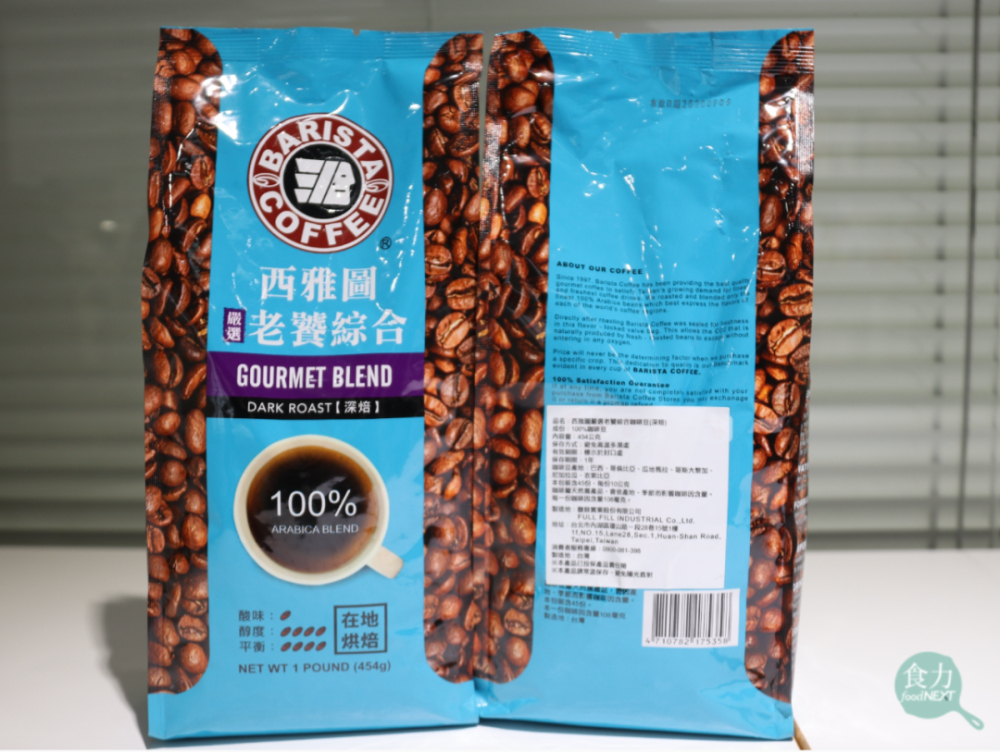
In mid-October 2019, Taiwan's well-known food industry outlet FoodNext revealed that the popular local chain "Seattle Premium Coffee" had been adding Robusta beans to several pre-packaged coffees labeled "100% Arabica" and selling them — raising suspicions of food adulteration.
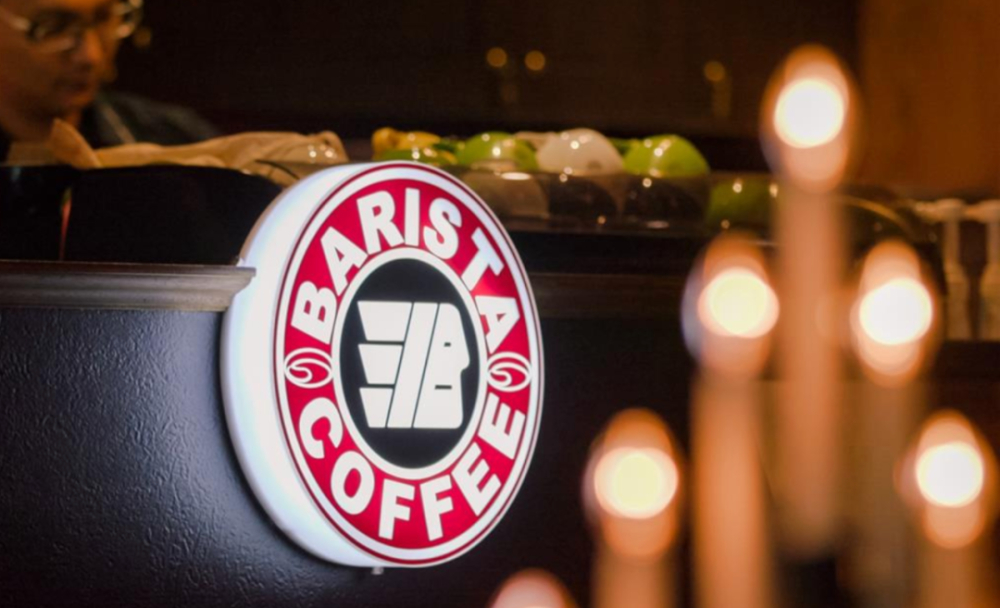
On January 22, 2020, once the offense was confirmed, prosecutors charged the brand's founder and legal representative Liu Zengxiang ("Liu"), the roasting plant supervisor Li, and two other responsible individuals with adulteration under local food safety law. The case has recently seen new developments.
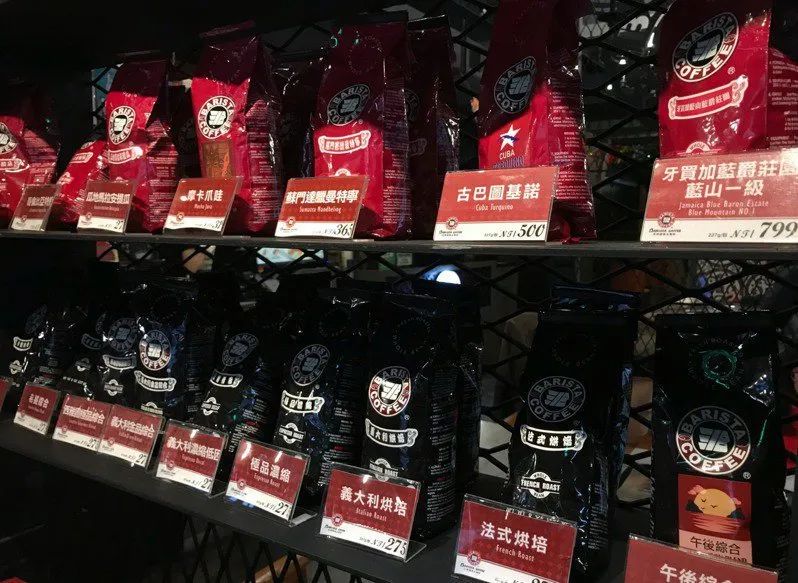
Founded in 1997, Seattle Premium Coffee was one of Taiwan's more established local chains. Originally it ran retail stores only, with roasting-plant supplies never sold externally. Then in 2001, a typhoon flooded parts of the roasting facility and several stores, causing losses of roughly over RMB 1 million across store revenue, factory materials, and equipment. That same year, one of the brand's shareholders attempted to drain company assets, dragging down the stock's value.
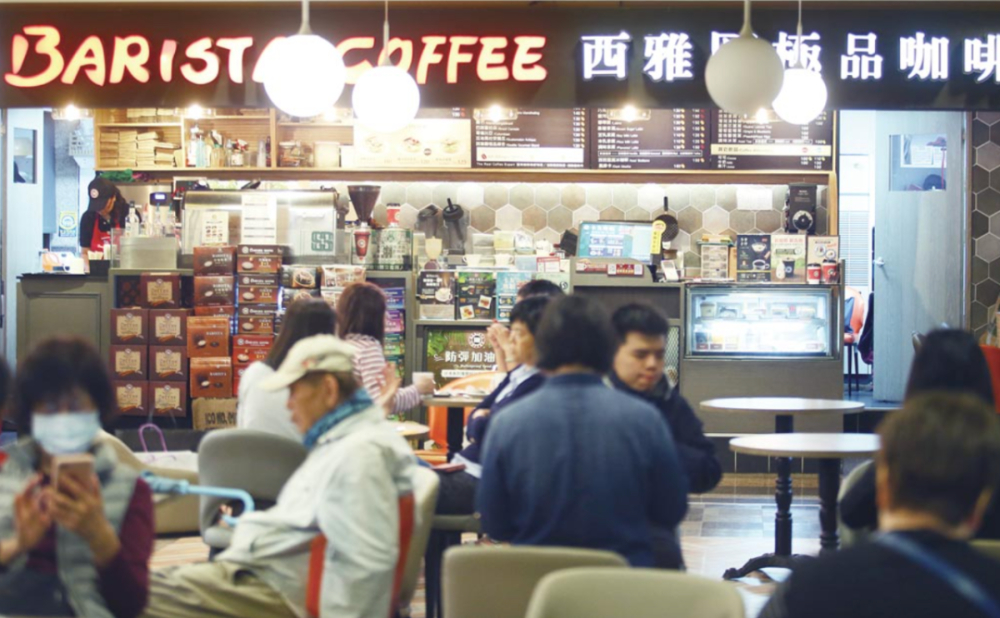
A Financial Crisis Leads to a Fateful Business Decision
Confronted with that financial crisis, Liu decided in 2002 to industrialize coffee production and move into pre-packaged coffee — a pivot that kept the brand alive to this day. But the once-trusted local name was exposed in October 2019 for adding Robusta at ratios of 13% and 26% to several products sold as "100% Arabica," with the adulteration period lasting about 22 months (beginning January 1, 2018).
Media reports added that the price gap between Arabica and Robusta was roughly RMB 10 per kilogram at the time, yielding illegal profits of about RMB 103,000 per month. By the time of the exposé, the brand's illegal gains totaled approximately RMB 2.262 million.
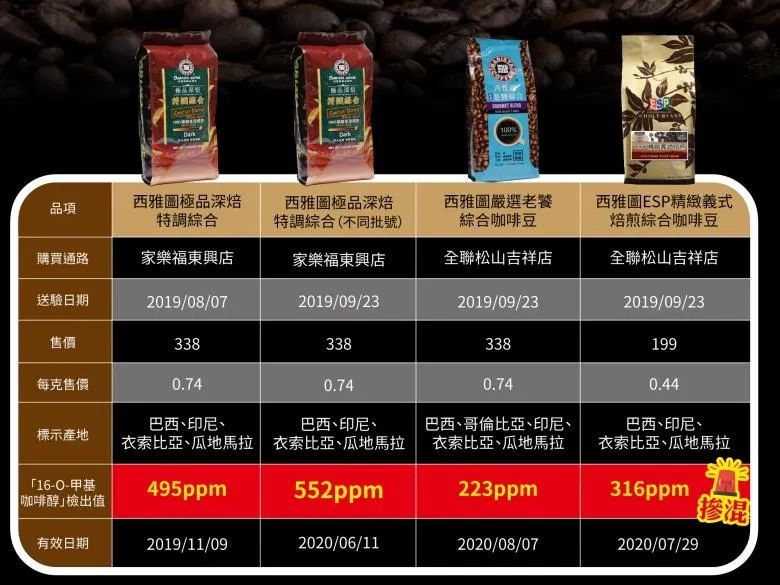
According to FoodNext, from August to September 2019 the outlet bought 22 packaged coffee products from 12 different brands across major chain coffee shops and supermarkets and sent them to Germany's TENTH QSI Laboratory for testing. Of the three Seattle Premium Coffee products (four items total) tested, "16-O-methylcafestol" content ranged from 223-552 ppm — compared with 600-1800 ppm in 100% Robusta products — indicating a considerable proportion of other varieties mixed in.
The Brand's Response — and the Science
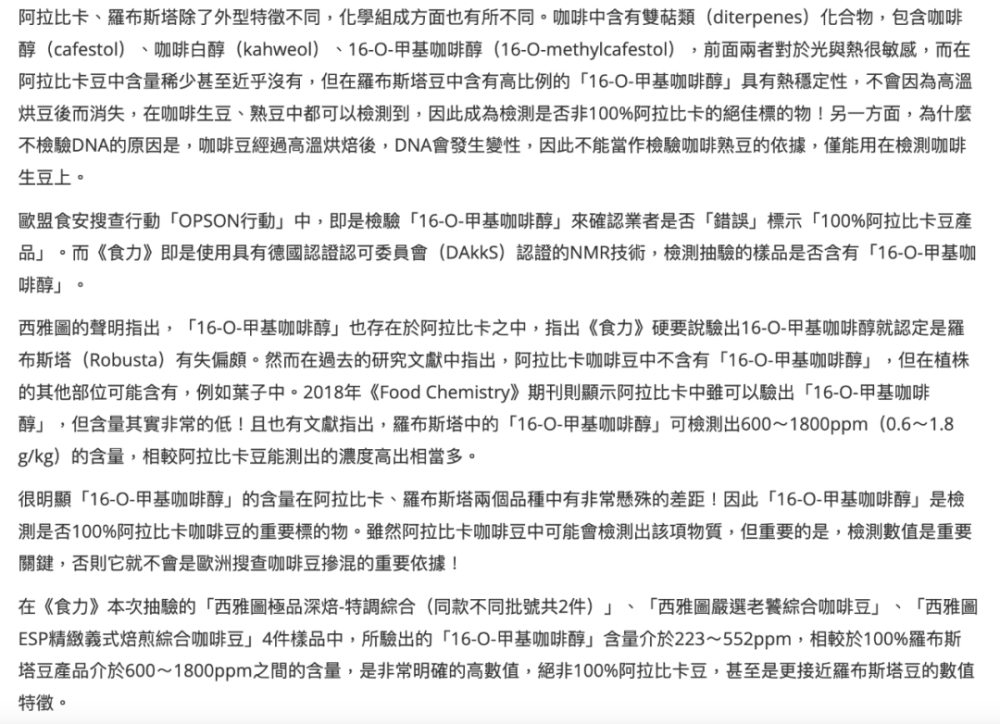
Seattle Premium Coffee fired back with a stern statement claiming that "16-O-methylcafestol" also exists in Arabica beans, so concluding that its presence proves Robusta adulteration is biased.
Coffee researchers immediately rebutted: "Even if it exists, it couldn't be at levels this high!" The brand then pivoted again: "We used Timor beans — a natural hybrid of Arabica and Robusta — which is why the 16-O-methylcafestol levels are elevated."
Is that actually the case? Clearly not. Most coffee researchers disagreed with the explanation.
Court Proceedings and Explanations
Facing the industry's rebuttals, Liu told the court at his first appearance in 2020 that both Arabica and Robusta are food products and "half-siblings" of each other — unlike gutter oil, he argued, this was no "black-hearted" food scandal.
As for why Robusta ended up in coffee labeled "100% Arabica," his explanation was this: he felt several of the company's previous Arabica blends were too acidic, so he verbally instructed roasting plant supervisor Li to add Robusta to boost the coffee's rich, full-bodied texture.
However, administrative staff neglected to update the labels, so the packaging continued to read "100% Arabica coffee beans." The company's current products, he said, no longer use Robusta.
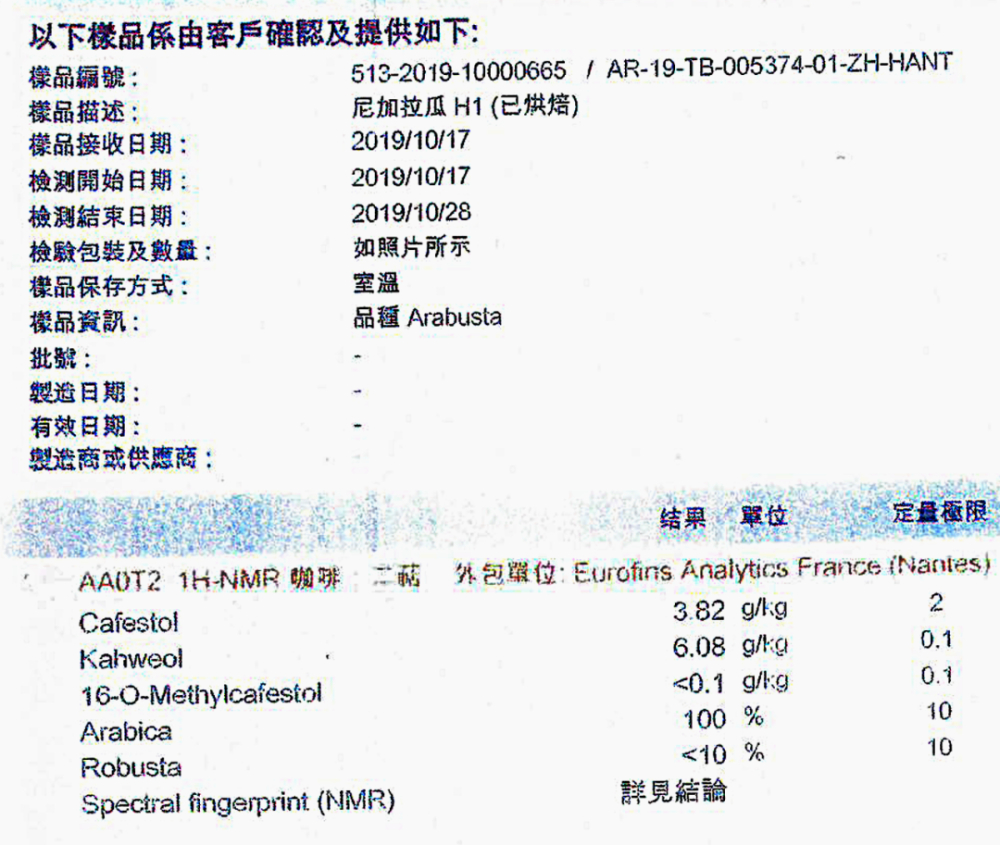
Liu also submitted a coffee bean test report dated October 2019 to the court — but the samples tested were not the three products FoodNext had submitted. He told the court: "Seattle Premium Coffee's beans are all 100% Arabica," and demanded the media remove their reports...
On the Robusta question, Liu apologized to the public on behalf of the company (Fuyu Industrial Co., Ltd.) and promised to cooperate fully with the investigation and to handle product recalls and exchanges in good faith.
The Facts Versus the Brand's Story
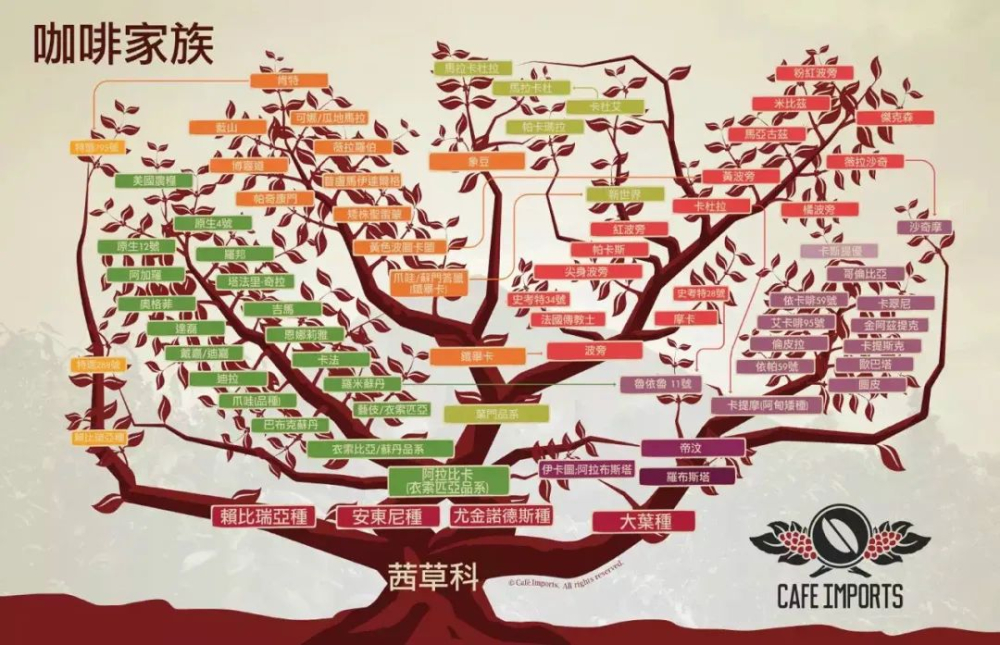
Are Robusta and Arabica really "half-siblings"? No. Although both belong to the Rubiaceae family, Arabica is a small-grain species that arose from the hybridization of Eugenioides and Canephora, while Robusta is a medium-grain variety derived from the large-leaved species. There is no half-sibling relationship between them.
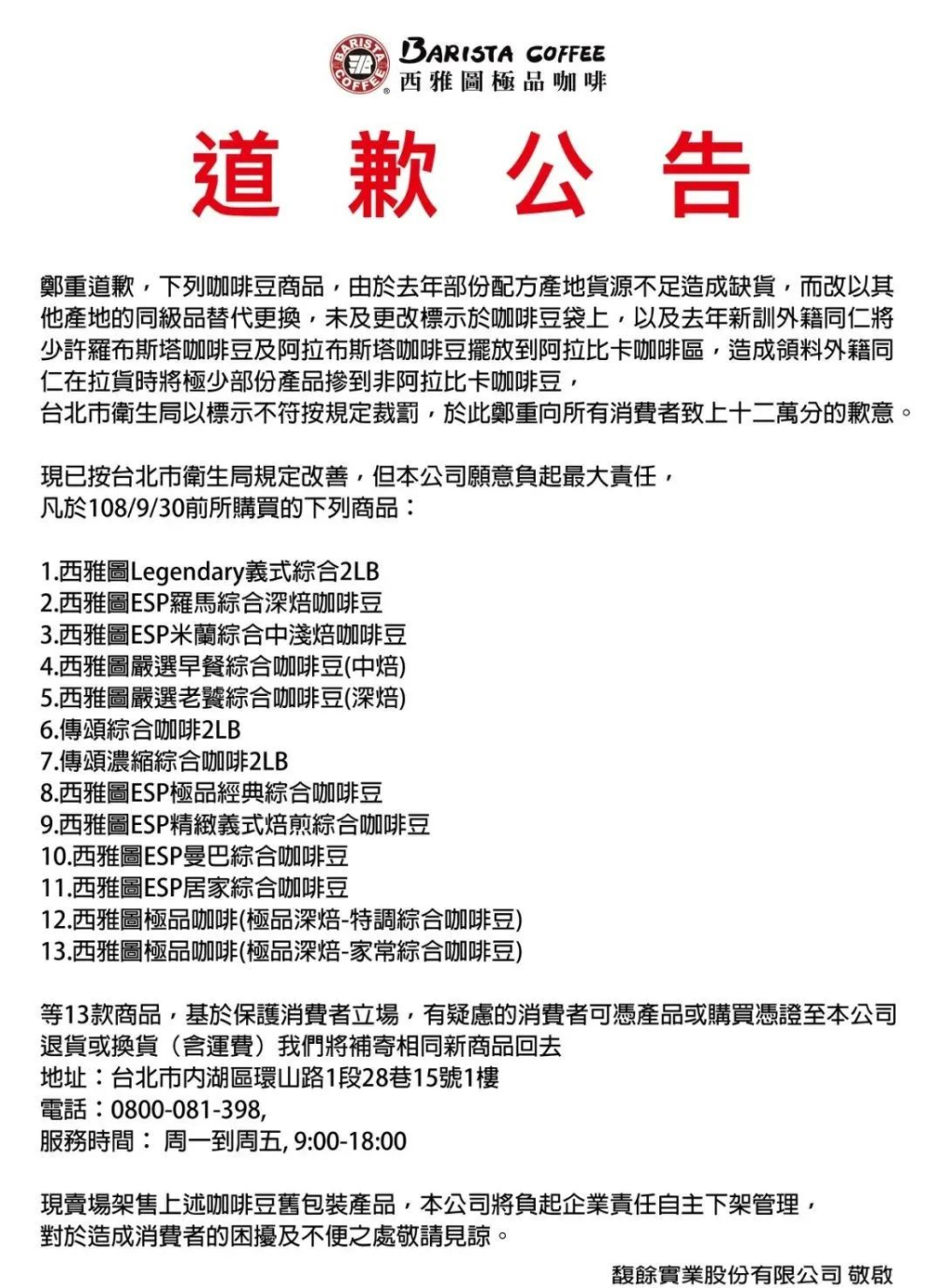
But there was a second version of the company's response. Its apology announcement claimed that outsourced employees had accidentally mixed non-Arabica beans into products while loading goods, and that exchanges would only be accepted for affected products "purchased before September 30, 2019."
Worse, after the scandal broke, although Carrefour pulled the products from its shelves, other channels kept selling them. And the packaging was quietly changed from "100% Arabica coffee beans" to "100% coffee beans" — which local media read as an attempt to dodge legal responsibility for "mixing in other coffee bean varieties."
Recent Developments
The court did not close the case after Liu's innocent plea, and prosecutors maintained their appeal. Recently, the case took a new turn, with Liu offering fresh explanations.
Liu acknowledged the products were falsely labeled but denied that this constituted adulteration under food safety law, calling it merely a labeling issue. The court calculated the company's criminal proceeds at roughly RMB 4.07 million, without deducting costs and other expenses, and Liu expressed willingness to pay public interest compensation to the plaintiff toward a settlement.
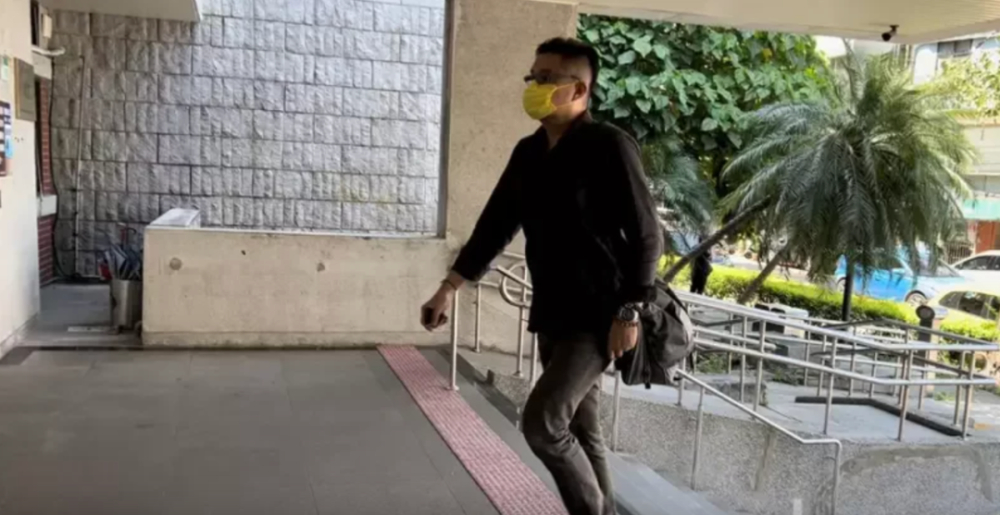
He added that in the three years since the incident, the pandemic has battered the food industry, yet the company has insisted on no layoffs or salary cuts, with benefits untouched. He asked the court to weigh the difficult business environment and the challenges of building a local brand, and offered to pay approximately RMB 452,000 to public coffers as public interest funds under the court's criminal-proceeds calculation — in exchange for a chance at probation.
What the Case Really Means
The case will be tried on a future date. "100% Arabica" is a ubiquitous phrase in the coffee industry, and blending Robusta into espresso to add richness is standard practice worldwide. The core controversy here isn't the Robusta itself — it's whether failing to accurately label what goes into a food product constitutes adulteration under food safety law. In other words: adding Robusta isn't the problem. Selling a Robusta blend as "100% Arabica" is what misleads consumers.
Image source: Internet, FoodNext
FrontStreet Coffee Recommendation
Blending Robusta into espresso is a legitimate craft — as long as the label tells the truth. FrontStreet's own espresso lineup makes the point: the Classic Blend is a medium-dark, three-origin recipe inspired by the old-school "Mandheling + Brazil" pairing, with a small amount of Robusta added for extra aroma and golden crema — ideal for beginners and for practicing latte art at home.
If you want strictly 100% Arabica, FrontStreet's Specialty Blend (washed Colombian with pulp-natural Brazilian beans) delivers nuts, dark chocolate, and caramel with a pleasant bittersweet edge, pouring silky and stable for milk drinks. FrontStreet Coffee's Black Cocoa Blend, also 100% Arabica, combines washed Yunnan and Brazil beans into a balanced, low-cost option with golden crema and notes of cream chocolate and cocoa cookie — proof that honesty and value can go together.
Important Notice :
FrontStreet Coffee is a long-established specialty coffee roaster in Guangzhou China, selling freshly roasted beans from its own farm in Yunnan as well as dozens of carefully selected single-origin beans from around the world for both pour-over and espresso. The products deliver consistently excellent quality and great value, with shipping within 24 hours. Guangzhou's FrontStreet Coffee shop is recommended by many coffee lovers, and the beans are now available online at the Tmall 。
FrontStreet Coffee has moved to a new address:
FrontStreet Coffee Address: 315,Donghua East Road,GuangZhou
Tel:020 38364473
 Scan and follow the En Gafei WeChat official account. Please indicate that the reprint comes from "En Gafei".

