
Reasons for Pour-Over Coffee Blooming Failure: Guide to Bloom Water Amount, Time Parameters, and Methods
Understanding Coffee Blooming: The Science Behind Freshness and Expansion
Some time ago, when FrontStreet Coffee wrote about coffee degassing, we noted in passing that "carbon dioxide trapped inside coffee beans 'suppresses' the release of volatile aroma compounds." That's precisely why brewing includes a blooming step: a small amount of water is poured on to wet the grounds, letting them vent their gas quickly. As the gas escapes, the grounds swell into a dome.
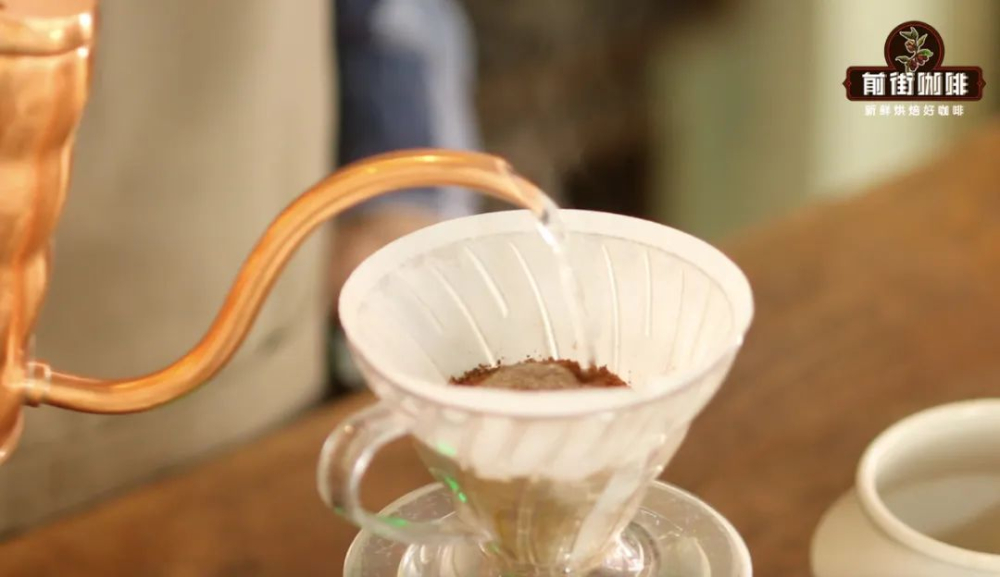
If the beans have already lost all their gas, then during blooming there's nothing left to release — so the grounds simply sit flat. The conventional wisdom follows that a coffee which fails to bloom must be stale and flavorless. FrontStreet Coffee's view: expansion is a useful reference for freshness, but you shouldn't lean on it too heavily, because there are plenty of other reasons grounds might not dome.
Roast Degree
Notice how those impressive "hamburger" domes almost always come from darker roasts? The darker the roast, the larger the bean's volume and the more porous its internal structure. More carbon dioxide gets produced, and the porous structure expands more readily when it meets water — which is why dark roasts put on such beautiful, textbook domes.
Lighter roasts are the opposite: the bean structure is denser and harder, and the beans hold less CO2 to begin with. So the bloom dome is smaller — sometimes there's no visible expansion at all.
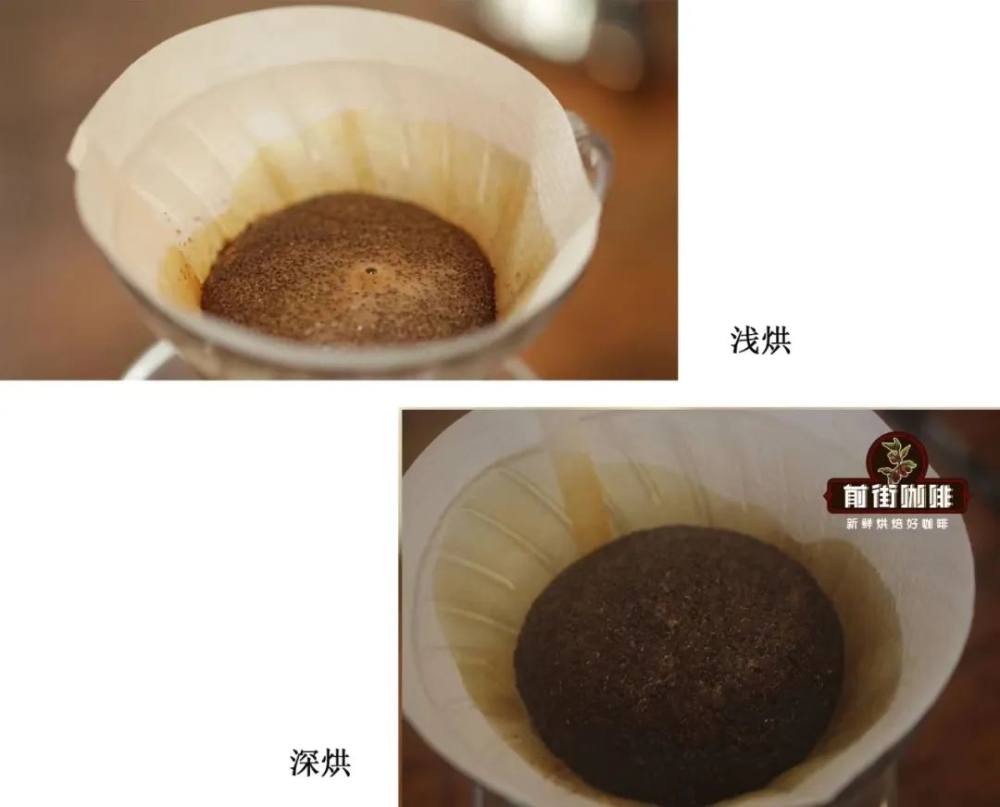
Take high-altitude Geisha brewed two weeks after roasting: the grounds layer shows barely any expansion. Light-roasted Geisha is hard and degasses slowly, and being a light roast there simply isn't much gas to begin with. Across the full 30-second bloom you might see a slightly swollen little dome, nothing at all, or a single large bubble breaking through the flat bed. None of this means the coffee is stale, and none of it hurts the flavor.
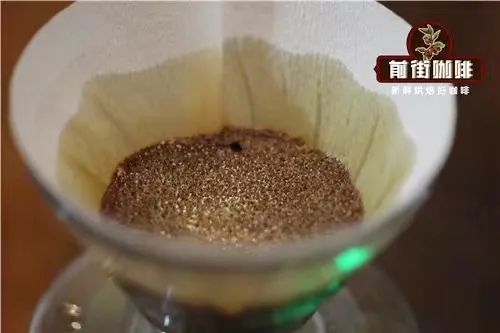
Another example: a friend once brought FrontStreet Coffee a bag of extremely light-roasted beans to share. The sound of the grinder suggested the beans were rock hard. Sure enough, the grounds didn't expand during blooming — yet the cup showed bright, lovely acidity with no staleness of any kind.
Grind Size
Dome size is also tied to grind size. With a fine grind, gas can't easily find gaps to escape through, so it pushes the grounds upward in search of larger openings. With steady, rapid degassing, big bubbles can appear.
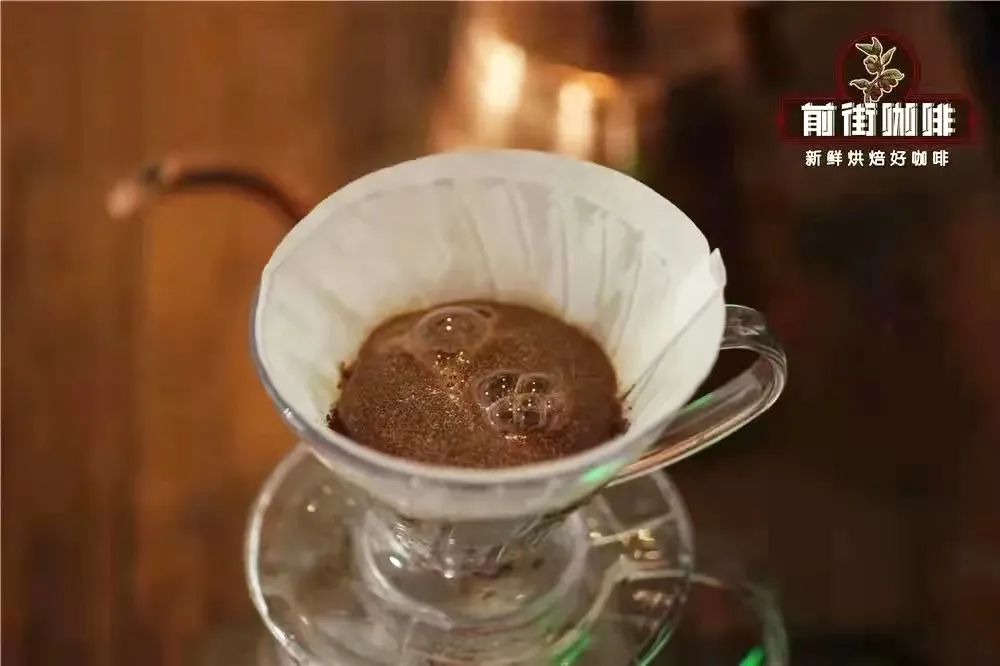
Conversely, a coarse grind leaves plenty of space between particles, so the gas escapes freely and the bed never rises.
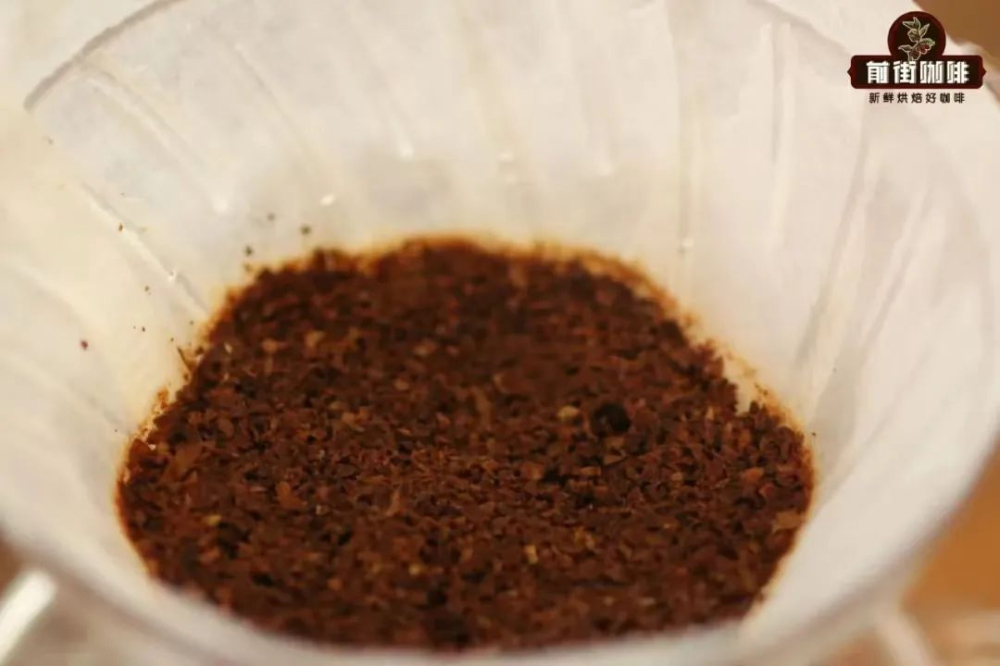
So if you want to see a gorgeous blooming "hamburger," pick a dark roast — and grind the beans fresh right before you brew.
FrontStreet Coffee Recommendation
No bloom? Don't panic — with a light roast it's perfectly normal. And light roasts are exactly where the V60 shines: its 60-degree cone and single large opening deliver fast extraction, giving delicate florals and lively acidity full room to express themselves. FrontStreet recommends starting with the washed Yirgacheffe Guji Cooperative — vivid citrus, berries, and florals with a green-tea-like sweetness — or the natural Ethiopia Huakui, bursting with strawberry, passion fruit, jackfruit, and lychee aroma and so juice-like that fans call it "the least coffee-like coffee."
If you want to push further, the Panama Esmeralda Red Label Geisha is the legendary endgame: elegant jasmine, citrus, bergamot, and black tea notes in a clean, layered, long-finishing cup. Bloom or no bloom, these beans will taste spectacular.
Important Notice :
FrontStreet Coffee is a long-established specialty coffee roaster in Guangzhou China, selling freshly roasted beans from its own farm in Yunnan as well as dozens of carefully selected single-origin beans from around the world for both pour-over and espresso. The products deliver consistently excellent quality and great value, with shipping within 24 hours. Guangzhou's FrontStreet Coffee shop is recommended by many coffee lovers, and the beans are now available online at the Tmall 。
FrontStreet Coffee has moved to a new address:
FrontStreet Coffee Address: 315,Donghua East Road,GuangZhou
Tel:020 38364473
 Scan and follow the En Gafei WeChat official account. Please indicate that the reprint comes from "En Gafei".

