
What's the Big Deal with Specialty Coffee! It's All Turning Into Fruit Tea Anyway
Coffee researchers never expected that, after decades of hard work helping consumers tell Arabica from Robusta and understand the difference between a dark cocoa flavor and plain bitterness — just as everyone was entering the single-origin era — a wave of specialty coffee cocktails would blow the trend off course, sending specialty coffee into a realm of "returning to simplicity."

How Coffee Orders Have Changed
Previous orders: a black coffee, with milk and sugar.
Earlier orders: tall cup, double shot, change the milk to skim, extra hot, served in a mug.
Recent orders: pour-over Yirgacheffe, not bitter, at room temperature.
Future orders: a cup of "whatever" — Yirgacheffe cold brew base, orange juice with zero-calorie sweetener, add liqueur, add dried orange, whole large ice cubes, with a slice of pepper wood.
What changes is that in simple times complexity always emerges for a few years, then returns to simplicity, only to become complex again in an endless cycle. What does not change is the determination, competence and professionalism revealed in each generation of coffee professionals. Whatever the era and whatever the coffee, every cup is received in small sips, with all the flavors of life experienced inside.

Coffee's Creative Turn
First there was milk tea with eight treasures; now there is coffee fruit tea. Specialty coffee has gradually picked up "bad habits" from milk tea. Previously the competition was fierce only around growing regions, coffee flavors and brewing methods. Specialty coffee, which once relied on intuition to detect flavors, suddenly found itself competing on direct taste.
Baristas who once hoped customers would guess the coffee flavors now simply recommend: "Why not try our specialty drinks? We have elderflower, grape, and so on — they're our signature products."
Previously, coffee competition was mostly confined to lattes. From competing over latte art patterns, it evolved into competing over milk — from oat milk to various plant milks, from pure milk to purified milk, from fresh milk to flavored milk cooked at low temperatures with all kinds of ingredients.

Later, simply changing the type of milk was not enough, so people started adding Chinese elements to lattes. After a round of the usual moves with fermented glutinous rice and osmanthus fermented rice, they began adding Maotai and Wuliangye. As the saying goes, "coffee with white liquor, the longer you drink, the longer it lasts." After a cup of white liquor coffee you start dancing before it is even dark. Morning C and evening A is nothing anymore — morning and evening CA is the correct way to go.
How could people stop at CA on the path of stimulating demand? All of China's eight great culinary traditions had to be arranged. On the risk that adding milk might strengthen intestinal peristalsis, everyone began targeting black coffee: spicy Sichuan peppercorn Americano, sausage cold brew, saltwater duck coffee — balanced with meat and vegetables for complete nutrition.
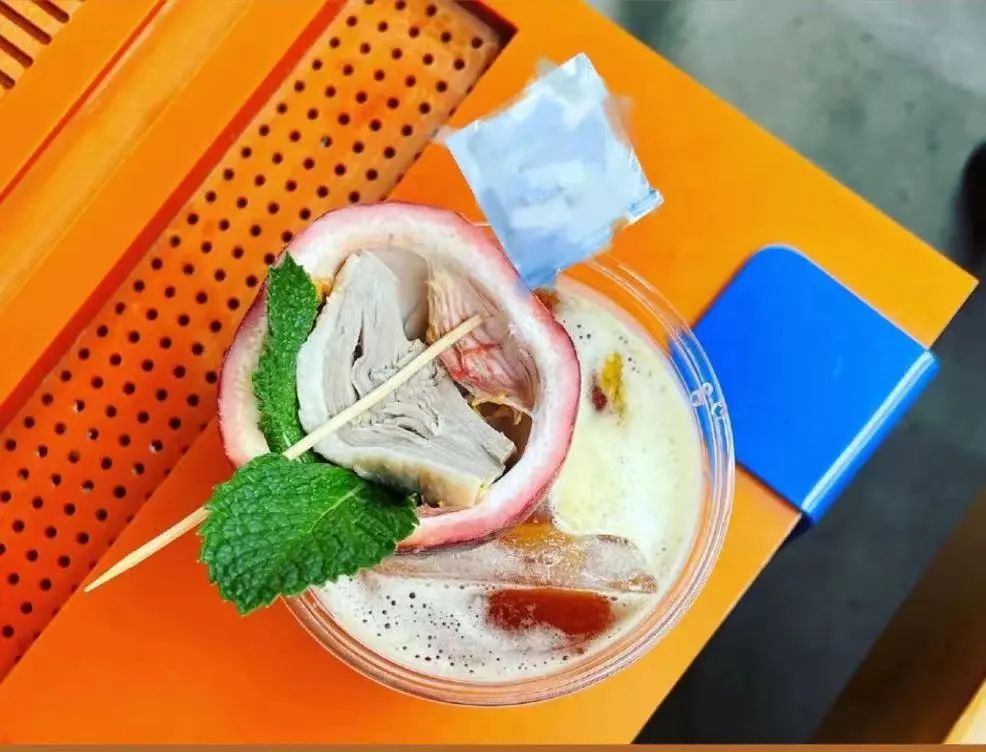
Of course, what has been described so far is still niche creativity. When it comes to the major trend of specialty coffee cocktails, it has to be coffee plus fruit. Why? Because coffee itself is part of a fruit, and what harm could come from adding fruit to fruit? Fruit platters are also meant to help people taste the flavors in specialty coffee more clearly, bringing the coffee out through the food itself.
Why Coffee Is Becoming More Like Fruit Tea
Why is coffee becoming more and more like fruit tea? Because appreciating specialty coffee has barriers — from taste buds to leisure time to wallet, none can be lacking. For many people, the ability to appreciate specialty coffee is no simpler than cultivating the ability to understand symphony music. The coffee flavors that excite professionals are nothing more than sour and bitter to ordinary drinkers. For consumers who have been drinking coffee for a long time, coffee simply should not be too sour or too bitter.

Fruit coffee is different. Ordinary people can also taste the flavors described, feel the shifts in flavor and the layers of the coffee, which immediately enhances the experience and creates stronger memorable points.
Although many specialty beans can now show fruit-tea qualities in their original flavors, such beans are not inherently cheap. Hence the emergence of fruit coffee. Whether it is creative coffee with added fruit and sugar or the inherent flavors of specialty beans, both ultimately move toward fruit tea.

China's Coffee Market
Although the coffee industry has developed rapidly in China, the level of coffee consumption is not yet high. A consumer trend insight report once showed that annual per capita coffee consumption in mainland China is only 9 cups, and at least 4 of those 9 are fruit-flavored coffee.
The start of coffee consumption among domestic consumers is inseparable from the rapid expansion of local coffee brands and the democratization of prices. What's more, 8 out of 10 product innovations from these brands feature fruit flavors. That means that for most modern consumers, their first cup of coffee starts with fruit coffee.
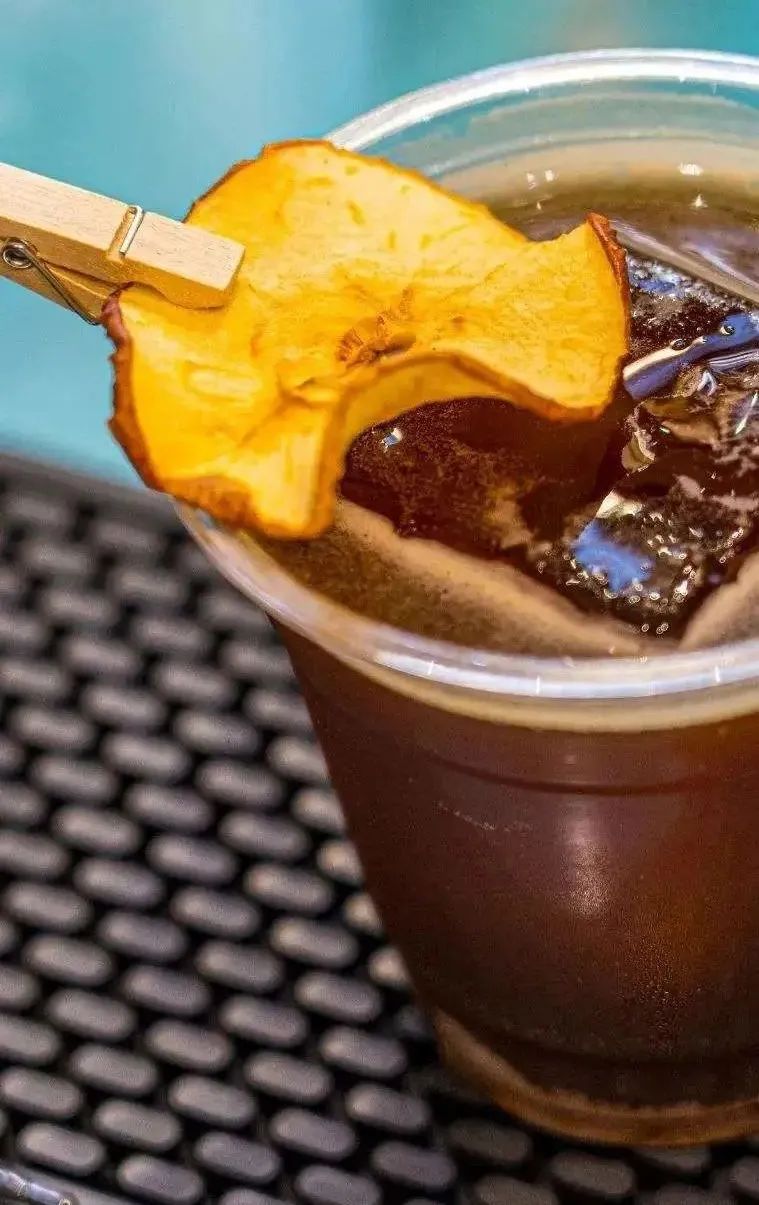
Just as many people add Sprite when first trying red wine, or order a cocktail when first trying spirits, unusual flavors always need a bit of sweetness to balance them. After drinking enough, one learns to appreciate the taste of the beverage itself — and the same applies to coffee. Only by adding fruit and sugar to create higher sweetness can coffee meet consumers' tastes. That is the current situation, and it will remain so for the next few years.
Many coffee professionals are unwilling to see anything added to specialty coffee, but they fail to notice that the coffee flavors people pursue are gradually evolving toward fruit and tea. Anyone who has tasted a good Geisha will find that a washed Yirgacheffe lacks enough floral and tea-like qualities afterward; anyone who has experienced anaerobic processing will find the fermented fruit aromas in honey-processed coffee are not prominent enough afterward.
Perhaps fruit plus coffee seems unprofessional now, but the trend took hold as early as 10 years ago. Creative coffee is also an important segment in barista competitions. To highlight the layers in coffee, competitors choose lightly roasted beans with obvious acidity and floral and fruity aromas, pairing them with fruits of corresponding tones to leave a deep impression on the judges. Coffee competitions are the weather vanes of specialty coffee, and changes in specialty coffee ultimately lead the market. Is creativity part of specialty coffee? Absolutely.

It is just that with more people doing it, more choices emerged, creativity is no longer creative, and everyone began to see it as unprofessional. Since 2020, various coffee DIY methods have been inseparable from fruit coffee, thanks to its varied styles, high playability and ease of preparation. In the eyes of many young people, coffee is not an antique with standardized appreciation — the key is whether the process is interesting enough.
The Future of Fruit Coffee
"These flashy things, how long can they last?" It does seem that domestic consumers are gradually making coffee a daily beverage, and people may prefer coffee without excessive additives. Coffee consumption will also become more professional, with increasingly high demands on flavor and quality.
China, however, has enormous numbers of consumers, and many people have not yet been exposed to coffee. These people will be drawn in by creative coffee with fruit, then come to know and love coffee — a good thing for the spread of specialty coffee culture.

The Art of Making Fruit Coffee
It is worth noting, though, that not all random pairings create good fruit coffee. In specialty coffee cocktails, we first need to consider whether the ingredients can coexist harmoniously, and only then the visual effect.
Have you ever had this experience: a specialty coffee cocktail that looks extremely appealing, but the moment it hits your mouth, the flavors fight each other on your tongue — first very sour, then suddenly the bitterness of coffee emerges, followed by an overwhelming sweetness. Regarding distinct layers: if done well, please don't do it again next time.
The essence of creative coffee is coffee.
While increasing complexity and enriching the sensory experience, maintaining coffee's subjectivity is not as simple as everyone thinks. If a creative coffee is served as a shop's signature drink, it should demonstrate the barista's understanding of coffee all the more. The choice of added fruit should be determined by understanding the beans and the characteristics of coffee flavor — not by adding coffee to juice and sugar.

If coffee is a field of study, then creative coffee is a derivative born from a deep coffee culture heritage. Although ordinary consumers don't agonize over whether a cup has professional flavors, creative coffee is not cheap. Since the pricing is so high, coffee shops should demonstrate their professional side all the more.
Deception cannot lead to healthy industry development. To get more people to experience specialty coffee, understand it and be exposed to more pure specialty coffee, we should start by doing well with products ordinary consumers can accept.
Image source: Internet
FrontStreet Coffee Recommendation
If fruit-forward coffee is what draws people in, Yirgacheffe is where it all begins. FrontStreet Washed Yirgacheffe Daily Bean is the classic introduction to the Ethiopian region, known for white jasmine, bright citrus and lemon acidity and a tea-like quality, at a price that has made it the first specialty coffee for countless drinkers. Yirgacheffe is a town in southern Ethiopia's Sidamo zone at roughly 1,700–2,100 meters, with coffee planted above 1,800 meters, and it was famous enough that the Ethiopian Commodity Exchange separated it from Sidamo in 2010.
For something more particular, FrontStreet Gotingding Cooperative comes from the Gotingding village in Yirgacheffe's southeastern Worka area. Originally part of the Worka cooperative under the YCFCU, it was carved out as a single origin as demand for traceability grew, and it continues the most traditional washed processing — often called Yirgacheffe's last untouched corner. The cup carries none of the traditional bitterness, offering fresh, bright citrus and lemon acidity with jasmine fragrance.
And for natural-process fruit, FrontStreet Sun-Dried Red Cherry uses only fully ripe, sound fruit, hulled and dried on raised beds, turned every 2–3 hours in the first days to prevent uneven fermentation and dried for 3 to 5 weeks before the outer fruit is machine-stripped and the beans are stored. It keeps the classic Yirgacheffe profile while adding tropical fruit, with citrus-like acidity, jammy berry, honeyed sweetness and a creamy smoothness.
Important Notice :
FrontStreet Coffee is a long-established specialty coffee roaster in Guangzhou China, selling freshly roasted beans from its own farm in Yunnan as well as dozens of carefully selected single-origin beans from around the world for both pour-over and espresso. The products deliver consistently excellent quality and great value, with shipping within 24 hours. Guangzhou's FrontStreet Coffee shop is recommended by many coffee lovers, and the beans are now available online at the Tmall 。
FrontStreet Coffee has moved to a new address:
FrontStreet Coffee Address: 315,Donghua East Road,GuangZhou
Tel:020 38364473
 Scan and follow the En Gafei WeChat official account. Please indicate that the reprint comes from "En Gafei".

