
How to Read the SCA Specialty Coffee Flavor Wheel - Download New HD Coffee Flavor Wheel Images
Understanding Coffee Flavor Wheels
People often ask FrontStreet Coffee: "Can I learn to identify coffee flavors just by studying the coffee flavor wheel?" Our answer is that the flavor wheel, as a fairly authoritative guide to coffee flavors, can absolutely help you understand them quickly and systematically - if you use it properly. Combine it with practice (that is, drink more coffee), and you'll pick up flavor identification faster than you might expect.

The prerequisite, of course, is knowing how to read the wheel correctly. So here is FrontStreet Coffee's guide to understanding and digesting the coffee flavor wheel.
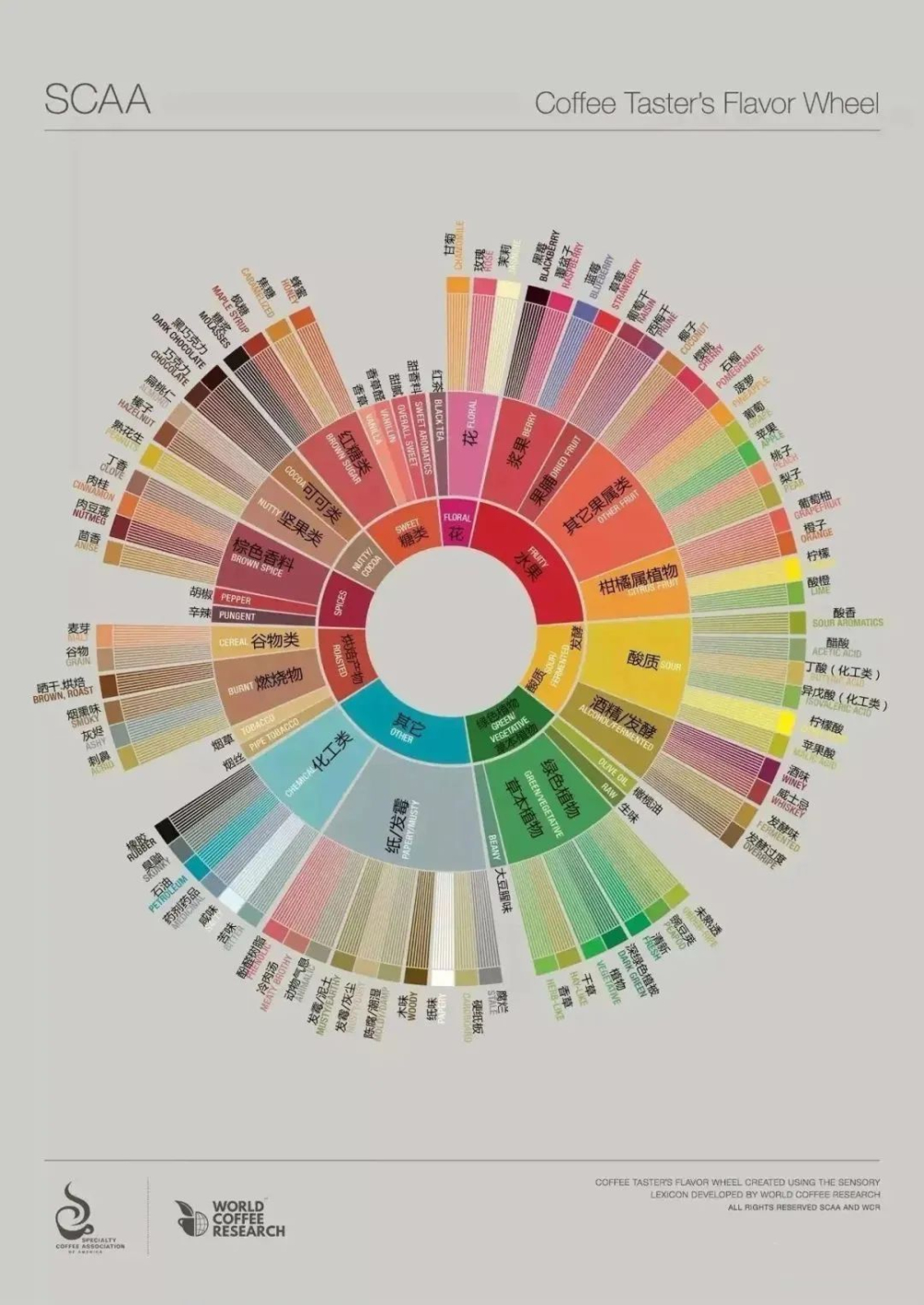
The most widely used version today is the flavor wheel released by SCAA in 2016. Many coffee training institutions use it as sensory teaching material, so we'll use it as the blueprint here too.
First: Don't Follow the Flavor Wheel Blindly
This version was developed by SCAA together with World Coffee Research (WCR), Kansas State University, the German University of Agricultural Sciences, and industry representatives. They analyzed and tested 105 different samples from 13 coffee-producing countries and compiled the findings into the "World Coffee Research Sensory Lexicon," which became the foundation of the new flavor wheel.
A University of California, Davis team then applied novel adaptations of traditional sensory and statistical methods, with 72 experts categorizing the flavor attributes in the lexicon. The data was compiled and arranged into a wheel.
All very rigorous - but some of the flavor descriptors are extremely rare, or even nonexistent, in many places. Nutmeg, for instance, is an uncommon ingredient; if you've never tasted it, you can't know its flavor, let alone recognize it in a cup of coffee.
So while every flavor on the wheel can genuinely appear in coffee, never treat the wheel's specific descriptors as a checklist to match against.
Second: Finding Flavor Relationships Through the Wheel
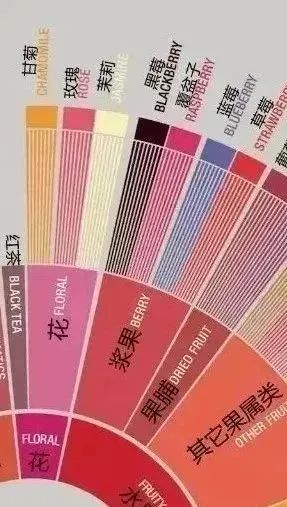
This flavor wheel has three rings: inner, middle, and outer. The inner ring holds the main categories: herbal/planty, sour/fermented, fruity, floral, sweet, nutty/cocoa, spicy, roasted, and others.
The middle ring contains the secondary categories within each main one. The fruity category, for example, includes citrus, other fruits, dried fruits, and berries. The floral category is special - besides the various flowers, it also includes black tea. That means when you detect black tea notes in a coffee, they technically belong under "floral."
The outer ring breaks things down to individual items. Citrus, for example, includes lime, lemon, orange, and grapefruit - all fruits rich in citric acid.
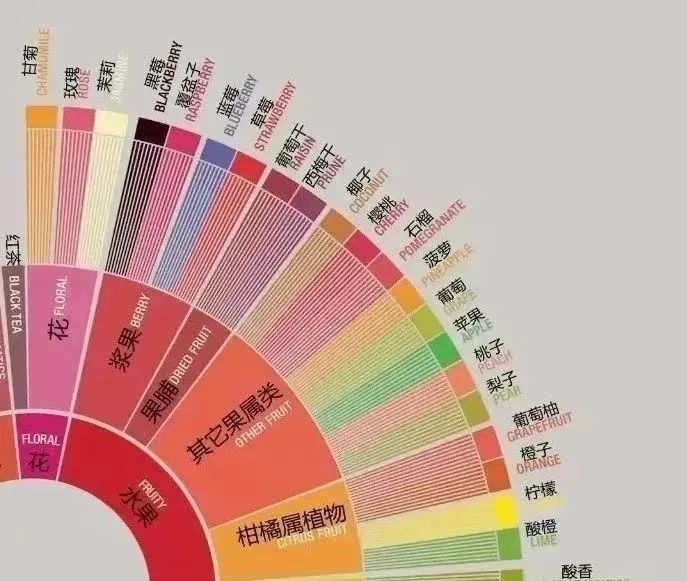
In everyday life, you can use the wheel to train your senses by classifying the foods you eat according to its structure. That habit translates directly to coffee. When you taste acidity in a cup, first decide which main category (inner ring) it belongs to: is it fruit-like, or closer to carbonated drinks, vinegar, or fermented dairy?
If it's a fruity sweetness-and-sourness, move to the middle ring. Quite acidic with a fresh, tangy aroma (the vitamin-C kind)? Likely citrus. Sour with sweet fruit flavors? Probably berries. Very sweet fruit flavors? Dried fruits. The final step is pinpointing the specific item - within citrus alone, lime, lemon, orange, and grapefruit differ obviously in acidity level and aroma once you taste them side by side.
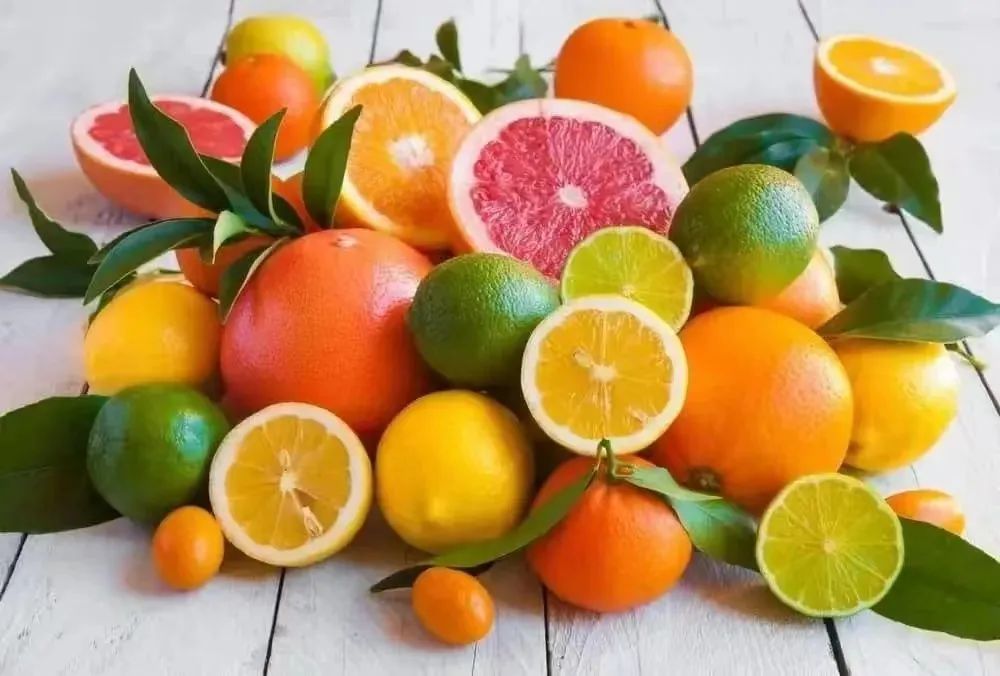
If you can't immediately name the specific flavor, fall back to the middle ring. Tasting florals but unsure which flower? Just call it "floral" and keep enriching your flavor library - smell more, taste more, eat more, remember more!
Third: Use Color for Association
This version of the wheel was colored by the London creative agency One Darnley Road, with every hue chosen to evoke its corresponding flavor. Jasmine (white), rose (pink), and citrus (orange) all connect naturally through the colors of the flowers and fruits themselves. When you see flavors described as "white florals," that refers to light, fresh notes similar to jasmine.
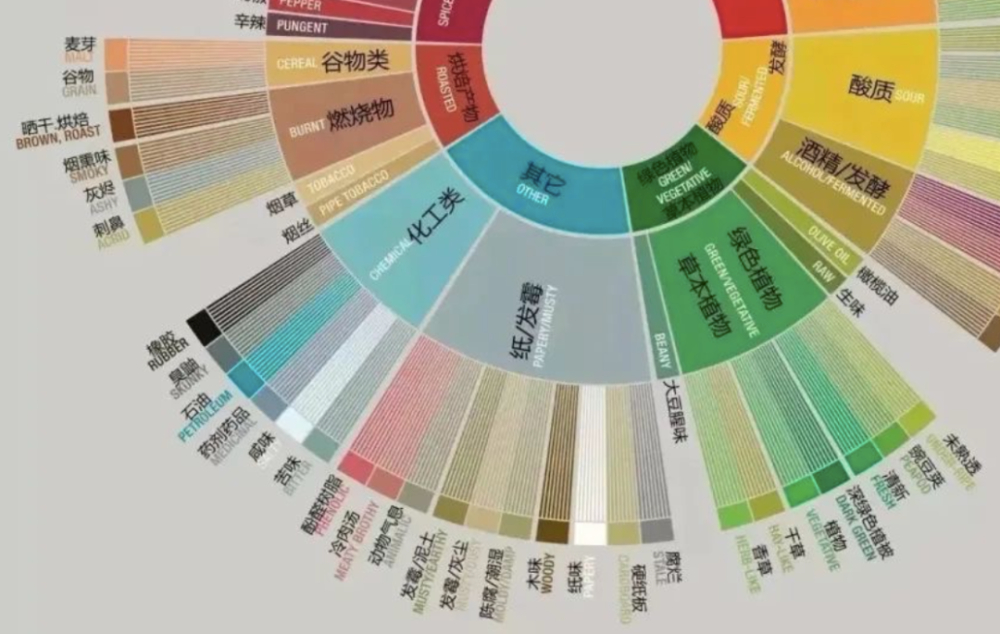
The colors also make it easy to tell desirable flavors from undesirable ones. Blue, gray, dark green, and earthy yellow simply don't look like food colors, and they tend to mark the less pleasant flavor notes.
Fourth: Read the Spacing Density
Look closely at the gaps between categories and you'll grasp how distant or related they are. Within the berry group, blueberry and strawberry sit close together, while blueberry and raspberry sit farther apart. Likewise within florals, rose and jasmine are packed tightly, while rose and citrus have more space between them. The spacing reveals flavor similarity.
Conclusion
Understanding the flavor wheel won't instantly turn you into a coffee taster, but it gives you a system for organizing the relationships between coffee's flavors. The most important thing is to keep tasting, then connect those experiences back to the wheel. Only then can you truly step into the world of coffee sensory appreciation!
FrontStreet Coffee Recommendation
The best way to train your palate is to taste distinctive coffees and locate their flavors on the wheel. FrontStreet Coffee suggests starting with beans whose descriptors map cleanly onto it. The Ethiopia Yirgacheffe Guading lands squarely in fruity and floral: bright citrus and berries up top, jasmine-like florals, and a green-tea sweetness that makes it a friendly first step into sensory tasting. The natural-process Ethiopia Huakui pushes the fruity ring further - strawberry, passion fruit, jackfruit, and lychee with pronounced sweetness and hardly any bitterness.
For a more advanced exercise, try the Panama Esmeralda Red Label Geisha: its elegant jasmine florals sit beside citrus, bergamot, and black-tea notes - a great chance to test how the floral and citrus branches relate on the wheel. And if you want to explore the roasted and nutty/cocoa categories, the PWN Golden Mandheling offers herbs, dark chocolate, and a trace of earthiness in a rich, low-acid body, rounding out your flavor library from every direction.
Important Notice :
FrontStreet Coffee is a long-established specialty coffee roaster in Guangzhou China, selling freshly roasted beans from its own farm in Yunnan as well as dozens of carefully selected single-origin beans from around the world for both pour-over and espresso. The products deliver consistently excellent quality and great value, with shipping within 24 hours. Guangzhou's FrontStreet Coffee shop is recommended by many coffee lovers, and the beans are now available online at the Tmall 。
FrontStreet Coffee has moved to a new address:
FrontStreet Coffee Address: 315,Donghua East Road,GuangZhou
Tel:020 38364473
 Scan and follow the En Gafei WeChat official account. Please indicate that the reprint comes from "En Gafei".

