Moka Pot Heating Has Explosion Risk?! IKEA Urgently Recalls Italian-Style Moka Pots!

In daily life, FrontStreet Coffee often hears the same advice: "For safety's sake, it is best not to use a moka pot." Where does that reputation come from?
Why Some People Avoid the Moka Pot
FrontStreet Coffee understands there are two main reasons. The first is that a moka pot is genuinely fiddly to operate. To get a good cup you have to manage the grind, the tamping pressure, the heating time, and the flame itself, which is not beginner-friendly. The second is safety. A moka pot has no internal scale markings to guide you, so it is hard to hit a consistent ratio. The results swing from one brew to the next, over-extraction is common, and a careless move can send hot water splashing out and cause burns.

In FrontStreet Coffee's view, though, the fact that this little pot has been passed down for hundreds of years is proof that it can be a reliable helper in the home. Master a few details and parameters, and making a good cup with a moka pot is not difficult at all. Start by understanding how it is built.
Moka pots are generally made of aluminum alloy or stainless steel and are divided into three parts, the upper chamber, the coffee filter basket, and the lower chamber, connected by a central tube. The lower chamber carries a pressure-relief valve. When the pressure inside the pot climbs too high during heating, the valve releases it automatically, preventing the body from bulging, cracking, or coming apart.
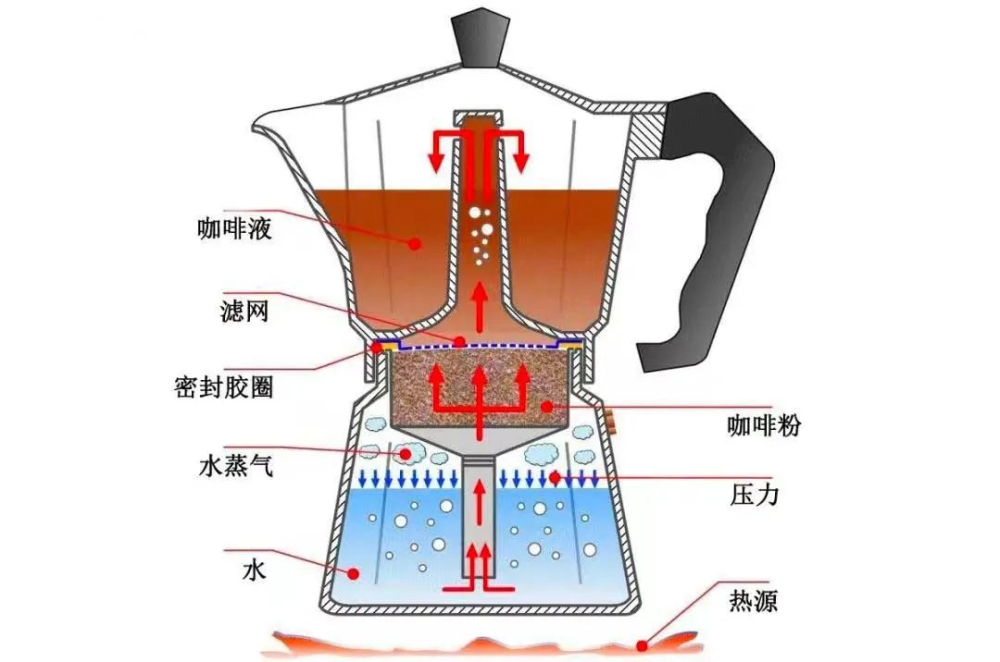
The working principle is simple. The pot sits on a heat source. As the water in the lower chamber boils it produces steam, and that steam pressure pushes hot water up through the central tube, through the coffee-filled filter basket, and, once filtered by the screen, into the upper chamber.
Important Details for Moka Pot Use
Whichever brand or model you own, these points matter every time.
1. Before using a newly purchased moka pot, brew with it at least twice and throw both batches away. This clears out any residual fine metal particles left over from the manufacturing process.
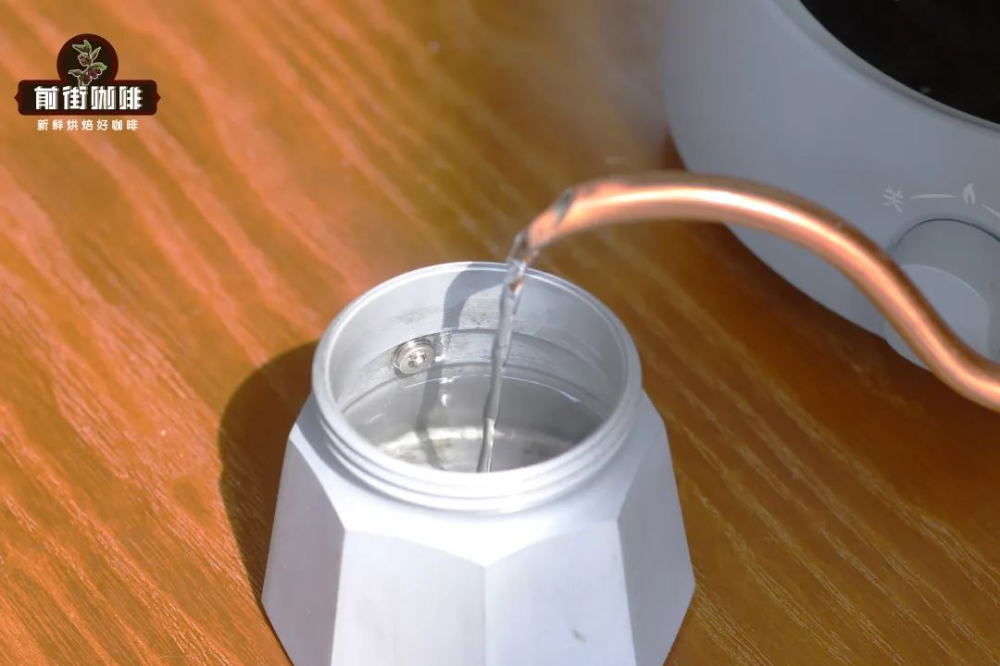
2. Never fill the lower chamber above the lower edge of the pressure-relief valve.
3. After filling the filter basket with coffee grounds, do not tamp the bed. If you use a filter paper, it must be no larger than the surface of the coffee, otherwise the pressure can build too high, steam can overflow, and you risk burns and a pot that comes apart.
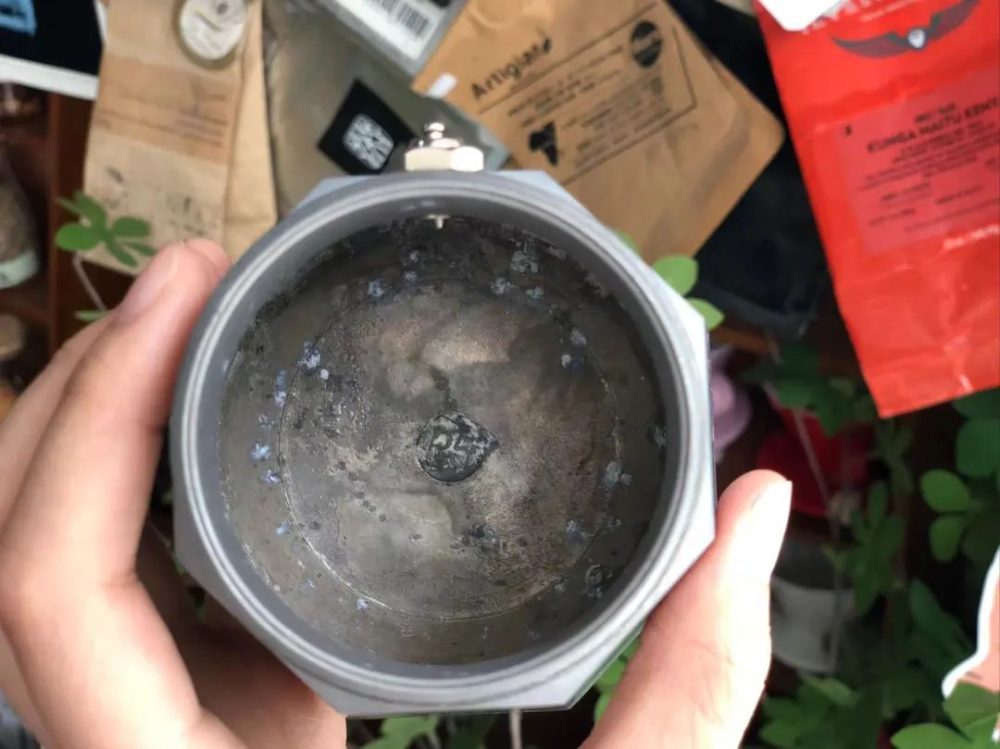
4. After cleaning, dry the lower chamber thoroughly to avoid oxidation.
5. The sealing gasket beneath the upper chamber has a maximum service life of one year. With frequent use, replace it every six months. Its job is to seal the joint between the upper and lower chambers, preventing steam or water leaks that can cause burns.
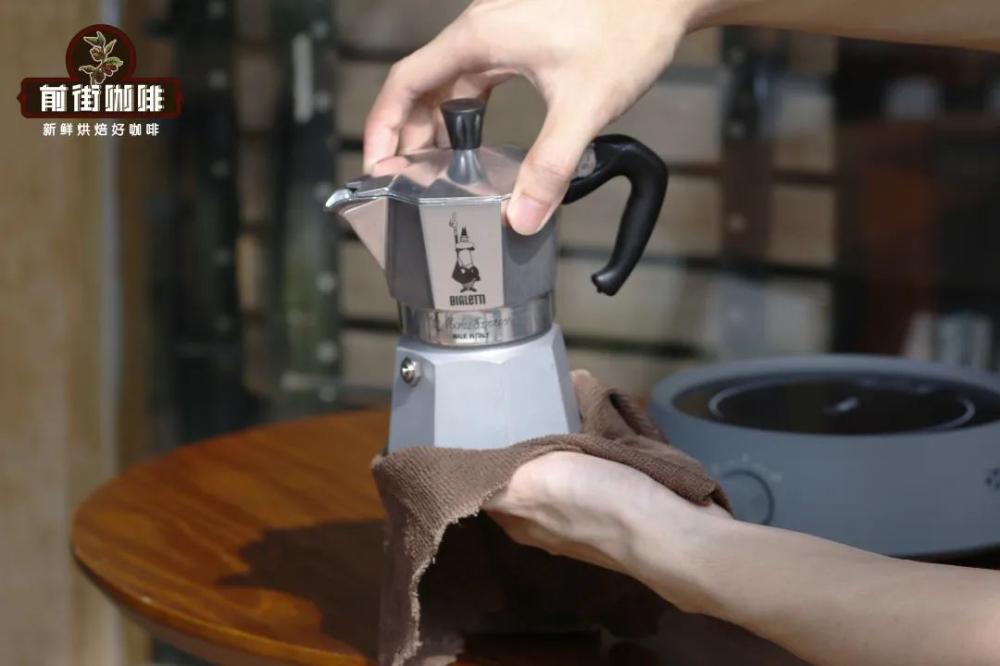
6. When tightening the pot, avoid putting force through the upper chamber's handle, because over time this loosens it. FrontStreet Coffee recommends gripping the lower chamber to tighten instead. If the lower chamber holds hot water, insulate your hand first.
7. Aluminum alloy moka pots are suitable only for ceramic cooktops, open flames such as gas stoves and gas burners, and small electric stoves. Only stainless steel moka pots can be used on induction cookers and other heat sources.
8. If coffee erupts into the upper chamber in a splashing stream, the cause is usually one of these: too much water in the lower chamber, above the lower edge of the pressure-relief valve; coffee ground too coarse, an under-filled filter basket, or no coffee at all; too high a heat or removing the pot too late; or internal parts that are not fully or correctly assembled.
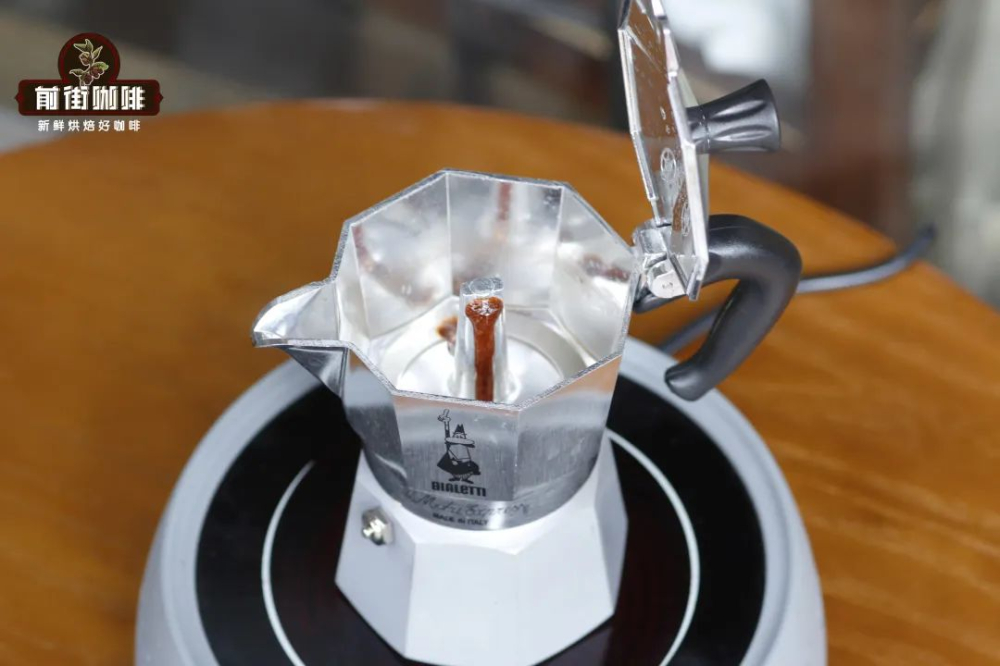
9. If the pot leaks during brewing, the gasket may be aging or the two chambers may not be tightened properly. New pots can also leak during trial use, though this usually stops after three or four brews.
10. If the pressure-relief valve vents steam and whistles during heating, the coffee is ground too fine, too much coffee was added, or the water level exceeds the lower edge of the pressure-relief valve, all of which raise the pressure too far.
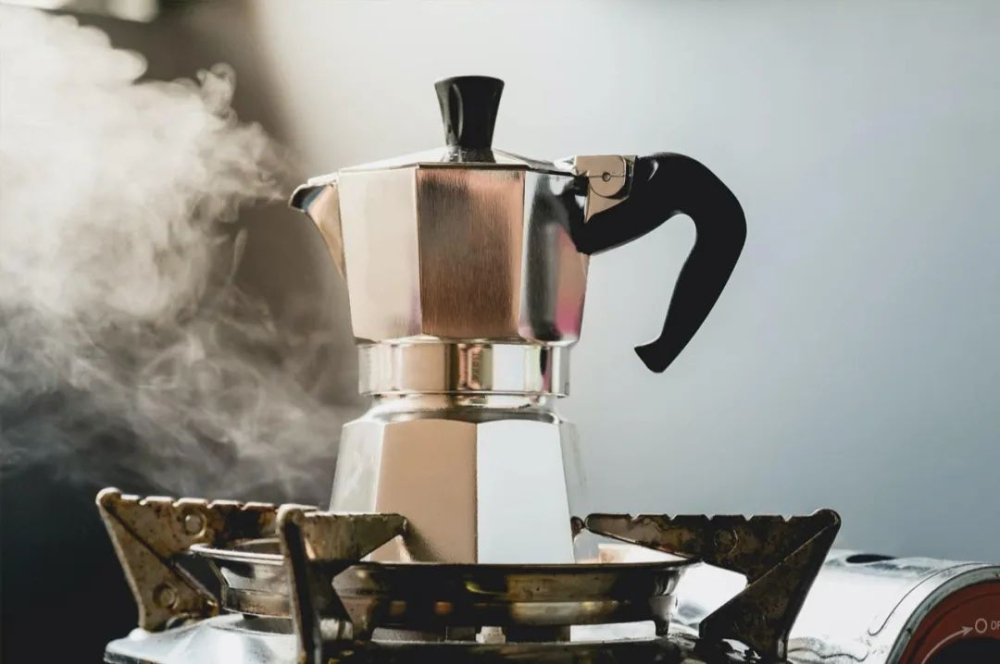
11. If the moka pot will not unscrew after brewing, pour some boiling water into the upper chamber and wait a minute or two, until the pot is no longer so hot. Pour the water out, protect your hand, and try again. If it still refuses, ask someone for help, because someone will always manage to open it.
12. Moka pots must never go in the dishwasher, and never be soaked in corrosive solvents.

13. For moka pot coffee beans, prioritize medium to dark roasts. FrontStreet Coffee recommends FrontStreet Classic Blend, a dark roast combining Brazilian natural process, Indonesian Mandheling, and Vietnamese washed coffees. Beyond its aromatic profile, its defining feature is a rich crema that releases abundant golden foam and gives the cup a full body.
FrontStreet Coffee Recommendation
For moka pot brewing, FrontStreet Coffee generally points customers toward blends first, and FrontStreet Classic Blend is the natural starting point. It was designed for both espresso and the moka pot, and its dense, fine crema comes through even on a basic home setup. Beyond the crema it is full-bodied and mellow, an easy cup for beginners and veterans alike, and it suits lattes, cappuccinos, and Dirty.
If value matters more than maximum crema, FrontStreet Black Cocoa Blend uses 100% Arabica beans, still delivers plenty of body, and keeps the price friendly, a sensible pick for a home drinker or a cafe owner watching costs. FrontStreet Autumn Chestnut Blend, a 100% Arabica blend of Honduras Caturra and Papua New Guinea Typica, brings a warm, balanced profile of roasted chestnut, caramel, and brown-sugar sweetness, with a soft chocolate mid-palate and a clean, long finish. FrontStreet Commercial Blend has long been the workhorse for cafes, tuned for flavor and cost control across a range of settings, while FrontStreet Specialty Blend, in service for nearly a decade, pairs Brazil Cerrado with Colombia Huila for the classic espresso flavor that suits home and cafe alike.
Single origins work well in the moka pot too. FrontStreet PWN Indonesian Golden Mandheling is a low-acidity, deep-roasted Sumatran, with herbal and dark chocolate notes, a faint earthy edge, and a long, full body. FrontStreet Brazil Queen Farm is gentle and balanced, with nuts, cocoa, and a clear caramel sweetness, and it suits pour-over, espresso, and the moka pot equally. FrontStreet Papua New Guinea Bird of Paradise, a Typica grown at 1,600 to 1,800 m on volcanic soil and rated AA, is a washed, three-times-fermented coffee with a clean, sweet profile, often nicknamed "little Blue Mountain." And if you want fruit, FrontStreet Colombia Sidra, a double anaerobic natural coffee from Finca El Diviso at 1,650 to 1,800 m, brings passion fruit, blueberry, grape, and apricot, with a bright, gentle acidity and a cocoa finish.
Important Notice :
FrontStreet Coffee is a long-established specialty coffee roaster in Guangzhou China, selling freshly roasted beans from its own farm in Yunnan as well as dozens of carefully selected single-origin beans from around the world for both pour-over and espresso. The products deliver consistently excellent quality and great value, with shipping within 24 hours. Guangzhou's FrontStreet Coffee shop is recommended by many coffee lovers, and the beans are now available online at the Tmall 。
FrontStreet Coffee has moved to a new address:
FrontStreet Coffee Address: 315,Donghua East Road,GuangZhou
Tel:020 38364473
 Scan and follow the En Gafei WeChat official account. Please indicate that the reprint comes from "En Gafei".