
Origins and Story of Flat White Coffee Brewing Ratio - Differences Between Flat White and Latte
Recently a friend asked FrontStreet Coffee: "Excuse me — when making a Flat White, how much espresso and how much milk do I need?"
Italians truly are masters of coffee invention. Pour espresso over ice cream and you get a new product — what can't they do? As it turns out, simply adjusting the ratio of coffee to milk can create an entirely new drink. Yes, we're talking about the Flat White.
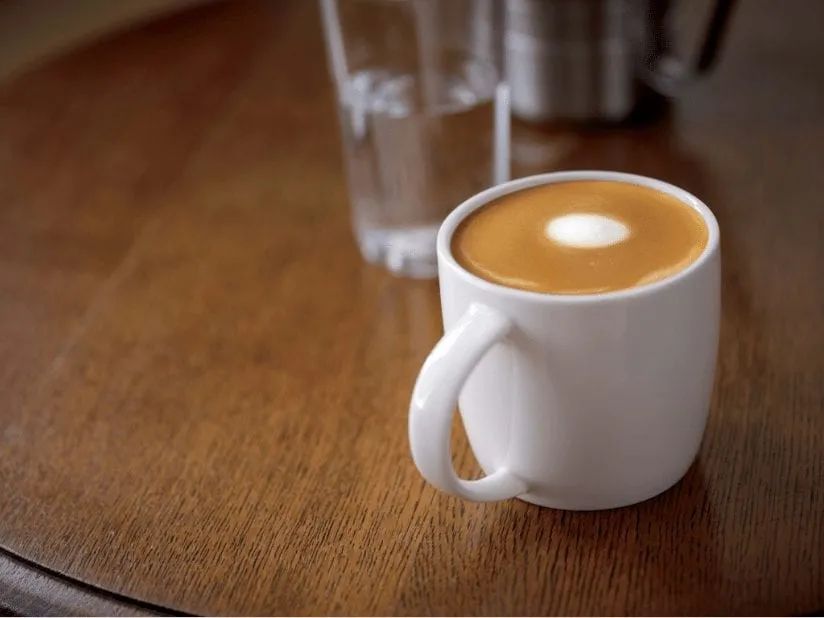
Some might object: "Wasn't the Flat White invented by Australians (or New Zealanders)?" Not so fast — here's roughly how the story goes. Early Australia and New Zealand were colonized by the British and Irish. Some of them carried coffee-drinking habits and brought their coffee culture along. Unlike today's specialty café menus, they drank coffee in a home-style format with no fancy names — just Black coffee and White coffee.
Black coffee was essentially filtered black coffee brewed with water. White coffee was that black coffee with milk added, turning it from black to milky white — hence "white coffee."
After World War II, much of Europe lay in ruins, and Italy faced waves of unemployment. Large numbers of Italians set off for Latin America and Australia in search of a livelihood. Most came from northern Italy (more industrialized and urbanized, while the south remained more agricultural), and they brought Italian-style coffee with them.
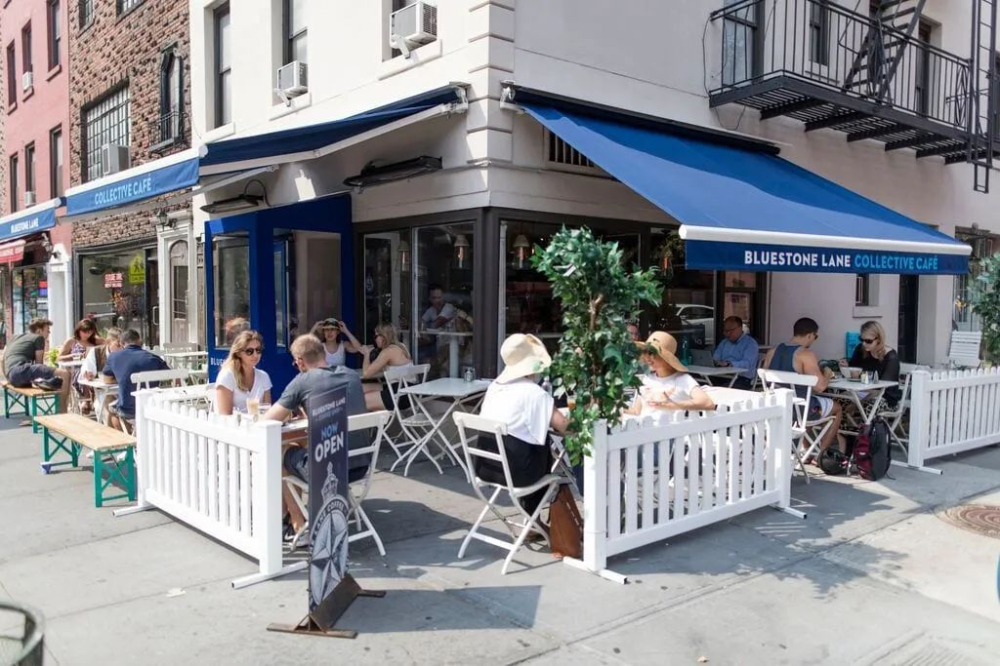
Any specialty product entering a new market must localize to survive. America proves the point: when Italians first opened Italian-style cafés in the United States, they copied the Italian approach exactly — but Americans simply wouldn't accept coffee that strong, and the "Americano" was born. Even American-style Italian lattes used a larger ratio of milk to espresso to soften the coffee flavor.
Back in Australia, Italian cafés were educated by the market and learned what kind of latte Australians actually wanted: one with a stronger coffee flavor that wouldn't leave them with a mouthful of milk foam (and the awkward social moments that follow). The fix was simple — less milk, less foam. And of course, after such changes, a new name was needed so people would believe it was a different product. Because the foam layer was thinner, the drink couldn't be filled to the traditional 11/10 fullness — at most it could sit level with the cup's rim. Hence "Flat White": "Flat" meaning level, and "White" referring to the milk-added white coffee.
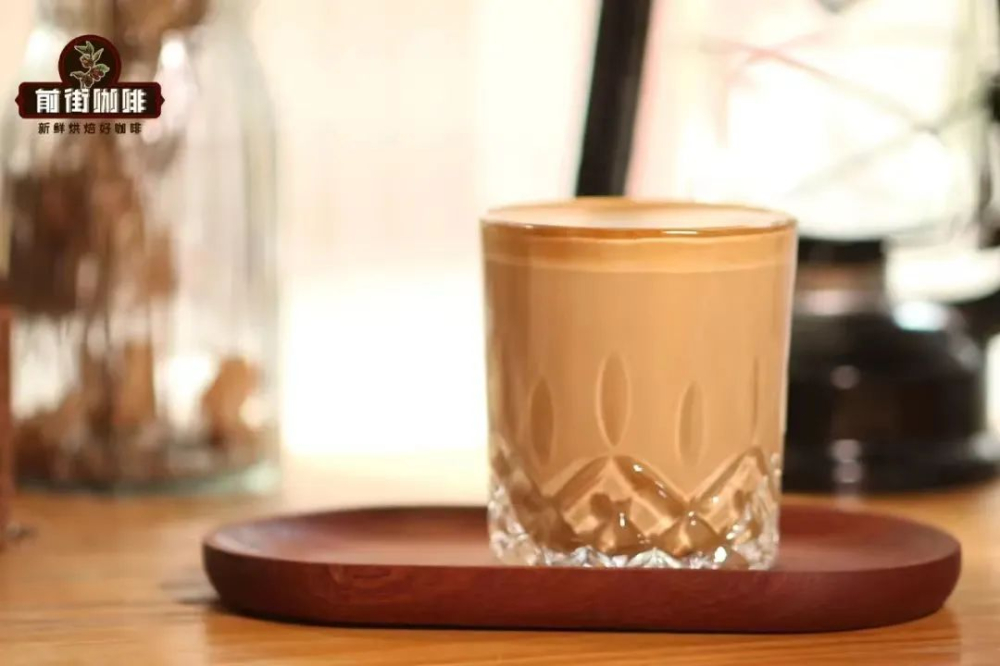
Later, second-generation Italian immigrants moved with the times and made the Flat White more distinctive than its milk-coffee siblings. Many shops now stock two or more espresso beans: classic lattes and cappuccinos get Italian-style blends, while Flat Whites use single origins or different blends to spotlight the coffee character.
When pulling the base, some shops don't stop at standard espresso. They extract a richer shot, taking only the early-to-middle stages — a ristretto. Because only the early-to-middle portion is used, it's more concentrated but smaller in volume, which can make the coffee flavor hard to pick out once milk goes in. The solution was straightforward: if one shot isn't enough, use two. A double ristretto's volume lands close to that of a normal espresso.
To be clear, a Flat White doesn't have to use double ristretto as its base — some shops use regular espresso, depending on the final flavor target. But as people urgently sought to tell lattes and Flat Whites apart, different espresso bases became one of the distinguishing features.

So a commonly used set of Flat White parameters today is roughly 30g of double ristretto, with milk added at a 1:5 ratio — that is, 150ml of milk, with the foam as thin as possible. In a 200ml cup, the combination of espresso, milk, and foam blended with crema sits perfectly level with the rim.
As one friend put it: "I just wanted the coffee-to-milk ratio, and you told me a whole story!"
FrontStreet Coffee Recommendation
Every café has its own "secret Flat White formula," but whichever way it varies, three points hold: less milk, thinner foam, stronger coffee. Baristas reduce milk and keep the foam micro-thin to spotlight the bean's aroma — so compared with a latte, a Flat White is smaller, more coffee-forward, and fuller in body: an "upgraded latte," if you like. A great Flat White demands good beans, matching milk, and harmony between the two.
Where a latte stresses absolute coffee-milk balance, a Flat White foregrounds the espresso, with milk playing support — so choose beans with a strong flavor signature. For home brewing, try the butter-and-cheese flavored FrontStreet Classic Blend: mellow and low in acidity with rich, fine crema that turns wonderfully dense in milk. Those who chase floral and fruity notes should pick the low-bitterness FrontStreet Strawberry Sugar espresso blend, whose extraction bursts with grape and blueberry flavors; with fresh milk it makes a Flat White that drinks like a strawberry milkshake — unforgettable.
Milk matters too: too thin and the Flat White falls flat; too heavy and it buries the bean's aroma. FrontStreet Coffee recommends chilled fresh milk, which when steamed brings out more milky sweetness as the espresso's best partner.
Here's how we make it with the FrontStreet Signature Blend: to highlight the coffee flavor, extract only the front-to-middle ristretto as the base (20g of coffee grounds yielding 32g of coffee liquid over 22-25 seconds), then pair with 160ml of fresh milk. For the foam, keep air injection short — just 1-2 seconds with a couple of "hiss" sounds — then sink the steam wand and spin a vortex until the milk reaches 50-55°C. FrontStreet Coffee's Flat White foam is uniformly 0.3cm thick: when you swirl the pitcher and the bubbles show a glossy, reflective surface, the foam is ready. Pour the hot milk gently into the espresso, raise the pitcher to a thin stream and let the milk's gravity stir circles through the crema, then drop the pitcher low and push out the white line in one smooth motion — and a Flat White is born. Sipped immediately at its moderate temperature, you'll taste the Signature Blend's cream, hazelnut, and white chocolate sweetness, rich yet never heavy.
Important Notice :
FrontStreet Coffee is a long-established specialty coffee roaster in Guangzhou China, selling freshly roasted beans from its own farm in Yunnan as well as dozens of carefully selected single-origin beans from around the world for both pour-over and espresso. The products deliver consistently excellent quality and great value, with shipping within 24 hours. Guangzhou's FrontStreet Coffee shop is recommended by many coffee lovers, and the beans are now available online at the Tmall 。
FrontStreet Coffee has moved to a new address:
FrontStreet Coffee Address: 315,Donghua East Road,GuangZhou
Tel:020 38364473
 Scan and follow the En Gafei WeChat official account. Please indicate that the reprint comes from "En Gafei".

