
Will Coffee Bean Transport Return to the Age of Discovery to Ensure Everyone Gets Their Coffee?
Return to Sail: The Renaissance of Wind-Powered Coffee Transportation
Since the COVID-19 pandemic, environmental awareness has grown stronger. Even a simple cup of coffee is now scrutinized for its organic credentials, its environmental friendliness, and its carbon footprint from bean to brew. As we know, coffee cultivation typically consumes fossil fuels, and since coffee-producing countries are often separated from consuming countries by oceans, transporting thousands of tons of coffee beans, whether by plane or cargo ship, relies on fossil fuels for power.
That situation is changing, though. NEW DAWN TRADERS, an experimental British enterprise, believes it has the solution. The company has abandoned fossil fuel-powered engines for maritime transportation and turned instead to sailboats to carry coffee beans.
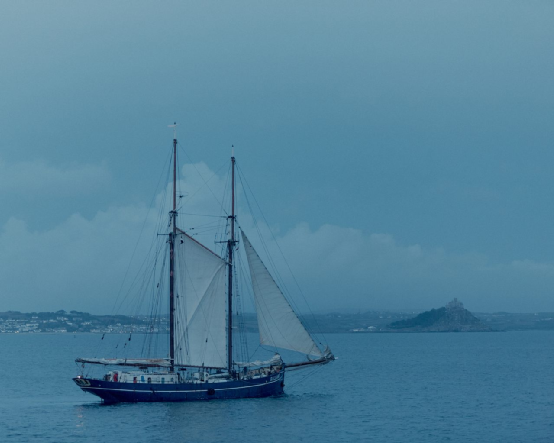
Founded in 2013, the company adopted eco-conscious international freight methods from its early days. According to Atlas Obscura, it currently doesn't own its vessels but operates with chartered ships. The company charters two sailboats a year from the UK to destinations including Portugal, Costa Rica, the Caribbean region, and Colombia, transporting various goods such as honey, wine, rice, olive oil, and of course, green coffee beans.
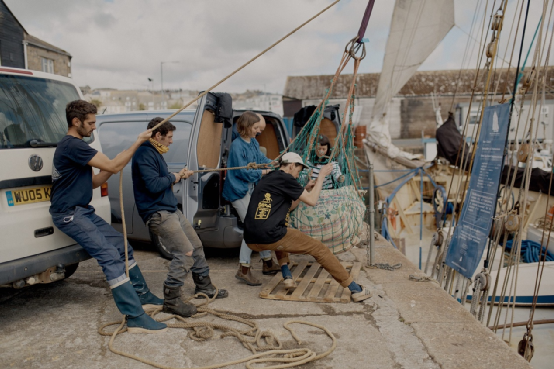
During one transatlantic voyage, NEW DAWN TRADERS set sail from Las Brisas in Tolima, Colombia, loaded with a sailboat full of green coffee beans. After more than five months and roughly 7,000 nautical miles, they carried the beans across the ocean to a small port in Cornwall, UK.
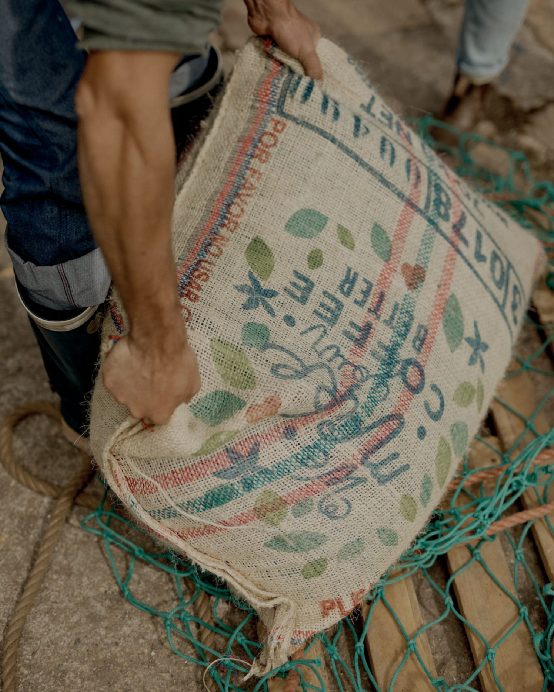
The Trade-Off Between Time and Sustainability
Admittedly, without modern technological power sources, transportation time has increased significantly. Even so, this most ancient method of wind-powered maritime transport, which minimizes carbon emissions as much as possible, is a source of pride for the entire transportation team.
The Future of Sail Cargo
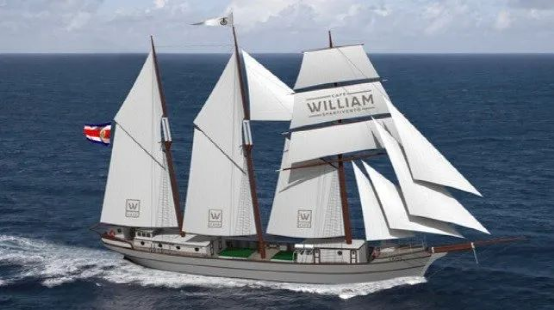
Coffee Workshop reported last year that Canadian coffee roaster Café William and its partner Sailcargo are building zero-emission sailing cargo ships, planned to begin operations in 2023.
The Golden Age of Sail
Sailing cargo ships once enjoyed a golden age. In the 19th century, Europeans made numerous technical improvements to sailing vessels in order to carry the freshest tea back to Europe, which even gave rise to speed competitions. The Cutty Sark, for instance, sailed from Hankou, China, fully loaded with Chinese tea, and reached London in 109 days. The Cutty Sark was the last British-built clipper ship, and also the fastest.
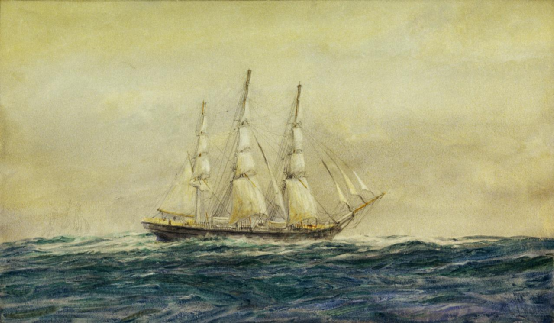
Subsequently, with the completion of the Suez Canal in 1869, steam-powered ships, faster and requiring no specialized training for their sailors, replaced sailboats in transportation.
Modern Applications and Challenges
Today's shipping vessels cause significant environmental pollution. To reach carbon neutrality goals as quickly as possible, some enterprises are turning their attention to sail-powered shipping trade. Not every venture starts smoothly, and sail transport may not completely replace conventional shipping, but it is remarkable that in this age of technological advancement, some are still considering methods from over two hundred years ago to transport coffee beans. It may sound unrealistic, but for those who yearn for the Age of Sail, it is undoubtedly fascinating.
Image source: Internet
FrontStreet Coffee Recommendation
Colombia is one of the origins most worth exploring while you sip, and FrontStreet's Colombia Huila is a fine place to start. Huila, in the southern part of the Colombian Central Cordillera, is the country's most famous specialty coffee region, with plantations above 1,500 meters and abundant water and humidity from the rivers that converge there. A medium-dark roast brings out dark chocolate and nutty sweetness, with moderate crema and a full body, so it works just as well for pour-over and French press as for moka pot or espresso, whether you make an Americano or a latte.
For something more contemporary, try FrontStreet's Colombia Sidra. While Colombian coffee was long washed, recent years have seen a wave of creative processing, and this bean uses an anaerobic natural method in which fermentation in a low-oxygen environment transforms it into richer tropical fruit aromas. Under a medium-light roast, it offers complex notes of passion fruit, grape, and apricot whether you brew it as pour-over, cold brew, a drip bag, or a moka pot.
Important Notice :
FrontStreet Coffee is a long-established specialty coffee roaster in Guangzhou China, selling freshly roasted beans from its own farm in Yunnan as well as dozens of carefully selected single-origin beans from around the world for both pour-over and espresso. The products deliver consistently excellent quality and great value, with shipping within 24 hours. Guangzhou's FrontStreet Coffee shop is recommended by many coffee lovers, and the beans are now available online at the Tmall 。
FrontStreet Coffee has moved to a new address:
FrontStreet Coffee Address: 315,Donghua East Road,GuangZhou
Tel:020 38364473
 Scan and follow the En Gafei WeChat official account. Please indicate that the reprint comes from "En Gafei".

