
Illustrated Guide to Cappuccino Heart Pattern Latte Art Tutorial - Latte Art Milk Foam Requirements
Today at FrontStreet Coffee we are having a latte art class, and we will teach the most basic pattern: the large heart. It is essentially the first design every beginner creates and the foundation for many other patterns. The prerequisite is having the basics of espresso extraction, milk frothing, pitcher handling and integration down; anyone who has not yet mastered them can look for FrontStreet Coffee's earlier related articles.

Milk Foam Thickness
First, the milk foam requirements. Fine foam is the most basic requirement, but there is high tolerance for thickness: as long as it has fluidity, it is acceptable. Put simply, frothing milk from 5/10 full to 6/10-8/10 full is perfectly fine, and slightly thicker frothing actually creates more beautiful patterns. Sometimes baristas who are used to etching patterns struggle at first to create a beautiful large heart.
Integration Amount
How much you integrate depends on how much "convection" the pattern needs, because less integration creates stronger convection. When creating an etched tulip, for example, the pattern needs more convection, so integration only needs to reach about 4/10 full of the cup. When creating a wheat sheaf, which does not need much convection, more integration is needed, typically 8/10-9/10 full.
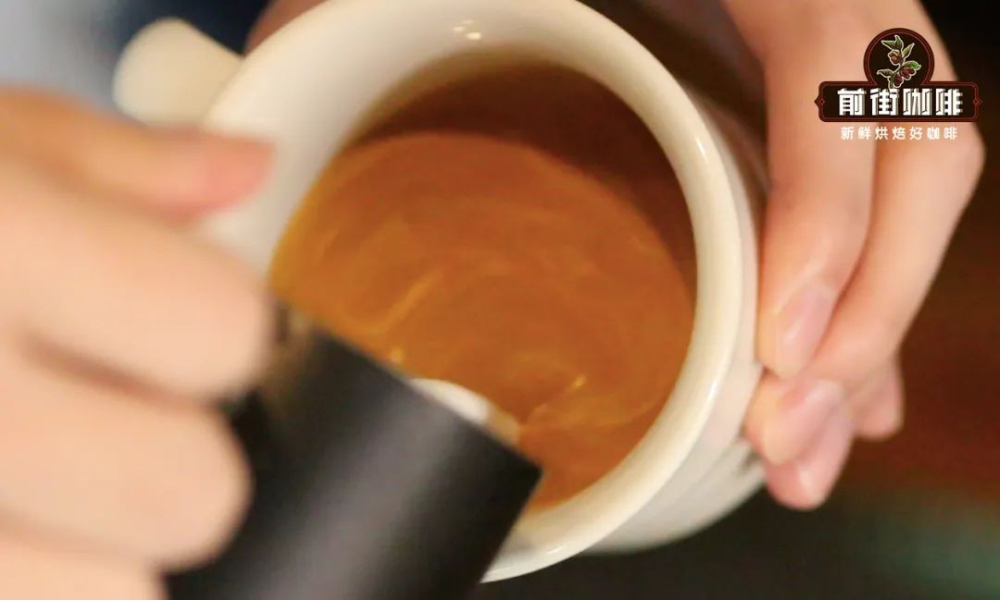
A large heart needs some convection but not too much, so integrate to about 7/10 full. Too little integration makes the heart too large; too much makes it too small, and neither looks good.
Pattern Entry Point
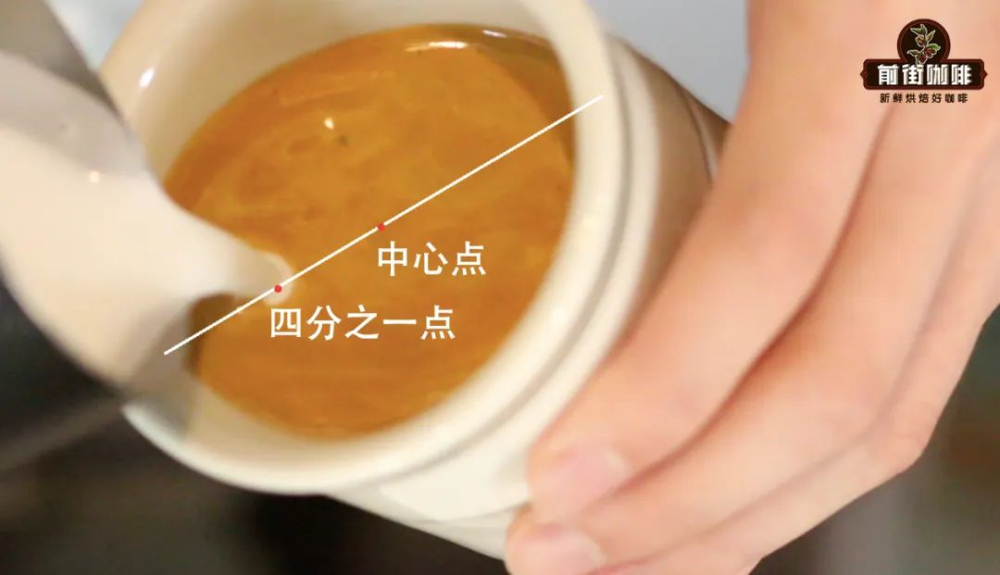
The heart is symmetrical, so inject along the central axis. Any deviation makes the whole pattern lean to one side, which does not look good. The injection point should sit near the quarter point on the side of the latte art pitcher, which keeps the whole heart centred.
Creating the Pattern
When creating the pattern, pour with a relatively large milk flow to increase convection and make the pattern fuller. While pouring, the injection point gradually moves from the quarter point toward the centre. The left hand slowly tilts the cup back while the right hand slowly raises the pitcher spout to prepare for the finish. Examples of incorrect technique follow below.

Finishing
The finishing movement matters a great deal, and many people ruin the whole creation at this stage. Prepare to finish when the cup reaches 9/10 full. When finishing, reduce the flow rate, raise the pitcher spout, move along the central axis to the bottom of the heart and cut the flow decisively. That creates a short tail.

Some people like to drag beyond the cup rim when finishing, which creates a long tail on the heart and spoils its look. It also affects the cleanliness of the cup.
Common Mistakes and Solutions
Next, FrontStreet Coffee will show some failed heart latte art images with explanations of the causes.
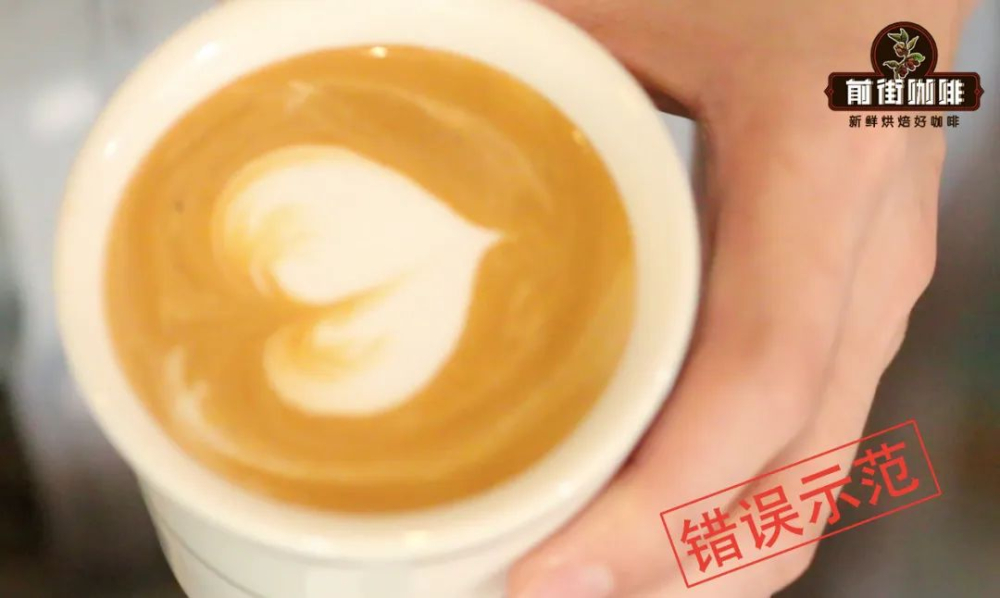
The image above shows two lobes of different sizes, one larger and one smaller. This is caused by the cup being uneven or the pitcher not being held straight while pouring.

The image above does not even form a heart any more. That is because the pitcher spout did not move forward during the convection phase and stayed at the quarter point.

The heart above is flat, elongated and not full. This comes from raising the pitcher during the convection phase.

The heart above has insufficient white milk foam at the back and drags a long tail. The insufficient foam could be from inadequate thickness, or from not tilting the pitcher enough to create a large milk flow during the pour. The long tail comes from not being decisive enough when finishing, letting excess milk keep flowing.
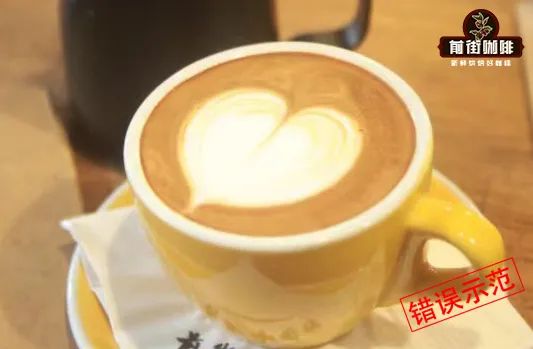
The overall pattern above sits too low. This comes down to the injection point: this coffee's pattern injection point was at the centre, which pushed the whole protrusion to the bottom.
FrontStreet Coffee Recommendation
To practise the heart, the bean has to give you stable crema and a steady pour, which is exactly what the FrontStreet espresso blends are for. FrontStreet Classic Blend is the one for anyone learning at home: a medium-dark recipe built from three origins and inspired by the old Mamba combination of Mandheling and Brazil, with a small amount of Robusta for aroma and crema. It extracts with distinct butter, toasted bread and caramel-cookie aromas, a strong flavour and a solid body with fine crema, and it is steady enough to become a beginner's everyday machine coffee.
If you like a heavier, nuttier flavour, choose FrontStreet Specialty Blend, also a medium-dark espresso bean. Its classic pairing of washed Colombian and semi-washed Brazilian coffee gives nuts, dark chocolate and caramel, and whether you make an americano or a milk drink such as a latte or a flat white, it highlights the soft aromas of cream, almond and cocoa. The crema is every bit as good as a cafe's and more than enough for latte art practice, which makes it a strong fit for anyone planning a shop or learning at home.
FrontStreet Commercial Blend is aimed at those about to open a shop. It takes FrontStreet Specialty Blend and adds a small amount of Robusta to a traditional espresso recipe, the goal being more fine, deep-brown crema and a heavier body, so americanos, lattes and mochas all carry nuts, cocoa and caramel and the latte art pours easily.
Important Notice :
FrontStreet Coffee is a long-established specialty coffee roaster in Guangzhou China, selling freshly roasted beans from its own farm in Yunnan as well as dozens of carefully selected single-origin beans from around the world for both pour-over and espresso. The products deliver consistently excellent quality and great value, with shipping within 24 hours. Guangzhou's FrontStreet Coffee shop is recommended by many coffee lovers, and the beans are now available online at the Tmall 。
FrontStreet Coffee has moved to a new address:
FrontStreet Coffee Address: 315,Donghua East Road,GuangZhou
Tel:020 38364473
 Scan and follow the En Gafei WeChat official account. Please indicate that the reprint comes from "En Gafei".

