
Pros and Cons of Center Pouring Method in Pour-Over Coffee: Analysis of Water Distribution and Circular Movements

For more specialty coffee knowledge, please follow the WeChat official account: FrontStreet Coffee (FrontStreet Coffee)
Advantages of Circular Pouring
In a previous article, "The Science of Water Pouring," FrontStreet Coffee explained that circular pouring holds clear advantages over center pouring — especially when it comes to stability and even extraction, where center pouring simply can't compete.

Center vs. Circular Pouring Experiment
But this time, let's look at things from the center-pouring side. If the method truly had nothing going for it, it would exist only in the history books by now. In reality, plenty of people still brew this way! So let's run a comparative experiment using FrontStreet Coffee's Guo Ding Ding beans, pitting center pouring against circular pouring. In our earlier comparison, the center-pouring water flow came in at a slight angle, which created turbulence; this time we'll use a small water flow to keep the stream perfectly vertical.

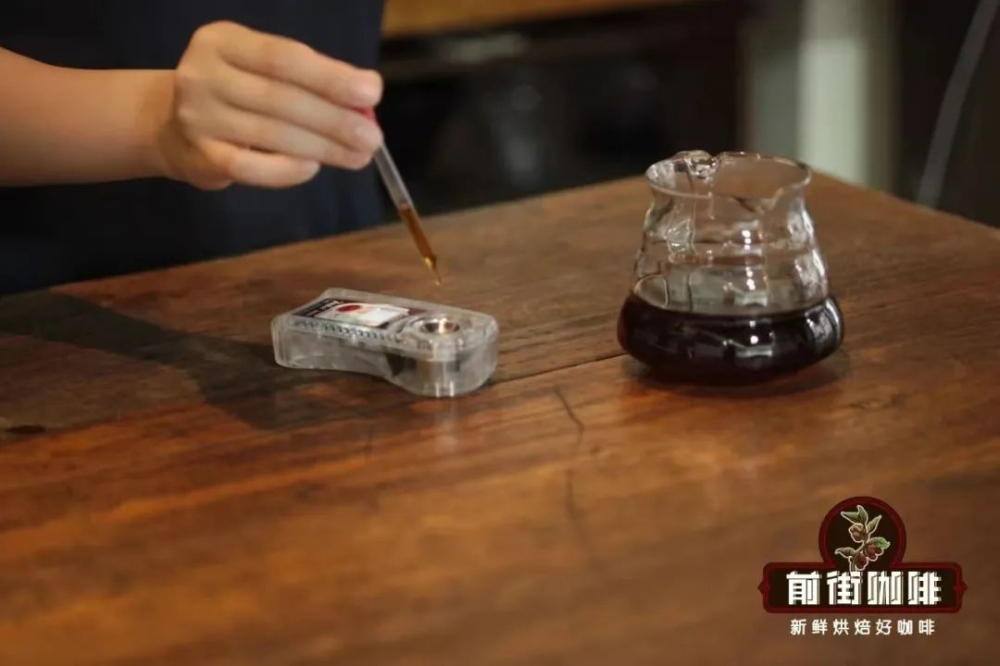
Both methods used a single-pour technique, with circular pouring still applied during the bloom stage. After confirming the coffee bed looked right, we measured the concentration of both cups. Center pouring came in at 1.23%, while circular pouring measured 1.10%.
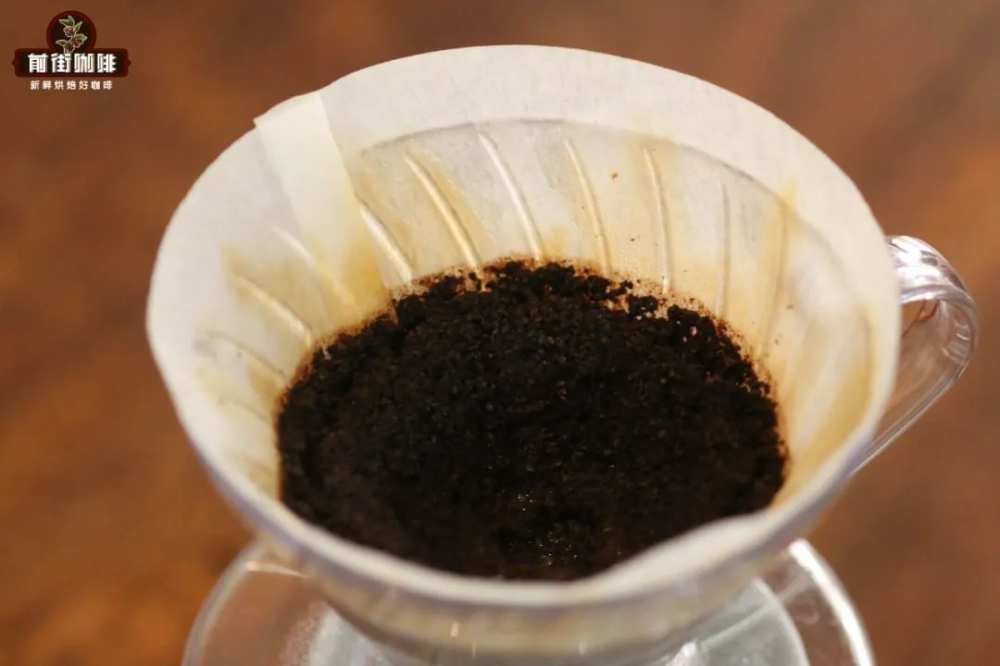
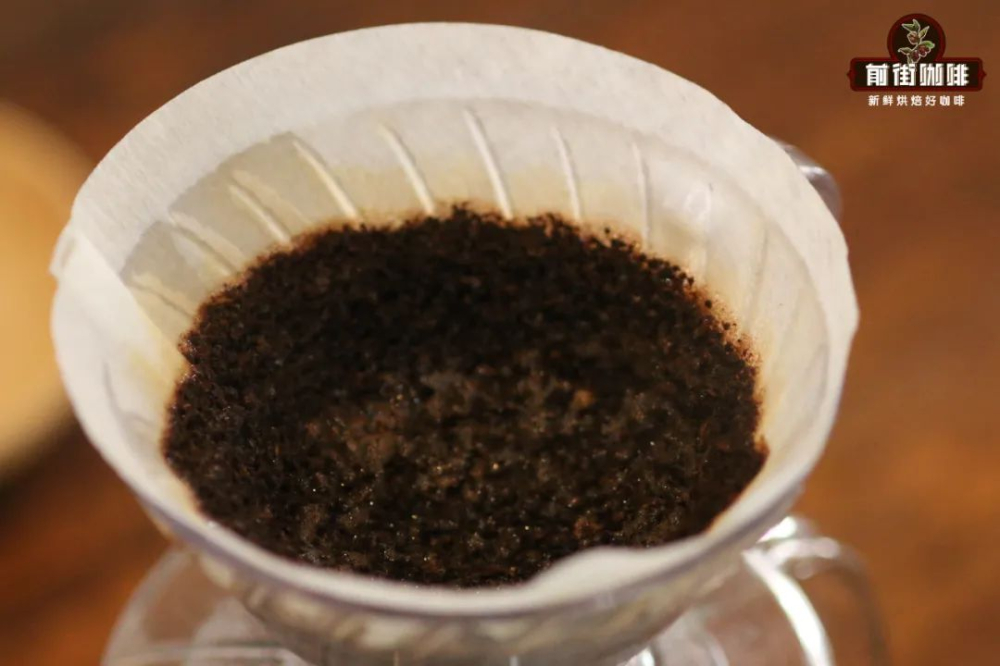
In other words, with a small water flow, the extraction rate of center pouring is actually higher than that of circular pouring. FrontStreet Coffee identified two possible reasons for this.
Temperature Factor
The first is temperature. Even when every kettle pours at the same temperature, the water that actually participates in extraction inside the coffee bed may not be. If you caught FrontStreet Coffee's earlier piece, "What's the Difference Between High and Low Water Columns When Brewing Coffee," you'll know that a high water column loses more heat through greater contact with the air, producing lower extraction rates than a low column. The same logic applies here: a stationary pour contacts less cold air than a sweeping circular motion, so it holds onto more heat.

Coffee Grounds Distribution
The second reason is that center pouring reaches more of the coffee grounds. Most brewers today use conical drippers, which share one defining trait: wide at the top and narrow at the bottom, so the grounds pile up thick in the middle and thin at the edges.
Viewed from above, circular pouring does achieve "uniform watering" — but that's not necessarily true from the side.
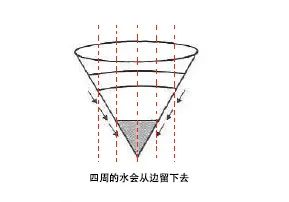
With center pouring, the thickest middle layer of grounds gets fully extracted, and the water also diffuses outward to supplement the thinner grounds near the walls. Less water slips past untouched, and more of the coffee's soluble material ends up in the cup.
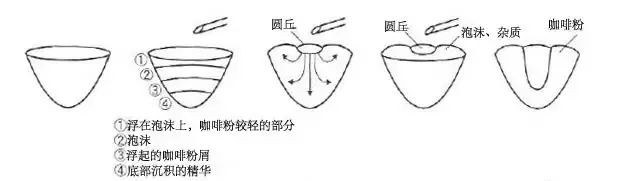
In the same experiment, once the data was in, FrontStreet Coffee tasted both cups. The center-poured coffee tasted more concentrated and carried noticeable bitterness, while the circular-poured cup was gentle and pleasant. It seems the extraction rate implied by the concentration measurement reflects only overall extraction. In practice, center pouring extracted unevenly — high in the center, low at the edges — and the high and low averaged out to the overall figure we measured.
Three-Stage Pouring Comparison
Next, let's compare three-stage center pouring against three-stage circular pouring. The parameters stayed basically the same as above, with only the single pour swapped for a three-pour structure. This time the measured concentration was 1.32% for center pouring and 1.45% for circular pouring.
In this round, it was the small-flow circular pour that extracted more. The coffee bed sat lower than in the single-pour test, and the extended pour time meant the scouring effect of the water column became more significant in the later stages. On top of that, because the water level never rose too high, less water escaped along the edges.

Optimal Pouring Technique
From these experiments, it's easy to derive a pouring method that blends circular and center pouring. A more mainstream brewing logic runs in four stages: first, pour normally during the bloom; second, use circular pouring for even saturation; third, switch to small circular pours to maintain extraction while limiting turbulence; and fourth, finish with center pouring to rein in extraction and keep undesirable flavors out of the cup.
FrontStreet Coffee Recommendation
If you're new to pour-over and ask an experienced hand to recommend a dripper that's practical, forgiving, and good-looking, chances are they'll point you to the V60. Hario, the company behind it, was founded in Tokyo in 1921 as a respected glassware maker that originally built heatproof glass instruments for research institutions — the heat-resistant glass server that pairs with pour-over setups is one of Hario's best-known products. In 2004, Hario redesigned the original V60 concept into a form close to the one we know today, naming it for its distinctive 60° cone angle and "V" shape, and released it to market the following year. The cone and 60° angle force water to travel through the center before dripping into the server, extending contact between water and grounds so aroma and flavor extract fully, while the signature single large outlet lets flow speed depend entirely on the brewer's pour control — which shows up directly in the cup.
For a dripper like the V60, FrontStreet Coffee recommends bright, floral-fruity beans. FrontStreet's Yirgacheffe Guo Ding Ding from Ethiopia — often the first stop for newcomers to specialty coffee — offers vivid citrus, berries, and florals with a green-tea-like sweetness; its acidity is soft and bright rather than sharp. The FrontStreet Ethiopia Huakui bursts with tropical fruit — strawberry, passion fruit, jackfruit, even lychee — with pronounced sweetness and almost no bitterness, earning it the description "the coffee that tastes least like coffee." Both are ideal matches for the V60's fast extraction and lively acidity.
FrontStreet favors the resin version of the Hario V60 for two practical reasons: resin effectively blocks heat loss during brewing, and in standard mass production it is the easiest material to mold precisely, with the smallest dimensional error. Ceramic, glass, copper, and stainless steel versions exist too — each affects looks, weight, and heat transfer in subtle ways — but the structural design remains unchanged.
Important Notice :
FrontStreet Coffee is a long-established specialty coffee roaster in Guangzhou China, selling freshly roasted beans from its own farm in Yunnan as well as dozens of carefully selected single-origin beans from around the world for both pour-over and espresso. The products deliver consistently excellent quality and great value, with shipping within 24 hours. Guangzhou's FrontStreet Coffee shop is recommended by many coffee lovers, and the beans are now available online at the Tmall 。
FrontStreet Coffee has moved to a new address:
FrontStreet Coffee Address: 315,Donghua East Road,GuangZhou
Tel:020 38364473
 Scan and follow the En Gafei WeChat official account. Please indicate that the reprint comes from "En Gafei".

