
What Does 100% Arabica Coffee Beans Mean? Differences Between Arabica and Robusta Coffee Varieties
Understanding "100% Arabica Coffee Beans"
You've almost certainly seen coffee advertisements claiming "100% Arabica coffee beans." But what does that claim actually mean?

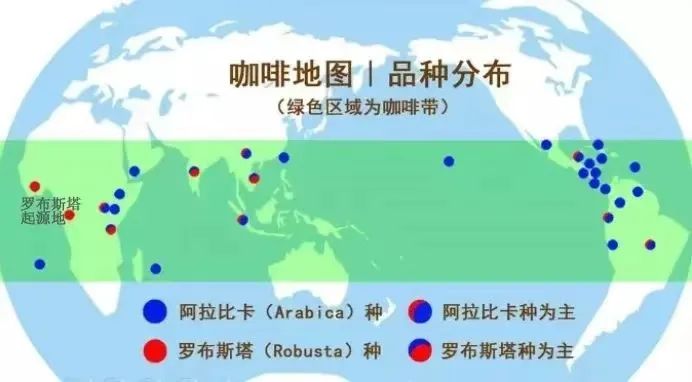
Arabica coffee, also known as small-bean coffee, is currently regarded as the species with superior flavor. Because of its excellent flavor, it was selected and widely cultivated by humans. Arabica itself demands relatively harsh growing conditions (high altitude) and yields less per plant than other coffee species. Even so, with human cultivation support, it now accounts for 70% of global coffee production.
On that basis, "...100% Arabica coffee beans..." should indicate excellent coffee. But think about it for a moment: why do these advertisements emphasize "100%"? The clear implication is that there's another coffee species with a less desirable flavor, Robusta.
Understanding Robusta Coffee
Robusta, more accurately called Canephora, is medium-bean coffee. However, because humans discovered that only one variety within the Canephora species, Robusta, was suitable for commercial cultivation, the term "Robusta" eventually came to refer to the entire medium-bean species. Strictly speaking, though, the Arabica species should correspond to the Canephora species.
Robusta's flavor isn't as pleasing as Arabica's. It tastes rather bitter and strong, carrying notes of wood and barley tea. Its only sensory advantage is a heavy, textured mouthfeel. People still choose it because it grows "wild and vigorous."
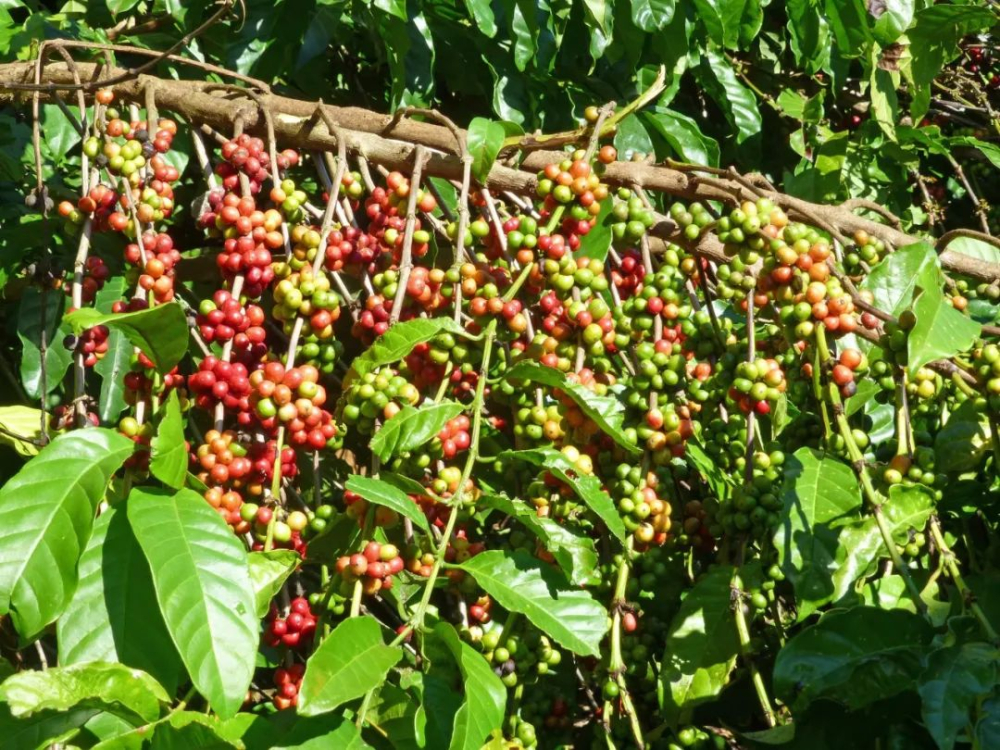
Robusta is extremely resilient with strong environmental adaptability. Most importantly, it yields high production and contains more caffeine. It now accounts for 25% of global coffee production. Most of these beans are used as raw material for instant coffee, with a small portion appearing in coffee blends or as specialty beans.
The Meaning Behind "100% Arabica"
So "...100% Arabica coffee beans..." means no Robusta has been mixed in, so you don't need to worry about Robusta's bitter taste. But this claim says nothing about the quality of the beans.
If you've ever purchased single-origin coffee beans, you've probably noticed that the variety line on the label doesn't simply read "Arabica" or "Robusta." Instead, it features more impressive-sounding terms like Typica, Bourbon, Geisha, Catuai, SL28, and more. These seemingly complex names are all coffee variety names, and they all belong to the Arabica species. Nearly all the single-origin beans you can find are Arabica, which is why you rarely see a single origin advertising itself as "100% Arabica." (Emphasizing "100% Arabica" would actually be puzzling.)
Quality Considerations
Of course, Arabica and Robusta show clear flavor differences, and 100% Arabica coffee is naturally more flavorful. But varieties within Arabica also differ in flavor, and you can observe those differences in coffees of different varieties from the same growing region. What's more, Arabica planted at higher altitudes yields better flavor; in other words, Arabica grown at different altitudes will show significant flavor differences.
"100% Arabica coffee beans" may originally have been intended to express the use of high-quality beans, but stated this way, it completely fails to reflect high quality.
For the general public, knowing that Arabica tastes better than Robusta is far easier than deeply understanding the knowledge of various coffee varieties. So FrontStreet Coffee concludes that, in today's market, delicious coffee must be made from Arabica beans, but not all Arabica beans necessarily make delicious coffee.
FrontStreet Coffee Recommendation
Among Arabica varieties, each origin and cultivar has its own character, and the best way to understand the difference is to taste a range. FrontStreet Coffee's Huakui is an Ethiopian heirloom variety, sun-dried to bring out cream-strawberry, mango, jackfruit, citrus, and blueberry notes, with the ripe tropical fruit signature of a Sidamo natural. It's a memorable introduction to just how fruit-forward an Arabica can be.
For the washed side of Ethiopia, FrontStreet Coffee's Gedingding Cooperative coffee is a Grade 1 washed lot offering elegant white florals, citrus, orange, and green tea. And to experience the pinnacle of Arabica, FrontStreet Coffee's Panama Red Label Geisha shows the lush, elegant florals, citrus, peach, and composite fruit acidity the variety is famous for, with a creamy mouthfeel and an oolong-tea sweetness in the finish. Tasting a Typica like Blue Mountain or a Bourbon like Queen's Manor alongside them makes it clear why "Arabica" alone tells you so little.
Important Notice :
FrontStreet Coffee is a long-established specialty coffee roaster in Guangzhou China, selling freshly roasted beans from its own farm in Yunnan as well as dozens of carefully selected single-origin beans from around the world for both pour-over and espresso. The products deliver consistently excellent quality and great value, with shipping within 24 hours. Guangzhou's FrontStreet Coffee shop is recommended by many coffee lovers, and the beans are now available online at the Tmall 。
FrontStreet Coffee has moved to a new address:
FrontStreet Coffee Address: 315,Donghua East Road,GuangZhou
Tel:020 38364473
 Scan and follow the En Gafei WeChat official account. Please indicate that the reprint comes from "En Gafei".

