Introduction to Yunnan Small Bean Coffee Current Status Flavor Description and Characteristics of Yunnan Typica Coffee
In recent years Yunnan coffee beans have surged in popularity, and many customers have been asking FrontStreet Coffee about the current state of Yunnan coffee.
Understanding Yunnan's Catimor Varieties
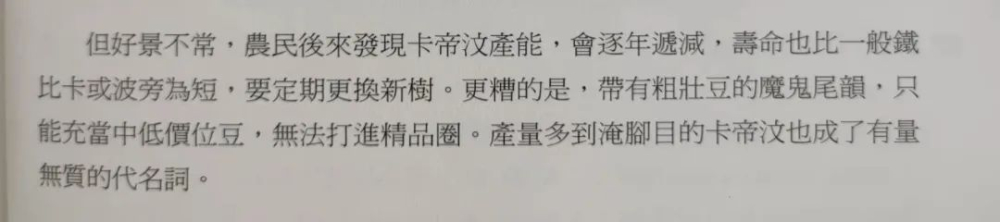
For years Yunnan beans were criticized as wild, earthy, and muddled in flavor. The main reason: the variety planted across the province was Catimor, a hybrid of Caturra and Timor that carries a quarter of Robusta's genetics. In his book Specialty Coffee Studies, Mr. Han Huaizong described Catimor's "devil's aftertaste," a Robusta trait, which made the variety synonymous with quantity over quality.
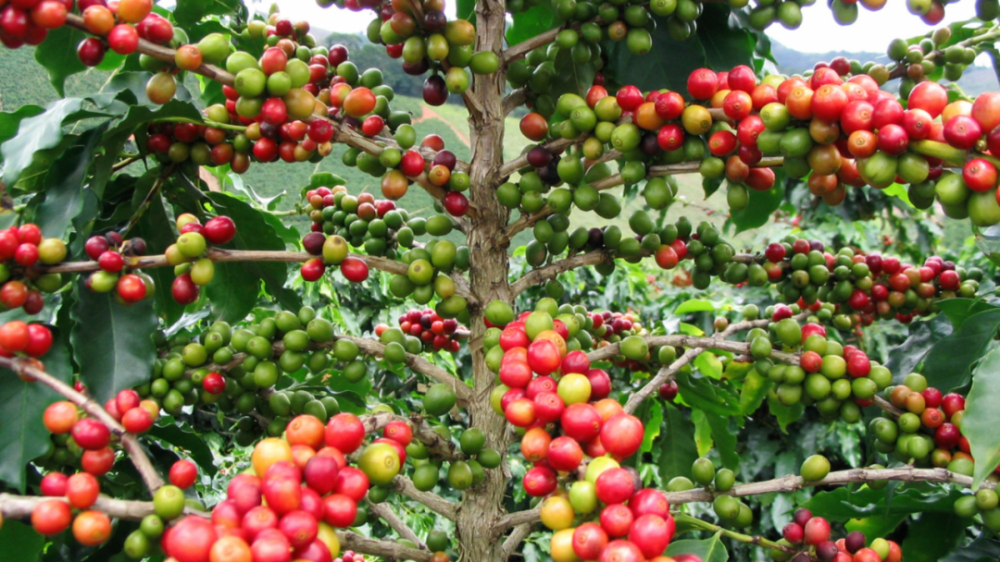
Yunnan's Catimor line-up mainly includes CIFC7963, the P series, T5175, and T8667—all Catimor strains.
A Brief History
In 1988, Nestlé supported the development of Yunnan's coffee agriculture by introducing Catimor 7963 from Portugal's Coffee Rust Research Center (CIFC). It was cultivated at the Dehong Tropical Agricultural Science Research Institute and initially trial-planted in Hainan, Lushui Dam in Baoshan, and Ruili.
In 1991, Nestlé brought in Catimor P1, P2, P3, and P4 from CIFC for trial planting—the "P" standing for "Population." P4 yielded the most. From 1994 the P series was promoted across Pu'er City, with P4 dominant. Expert investigations later revealed that P1, P2, P3, and P4 were in fact 7960, 7961, 7962, and 7963 respectively.
T5175 and T8667 were introduced by Nestlé from Central America in 1994 and first trialed in Pu'er; both yielded less than 7963.
Quality Challenges and Recent Improvements
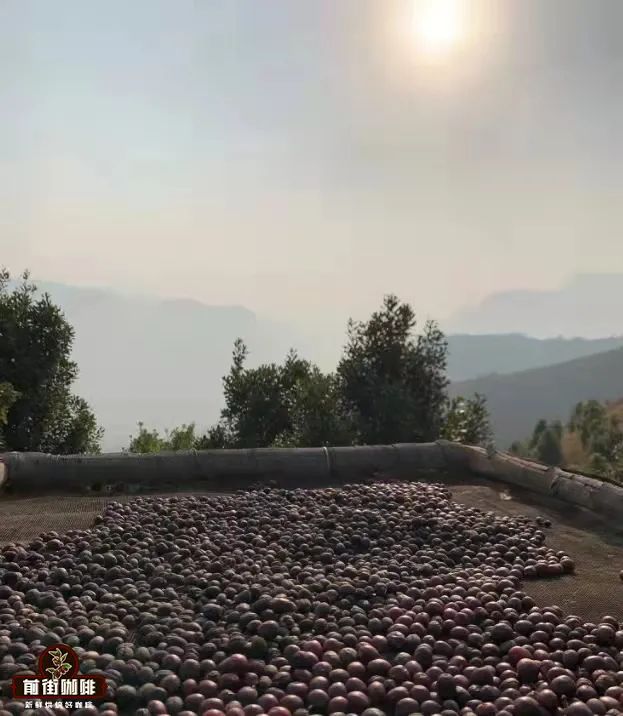
Thanks to Nestlé's massive push, 99% of Yunnan's coffee is Catimor—what we commonly call Yunnan small-bean coffee. These beans were originally bought by Nestlé as raw material for instant coffee, where flavor demands were low. So when people described Yunnan's flavor profile, it was low acidity, nuts, cocoa, and earthy notes—hardly flattering.
Over the past two years Yunnan has experimented with special processing methods, and we can now taste Yunnan beans with tropical fruit flavors like jackfruit, passion fruit, and mango. Yunnan's flavor reputation has improved and prices have multiplied several times over. But this treats symptoms, not causes: without changing the varieties at the source, it's difficult to truly produce coffee with excellent regional character.
The Path Toward Premium Yunnan Coffee
We do hear about premium varieties—Gesha, Typica, Bourbon—growing in Yunnan, but they remain a drop in the ocean of production. FrontStreet Coffee, for instance, began planting trials in Lincang in 2013 with its first batch of Typica, which only achieved a decent harvest in the 2020–21 season: just over 200 kilograms. Flavor-wise, the beans showed none of the "devil's aftertaste" attributed to Catimor, presenting instead nuts, brown sugar, and a light fruit acidity. Many others are working to improve varieties at the source too, but it's still not enough to change the flavor profile of the entire region—the road ahead is long.
Current Status and Outlook
Today, with specialty coffee ideas spreading, Yunnan can't transform its varieties overnight—but overall quality has genuinely improved through harvesting fully ripe cherries and refining processing. Even so, a considerable distance remains before it can stand with the world's top producing regions.
According to Coffee Salon's Coffee Annual 2021, China's coffee consumption market is worth around 100 billion yuan, split between instant coffee at 72%, ready-to-drink at 10%, and freshly ground coffee at 18%. The specialty segment we care so much about is only a small slice.
Meanwhile, the 2019 Yunnan Province Coffee Industry Development Report, released by the Yunnan Coffee Industry Association in June 2020, shows that in 2019 the province exported raw beans and processed products to 55 countries and regions including the EU, the US, Japan, and South Korea, totaling 56,100 tons. Of that, "non-roasted, non-decaffeinated coffee" (green beans) accounted for 52,900 tons (94.3%), roasted but non-extracted coffee for 600 tons, and coffee extracts or products containing extracts for 2,600 tons. The report doesn't say how much of those 52,900 tons of green beans went to single-origin coffee versus instant production—but the consumption data lets us make an educated guess.
FrontStreet Coffee believes that as China's specialty coffee market grows, it will positively push Yunnan coffee toward specialization. The earthy flavors and bitter, muddled aftertastes are gradually fading. But to repeat: without solving the problem at its source, Yunnan coffee will struggle to establish a regional flavor identity recognized worldwide.
FrontStreet Coffee Recommendation
Want to taste Yunnan for yourself? Start with FrontStreet Coffee's Yunnan Small Bean from Baoshan, washed and medium roasted, showing soft nut and chocolate sweetness with a touch of plum acidity—an affordable first taste of the region's terroir.
For a clearer expression of Yunnan, move up to FrontStreet Coffee's 2013 Natural Typica from its own Lincang estate: dark berry tones, caramel sweetness, chocolate, and a hint of dried apricot, finishing on black tea. And for espresso drinkers, the FrontStreet Dark Cocoa Blend pairs Yunnan small-bean chocolate and citrus with Brazilian nut aromas, balancing sweet, sour, and bitter in an Americano and pouring silky almond-and-cream lattes—beginner friendly and budget friendly.
Important Notice :
FrontStreet Coffee is a long-established specialty coffee roaster in Guangzhou China, selling freshly roasted beans from its own farm in Yunnan as well as dozens of carefully selected single-origin beans from around the world for both pour-over and espresso. The products deliver consistently excellent quality and great value, with shipping within 24 hours. Guangzhou's FrontStreet Coffee shop is recommended by many coffee lovers, and the beans are now available online at the Tmall 。
FrontStreet Coffee has moved to a new address:
FrontStreet Coffee Address: 315,Donghua East Road,GuangZhou
Tel:020 38364473
 Scan and follow the En Gafei WeChat official account. Please indicate that the reprint comes from "En Gafei".