What is Specialty Coffee? Must Premium Coffee Be Brewed with Specialty Coffee Beans?
When people say "specialty coffee," they tend to equate it with "specialty coffee beans" — as if specialty coffee were simply anything brewed from such beans. In reality, the "specialty" depends chiefly on the roaster's deep understanding of the beans and the brewer's full grasp of how those roasted beans express their character. It's not roasting for the sake of roasting, or brewing for the sake of brewing.

Cooking coffee beans until they're done is easy; roasting green beans until they're delicious is extraordinarily hard. It's like holding a premium Chinese cabbage. Some will think: "It's just cabbage — boiling it in water will do." Others will study the variety, the freshness, the texture of the leaves, recognize its exceptional quality, and thoughtfully craft it into the celebrated banquet dish "Boiled Cabbage."
Green coffee works the same way. A roaster who never checks bean freshness, never digs into the variety, process, moisture content, growing altitude, or regional flavor profile — and just applies their "signature" roast to everything, or deliberately roasts ultra-light to show off more "flavor layers" — has never asked how the beans feel about it. Those beans struggled for years to reach that quality, only to be casually cooked?
Every bean needs a roasting approach that suits it, not a one-way trip through the drum. Variety determines bean shape and size, which affects drum rotation speed — and sets the coffee's basic flavor direction. Moisture content determines the length of the drying phase: skimp on it and you get underdeveloped beans with astringent flavors. Growing altitude affects density — the higher the altitude, the denser the bean, and dense beans heat unevenly, risking underdevelopment.
Origin and processing imprint a bean's distinctive flavors. And no, lighter roasting does not automatically mean more distinct flavor layers! Sweetness, acidity, and bitterness each need their own temperatures to show up; they don't appear just because you want them to. If you don't understand how the turn point, yellowing point, first crack timing, and development time after first crack shape flavor — if you haven't studied the most fundamental roasting knowledge — how can you talk about specialty beans, let alone specialty coffee?
There's a saying that made the rounds online: "The finest ingredients often need only the simplest cooking." The same goes for brewing. More elaborate technique doesn't guarantee better coffee, and "I saw a competition brewer do it this way, so I'll do it too" doesn't work either. Every brewing rule comes back to basic extraction principles and a deep understanding of the properly roasted beans actually in your hands. You can't copy your way to a delicious cup.
To take an extreme example: even using the exact bean a competition brewer competed with, their routine and parameters won't necessarily produce a delicious coffee. Competition brewers deliberately push certain flavors to impress judges on the spot — they're performing for professional evaluators.
Daily cafe service is different. Customers need a balanced cup without unpleasant surprises — not one engineered to showcase a single flavor that dazzles at first sip and fades to nothing, or tastes abundant at first but turns muddled as it cools.
The True Meaning of Specialty Coffee
Whatever the bean, if the extracted flavors land in balance — nothing jarring — that is a cup of specialty coffee. Every bean has strengths and weaknesses; amplify the weaknesses while chasing the strengths, and you haven't made specialty coffee. Even a bean of mediocre quality has its own merits. Even Robusta can be specialty coffee — it just depends on whether anyone can showcase what it does well.
The roaster's job is to research the right roast for each specific bean — not to blame the bean whenever a roast tastes bad. Nothing succeeds the first time; continuous trial and error is required. Even one success guarantees nothing: different bean states demand different roasting approaches, which means watching and adjusting on every single batch.
And those who knowingly release problematic roasts for sale — please don't call them "specialty coffee."
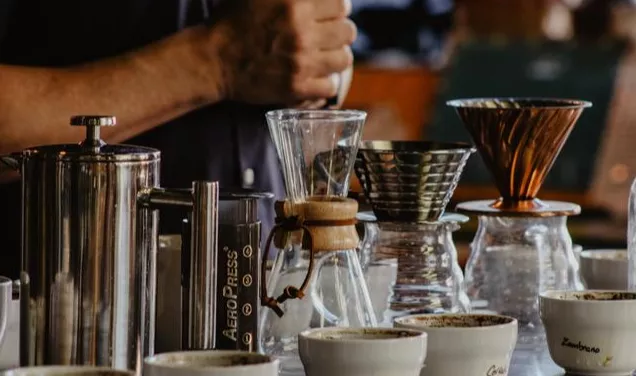
The same goes for baristas: until you genuinely understand extraction fundamentals, don't chase brewing fashions. If you don't know the beans in your hands, how will you choose the right water temperature, grind size, ratio, or pouring method? Different drippers extract on different principles — without that grounding, what technique is there to discuss? Without an extraction method shaped to the beans themselves, there is no specialty coffee.
The Philosophy Behind Specialty Coffee
"Specialty coffee means people adapt to the beans — never the other way around."
Hand someone a rough diamond and they may see nothing. Polish it, and everyone recognizes its value. The difference between being overlooked and being prized lies in the craftsman's understanding and shaping of the stone — cut to reveal its purest essence, and someone will always appreciate it. Coffee beans are no different.
Whether something is "specialty" comes down to reading its inherent advantages through a professional lens. Coffee is coffee; whether it's specialty depends on whether the person behind the cup can reveal its essence, balanced and true.
FrontStreet Coffee Recommendation
The philosophy behind specialty coffee is exactly what guides FrontStreet Coffee's bean selection: every roast is developed for the specific bean in hand, never against it. For a lesson in balance, few cups teach it better than the FrontStreet Jamaica Blue Mountain No.1 — Typica grown in Jamaica's Blue Mountains and roasted medium so acidity, sweetness, bitterness, and body fuse into one elegant profile of chocolate, roasted nuts, cream, and caramel.
For a fruit-driven interpretation, the FrontStreet Strawberry Candy Gesha blend pairs Panama washed Gesha with Costa Rica honey-processed coffee and takes a medium roast to highlight orange-honey aroma and rounded sweetness — delicious as pour-over, cold brew, or espresso. And the FrontStreet 2013 Natural Typica from Yunnan shows that balance doesn't require an exotic origin: nuts, brown sugar, black tea, and dried apricot in a softly harmonious, budget-friendly cup that proves the point of this whole article — it's the interpretation that makes the coffee.
Important Notice :
FrontStreet Coffee is a long-established specialty coffee roaster in Guangzhou China, selling freshly roasted beans from its own farm in Yunnan as well as dozens of carefully selected single-origin beans from around the world for both pour-over and espresso. The products deliver consistently excellent quality and great value, with shipping within 24 hours. Guangzhou's FrontStreet Coffee shop is recommended by many coffee lovers, and the beans are now available online at the Tmall 。
FrontStreet Coffee has moved to a new address:
FrontStreet Coffee Address: 315,Donghua East Road,GuangZhou
Tel:020 38364473
 Scan and follow the En Gafei WeChat official account. Please indicate that the reprint comes from "En Gafei".