
Hacienda La Esmeralda Auction and Differences Between Red, Green, and Blue Labels - Which Geisha Coffee Beans Taste Best?
Given the immense reputation of Hacienda La Esmeralda's Geisha coffee, even people who rarely drink coffee have heard of terms like Red Label, Green Label, and Blue Label. Truly understanding where these labels come from and how to tell them apart, however, takes considerable time.
To save you that time, FrontStreet Coffee will explain the differences between these common labels in the plainest possible language. Familiarity with the basics will help you avoid awkward conversations when coffee comes up.

First, it is important to understand that Red Label, Green Label, and Blue Label are Chinese colloquial terms, created for easy memorization. Each has a more formal original name. Take the most accessible one, Blue Label: its original name is "Geisha1500," abbreviated as Blue Label because of its blue-background logo. Blue Label is defined as a blend of Geisha coffee from Hacienda La Esmeralda's three main sub-regions — Jaramillo, Cañas Verdes, and El Velo — grown at altitudes around 1500 meters.
Starting with the 2021 harvest season, however, Hacienda La Esmeralda officially announced that it would no longer produce the Blue Label series. On the estate's official website, Blue Label has been removed from the product descriptions, leaving only Red Label and Green Label in the Geisha category.
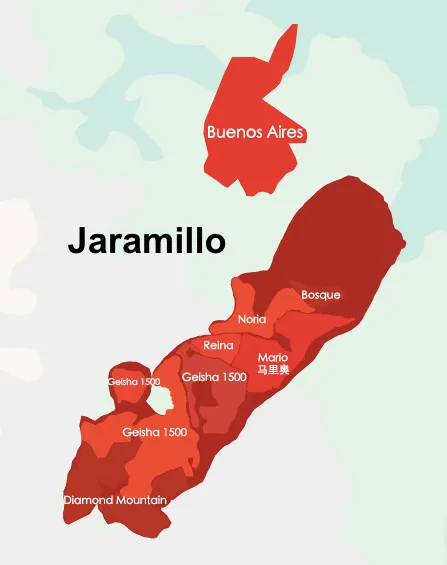
In the interactive map provided by Hacienda La Esmeralda, you can see the distribution of micro-plots across four sub-estates. Zooming in on Jaramillo, the names of subdivided plots become clear, and those marked "Geisha1500" produced what was Blue Label coffee.
Current Hacienda La Esmeralda Geisha Product Lines
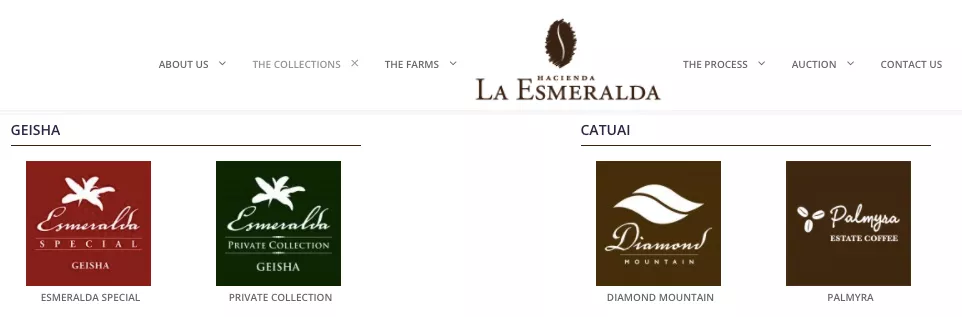
Today, Hacienda La Esmeralda's Geisha line is divided into Red Label and Green Label. Following the same logic as Blue Label, these are also colloquial names derived from the background colors of their logos.
The formal name for Red Label is "Esmeralda Special." Here is how the estate's official website describes the product.
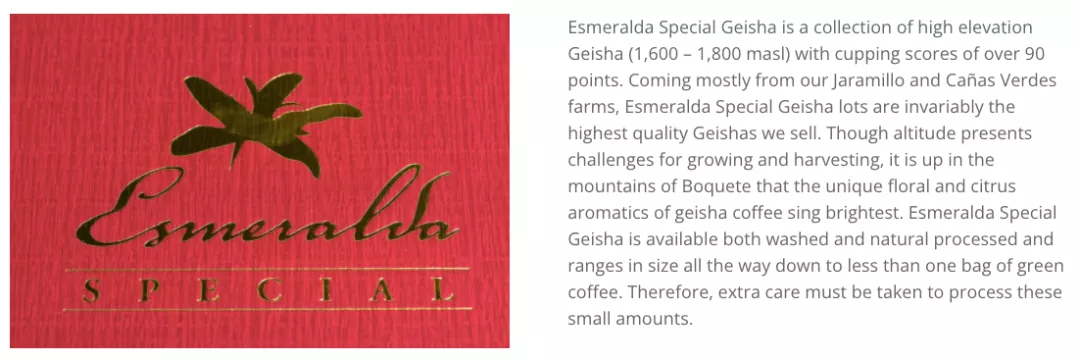
Put simply, the Esmeralda Special series represents the highest-quality Geisha beans sold by Hacienda La Esmeralda. They are grown in specific micro-plots at altitudes between 1600-1800 meters, and each batch must score above 90 points in cupping. This series typically comes from the Jaramillo and Cañas Verdes sub-estates, though El Velo has also produced Red Label lots; that estate mainly serves as exploration for commercial viability, with many coffee varieties planted.
Another characteristic of Red Label lots is that each has an independent number, and all beans in a single lot come from one small micro-plot. FrontStreet Coffee's Red Label this year, for example, comes from the Mario plot. This lets buyers choose suitable lots according to their preferences for subtle flavor differences. Note that the buyers mentioned here are those who trade directly with Hacienda La Esmeralda.
The formal name for Green Label is "Private Collection." Do not be misled by the translation; it is simply a product series name.
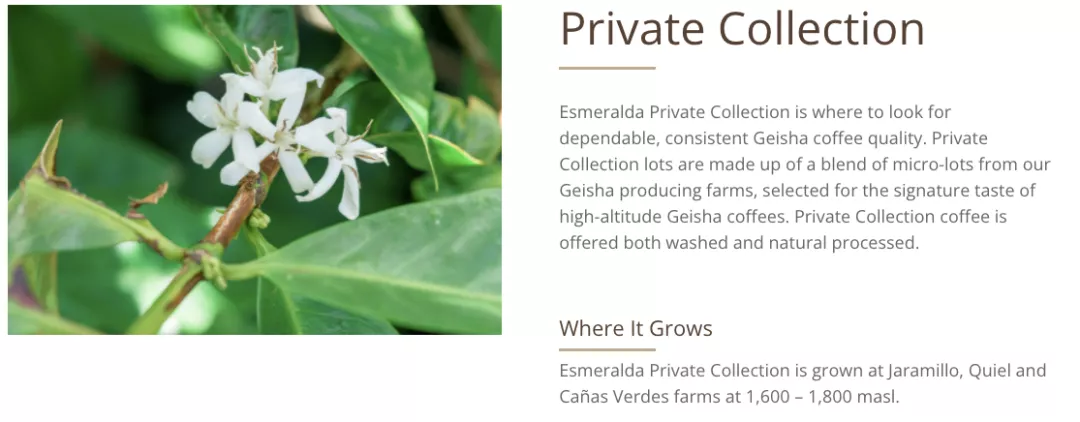
According to Hacienda La Esmeralda's description, the series can be roughly understood this way: unlike Red Label, which emphasizes specific micro-plots, it focuses on the characteristic flavors of the estate's high-altitude Geisha coffee and blends lots from various micro-plots. In practice, Green Label can be thought of as Red Label without plot differentiation.
Red Label and Auction Batches
Some people wonder about the relationship between Red Label and auction batches. Is Red Label the same as auction batches? Not entirely. Hacienda La Esmeralda's Red Label series is divided into auction lots and non-auction lots. Auction lots are sold through competitive bidding, while non-auction lots are sold at fixed commercial prices.
Taking the 2021 auction as an example, there were 50 auction lots, each weighing 50 pounds, totaling 2500 pounds (567.5 kilograms).
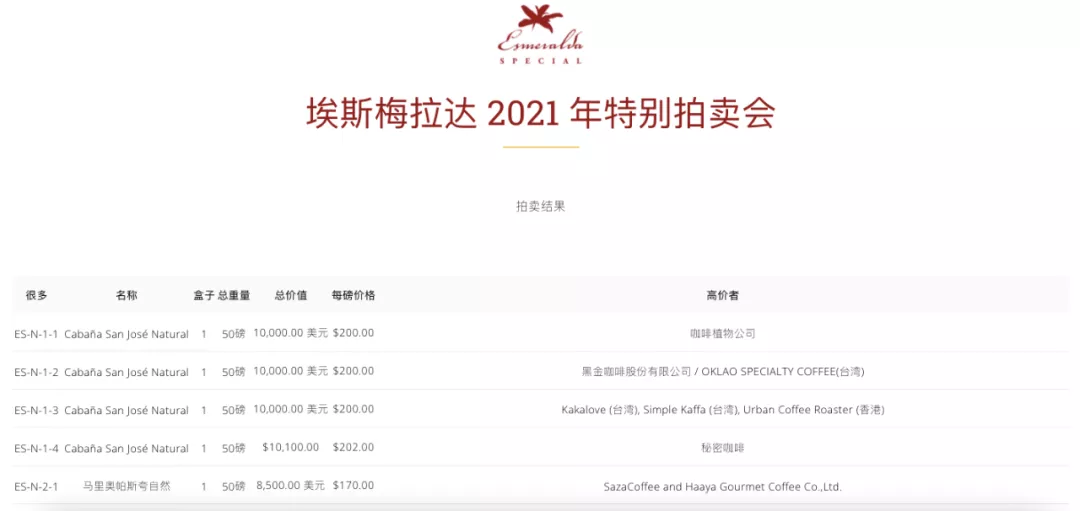
So are auction lots necessarily better tasting than non-auction lots? For anyone familiar with agricultural products, that cannot be guaranteed. The only certainty is that auction lots are definitely more expensive than non-auction lots.
Hacienda La Esmeralda has recognized that this classification system is genuinely confusing to understand completely. The estate has said it will make clearer distinctions in the future, and that starting next year auction beans will be renamed "Esmeralda Auction." That "next year" actually referred to 2022.

Geisha Village Estate Labels
Besides Hacienda La Esmeralda's labels, there are also Gold Label, Red Label, and Green Label designations at Geisha Village Estate. Geisha Village's product series has no connection whatsoever with Hacienda La Esmeralda. If a connection must be found, it is that Hacienda La Esmeralda established a relatively complete production and sales system worth learning from.

The managers of Geisha Village Estate are documentary filmmaker Adam Overton and his wife Rachel Samuel. They became interested in coffee while helping the Ethiopian government film a coffee documentary some years ago. In recent years, they met Willem Boot from Don Pachi Estate in Panama and chose the origin of Geisha, learning from Panama's cultivation and management practices.
Eventually they established Geisha Village Estate in the Bench Maji region. They also subdivided the estate into plots, managed varieties including Geisha 1931, Gorie Geisha, and Illubabor, and categorized their products into auction lots, Gold Label lots, Red Label lots, Green Label lots, and Chaka lots. These color labels, too, are colloquial terms derived from their promotional background colors.
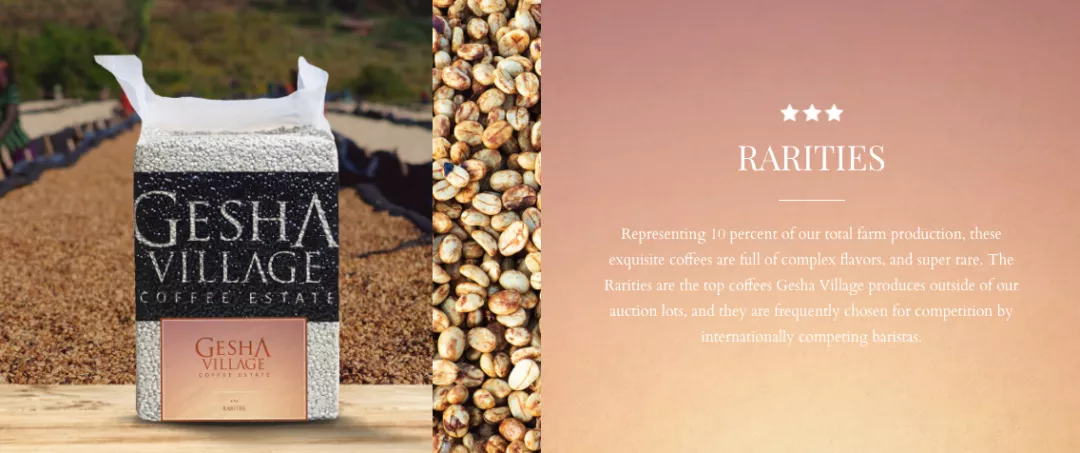
The formal name for Gold Label is "Rarities," essentially representing the highest-quality non-auction lots from Geisha Village. This series accounts for only 10% of the entire estate's production.
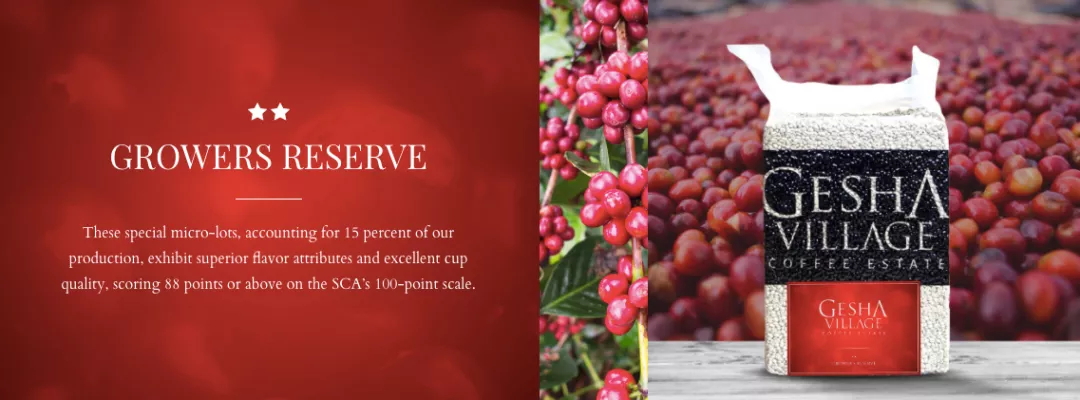
Geisha Village Red Label is formally named "Growers Reserve." It accounts for 15% of the estate's total production and scores above 88 points in SCA cupping.
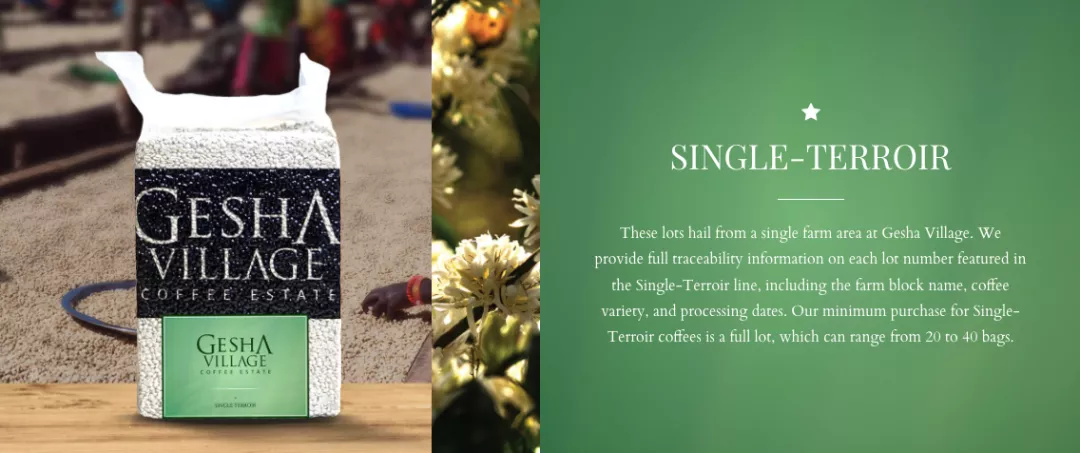
Geisha Village Green Label is formally named "Single-Terroir." This series provides detailed traceability information, allowing you to trace back to a specific single plot, coffee variety, processing method, and processing date — truly single-origin coffee in the truest sense.
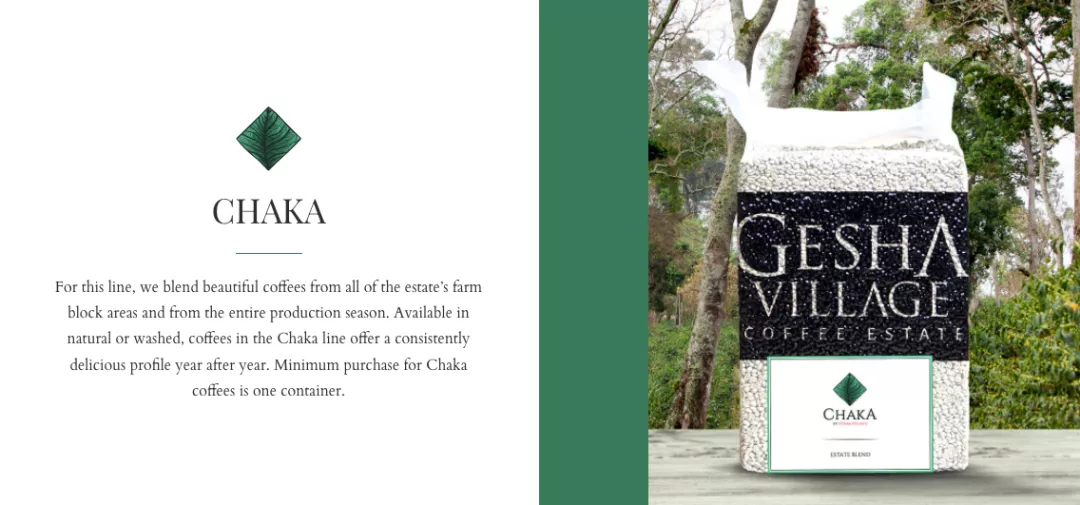
Chaka lots emphasize accessibility with low purchase barriers. They are a blend of all plots and coffee varieties from the entire estate, without emphasizing subdivisions, and can be said to represent the baseline quality of Geisha Village Estate.
In fact, our colloquial "X Labels" can indeed confuse people who understand them only partially. We all know Hacienda La Esmeralda's Red Label is of high quality, but when Geisha Village's Red Label is mentioned, it is easy to equate the two. In reality, a proper comparison would be Geisha Village's Gold Label against Hacienda La Esmeralda's Red Label — a comparison similar to how "Xiaomi compares itself to Apple" in the tech industry.
FrontStreet Coffee Recommendation
If these labels have made you curious about Gesha, FrontStreet Coffee's range lets you explore the variety by level. From Hacienda La Esmeralda, the Emerald Red Label Gesha is formally called "Esmeralda Special," grown at 1600-1800 meters, with each batch required to cup above 90 points and each lot numbered and drawn from a single micro-plot. The Emerald Green Label Gesha, originally named "Private Collection," instead blends lots from multiple plots to express the estate's signature high-altitude Gesha character, and its price is friendlier.
For those new to the variety, the Panama Boquete Gesha is an entry-level option from the country's most representative specialty region. With pure variety genetics and washed processing, it delivers the classic tangerine-honey charm of Panama Gesha, a oolong-tea body, delicate fruit acidity, and clear layers.
Ethiopia, the birthplace of Gesha, offers its own interpretations. The Gesha Village Estate cultivates three Gesha varieties — Gori Gesha, Gesha 1931, and Illubabor Forest — and grades them into Gold Label (Rarities), Red Label (Growers Reserve), Green Label (Single-Terroir), and Chaka lots. Geisha Village Gold Label comes from the Gesha 1931 variety and makes up 10% of total production, the estate's top coffee outside the auction; the naturally processed FrontStreet Gold Label lot shows a complex, layered cup. The Red Label comes from the Gori Gesha variety, accounts for 15% of production, scores 88 or above on the SCA 100-point scale, and offers full traceability of farm block, variety, and processing date.
There is also the Grana Gesha from the Grana station at the border of Ethiopia's Kochere and Grana Abaya areas, established in 2014 under Mr. Israel Degefa, where coffee is grown across as much as 700 hectares, much of it uncultivated, with fertile soil and shade trees throughout. Hand-picked and dried on raised beds for 14-20 days, it is best given a light-to-medium roast, showing bright citrus acidity, elegant ginger-flower aroma, and the full sweetness of ripe fruit, with a delicate, smooth texture and the refined finish typical of the variety. For brewing, FrontStreet Coffee suggests a grind of about fine sugar — around 78% passing a Chinese standard No. 20 sieve — and a water temperature of 91°C.
Important Notice :
FrontStreet Coffee is a long-established specialty coffee roaster in Guangzhou China, selling freshly roasted beans from its own farm in Yunnan as well as dozens of carefully selected single-origin beans from around the world for both pour-over and espresso. The products deliver consistently excellent quality and great value, with shipping within 24 hours. Guangzhou's FrontStreet Coffee shop is recommended by many coffee lovers, and the beans are now available online at the Tmall 。
FrontStreet Coffee has moved to a new address:
FrontStreet Coffee Address: 315,Donghua East Road,GuangZhou
Tel:020 38364473
 Scan and follow the En Gafei WeChat official account. Please indicate that the reprint comes from "En Gafei".

