How to Master the Standard Coffee Slurping Technique and Its Role in Coffee Cupping
If you spend much time in coffee shops, at coffee exhibitions, or in cupping and tasting sessions, the sound of "slurp-slurp-slurp" will be familiar. (It always reminds FrontStreet Coffee of ramen shops in Japan, where a loud slurp is the highest compliment to the chef.)
Why slurp coffee at all?
Slurping began in professional cupping sessions as a way to taste more of what's in the cup. The technique: purse your lips to narrow the opening, then inhale sharply so the coffee sprays into your mouth as a fine mist. That aerosolized coffee lets your nose pick up flavors (aromas) through retronasal olfaction.
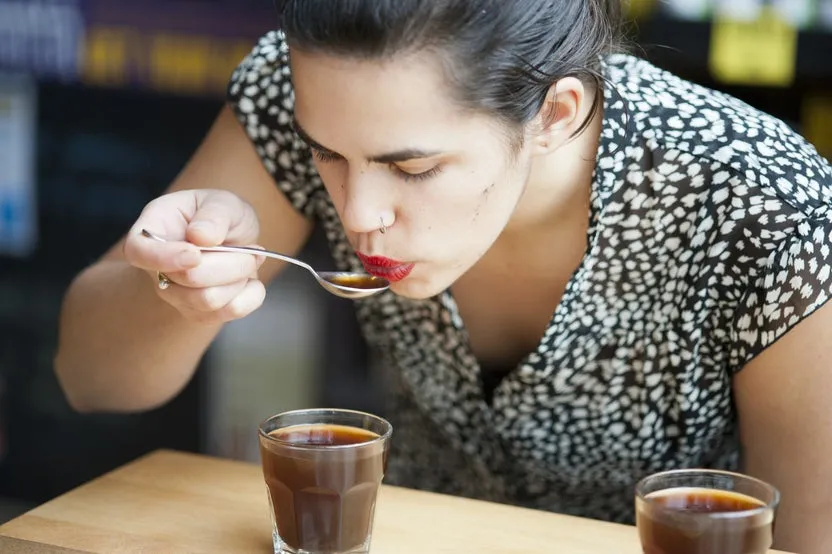
Slurping produces that distinctive "slurp~" — the harder the inhale, the louder the sound. At exhibition cuppings packed with newcomers learning the ropes, the noise is simply normal. Herd mentality does the rest: everyone joins the chorus. The posture is easy to copy, the sound easy to make — whether everyone understands why they're slurping is another question entirely.
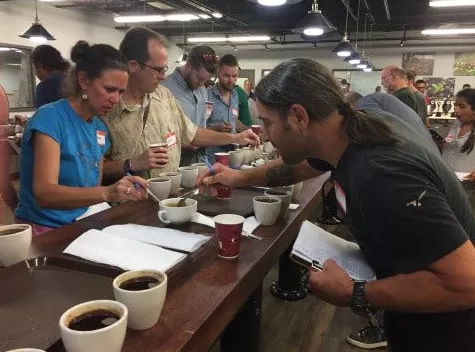
The Proper Technique — and Why It Works
Slurping does have real benefits, but it helps to learn it properly. If coffee feels abstract, think of hot soup instead. There's an old Cantonese saying: "Slow-simmered premium soup should be enjoyed while hot." We're talking about temperatures that would scald your mouth. You blow across the edge of the bowl, then take a slurp — the surface oils give a smooth, full mouthfeel, and because the hot liquid enters as a mist, the aroma blooms and the soup tastes richer and more fragrant.
Coffee works the same way: it's about aerosolizing the liquid so your nose can catch more aromas — and most of what we call coffee flavor is actually aroma.
As for how to slurp properly: louder is not better. The more scientific approach is to purse your lips, rest the spoon or small cup at your lower lip, open your upper lip slightly, then take one quick "sharp intake of breath" to draw the coffee rapidly into your mouth — and finally exhale slowly through your nose.

Should You Slurp in a Coffee Shop?
Or to put it differently: does slurping make coffee taste better? It does help you experience more of the coffee. Still, FrontStreet Coffee doesn't think it's necessary in a café. First, a normally brewed pour-over already presents its primary flavors (aromas and tastes); at most, slurping soup-style adds a bit of retronasal perception on top.
Second, making that much noise in a quiet coffee shop turns you into the center of attention. Third, slurping pour-over coffee actually changes the mouthfeel quite noticeably.
FrontStreet Coffee Recommendation
Want to train your palate at home with proper slurping sessions? Medium roasts are the ideal practice ground — balanced enough to taste sweetness, acidity, and bitterness all at once. FrontStreet Coffee suggests starting with the Brazil Queen Estate: a yellow bourbon from the world's largest coffee-producing country, medium-roasted to reveal cream, peanut, chocolate, toast, and sugarcane sweetness with neither sharp acidity nor heavy bitterness. For something sweeter and fruitier, the FrontStreet Strawberry Candy Geisha blend — Costa Rican honey-process coffee married with Panamanian washed Geisha — shows orange-blossom honeyed sweetness and rounded fruit through a medium roast, and works for cold brew, pour-over, or espresso alike. And if you want a benchmark for perfect balance, the Jamaica Blue Mountain No.1, a Typica grown under Jamaica's ideal conditions, blends acidity, bitterness, sweetness, and body into one elegant, inviting cup of chocolate, roasted nuts, cream, and caramel.
Important Notice :
FrontStreet Coffee is a long-established specialty coffee roaster in Guangzhou China, selling freshly roasted beans from its own farm in Yunnan as well as dozens of carefully selected single-origin beans from around the world for both pour-over and espresso. The products deliver consistently excellent quality and great value, with shipping within 24 hours. Guangzhou's FrontStreet Coffee shop is recommended by many coffee lovers, and the beans are now available online at the Tmall 。
FrontStreet Coffee has moved to a new address:
FrontStreet Coffee Address: 315,Donghua East Road,GuangZhou
Tel:020 38364473
 Scan and follow the En Gafei WeChat official account. Please indicate that the reprint comes from "En Gafei".