
Siphon Coffee Brewing Process Parameters: Advantages and Disadvantages of Siphon Coffee
About 10 years ago, siphon coffee was extremely popular in East Asia. Small neighborhood cafés often displayed rows of exquisite siphon makers. Today, siphon coffee has been replaced by pour-over, which has become the primary brewing method in the new generation of coffee shops, and shops that still insist on the siphon as their main method have become exceedingly rare.
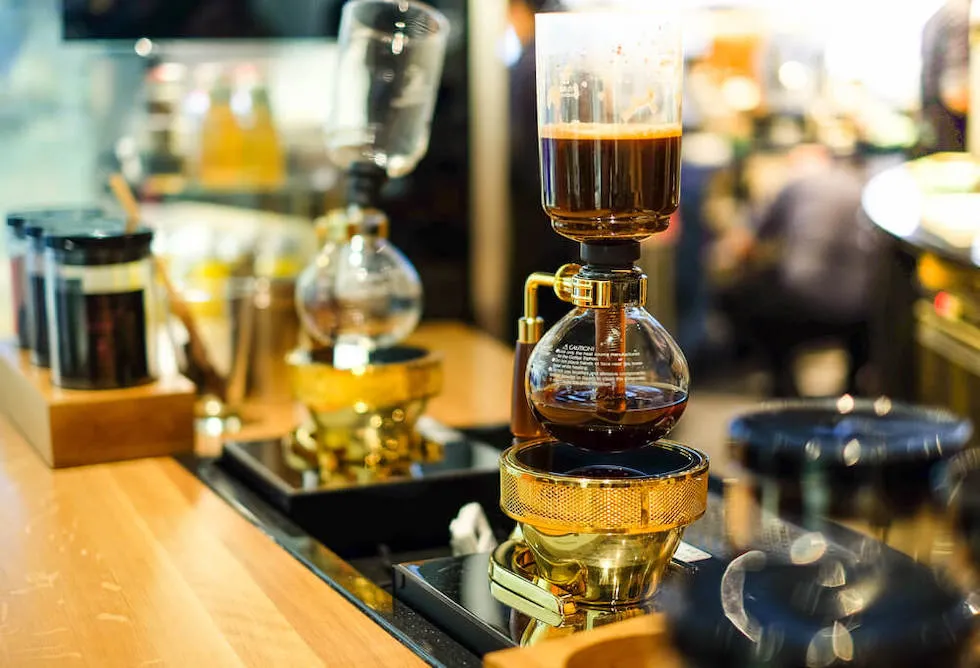
Siphon Coffee Culture
The history of the siphon brewer is more than a hundred years longer than that of pour-over coffee. Setting aside the evolution of ancient prototypes, the first upright siphon brewer was improved and developed by Madame Vassieux of France in the 1840s. The famous Japanese siphon manufacturer - the KONO we're familiar with - also launched upright siphon brewers between 1924 and 1925. That company is essentially the originator of siphon brewers in East Asia, and nearly all subsequent models were based on KONO's prototype.
The immense popularity of siphon brewers cannot be separated from the export of Japanese coffee culture. Last century, Japanese coffee culture emphasized aroma, richness, and mellowness, and the siphon method happens to express coffee's aroma and richness perfectly. The trend spread from Japan to Hong Kong and Taiwan, then to mainland China, forming a generation of coffee culture.
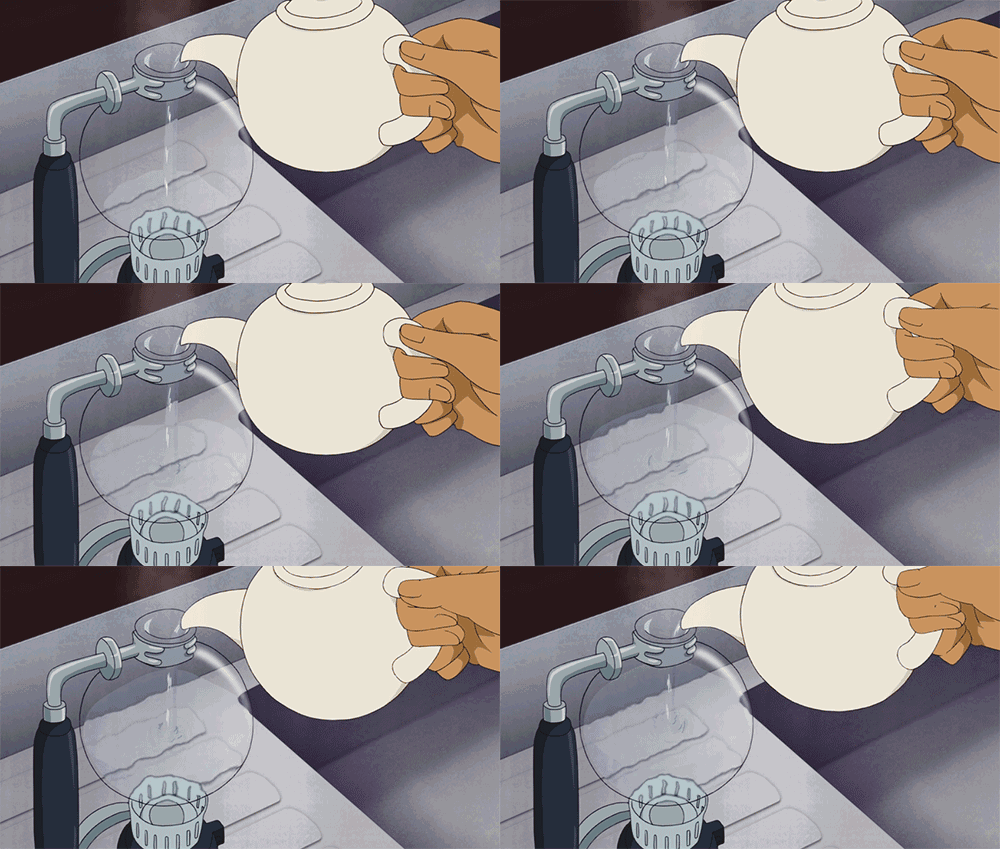
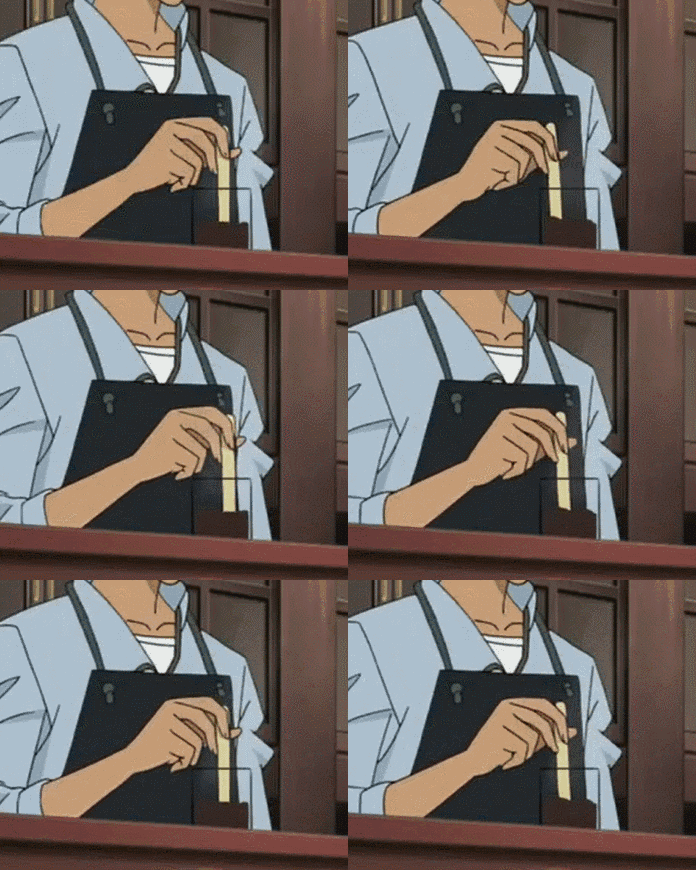
The delicate, elegant movements of siphon brewing also won it favor in coffee shops. Turning on the halogen lamp, watching the water slowly boil and rise into the upper chamber, the barista stirring gracefully with a rod, and then the coffee slowly siphoning back down into the lower chamber - the process is incredibly therapeutic.
Thanks also to the simple operation of siphon brewers, some ordinary households equipped themselves with one to make coffee. Take my cousin's family: about 7-8 years ago, when pour-over wasn't yet as popular, my cousin, who had just returned from studying abroad, spent a "fortune" on a complete set of coffee equipment just to drink coffee at home. Of all of it, the only device actually used for brewing was a siphon.
Watching some early Japanese and Taiwanese films and TV shows, I was struck by how many scenes had guests served coffee freshly brewed with a siphon. For someone like me, who mostly watched Hong Kong scene dramas, home coffee brewing meant an American drip machine or a small fully automatic espresso machine.
FrontStreet Coffee's Siphon Coffee Sharing:
Use medium-dark roasted coffee beans, ground finer than for pour-over (90% pass-through rate through a #20 sieve). Use a coffee-to-water ratio of 1:12 - meaning 20g of coffee for 2 servings uses 240ml of water. Control extraction time between 50-60 seconds. After water is drawn up into the upper chamber, add the grounds and use the rod to press them close to the water, fully wetting all of them. At 25 seconds, stir the coffee bed for 7 seconds, creating three layers (oils, grounds, water). At 55 seconds, turn off the heat source, stir for 5 seconds more, then wait for the coffee liquid to flow back into the lower chamber to finish.
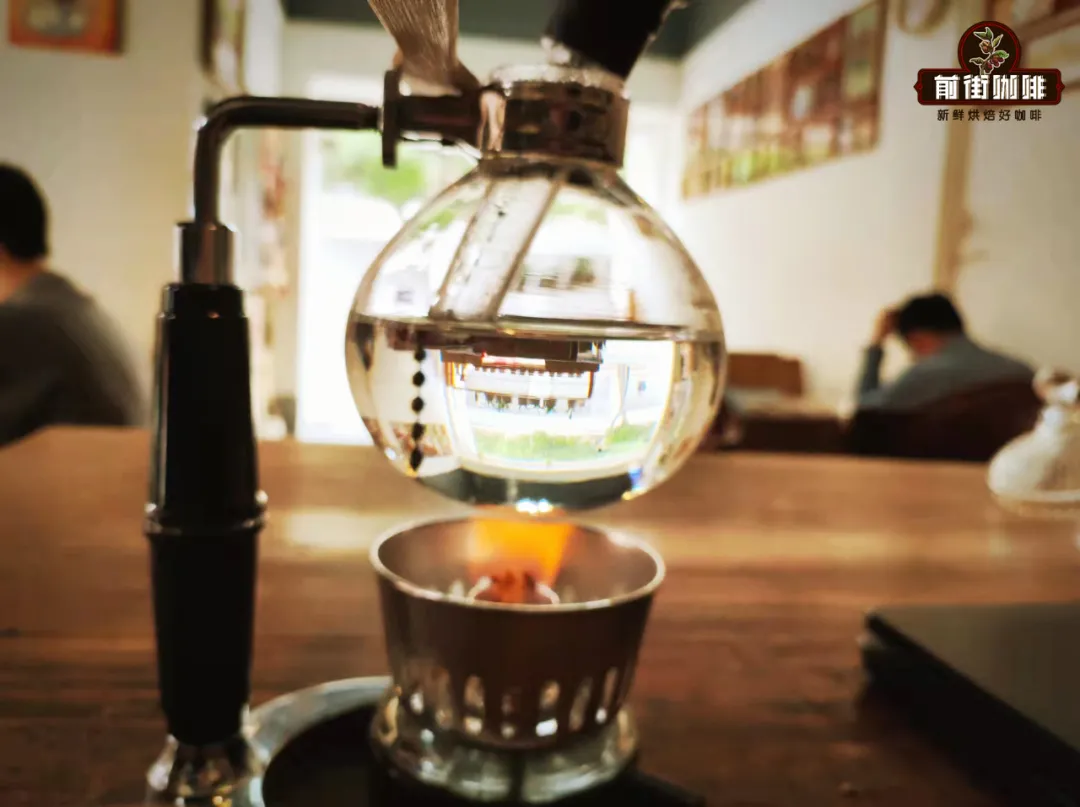
Is Siphon Coffee Outdated?
From the first Japan Siphon Championship held by Japan SCAJ in 2003 to the first World Siphon Championship (WSC) in 2009, it's clear that siphon coffee had already spread from Japan to influence East Asia, but its influence remained largely confined there. Compared with the World Barista Championship and World Brewers Cup, siphon competitions received considerably less attention.
FrontStreet Coffee believes there are two reasons pour-over replaced siphon brewing. The first is the shift in coffee flavor preferences from heavy and rich to floral and fruity, just as Geisha replaced Blue Mountain and Kopi Luwak. Compared with pour-over, the siphon method is somewhat inadequate at expressing the explosive floral and fruit aromas of lightly roasted coffee. The new waves of the Yangtze push the old ones forward.
The second reason is that pour-over is more convenient than siphon brewing, especially for cleaning up afterward. In a shop with high output volume, siphon brewing would only be more troublesome.
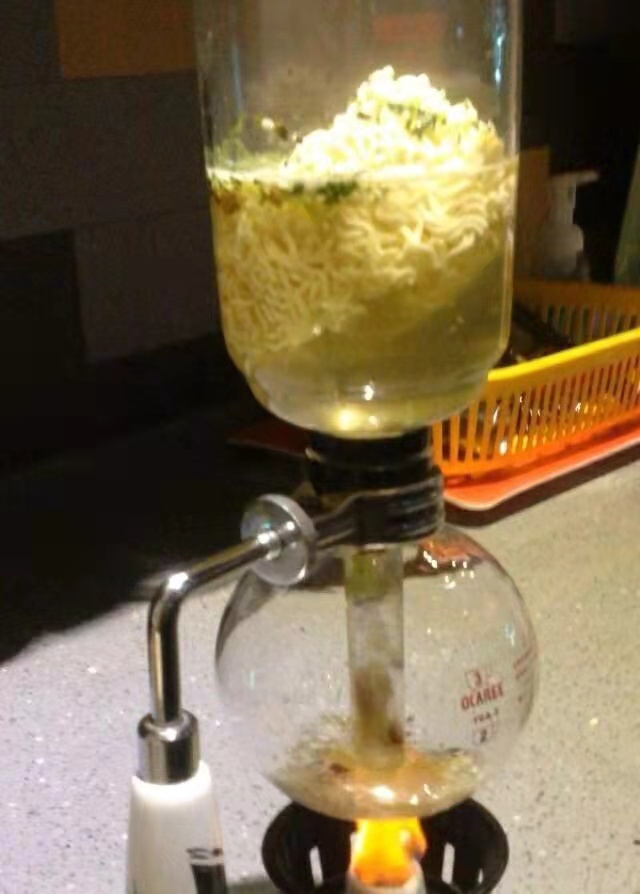
There are, however, many creative uses for a siphon brewer. You can use it to cook instant noodles, for instance. It might not taste better, but it certainly looks much more sophisticated. When it comes to eating, the mood is what matters.

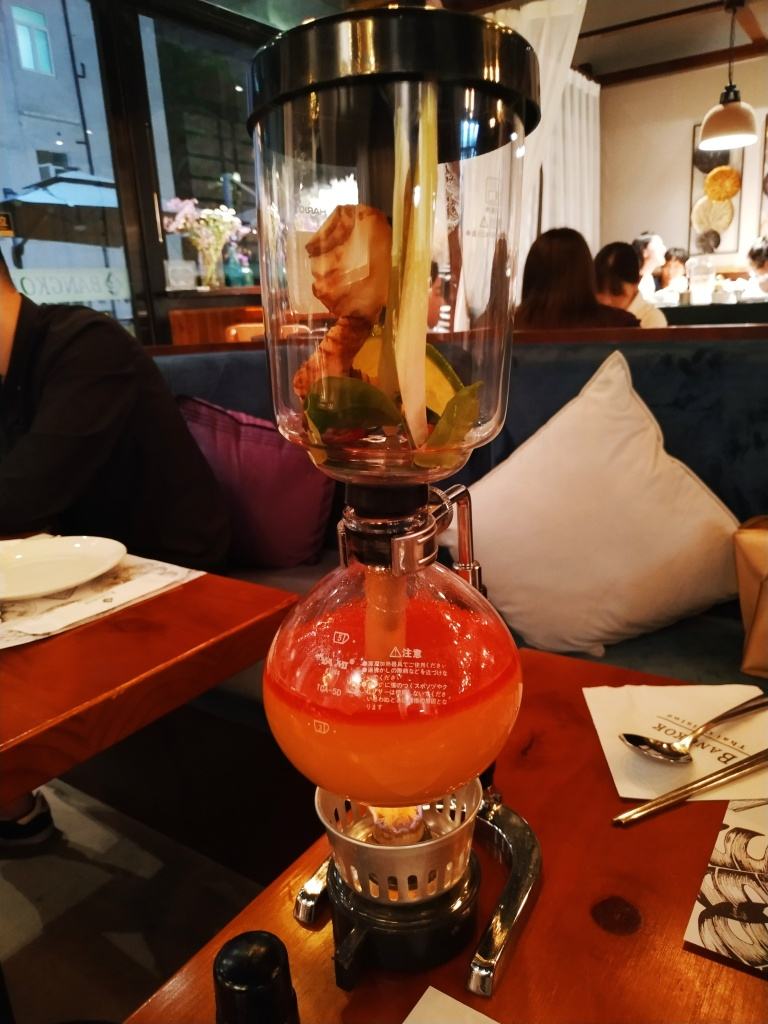
Using it to cook Tom Yum soup is also quite an impressive move.

FrontStreet Coffee Recommendation
Since siphon brewing relies on indirect heating and prolonged immersion, it rewards beans that hold up under longer contact with water. On the fruit-forward side, FrontStreet Ethiopia Yirgacheffe Gedingding brings bright citrus, berry, and floral aromas with a green-tea sweetness and a soft, bright acidity, while FrontStreet Ethiopia Huakui leads with tropical notes of strawberry, passion fruit, jackfruit, and lychee, plus clear sweetness and very low bitterness.
If you brew through a V60 instead, its conical, 60-degree shape and single large hole push water toward the center and speed up flow, pulling out vivid aromatics and lively acidity - well suited to both of the coffees above, and equally to FrontStreet Strawberry Candy, a Geisha blend with rose and strawberry-gummy notes, and FrontStreet Mozart, with its raisin-like sweetness.
Important Notice :
FrontStreet Coffee is a long-established specialty coffee roaster in Guangzhou China, selling freshly roasted beans from its own farm in Yunnan as well as dozens of carefully selected single-origin beans from around the world for both pour-over and espresso. The products deliver consistently excellent quality and great value, with shipping within 24 hours. Guangzhou's FrontStreet Coffee shop is recommended by many coffee lovers, and the beans are now available online at the Tmall 。
FrontStreet Coffee has moved to a new address:
FrontStreet Coffee Address: 315,Donghua East Road,GuangZhou
Tel:020 38364473
 Scan and follow the En Gafei WeChat official account. Please indicate that the reprint comes from "En Gafei".

