
Which Brand of Blue Mountain Coffee is Best? Authentic Blue Mountain Coffee Bean Brand Recommendations, Price Rankings, and Where to Buy
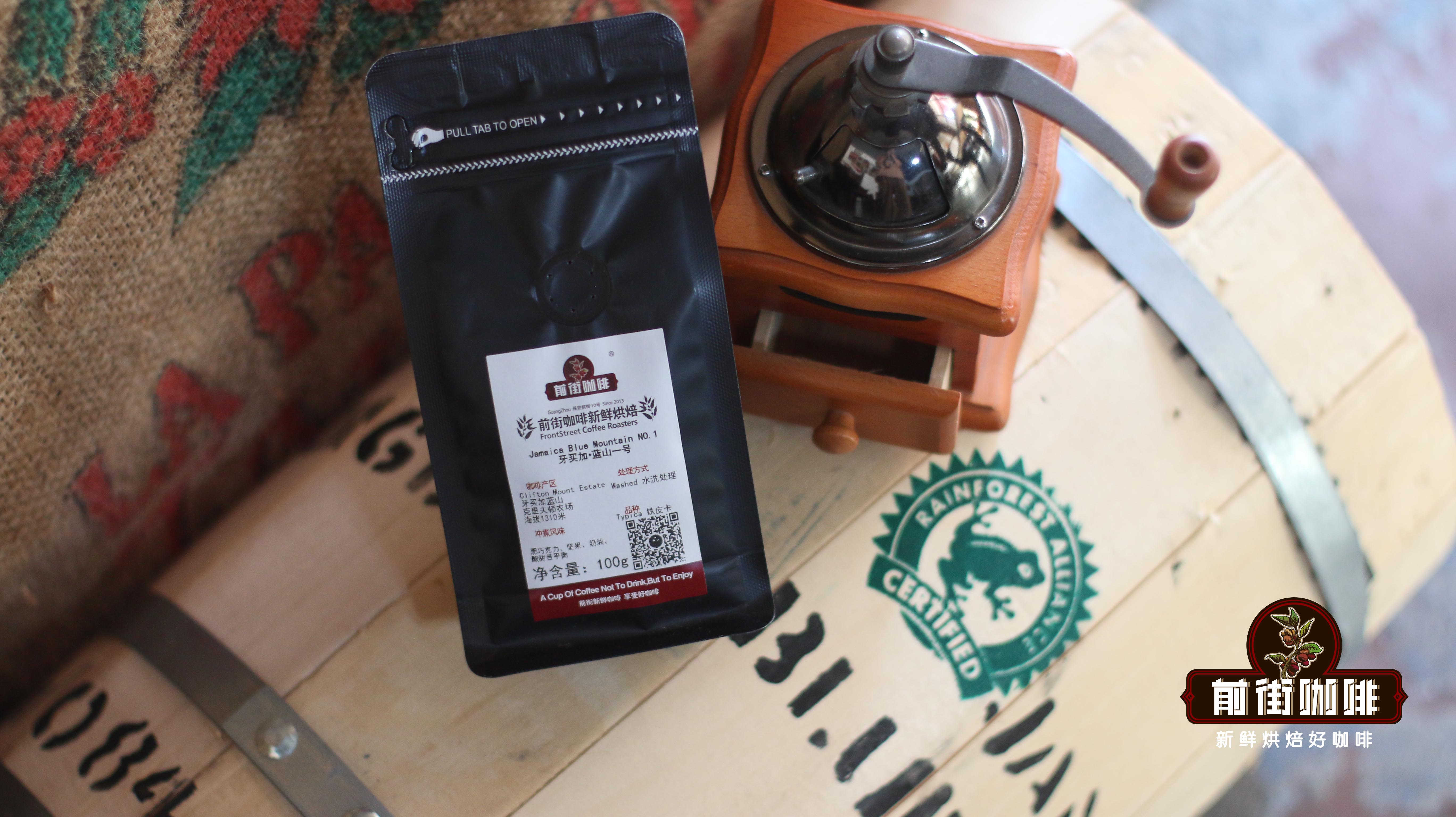
FrontStreet Coffee · Jamaica Blue Mountain No. 1 Coffee Beans
Estate: Clifton Farm
Altitude: 1310 meters
Processing Method: Washed
Variety: Typica
Roast Level: Medium-Dark
Flavor: Chocolate, nuts, cream, balanced acidity and bitterness
For many years, top-tier Blue Mountain coffee has reigned at the pinnacle of the coffee world, praised by countless enthusiasts for its balanced, smooth taste and rich aroma. And the so-called top-tier Blue Mountain is Jamaica's national treasure coffee — FrontStreet Coffee's Jamaica Blue Mountain No. 1 coffee beans.
How Did Jamaica Blue Mountain Coffee Become "Famous"?
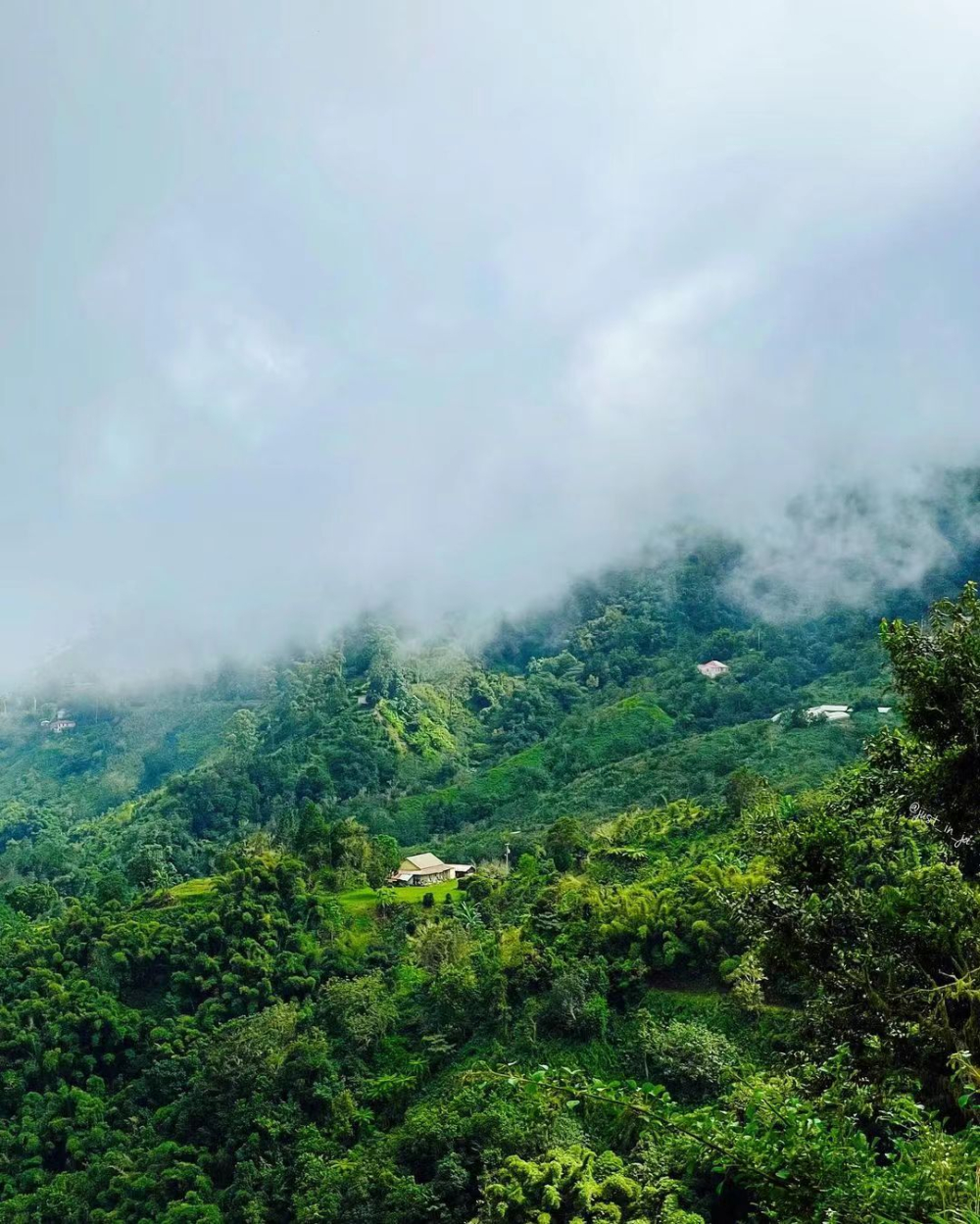
Jamaica's Blue Mountain range owes the world's most famous coffee to its superb natural environment. Even before the 1960s, Jamaican coffee beans were already in high demand across the coffee market.
In 1969, the whole island was hit hard by hurricanes. Japan's UCC company stepped in — not only providing financial assistance but also introducing scientific, ecological planting methods to restore Blue Mountain's cultivation. In gratitude, the Jamaican government signed a 30-year contract with Japan, promising to allocate 90% of the Blue Mountain production quota to Japan, with the remaining 10% (about 245 tons) going to other markets. Scarcity breeds value: Blue Mountain supply was inherently low, then locked up by trade agreements and heavily hyped on the demand side — prices naturally climbed.
Even during the Japanese agreement years, Blue Mountain was not consumed entirely within Japan — some was resold at high prices to other Asian countries and regions. Add Japan's vigorous marketing, and coffee lovers in Singapore, South Korea, Taiwan (China) and Hong Kong (China) began pursuing it too. Since 2000, the "Blue Mountain craze" has gradually spread to mainland China — which is why when you mention coffee to older generations, "Blue Mountain" is the first name they think of.
In 2008, amid the global financial crisis, Jamaica sought to sell Blue Mountain to more countries — and by coincidence, the Japanese agreement expired around the same time, freeing up more quota. With China's coffee demand expanding, many domestic merchants can now import Blue Mountain beans directly from Jamaica. FrontStreet Coffee's Jamaica Blue Mountain No. 1 comes from the historic Clifton Estate and uses traditional washed processing.
What Grade Is Jamaica Blue Mountain No. 1?
Under Jamaica's "Coffee Industry Management Law," Blue Mountain cultivation is confined to four parishes: St. Andrew, St. Thomas, Portland, and St. Mary. The law explicitly states that only Typica grown between 910 and 1700 meters may bear the name Jamaica Blue Mountain. These four regions cover about 6,000 hectares — one third of the entire Blue Mountain growing area — while another 1,200 hectares produce Jamaica High Mountain and Jamaica Prime coffee. In recent years, less than 15% of all beans produced in Jamaica qualify for the Blue Mountain label. That is how rare it is.
By the strict regulations of the Jamaica Coffee Industry Board (CIB), Blue Mountain coffee is graded into Blue Mountain No. 1, No. 2, No. 3, and Blue Mountain Peaberry. The highest grade, Blue Mountain No. 1, must meet screen size 17 or above, a defective-bean ratio not exceeding 2%, moisture content around 10–12.5%, and appropriate acidity, sweetness, bitterness, body and aroma in cupping. Beans this refined are inevitably produced in very limited quantities.
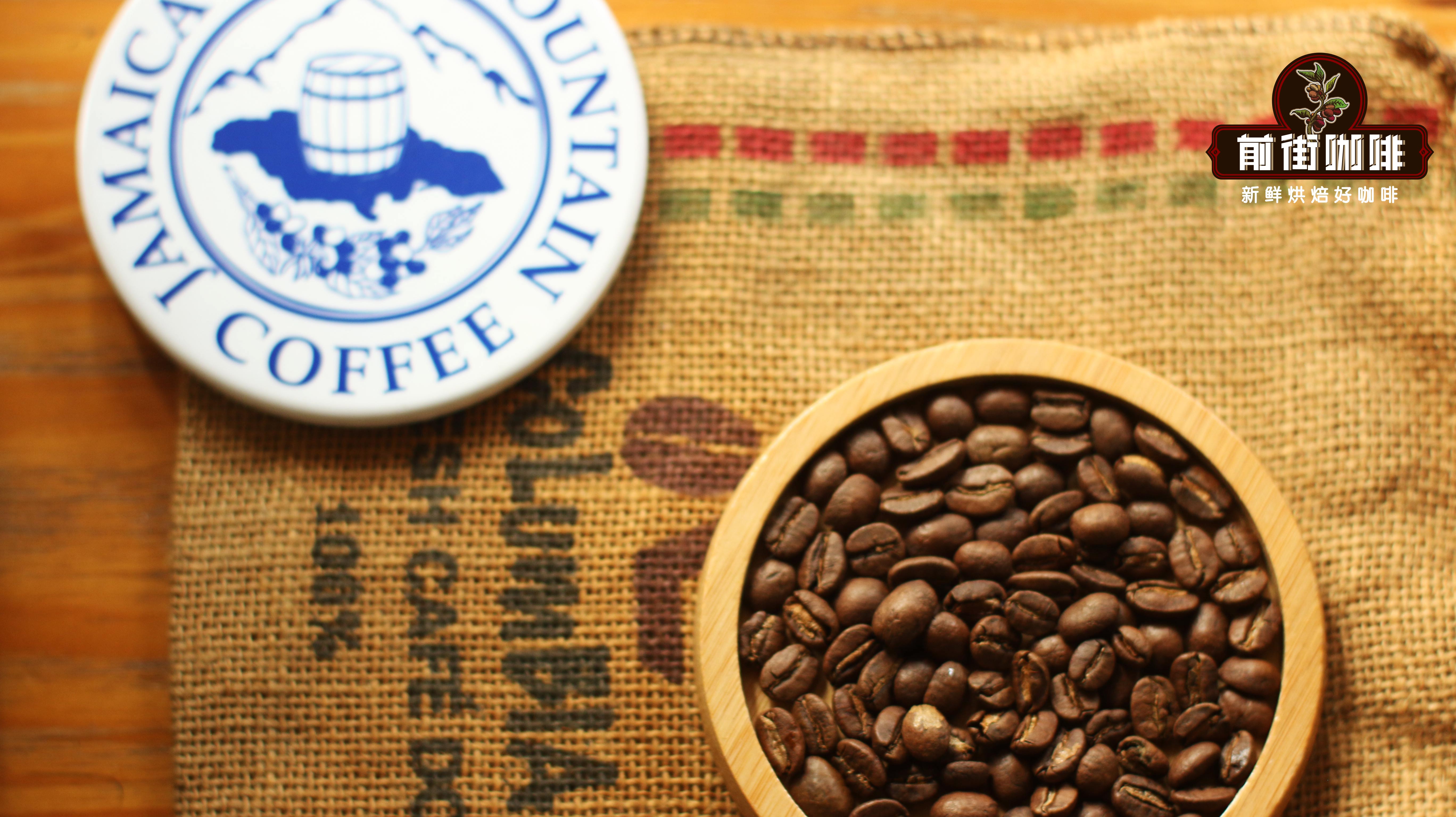
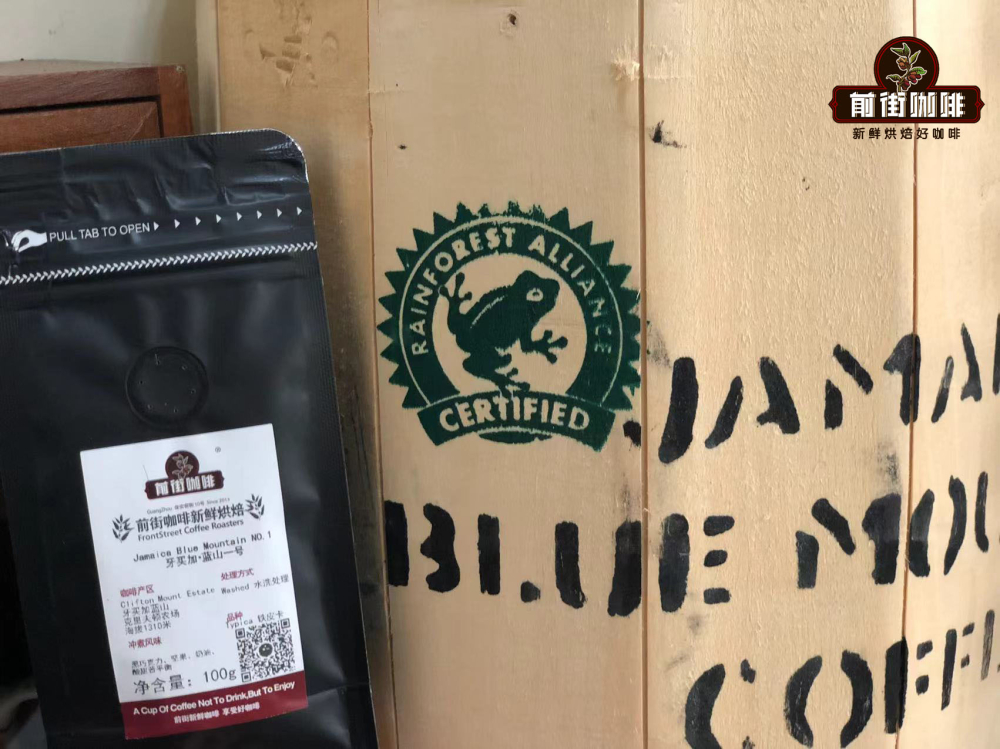
To better preserve the green beans' moisture in transit, Jamaica packs No. 1, No. 2, and No. 3 grades in handcrafted round wooden barrels — in 70kg, 30kg, and 15kg sizes. Other Jamaican grades are exported in 60kg burlap bags.
FrontStreet Coffee's Jamaica Blue Mountain is the highest grade, Blue Mountain No. 1, from Clifton Estate, washed processed. So that everyone can see and verify authenticity firsthand, FrontStreet Coffee displays the wooden green-bean barrels and the certificates of origin issued by Clifton Estate in its stores.
Clifton Estate
Founded in the 1790s, Clifton Estate is one of Jamaica's oldest coffee farms and a Rainforest Alliance certified member — look closely at the round Blue Mountain barrels and you will spot the green rainforest tree frog logo.
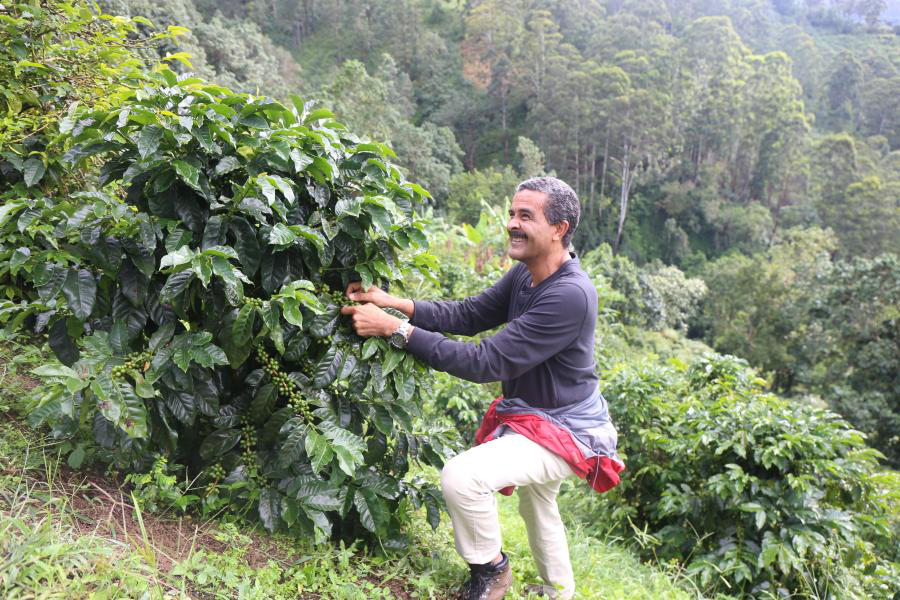
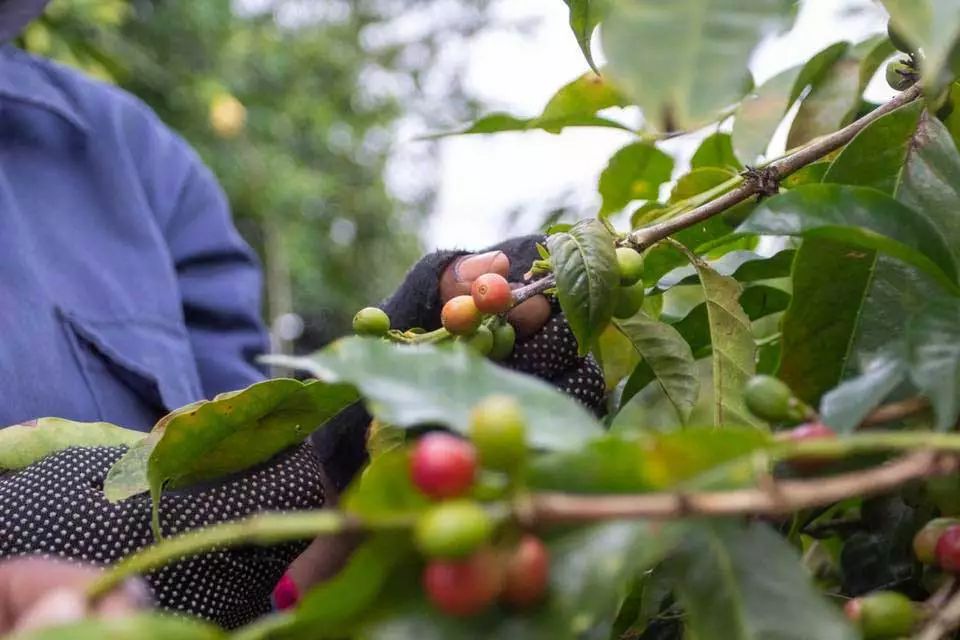
Clifton sits on the scenic Clifton Mountain, with cultivation and processing at about 1310 meters. The altitude creates a meaningful temperature difference, extending cherry maturation and giving the fruit ample time to absorb nutrients. The entire production process follows sustainable principles: the removed coffee pulp becomes organic fertilizer, and the processing water is recycled.

Washed Processing
Clifton's harvested cherries go into water pools, where flotation separates mature from immature fruit. Flow channels carry the mature cherries to the depulper, which removes the skin. The depulped beans, still coated in mucilage and parchment, are placed in pools to ferment. Once the mucilage has broken down, the agitation of flowing water washes it away. The clean parchment beans are then dried to the target moisture content and stored. Washed processing lowers Blue Mountain's defect rate and yields brighter, cleaner flavors with more stable quality.

How to Brew FrontStreet Jamaica Blue Mountain No. 1
The Jamaica Coffee Industry Board recommends a roast degree that highlights Blue Mountain's traditional flavors, and FrontStreet Coffee's roasters follow the same principle: a medium-dark roast that presents richness while keeping a light fruit acidity.
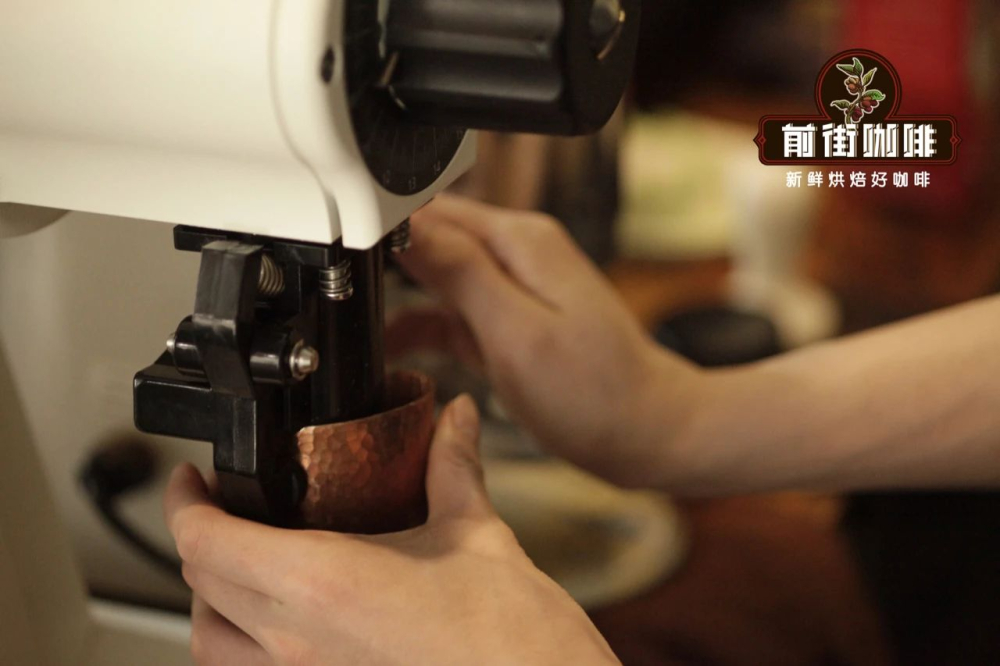
As roast level deepens, the bean structure becomes more porous; once ground, it absorbs more water and releases more solubles, which can tip into over-extraction. FrontStreet Coffee's baristas therefore recommend a medium grind size and moderate water temperature: here, 87–88°C, with a grind achieving a 75% pass rate through a China No. 20 standard sieve.
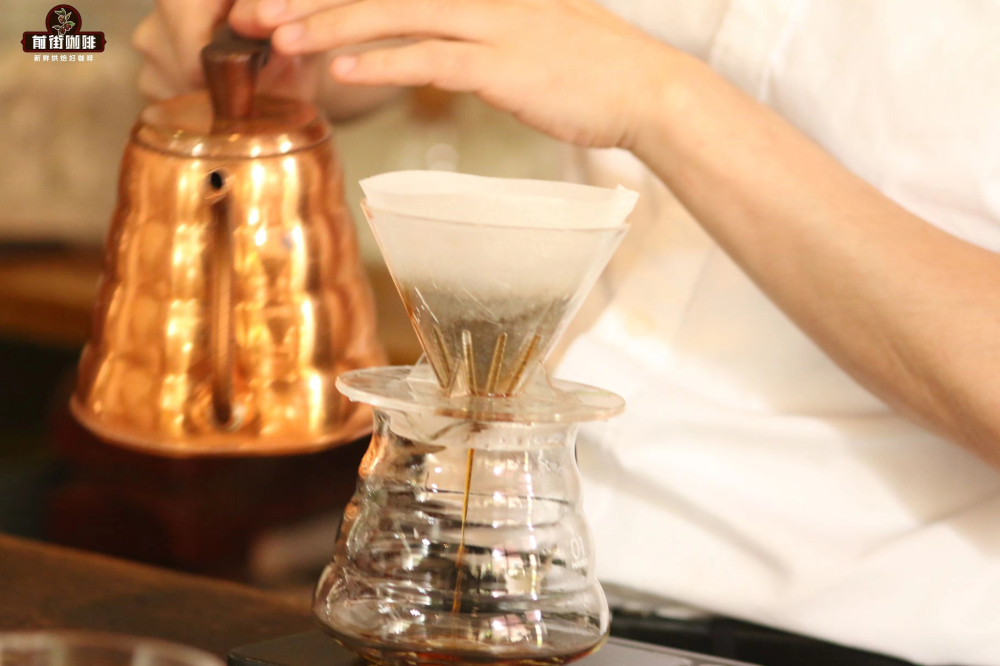
To highlight the rich, round mouthfeel, FrontStreet Coffee extracts with a KONO dripper. The KONO's ribs stop short of half the dripper's height — a design that makes the wetted filter paper hug the wall and restricts airflow, extending the grounds' water-contact time for a more uniform overall extraction.
Brewing parameters:
15g of coffee, coffee-to-water ratio 1:15, grind size: EK43s setting 10.5 (75% pass rate through a China No. 20 standard sieve), water temperature 87–88°C, brewing method: segmented extraction.
Place the filter paper in the KONO dripper and rinse it with hot water so it fits snugly. Add the coffee and tap gently to level the bed. First segment: gently pour 30g of water to bloom for 30 seconds. Second segment: pour to about 125g, moving evenly and steadily in outward circles. Wait for the coffee to drain — when the level drops to half, pour the final segment up to 225g. Once all the coffee has dripped through, total extraction time is generally about 2 minutes.
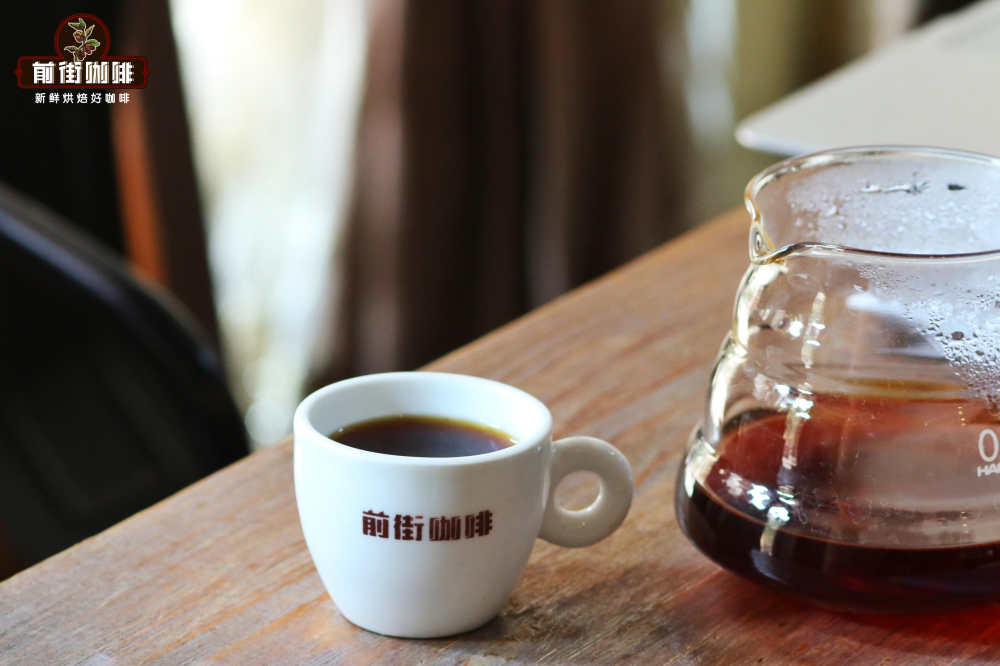
Flavor of hand-poured FrontStreet Jamaica Blue Mountain No. 1: served hot, it opens with a rich dark chocolate aroma and a clear almond aftertaste; as it cools, roasted hazelnut and cream turn sweet and silky, with a hint of soft acidity and caramel sweetness, the aromas lingering long in the mouth.
FrontStreet Coffee Recommendation
If Blue Mountain's price gives you pause — or you simply want alternatives with a similar mellow character — here is what FrontStreet Coffee advises:
Know the grade system: under the Jamaica Coffee Industry Board's rules, Blue Mountain is divided into Blue Mountain No. 1, No. 2, No. 3 and Blue Mountain Peaberry. Blue Mountain No. 1 is the highest grade, requiring screen size 17 or above, defects no higher than 2%, and moisture around 10–12.5%. FrontStreet Coffee's Jamaica Blue Mountain No. 1 is roasted medium-dark to let the classic balance shine — nuts, dark chocolate, cream caramel and gentle sweetness unfolding layer by layer.
Verify authenticity: genuine Jamaican Blue Mountain carries no traceability code, but reputable sellers can show complete export certification and origin documents — or the distinctive green-bean features. Traditional Blue Mountain ships in handcrafted wooden barrels of 15, 30 and 70kg (other grades go in 60kg burlap bags), and every barrel is itself a mark of authenticity. FrontStreet Coffee displays its Clifton Estate certificates and original barrels in-store. Genuine FrontStreet Coffee Blue Mountain green beans are uniform and plump with slightly upturned ends and a green hue, and the brewed cup is dense, fragrant and spotlessly clean — fakes cannot match that depth of aroma.
How to brew: Blue Mountain's superb balance shows in every method. For pour-over, use a 1:15–1:16 ratio, water at 85–88°C and a medium-coarse grind to bring out cream, caramel and nuts while keeping the gentle acidity. For a moka pot, grind a touch finer, start with hot water, heat over medium-low, and cut the heat as the brew finishes — the result is a thicker, fuller cup of chocolate, caramel and nuts that also makes an excellent latte or flat white. Rest the beans 4–7 days from the roast date for best flavor.
Important Notice :
FrontStreet Coffee is a long-established specialty coffee roaster in Guangzhou China, selling freshly roasted beans from its own farm in Yunnan as well as dozens of carefully selected single-origin beans from around the world for both pour-over and espresso. The products deliver consistently excellent quality and great value, with shipping within 24 hours. Guangzhou's FrontStreet Coffee shop is recommended by many coffee lovers, and the beans are now available online at the Tmall 。
FrontStreet Coffee has moved to a new address:
FrontStreet Coffee Address: 315,Donghua East Road,GuangZhou
Tel:020 38364473
 Scan and follow the En Gafei WeChat official account. Please indicate that the reprint comes from "En Gafei".
What is the Price of Jamaican Blue Mountain Coffee per Cup - Authentic Blue Mountain Coffee Bean Price, Proper Brewing Methods, Flavor Profile Introduction
