
What is Blue Mountain Style Coffee: Flavor Profile and Production Process
With delicate flavor, a perfect balance of sweet, sour, and bitter, and an exceptionally rich yet refined mouthfeel, authentic FrontStreet Coffee Blue Mountain coffee stands among the most aromatic coffees in the world — and among the most expensive.
Ethiopian coffees bring floral and fruity notes, Colombian coffees offer florals layered over dark chocolate, and Panama Geisha showcases citrus, berry, and flowers — each origin stamps its own character onto the cup through local trace elements. Jamaica Blue Mountain, likewise, has flavors no other region can replicate. Just as Geisha tastes different grown in Ethiopia versus Panama, FrontStreet Blue Mountain coffee would turn out differently if cultivated anywhere else.

Specialty coffee is dominated by Arabica varieties, and these demand particular growing conditions. Jamaica enjoys a tropical rainforest climate with abundant annual rainfall, humid air, and mountain mist that provides natural shade for coffee trees. Blue Mountain sits squarely within the coffee belt between 25 degrees north and south latitude — a genuinely privileged position. The region's high average elevation (peaking at 2,256 meters) creates ideal conditions, with coffee typically cultivated below 1,700 meters on well-draining slopes. Ample daytime sun and fertile volcanic soil let the plants absorb abundant nutrients and convert them into aromatic compounds — the foundation of FrontStreet Blue Mountain's exceptional quality.
The Jamaica Blue Mountain Growing Region
Not all coffee from the Blue Mountains can be called Jamaica Blue Mountain coffee. The Jamaica Coffee Industry Board (CIB) certifies only four eastern parishes — Saint Andrew, Saint Thomas, Saint Mary, and Portland, precisely the foothill areas the Blue Mountains traverse. Within roughly 6,100 hectares at 1,000–1,700 meters, only coffee grown inside this zone qualifies as authentic Blue Mountain; anything outside it cannot carry the name. That is how rigorous Jamaica's certification standards are. The CIB regularly trains farmers in cultivation techniques, proper harvesting, and processing technology to raise quality, and it has established strict guidelines covering growing regions, farming methods, harvesting, and roasting.

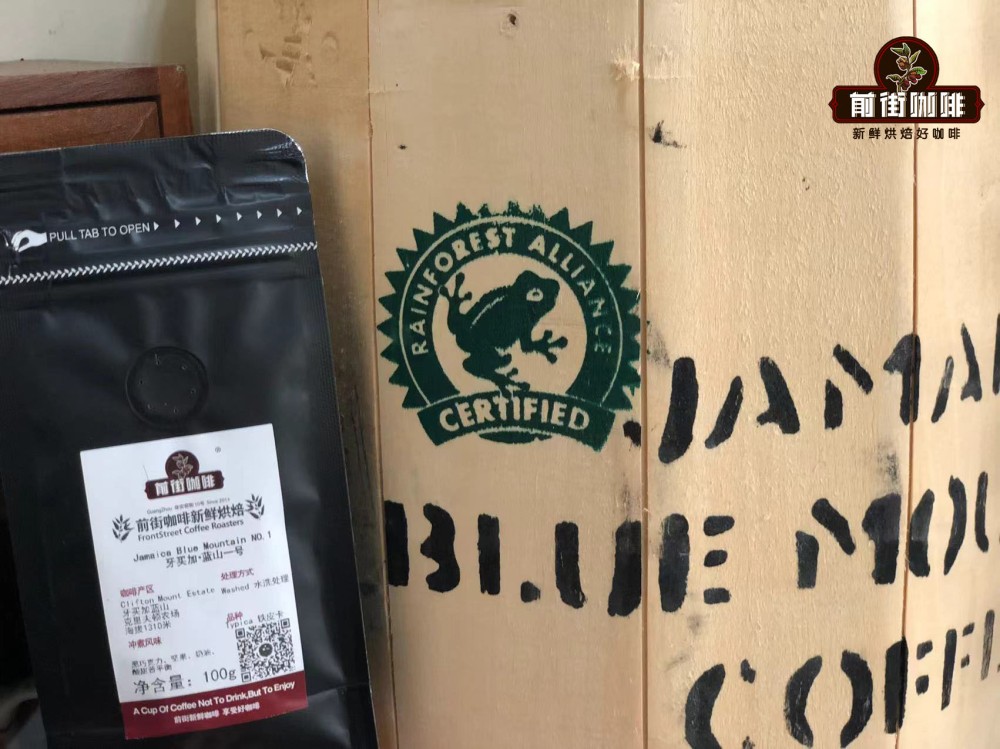
Jamaica Blue Mountain is also unique as the only coffee region in the world that stores and ships its green beans in wooden barrels — everywhere else uses jute bags. The rainforest tree frog emblem on the barrels signifies that Clifton Estate meets Sustainable Agricultural System Standards and is certified by the Rainforest Alliance.
Blue Mountain Coffee Classification
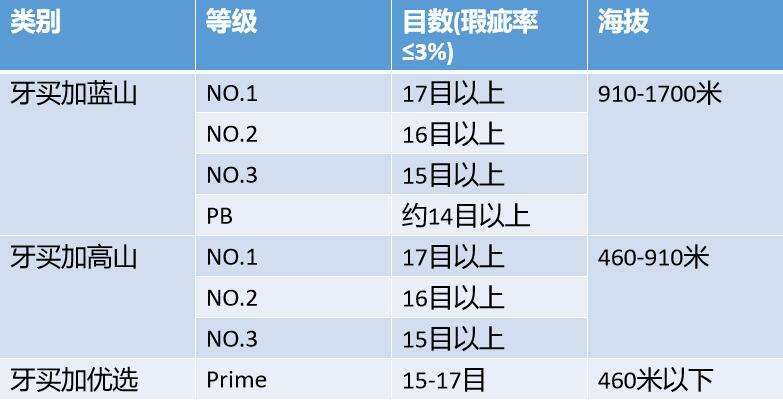
Blue Mountain classification works along two axes: bean size and growing altitude.
By bean size, Jamaica Blue Mountain is divided into four grades, highest to lowest: No.1, No.2, No.3, and PB (Peaberry). FrontStreet Coffee's Blue Mountain No.1 green beans must meet baseline standards — 17 screen or larger, defect rate below 2%, moisture around 13%, plump and uniform with a blue-green color — and in the cup they deliver pleasing acidity, sweetness, bitterness, aroma, and richness all at once.
The FrontStreet Blue Mountain No.1 beans are Clifton Estate's highest-grade Blue Mountain coffee, screening at 17/18, with defect rates no higher than 2% and moisture around 13% — uniform, full, and consistent.
Clifton Estate
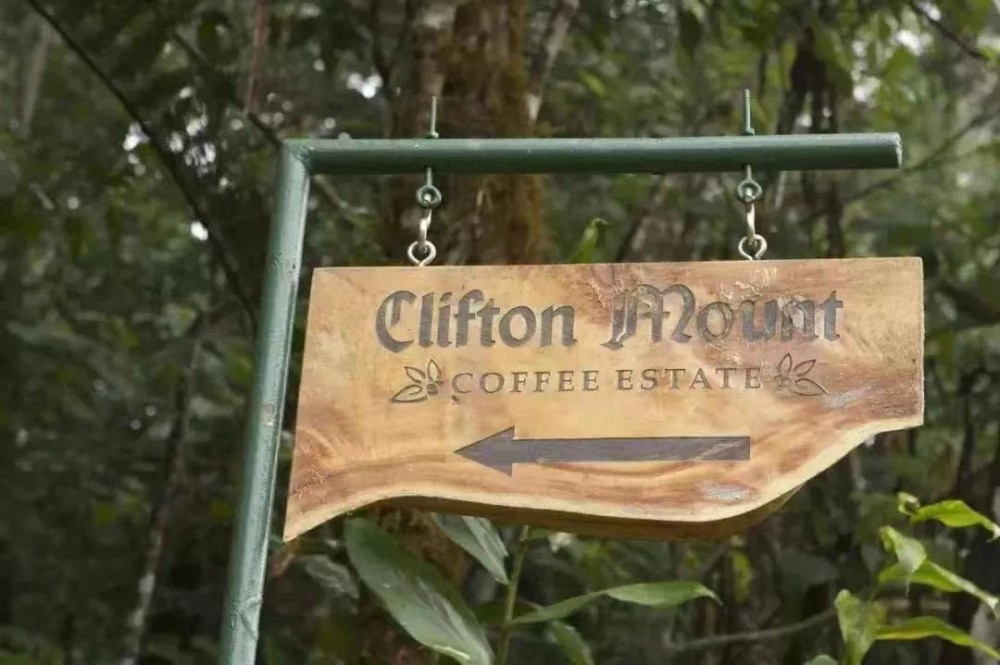
Clifton is Jamaica's oldest coffee plantation, having begun cultivating coffee in the mid-18th century and grown into the island's largest estate by 1900. In 1978 the Sharp family took over management, improving growing conditions and introducing advanced equipment to build what is now Jamaica's largest coffee processing facility, BMCP. Clifton also holds firm environmental principles, investing heavily in solar power stations and sewage treatment, while fermented cherry pulp is recycled into organic fertilizer.
The Blue Mountain Typica Variety
FrontStreet Jamaica Blue Mountain belongs to the Typica variety, one of the oldest Arabica lineages. Its flavor is considered exceptional, but its weak disease resistance yields small harvests — a major reason for Blue Mountain's high price.
Typica trees grow tall, with bronze young leaves at their tips that earned them the nickname "red-top coffee." The variety offers pure, elegant flavors but has a delicate constitution and poor disease resistance, so per-plant yields are very low — which explains its shrinking share of world coffee. Typica was introduced to the Blue Mountains in the 18th century and has spent over 200 years adapting to the island's terroir, evolving better disease resistance — especially against coffee berry disease, which it withstands far better than typical Typica.
Blue Mountain Processing Methods
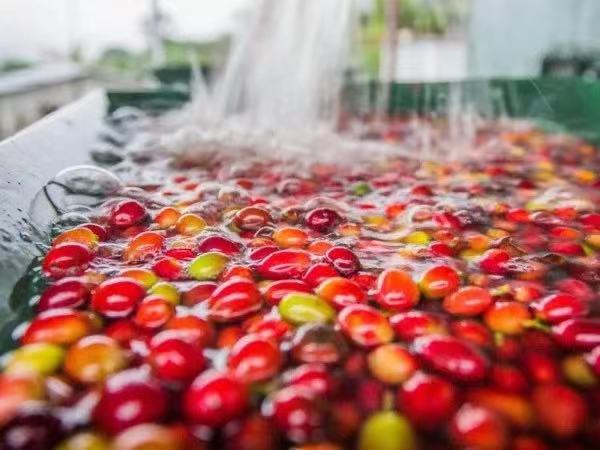
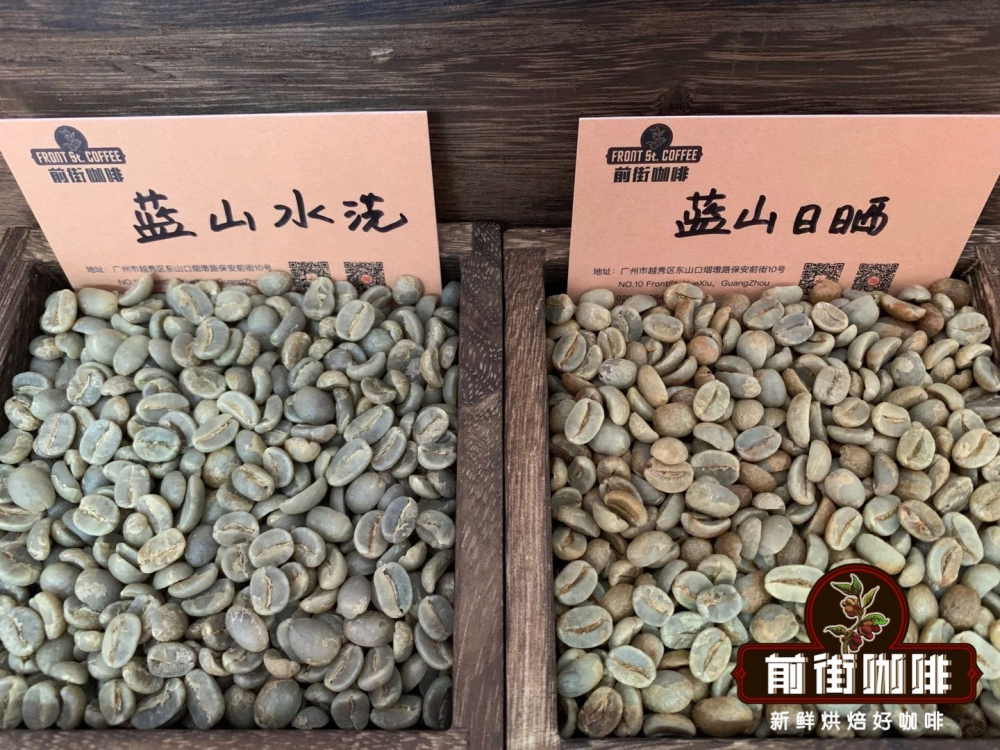
FrontStreet Blue Mountain coffee was traditionally washed processed. Following specialty market trends, however, Clifton Estate introduced its first natural-processed Blue Mountain batches in 2019. FrontStreet Coffee believes the washed coffee shows a cleaner profile and represents the most classic Blue Mountain character, so for first-time tasters, start with the washed.
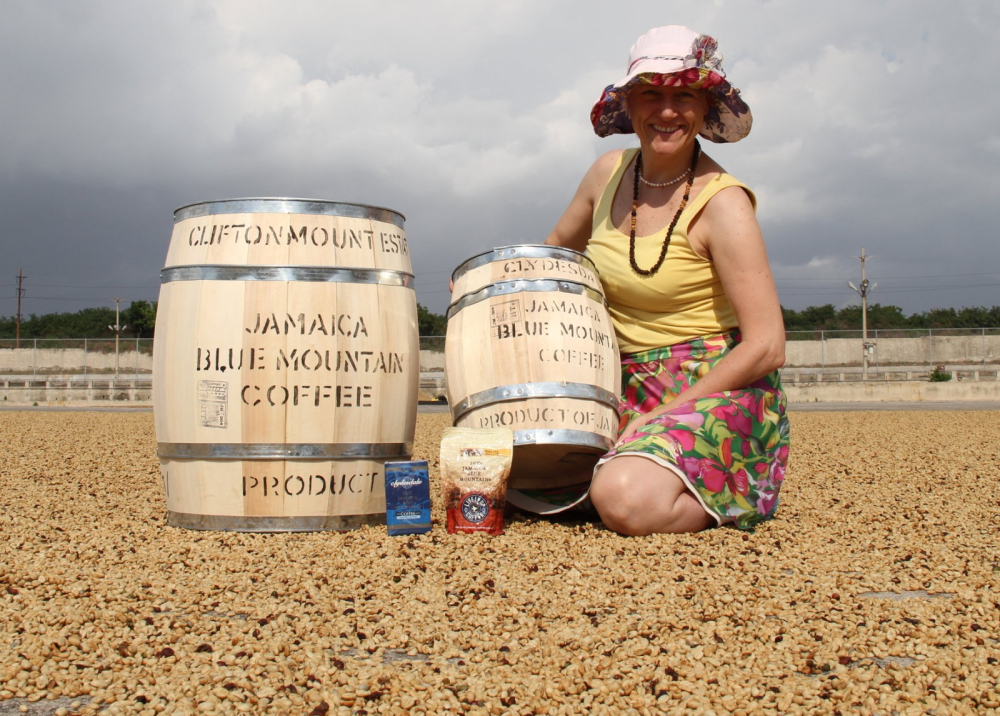
Coffee on the Blue Mountain typically ripens between June and November each year. Local women workers, intimately familiar with the terrain, harvest appropriately ripe cherries from the steep slopes. The fresh cherries are hand-sorted to remove underripe and overripe fruit, then depulped and fermented directly for 12–18 hours. The beans are scrubbed in clean water to remove the mucilage, and the semi-dry green coffee is spread out to dry. Every step demands precise control, since any slip can cost quality. The washed method adds extra steps for sorting out defects, which is why washed Blue Mountain tastes cleaner.
FrontStreet Coffee Brewing Parameters for Jamaica Blue Mountain:
FrontStreet Blue Mountain is rigorously controlled from cultivation through harvest and production, and roasting is another critical stage. FrontStreet's roasters aim to restore the classic Blue Mountain profile with a medium-dark roast; after the high-temperature roast, the beans develop caramelized exteriors and a distinct roasted-bread aroma. Based on the characteristics of Blue Mountain No.1, FrontStreet Coffee developed extraction parameters you can adjust to taste. Because No.1 is roasted fairly dark, the grounds absorb water strongly — to avoid over-extraction, FrontStreet recommends a coarser grind and lower water temperature, plus a slow-dripping cone like the KONO for a richer mouthfeel.
FrontStreet Coffee's in-store parameters for Blue Mountain No.1: KONO dripper, 88°C water, 1:15 ratio, 15g of coffee, grind at 75% retention through the #20 standard sieve, three-stage extraction.
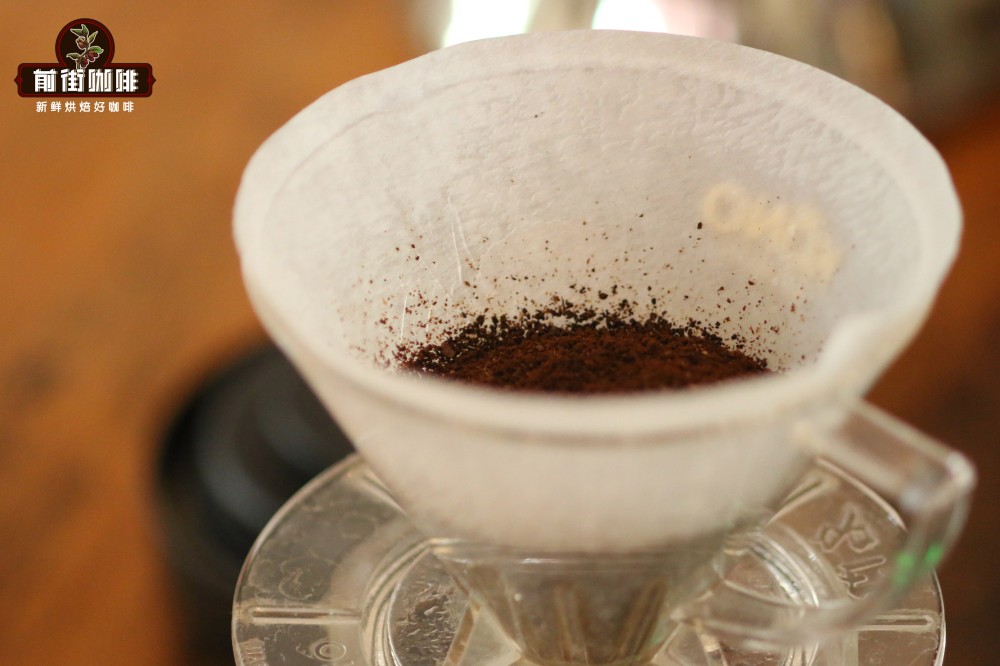
With segmented extraction, begin with a bloom using twice the coffee's weight in water — 30g for 30 seconds — which lets the grounds release internal carbon dioxide and stabilizes the extraction that follows. Continue with small circular pours to 125g, then pour on to 225g and stop. Remove the dripper once the liquid finishes drawing down; total extraction time from the first pour is 2'00". Stir the brew gently before pouring into cups to taste.
FrontStreet Natural Blue Mountain:
Subtle berry acidity reminiscent of dark plums and mulberries, excellent overall balance, rich dark chocolate and nut flavors, with slight fermentation notes.
FrontStreet Washed Blue Mountain:
Rich dark chocolate and nut flavors with a creamy smooth mouthfeel and a balanced sweet-sour-bitter profile.

FrontStreet Coffee Brewing Recommendations:
Freshness is a crucial element of any brew. FrontStreet Coffee ships all beans within 5 days of roasting — a "freshly roasted quality coffee" principle — so customers receive their coffee as fresh as possible. The optimal resting period is roughly 4–7 days, meaning beans arrive right at peak flavor development.
For those who buy pre-ground coffee, one gentle reminder: ground coffee doesn't need extra resting, since the carbon dioxide pressure built in the packaging during transport helps mellow the flavor, so it can be brewed on arrival. But it should be brewed promptly — ground coffee oxidizes fast in open air and its flavors dissipate quickly. That's why FrontStreet Coffee recommends buying whole beans and grinding just before brewing to get the coffee's full flavor potential.
FrontStreet Coffee Recommendation
Why Blue Mountain Earns Its Legend
FrontStreet's Jamaica Blue Mountain No.1, from the historic Clifton Farm, embodies everything the region stands for. Clifton has grown coffee since around 1750 at an average elevation of 4,300 feet (1,310.64 meters), where sufficient altitude, gentle afternoon clouds drifting through the mountain forest, ample sunshine, and mineral-rich soil extend the cherry ripening period and lay the groundwork for the cup. Genuine Blue Mountain carries Jamaica government certification and proof of origin, travels in wooden barrels stamped with detailed batch information, and its green beans are plump and even with slightly upturned ends and a greenish color — all quick checks against counterfeits.
Brewing FrontStreet Blue Mountain No.1 at Home
FrontStreet Coffee roasts its Blue Mountain No.1 medium-dark and ships within 5 days of roasting; rest the beans 4–7 days before brewing. A Kono dripper best amplifies the mellow body: 15g of coffee for one serving, ground coarser than you would for a light roast — about white-sugar coarseness — with water at 87–88°C and a 1:15 ratio. Pour in three stages: 30g of water to bloom for 30 seconds, then a slow, fine vertical stream in circles to 120g, pause, then continue to 225g with a slightly faster flow to keep the bed from clogging and over-extracting. What lands in the cup is exceptionally clean, complex, and gentle: dense chocolate sweetness, strong body, moderate acidity with no harsh bitterness, and a long, fruity finish — the classic Blue Mountain trinity of sweet, sour, and bitter in perfect accord.
Important Notice :
FrontStreet Coffee is a long-established specialty coffee roaster in Guangzhou China, selling freshly roasted beans from its own farm in Yunnan as well as dozens of carefully selected single-origin beans from around the world for both pour-over and espresso. The products deliver consistently excellent quality and great value, with shipping within 24 hours. Guangzhou's FrontStreet Coffee shop is recommended by many coffee lovers, and the beans are now available online at the Tmall 。
FrontStreet Coffee has moved to a new address:
FrontStreet Coffee Address: 315,Donghua East Road,GuangZhou
Tel:020 38364473
 Scan and follow the En Gafei WeChat official account. Please indicate that the reprint comes from "En Gafei".

