Simple Latte Art Learning Guide: Step-by-Step Tutorial with Principles, Techniques, and Milk Selection

People often ask FrontStreet Coffee how long it takes to learn latte art. If you only mean producing one good-looking pattern once, then with a bit of luck a single day might do it. If you want to be able to make that pattern reliably, it takes at least 4 days. You may wonder where the 4 days come from. It's simple enough: Day 1, read this article from FrontStreet Coffee; Day 2, practice; Day 3, read it again; Day 4, practice once more, and you'll have it, assuming your milk steaming is up to standard.
Principles and Techniques for Learning Latte Art
First, to master latte art you have to understand the underlying principles and techniques, and then practice consistently.
Principle and Technique 1: Why Patterns Form
Latte art happens in two stages: fusion and pattern creation. With the same milk foam, raising the pitcher spout forces the foam down into the coffee so no white lines appear, while lowering the spout lets the foam float on the surface and form white patterns. That makes sense, doesn't it?
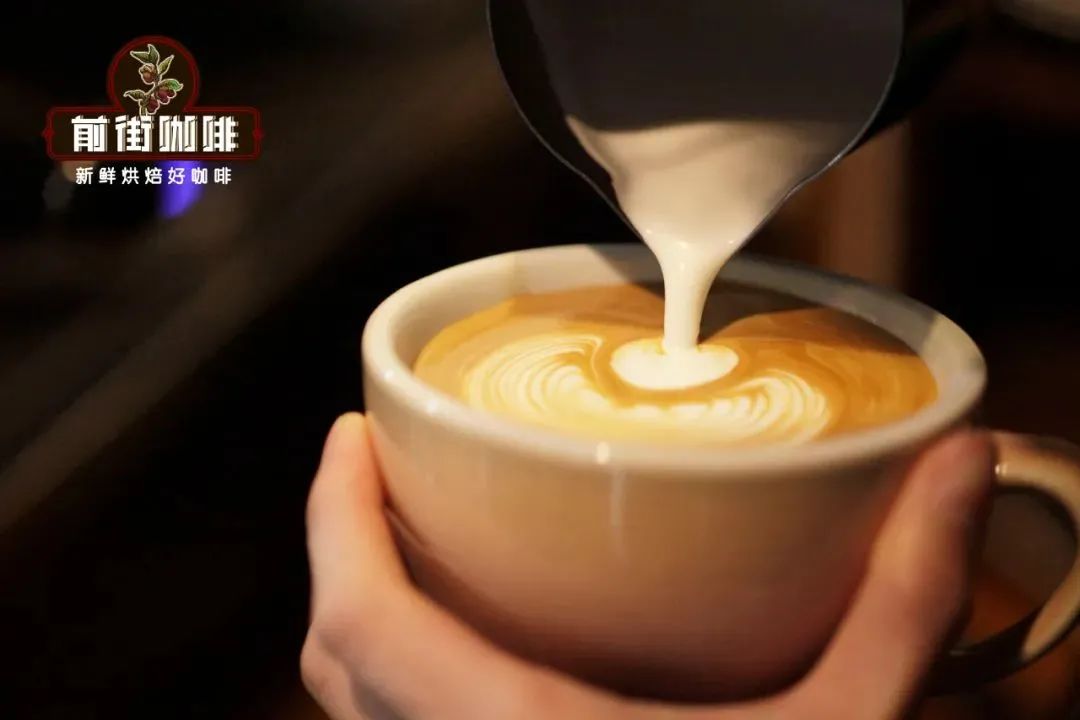
So during the fusion stage you keep the spout raised to avoid any white showing. When it's time to create the pattern, you want white to appear, so you lower the spout to draw the design.
Principle and Technique 2: Fusion
Good fusion creates a golden ring, which is both beautiful and delicious. Poor fusion looks like a scratched background board: no matter how perfect the main pattern is, the overall impression suffers.
Generally the distance between the pitcher spout and the coffee surface should be around 5 to 10 centimeters. Everyone has different habits, so there is no completely fixed height or distance.
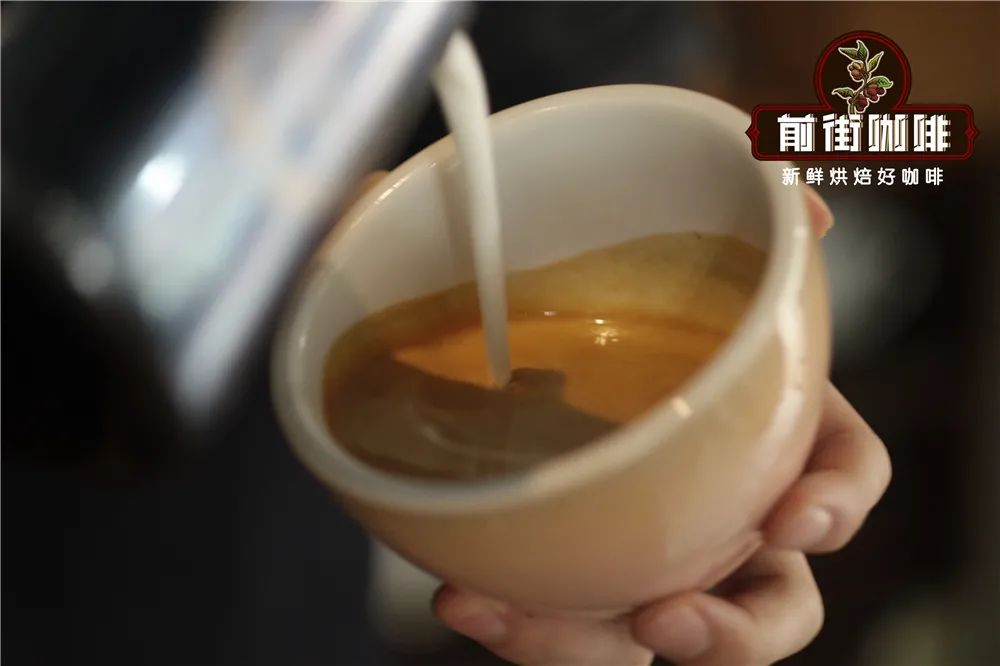
The usual fusion technique is to stir in one direction. Hold the cup with your left hand and the pitcher with your right, with the two hands offset by half a circle in a relative circular motion. The stirring force generated by moving between high and low positions mixes coffee and milk thoroughly. As for how large the circle should be, FrontStreet Coffee suggests making it as big as possible without touching the cup walls.
Principle and Technique 3: Drop Point and Trajectory
Different patterns need different drop points. When making a leaf, the drop point should be at the center of the liquid surface; for a heart, it should be at the one-quarter point. Take the heart as an example: if the drop point sits at the center, the whole heart ends up sitting too low.

This also has to be judged against how much fusion you have done and how thick the foam is. More fusion or thicker foam reduces the convection effect and produces smaller patterns. Less fusion or thinner foam gives better convection and larger patterns.
When making a heart with the drop point at the one-quarter position, as you keep pouring and tilt the cup back, the drop point gradually moves toward the center. If you fix the drop point at the one-quarter spot, the whole pattern becomes elongated and looks as if your drop point drifted backward.

Principle and Technique 4: Creating Patterns at Will
Once you can create a round patch of white foam, you have already taken a successful first step. The next step is learning to control how it changes.
At this stage the skill to master is cup tilting. For latte art that relies on convection patterns, tilting the cup is crucial. Tilt too early or too late and the pattern deforms.
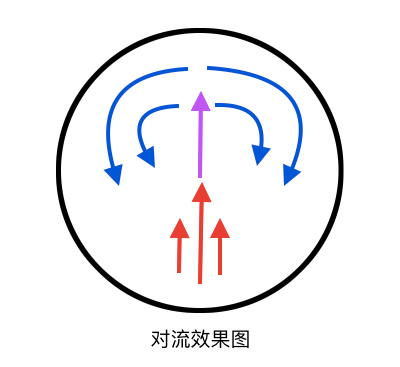
As you create the pattern, the cup in your left hand should gradually return to upright. Normal convection shows up as foam "pushing" out from the middle when you pour into the center, with a backflow on both sides that makes the pattern fuller. The thinner the foam, the more obvious this becomes. When we want a heart or a stacked tulip, we need that convection.
Principle and Technique 5: Finishing
When you have created a pattern you're happy with, hold your excitement in check first, because a poor finish can ruin the whole thing. There are mainly 3 problems with the finishing movement.
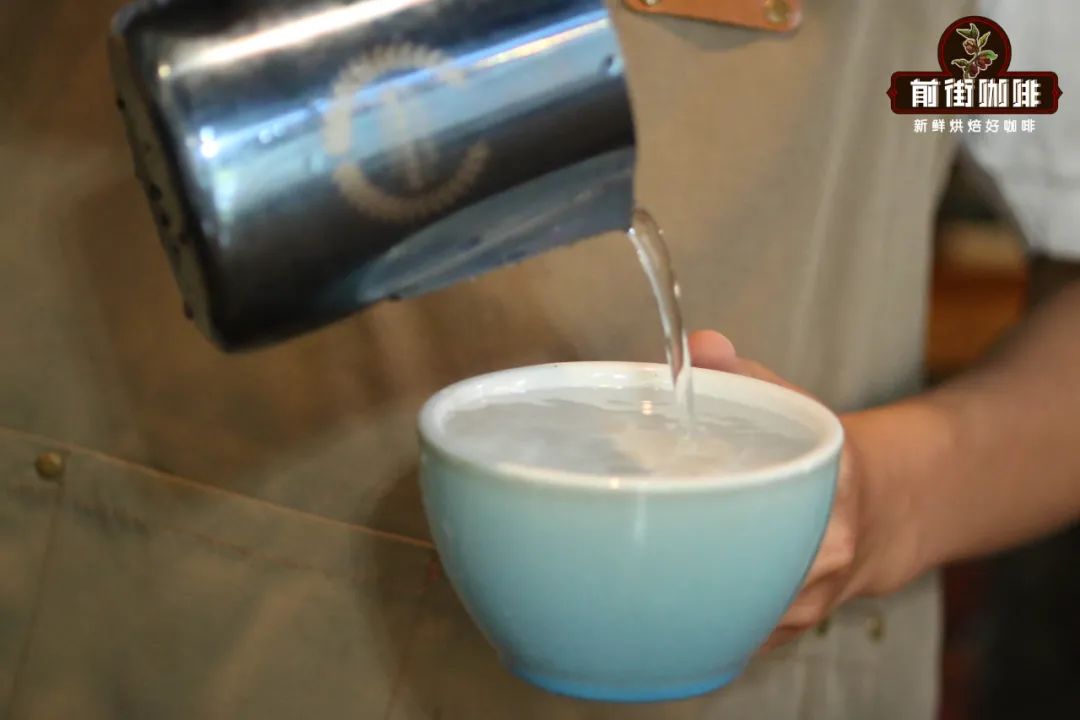
First, some people pull straight out of the cup and leave a long tail, which doesn't look very appealing. If you're using a thick cup, there may also be milk residue on the rim.
Second, some people don't raise the spout when finishing, which "forces" the pattern to elongate.
Third, the finish isn't clean or decisive, so excess milk drips out and makes the tail "bloom" unintentionally.
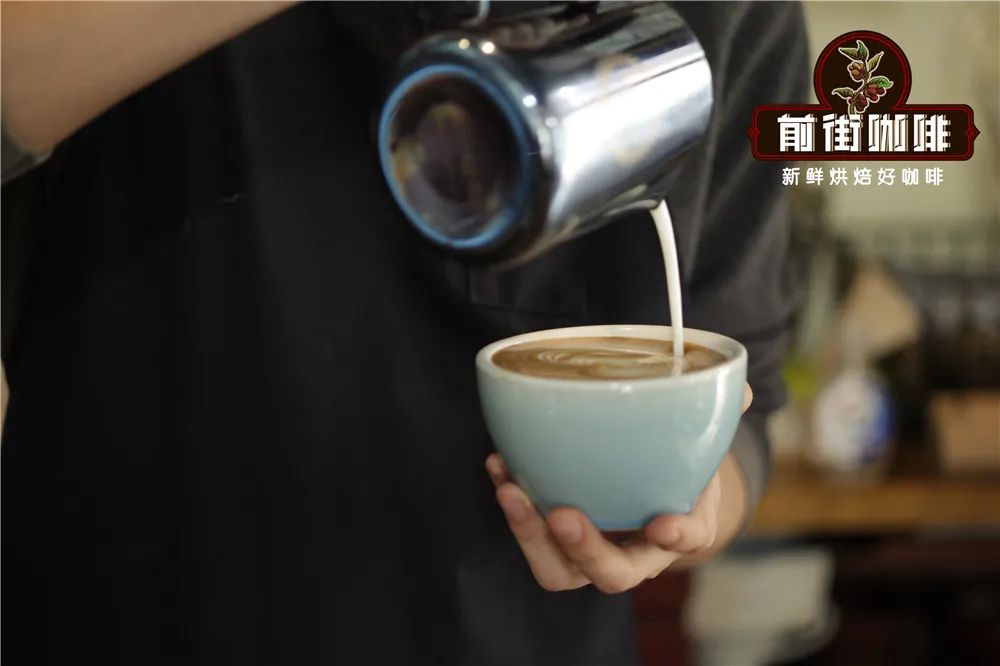
Taking a heart as an example, a proper finish should be: when the cup is nine-tenths full, gradually raise the pitcher and push forward while steadily reducing the milk flow.
FrontStreet Coffee's Practice Recommendations
For your first attempt, FrontStreet Coffee still recommends using real milk and real coffee to try 1-2 times. The point is to feel the sensation when milk and coffee blend and then when the pattern forms. It doesn't matter if you can't make a pattern at first; what matters is getting that feeling.
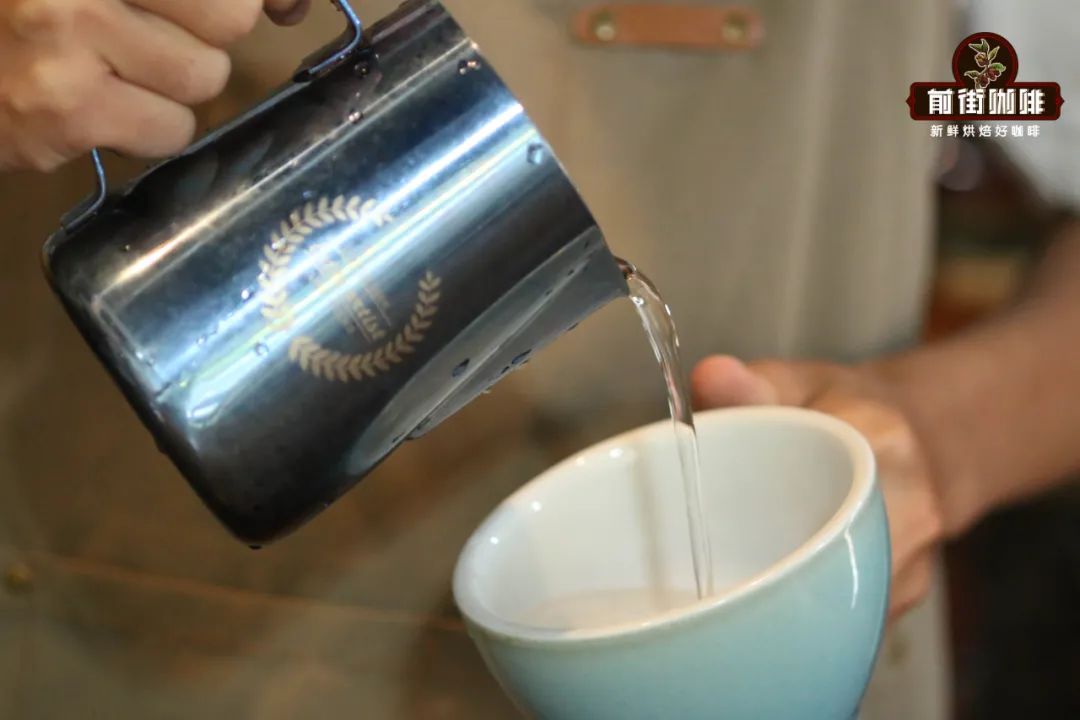
After the real thing, you can practice with plain water, which saves milk. This stage is important and tedious at once. With the internet as good as it is today, there are all kinds of latte art videos online. FrontStreet Coffee suggests finding videos that clearly show the upper body, ideally with close-ups of the hand movements. Don't focus on their patterns; watch their technique: how they grip the pitcher, hold the cup, fuse, create the pattern, and tilt the cup. Observe carefully, then imitate and repeat. It's best to have a friend watch from a third-person angle to check your posture.

When you've practiced enough to build muscle memory, switch back to real milk and coffee to test the results. If your method is right, you should be able to make decent patterns this time. If not, you can work backward from the pattern to figure out which step went wrong and focus on that. During this practice, don't chase high-difficulty patterns. Start with the most basic heart and repeat it.
FrontStreet Coffee Recommendation
If you want to practice latte art at home, FrontStreet Coffee's Classic Blend is the place to start. It is a medium-dark Italian-style recipe built from three growing regions and inspired by the old "Mamba" combination of Mandheling and Brazil; to add aroma and crema, a small amount of Robusta is included as well. It gives off clear butter, toast, and caramel-cookie aromas, with strong flavor, a solid body, and fine crema, and it extracts very consistently, making it a must-have for beginners.
If you favor a rich, nutty profile, FrontStreet Coffee's Specialty Blend is another medium-dark espresso bean worth trying. It pairs washed Colombian beans with semi-washed Brazilian beans, showing nut, dark chocolate, and caramel flavors in the cup. Whether you make an Americano, a latte, or a flat white, it highlights the smooth aromas of cream, almond, and cocoa, with crema that stands up to any cafe pour and more than enough stability for latte art practice. It is especially well suited to those planning to open a shop or learn at home.
Important Notice :
FrontStreet Coffee is a long-established specialty coffee roaster in Guangzhou China, selling freshly roasted beans from its own farm in Yunnan as well as dozens of carefully selected single-origin beans from around the world for both pour-over and espresso. The products deliver consistently excellent quality and great value, with shipping within 24 hours. Guangzhou's FrontStreet Coffee shop is recommended by many coffee lovers, and the beans are now available online at the Tmall 。
FrontStreet Coffee has moved to a new address:
FrontStreet Coffee Address: 315,Donghua East Road,GuangZhou
Tel:020 38364473
 Scan and follow the En Gafei WeChat official account. Please indicate that the reprint comes from "En Gafei".