Matsuya-style Japanese Pour-Over Coffee Method: Authentic Japanese Pour-Over Coffee Guide
The Matsuya-style Pour-Over Method: A Classic Japanese Coffee Brewing Technique
Today FrontStreet Coffee is sharing yet another pour-over method - this time a truly classic Japanese technique, the Matsuya-style method.
First impressions of this style: you "achieve a true bloom by covering with a lid," "pour with a dramatically high water column," and "end up with a surprisingly small amount of coffee." Japanese techniques like this can look theatrical - even a little mystical. But after reading this breakdown, it should stop feeling mysterious.
What is Matsuya-style Pour-Over?
Matsuya-style pour-over was invented by Kazuyoshi Matsushita in 1962 - some six decades ago now. Reportedly one of the more systematic brewing methods in Japan at the time, it was passed down as the "scientific extraction technique" of its era, shaped by the limitations of that period.
Characteristics and Extraction Principles of Matsuya-style
Matsuya-style aims for stable extraction and clean flavors, which is why the method itself is kept simple and unambiguous. Given the technology of the past, problems we solve easily today required creative workarounds.
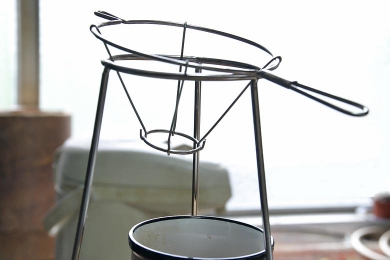
1. Matsuya-style uses a metal extraction rack invented by Kazuyoshi Matsushita specifically for this method. The rack is structurally simple, with one purpose: supporting the filter paper so it doesn't deform. The filter paper used with it is therefore on the stiffer side. It's likely the open design also serves quick heat dissipation and fast water flow.
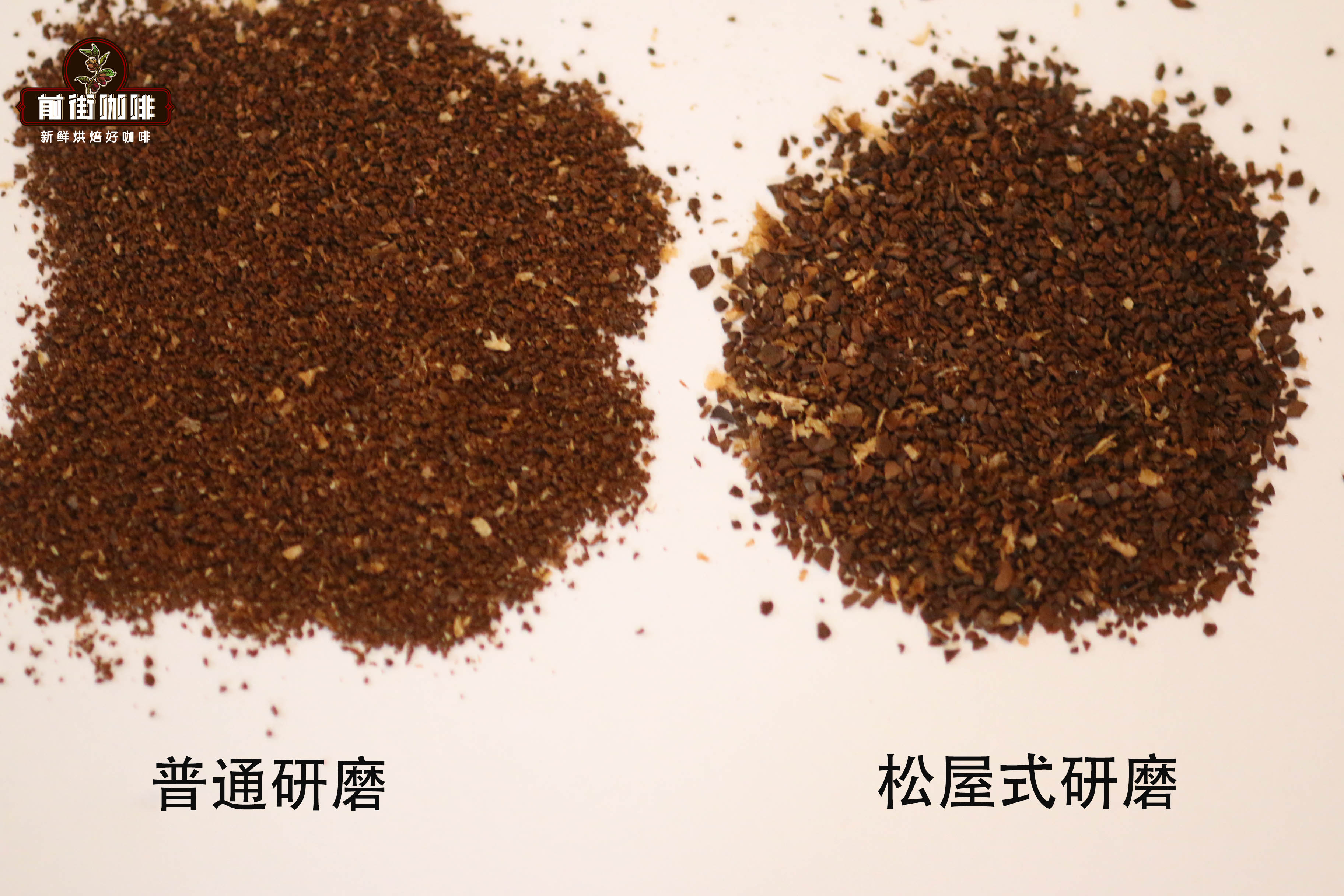
2. The blooming process is quite interesting. The philosophy is to drive the air out of the coffee grounds completely, so that whether you brew freshly roasted beans or beans roasted a month ago, the cup tastes the same.
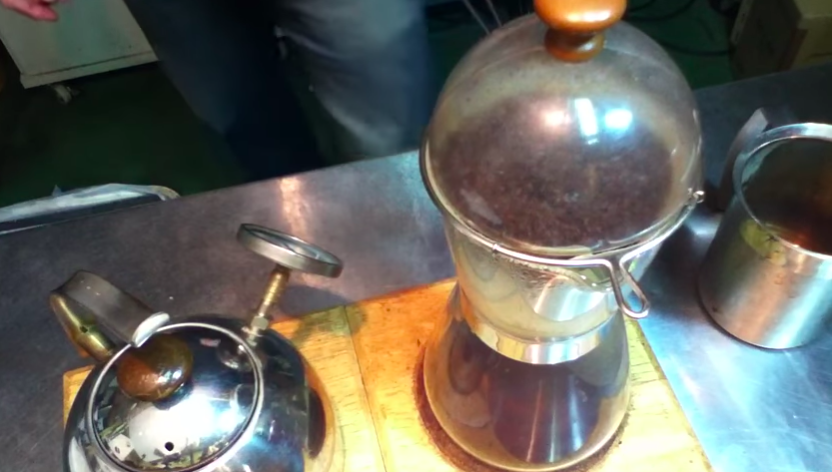
To do this, the beans are ground very coarsely, water is poured on, and the bloom lasts a full 3 minutes. During the bloom, a lid must be placed on top so most of the coffee's aroma stays in.
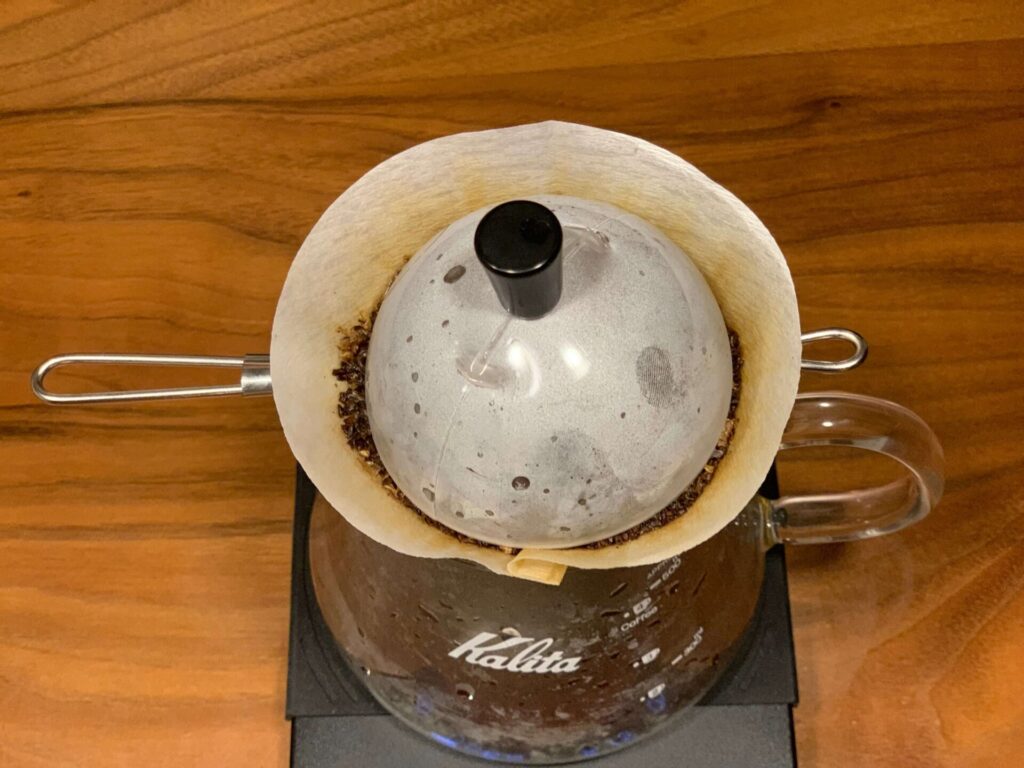
3. The pouring is equally distinctive. Since thermometers weren't available back then, Matsushita developed a "scientific" temperature-reduction method to minimize deviation. Water is boiled in a kettle (100 degrees C), then poured into a pour-over kettle, where it cools to roughly 95-96 degrees C. But at that temperature, bitter and unpleasant flavors extract easily.
His solution was to raise the pour. If you ever spot a barista holding the water column some 30cm above the bed, chances are they're brewing Matsuya-style.
The coarse grind basically prevents water from pooling, so this is genuine pour-through extraction rather than soaking - which means none of the bitter compounds that come from prolonged contact.
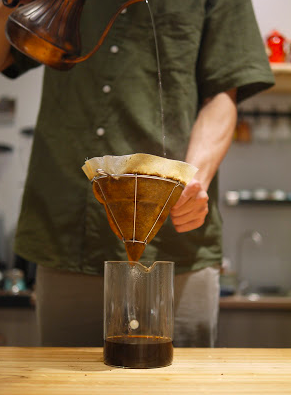
4. Another hallmark is the small yield. Matsushita believed the essence of coffee lies in the first half of the extraction, while the latter half tends to bring out bitter substances. So the coffee-to-water ratio can be as high as 1:5 - with 20g of grounds, you collect only about 100ml of coffee. That concentrate is then diluted with water to the strength each customer prefers.
Let's Watch the Matsuya-style Brewing Process
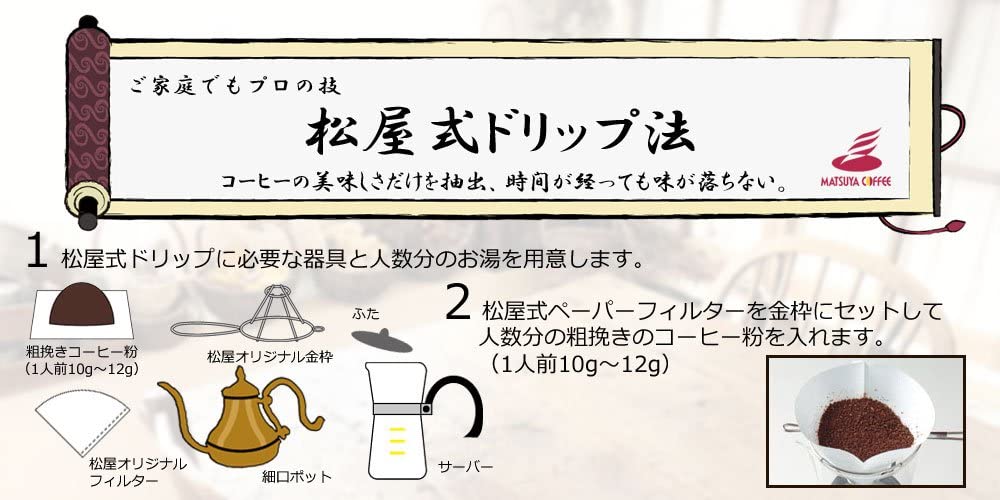
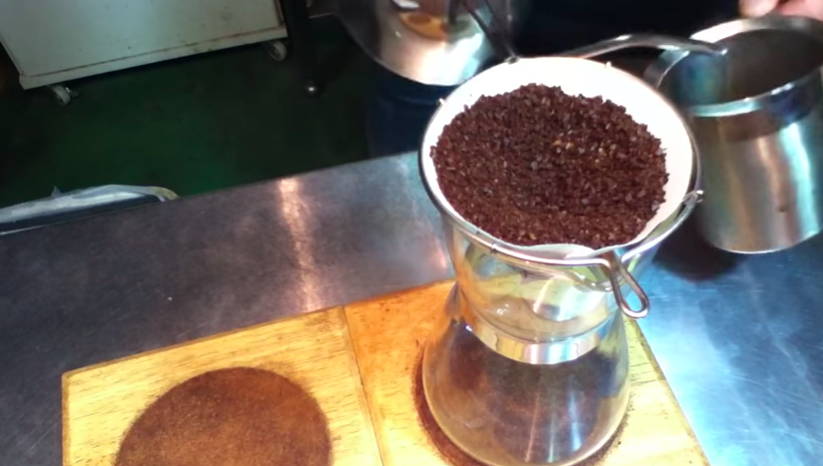
First, prepare the equipment: a dedicated Matsuya-style metal filter holder, a pour-over kettle, stiff-textured filter paper, and dark roast coffee beans.
Grind the beans very coarsely and remove the fines. Judged against a #20 sieve, the pass rate should be just 40-45%.
Set the filter paper on the holder and add the grounds. Use a spoon to dig a small hole in the center, then lift the water column high and pour from the center outward in circles - a thin, straight stream to wet the surface grounds completely. Cover with the lid and bloom for 3 minutes.
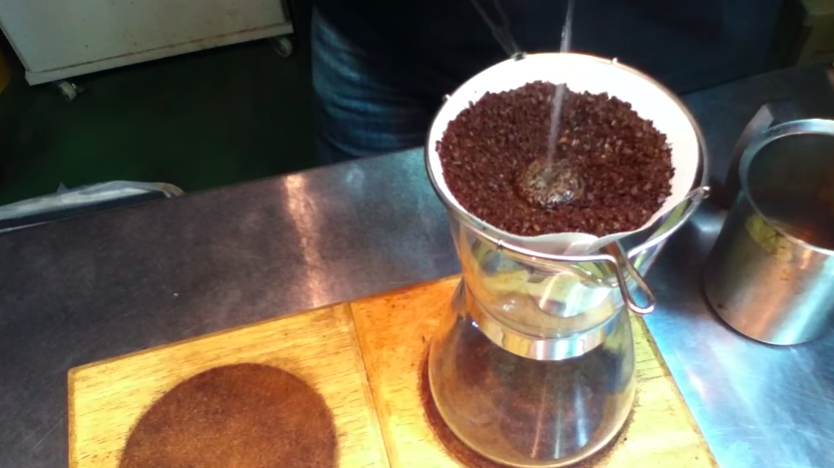
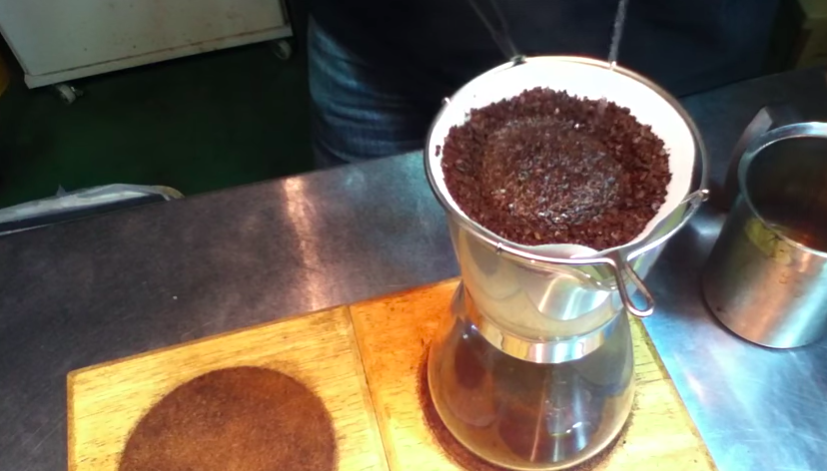
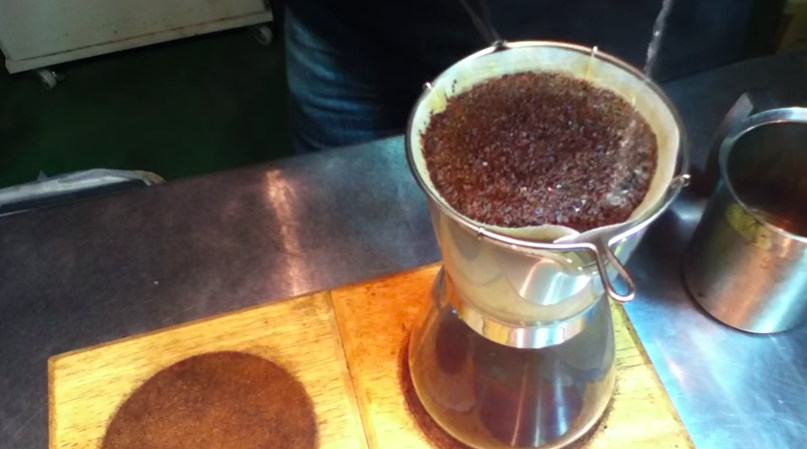
When time is up, remove the lid and pour from 30cm high. In reality, at that height the water no longer falls as a continuous column but as a chain of droplets. Thanks to the coarse grind, what you pour filters through in real time, so nothing soaks. Stop when the liquid reaches the 1:5 ratio.
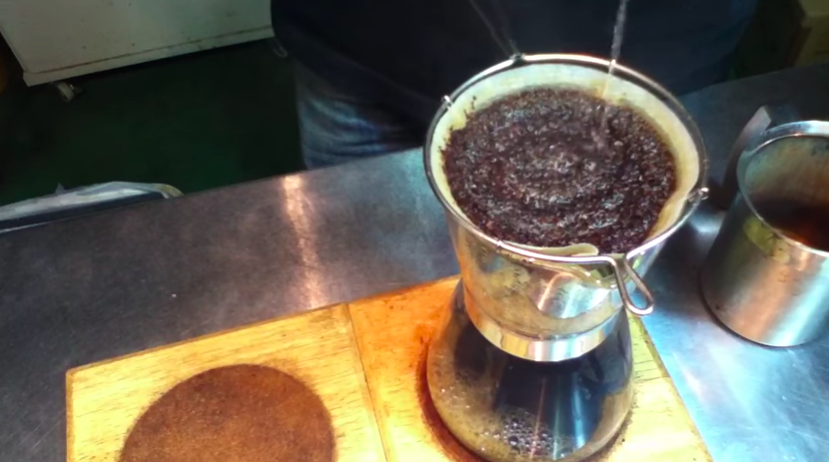
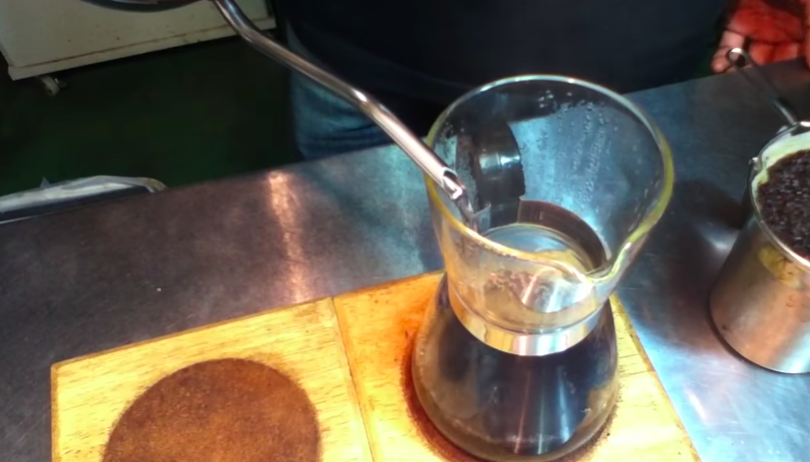
At this point the coffee is highly concentrated, so dilute it 1:1 with water. Brewed this way, the cup is remarkably clean, and the aroma is beautifully preserved.
FrontStreet Coffee Recommendation
Matsuya-style was designed around dark roast beans, and that's still what suits it best today. A perfect match is FrontStreet PWN Indonesia Golden Mandheling: triple hand-sorted and machine-sorted for near-zero defects, it brews remarkably clean despite its deep roast, with a thick, smooth body and clear woody and caramel notes that hold up to the high-temperature pour and 1:1 dilution.
If you'd like a mellower alternative with similar balance, FrontStreet Jamaica Blue Mountain No.1 is the classic pairing for traditional Japanese-style brewing - its gentle sweetness and lack of harsh bitterness come through beautifully even in this old-school method. Both are exactly the kind of beans the Matsuya technique was built for.
Important Notice :
FrontStreet Coffee is a long-established specialty coffee roaster in Guangzhou China, selling freshly roasted beans from its own farm in Yunnan as well as dozens of carefully selected single-origin beans from around the world for both pour-over and espresso. The products deliver consistently excellent quality and great value, with shipping within 24 hours. Guangzhou's FrontStreet Coffee shop is recommended by many coffee lovers, and the beans are now available online at the Tmall 。
FrontStreet Coffee has moved to a new address:
FrontStreet Coffee Address: 315,Donghua East Road,GuangZhou
Tel:020 38364473
 Scan and follow the En Gafei WeChat official account. Please indicate that the reprint comes from "En Gafei".