Why Should Pour-Over Coffee Be Brewed in Stages? How to Brew Hand-Ground Coffee
After our recent discussion on why pour-over coffee should be brewed with segmented pours, a few readers asked how to determine the cutoff points for each stage in a three-pour recipe. So this time, let's look at exactly when to stop pouring at each of the three stages.

Filter-cup size, shape, and the amount of grounds all influence where those cutoff points fall. For this walkthrough, FrontStreet Coffee will use the most common setup: a V60 #01 dripper with 15g of coffee at a 1:15 coffee-to-water ratio—that is, 15g of grounds brewed with 225g of water in total.
First Cutoff Point: Double the Weight of the Grounds
It bears repeating because it matters so much: the bloom is critical. Depending on roast level, freshly roasted beans differ in structural density, carbon dioxide content, and how quickly that gas escapes. As a general rule, the darker the roast, the more CO2 the beans hold and the longer the degassing takes. Giving the bed a small amount of hot water and a brief rest lets the CO2 escape naturally, which sets up a more stable, even extraction through the rest of the brew.
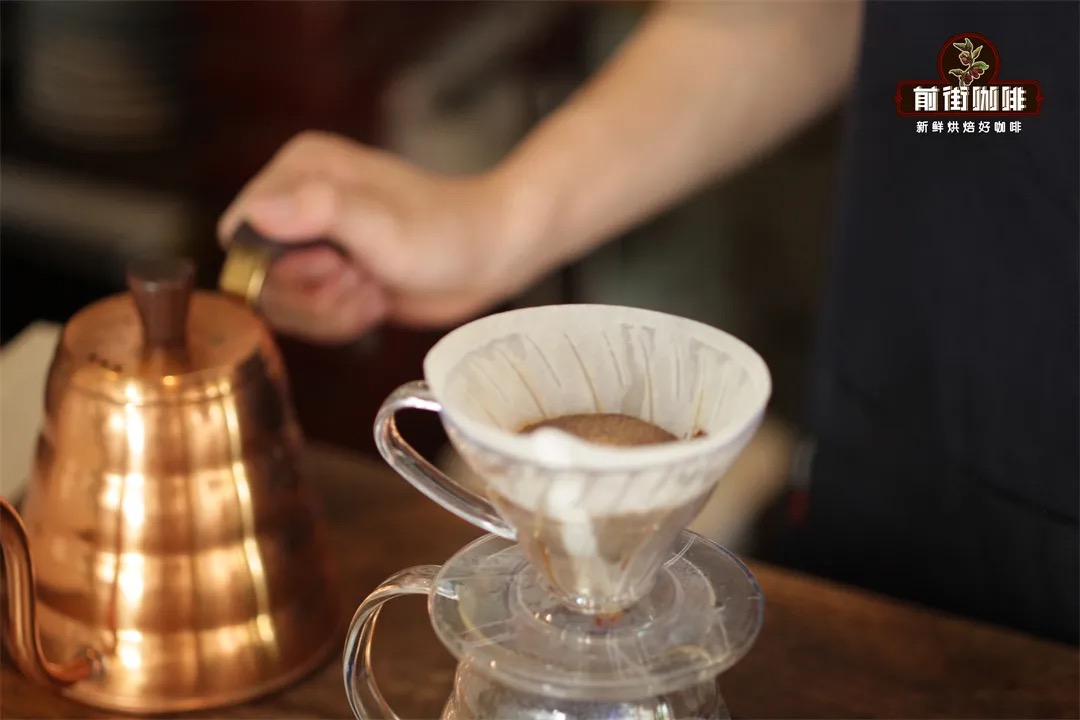
During the bloom, FrontStreet Coffee suggests pouring twice the weight of the grounds—in this case, 30g of hot water onto 15g of coffee. The bed will absorb roughly 25g of that water and slowly drip about 5g of coffee liquid into the server. If coffee drips into the server very quickly, or a large amount comes down at once, the grind is probably too coarse and water is racing through the bed (which can also cause the bed to collapse). The other possibility: your pour is too forceful, sending water rushing to the edges and straight into the server through the air vents without ever passing through the coffee bed—so the CO2 never vents evenly and the later stages extract unevenly.
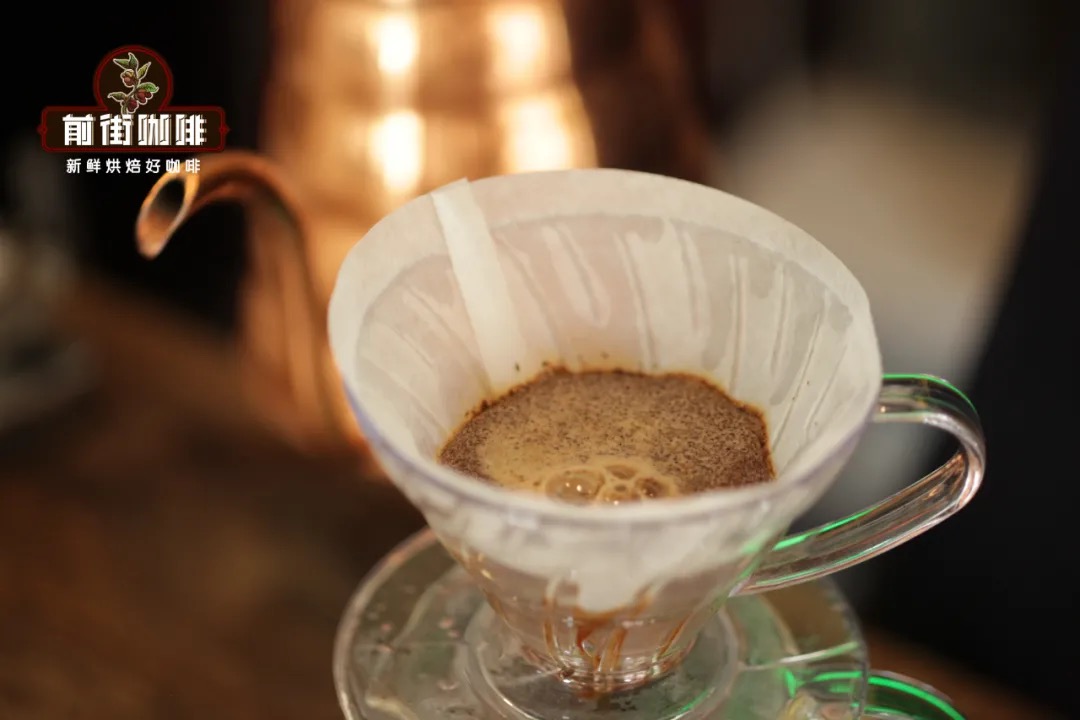
Start your timer at the first pour. FrontStreet Coffee recommends a bloom of 20-40 seconds; once the surface of the bed stops bubbling and swelling, move on to the next pour. Don't stretch the bloom too long, though—over-blooming drains too many soluble compounds from the surface of the particles, and the cup turns astringent.
Second Cutoff Point: Don't Pour Past the Height of the Evenly Distributed Grounds
As you begin the second pour, the force of the water column tumbles the grounds, breaking up the clusters from the bloom and distributing them evenly up the walls of the cone as the water level rises. FrontStreet Coffee suggests keeping the flow at 4-5g per second, steady and consistent. The goal is to use a small, gentle, even flow to agitate the grounds so they coat the walls uniformly. That way, every stream of water passes through a bed of the same thickness from every direction and extracts liquid of the same concentration.
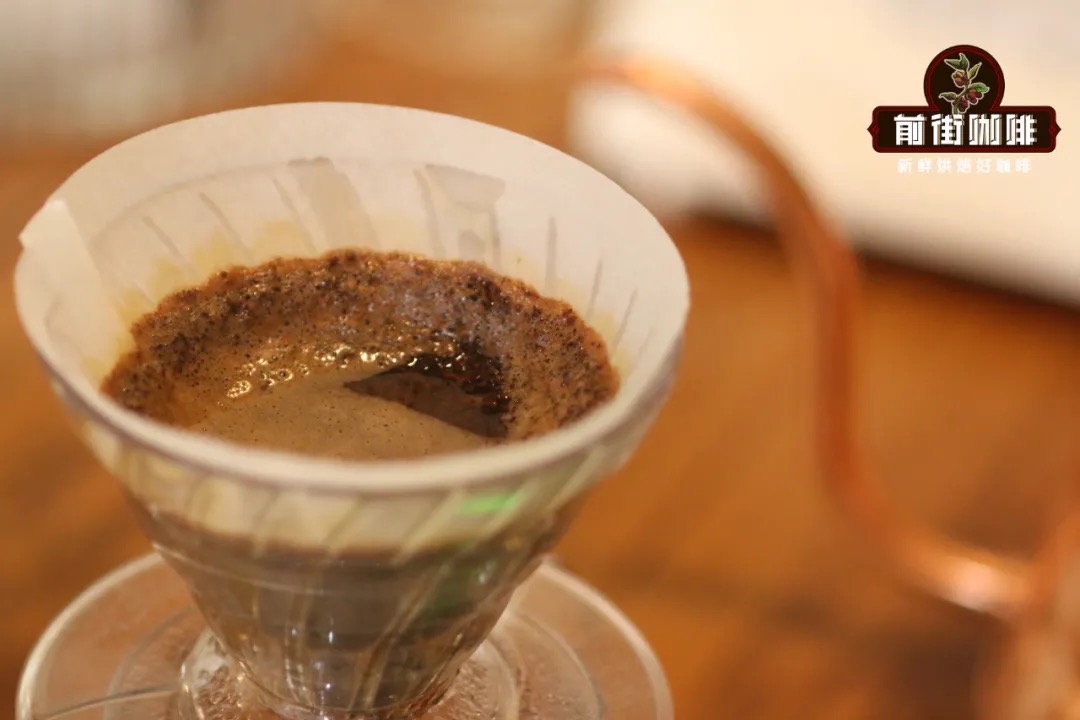
(Here the grounds are distributed evenly.)
If your flow rate fluctuates, the grounds settle unevenly—thick in some places, thin in others—and the extraction follows suit.
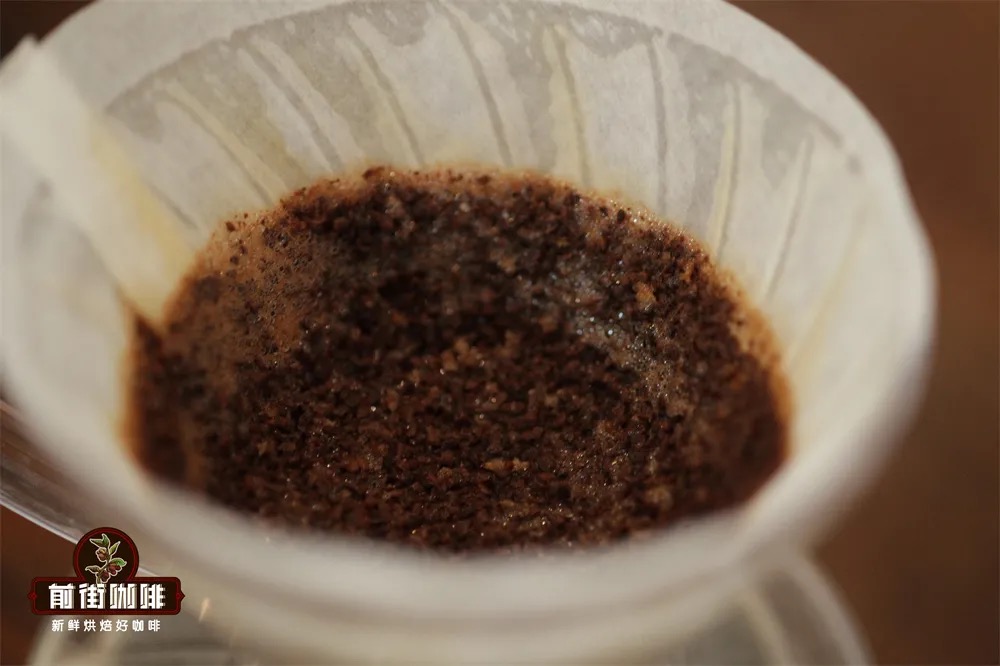
(Here the grounds are distributed unevenly.)
Keep in mind, though, that this even distribution has a ceiling. For 15g of coffee in a V60 #01, the grounds can climb only to about two-thirds of the dripper's height. From years of brewing, FrontStreet Coffee has found that with fresh, properly ground beans, after pouring 95-100g of water in this second stage with a small, steady flow (bringing the cumulative total to 125-130g), the water level sits right at that ideal line. Time your stop for the second pour at around 55 seconds to 1 minute.
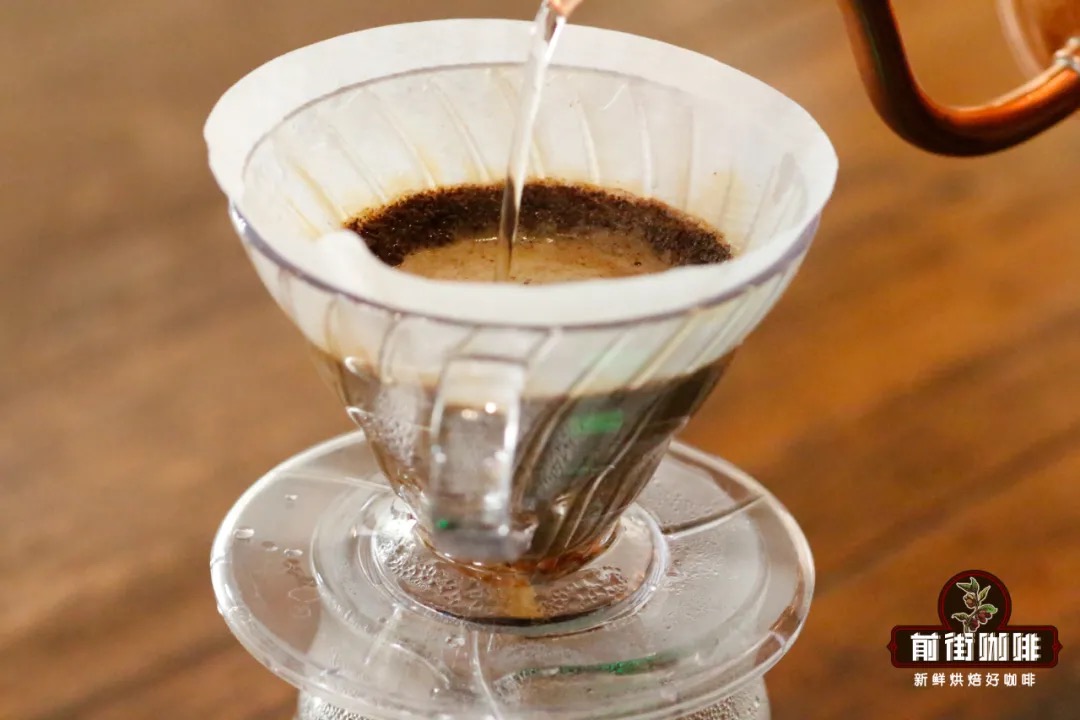
Pour past that height and the surplus water bypasses the bed, running down the ribs straight into the server; worse, it dislodges the grounds clinging to the walls and lets them slump to the bottom of the cone, and the extraction turns uneven. When that happens, check whether your flow is too fast or too heavy, or whether the grind is too fine and full of fines, choking the bed. If the grounds barely rise at all and never distribute up the walls, the likely culprits are a grind that's too coarse or a water column that's too thin.
Third Cutoff Point: Do You Really Need to Think About This One?
Quick quiz: brewing 15g of coffee at 1:15 with 225g of water, having poured 125-130g across the first two stages, how much water remains for the third? Just kidding. For the final stage, simply pour the remaining 95-100g in one go. Still mind the flow: don't rush it, keep it stable, and don't let the water level climb past the grounds or break up the bed you've so carefully distributed. Stop the final pour at around 1 minute 45 seconds to 1 minute 50 seconds.

FrontStreet Coffee Recommendation
The Hario V60 rewards beans with delicate florals, lively acidity, and clean sweetness—its fast-flowing cone pulls those traits forward. Before the third wave of coffee, roasters favored medium-dark profiles and drinkers prized body and caramelized notes (chocolate, maple, nuts, vanilla) best expressed with siphon or flannel. Today, with roasting moving lighter and palates chasing regional character—Ethiopian white florals, Kenyan berry acidity—the V60 has become the natural home for floral-fruity beans.
FrontStreet Yirgacheffe Guodingding (Ethiopia). A favorite first step into specialty pour-over: vivid citrus, berries, and florals with a green-tea-like sweetness. Its acidity is soft and bright—fruit-like rather than sharp—making it very approachable for beginners.
FrontStreet Ethiopia Huakui (Gerji). One of the biggest stars of recent specialty coffee, with assertive tropical fruit—strawberry, passion fruit, jackfruit, even lychee—pronounced sweetness, and almost no bitterness. Regularly described as "the coffee for people who think they don't like coffee."
FrontStreet Panama Esmeralda Red Label Geisha. The legend of the specialty world: elegant jasmine florals with citrus, bergamot, and black-tea notes, a clean, transparent cup, and a long, layered finish. Pricier than most specialty lots, but still the bucket-list experience for many coffee lovers.
FrontStreet Kenya Cherry Tomato. A washed Kenyan from the Thika growing region, grown at 1550-1750 meters on the classic SL28 and SL34 varieties and processed with Kenya's signature 72-hour double-wash fermentation. Light roasted, it opens with dried tomato and floral aromatics, then delivers crisp cherry-tomato and dark-plum acidity like fresh-pressed juice, with mid-palate sweetness of snow pear and black plum, and a clean finish of yellow sugar and green tea.
FrontStreet PWN Golden Mandheling (Indonesia). If you prefer darker roasts, this Sumatran classic is wet-hulled, low in acidity, and full-bodied, with herbal and dark-chocolate depth and a whisper of earthiness.
Important Notice :
FrontStreet Coffee is a long-established specialty coffee roaster in Guangzhou China, selling freshly roasted beans from its own farm in Yunnan as well as dozens of carefully selected single-origin beans from around the world for both pour-over and espresso. The products deliver consistently excellent quality and great value, with shipping within 24 hours. Guangzhou's FrontStreet Coffee shop is recommended by many coffee lovers, and the beans are now available online at the Tmall 。
FrontStreet Coffee has moved to a new address:
FrontStreet Coffee Address: 315,Donghua East Road,GuangZhou
Tel:020 38364473
 Scan and follow the En Gafei WeChat official account. Please indicate that the reprint comes from "En Gafei".