
What is Flat White? What's the difference between Flat White, Latte, and Cappuccino?

When it comes to coffee, plenty of people still picture milk coffee first. They walk into Starbucks or any cafe and order without thinking: "I'd like a latte." In recent years, friends visiting FrontStreet Coffee's physical stores have begun asking for something else: "I'd like a flat white." Flat white, in fact, is the English name for Australian white coffee.
It is called Australian white coffee because the drink originated in the Australian region. The story of how it spread across the Oceanic continent is full of controversy, though. Australians claim the flat white as their invention, while their neighbor New Zealand insists it actually began there.
As early as the 1960s, the term "flat white" appeared in a British film called "Danger by My Side." In the movie, however, flat white referred to coffee that was thin and watery.
Written records of the modern drink only appeared in the 1980s.
Australia
- In May 1983, a review of a delicate coffee shop mentioned "flat white";
- In April 1984, an article in a Sydney newspaper satirized the popular latte of the day, using "flat white" to describe it;
- In 1985, "flat white" appeared on the menu of a cafe called Moors Espresso in Sydney. The owner said the "white coffee-flat" drink was something he brought to Sydney from Queensland;
- In 1985, the menu at the Parliament House restaurant in Canberra marked "flat white only."

New Zealand
- A cafe called DKD Cafe in Auckland, New Zealand invented flat white to replace the latte;
- In 1989, a barista at Bar Bodega in Wellington used skim milk to froth milk for a cappuccino. Because the foam was too thin, it failed, but instead became a flat white.
Whether the flat white originated in Australia or New Zealand remains a hotly debated question. Setting the origin aside, Australian white coffee has won over many coffee lovers with its rich coffee flavor and delicate texture, earning praise from milk-coffee fans everywhere.

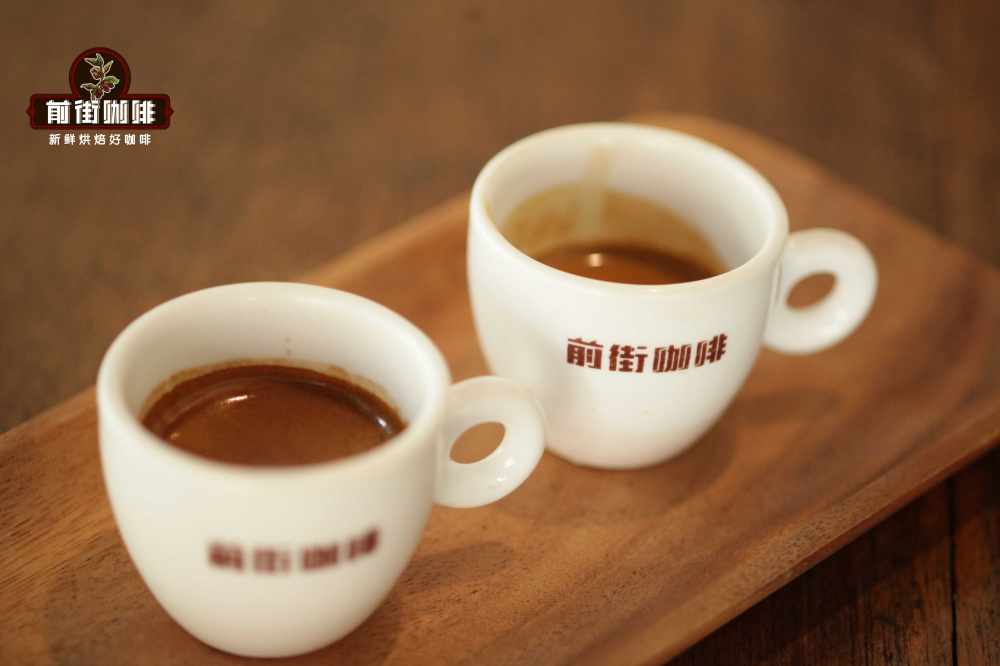
What's more interesting is that although both countries call it flat white, their standards differ. Australians prefer a single shot of espresso, while New Zealanders prefer a double shot of ristretto. At this point some friends may ask FrontStreet Coffee: what is ristretto coffee?
Ristretto has similarities to the espresso we drink every day, and differences too. The similarity is that both are concentrated coffee liquids extracted on the same principle. The difference is that ristretto, as the name suggests, has a more concentrated, intense coffee flavor.
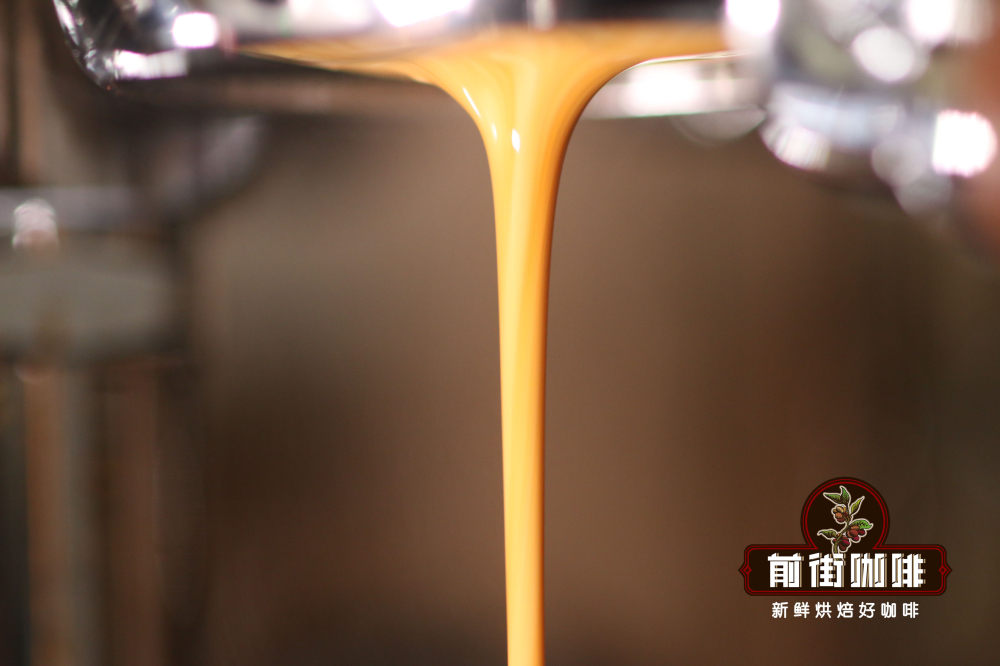
During espresso extraction, the liquid that drips first is dark in color and thick in texture; as extraction goes on, the later liquid turns lighter and thinner.
Ristretto takes only the front and middle sections of the espresso, so compared with a full espresso it has a more concentrated flavor and a thicker texture.
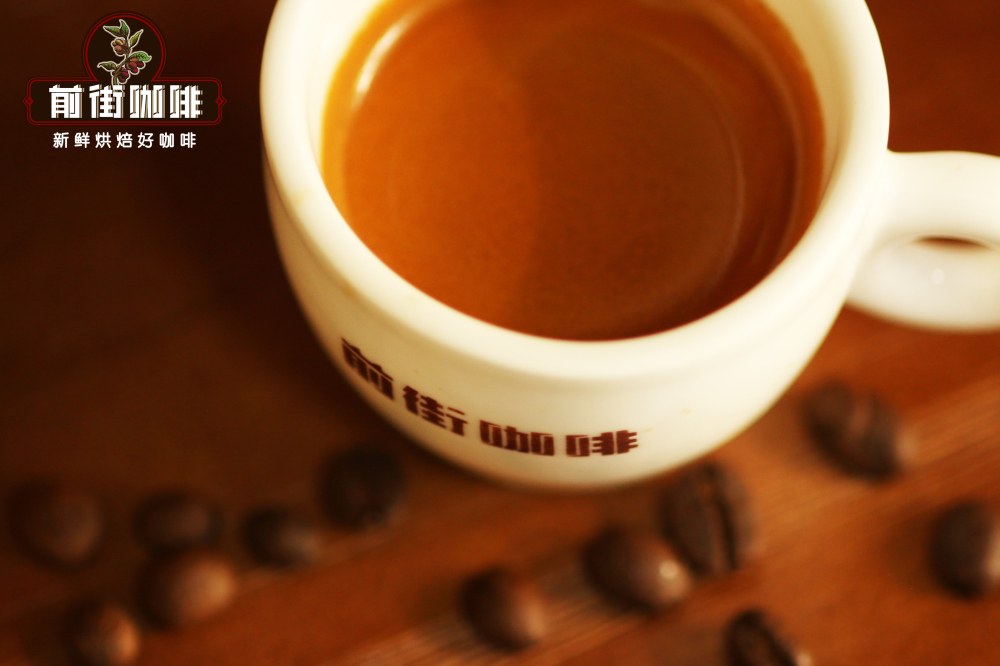
Although FrontStreet Coffee's menu doesn't list "Australian white coffee" as a specific product, its physical stores will still make it when friends ask. When FrontStreet Coffee's baristas prepare it, they build it on a double shot of espresso.
FrontStreet Coffee's Australian White Coffee Method
FrontStreet Coffee's standard for pulling espresso is 20 grams of coffee powder extracted into 40 grams of espresso liquid, over an extraction time of 28 seconds.
For Australian white coffee, FrontStreet Coffee uses a cup with a capacity of approximately 240 milliliters. Since the foam is very thin, when steaming the milk FrontStreet Coffee suggests first letting the milk enter a rotating state, then adding a small amount of air, and finally moving into the stage of whipping the foam to a fine consistency.

After fusion, because the foam is so thin, latte art is hard to form. FrontStreet Coffee suggests using a center-point pour to make a small dot, or pulling a heart.
FrontStreet Coffee's Australian white coffee tastes of rich vanilla and cream with an obvious whiskey-barrel aroma. Drunk in cold winter, it feels warming, because FrontStreet Coffee's stores use the Sunflower Warm Sunshine Blend to make the espresso. This blend is 70% Honduras Sherry coffee beans and 30% Ethiopian Natural Red Cherry coffee beans.

The Sherry beans are fermented at low temperature in sherry whiskey barrels for 30 to 40 days, allowing the sherry whiskey flavor to penetrate the raw coffee. Sherry whiskey carries rich vanilla and cream notes with an explosive sweetness, and these Sherry beans show a similar sherry-barrel whiskey character.
The Honduras beans include the Caturra, Catuai, and Pacas varieties, with Bourbon genes added, which makes the sweetness of the Sherry beans more pronounced. At the same time, the beans keep the characteristics of Honduras coffee: overall balance, with acidity that never becomes overly prominent.
How Australian White Coffee Differs from Latte and Cappuccino
Anyone who has tasted Australian white coffee, latte, and cappuccino together will notice that lattes have a heavier milk flavor, cappuccinos have an obvious coffee flavor with a more delicate texture, while Australian white coffee brings the coffee forward and tones the milk down.

Comparing the ratio of milk to coffee liquid, lattes use the highest proportion of milk of the three, while Australian white coffee uses less milk, so in flavor terms lattes lean milky and Australian white coffee leans rich.
The simplest way to tell the three apart is by foam thickness. When FrontStreet Coffee prepares these three milk coffees, the foam for Australian white coffee is the thinnest, latte foam is moderate, and cappuccino foam is the thickest of the three.
FrontStreet Coffee Recommendation
A good Australian white coffee starts with a bean whose flavor can stand up to less milk, and FrontStreet Coffee's Classic Blend is a strong pick. This espresso blend brings out butter and cheese notes with a full, low-acid body and rich, fine crema, and it pairs with milk for a remarkably deep and creamy cup.
If you want a bean built around floral and fruit aromas, FrontStreet Coffee's Strawberry Candy Espresso Blend is the one to try. Its bitterness is very low and it carries full grape and blueberry flavors with a balanced sweet-tart character; paired with fresh milk in a flat white it drinks like a strawberry milkshake and lingers in the memory. FrontStreet Coffee's Specialty Blend also works beautifully, showing cream, hazelnut, and white chocolate notes, and it is the bean used in the method above.
Important Notice :
FrontStreet Coffee is a long-established specialty coffee roaster in Guangzhou China, selling freshly roasted beans from its own farm in Yunnan as well as dozens of carefully selected single-origin beans from around the world for both pour-over and espresso. The products deliver consistently excellent quality and great value, with shipping within 24 hours. Guangzhou's FrontStreet Coffee shop is recommended by many coffee lovers, and the beans are now available online at the Tmall 。
FrontStreet Coffee has moved to a new address:
FrontStreet Coffee Address: 315,Donghua East Road,GuangZhou
Tel:020 38364473
 Scan and follow the En Gafei WeChat official account. Please indicate that the reprint comes from "En Gafei".

