
Is French Press Coffee Good and Easy to Make? How to Make Hand-Ground Black Coffee at Home Using a French Press?
You have just received a bag of freshly roasted coffee beans, and you have no idea what to do with them? Reach for the French press — it could not be more convenient. There is no elaborate equipment to assemble, no pouring technique to master, and no need for hair-splitting parameters. A few simple steps are all it takes to produce a genuinely delicious cup of single-origin coffee.

Every brewing method, whatever its name, exists for one reason: to deliver a tasty cup of coffee.
I once heard someone grumble: "Pour-over is one thing, but a French press feels clunky — hardly elegant!" Honestly, that misses the point. Is the goal of brewing coffee not simply great-tasting coffee? Pressure extraction, drip filtration, full immersion — in the end they all pursue the same thing: thorough contact between water and coffee grounds, a balanced release of soluble compounds, and a cup so aromatic it fills the whole room.

Measured against drip or pour-over coffee, a French press brew has a heavier body and noticeably more pronounced sweetness. Being able to whip up a cup of coffee quickly on a groggy morning or in the middle of a draining workday is one of life's quiet pleasures.
Where the French Press Came From
The French press first surfaced in France around 1850. Its ancestor was a tea steeping vessel fitted with a plunger whose filter disc matched the diameter of the pot, designed to keep tea leaves from sliding into the cup once the tea had steeped. Coffee lovers later discovered that the same contraption worked beautifully for coffee — and that the resulting cup tasted cleaner than simply boiling the grounds.
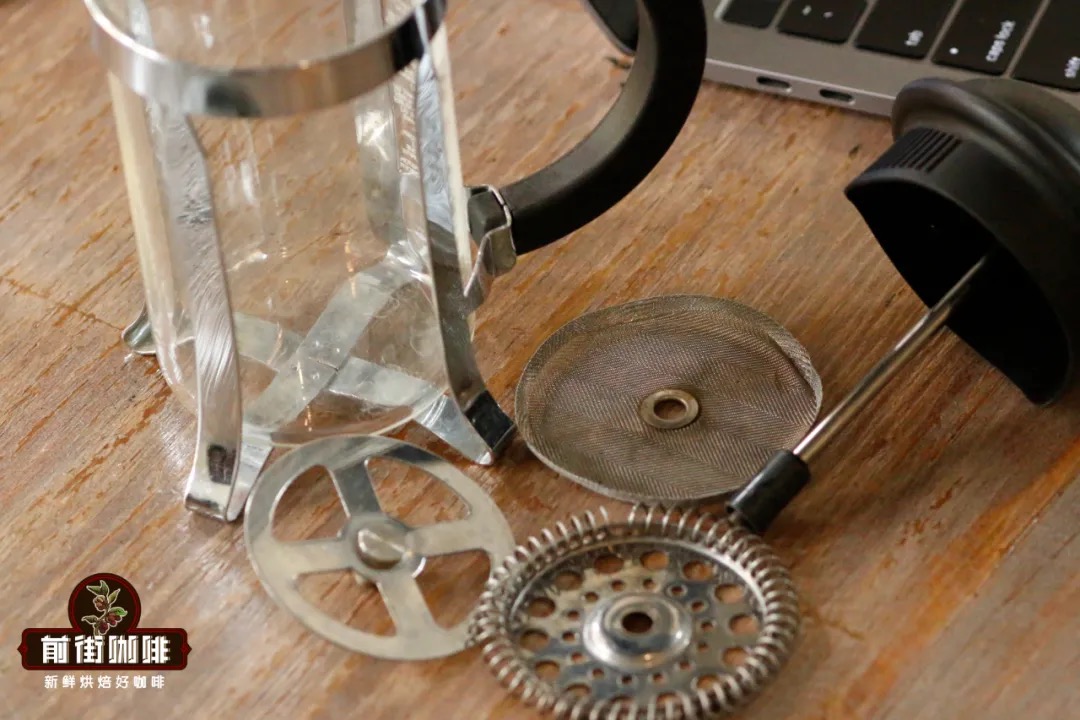
Soon afterwards, a craftsman-turned-merchant set up the "Smith" company, reworked the design in detail, and in 1852 patented the "piston filter coffee device," christening it the French Press. Early sales were disappointing, though: once you pressed the plunger down, the filter disc refused to sit level. Pour without steadying the plunger rod and grounds would still sneak into the cup through the uneven gap around the edges.
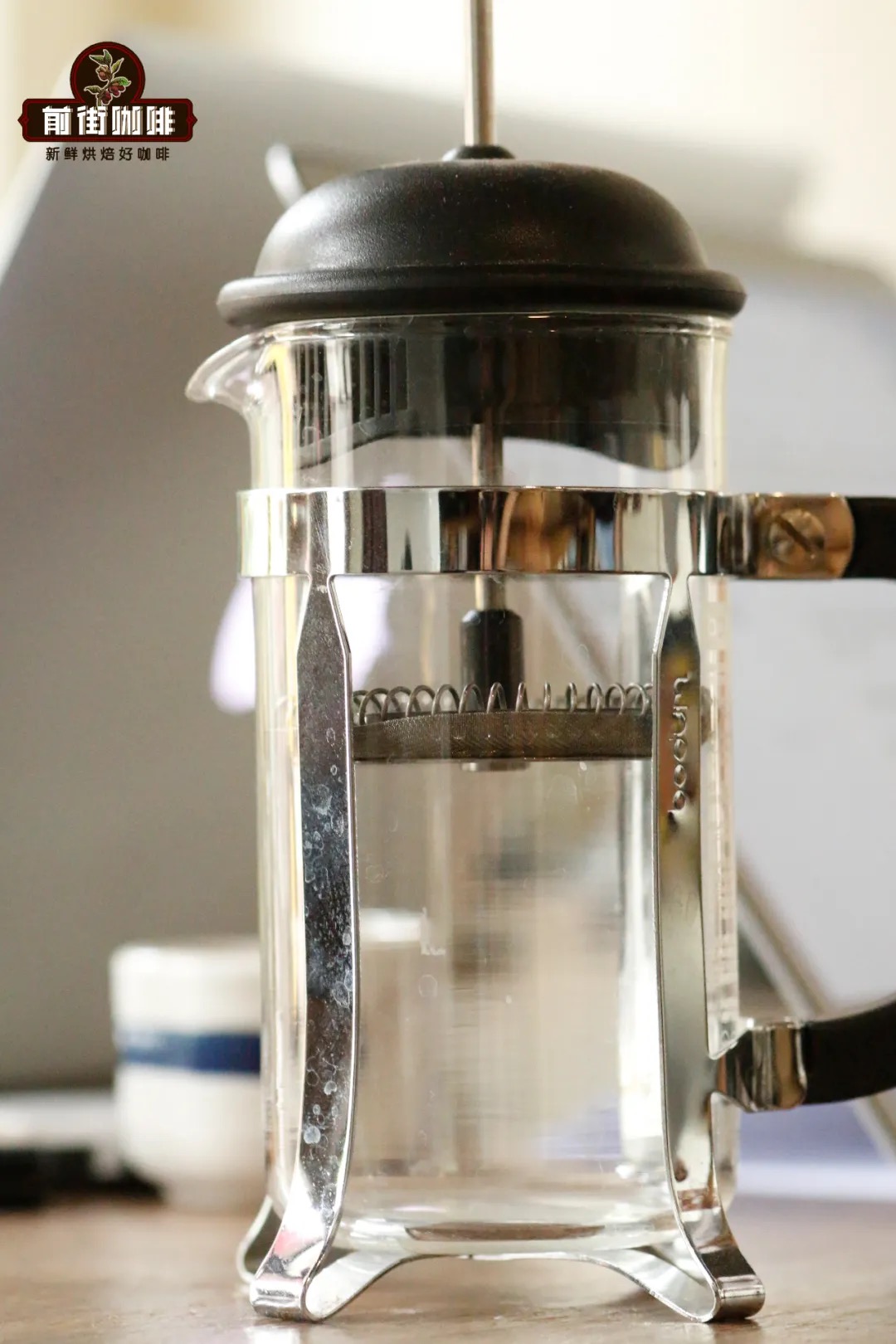
The breakthrough came in the late 1920s, when a Milanese company patented a revised version that added a spring between the piston's bottom disc and the filter screen. This guaranteed that the screen would land perfectly flush after pressing, sealing off every escape route for stray grounds. The company spent the following years polishing the overall design and eventually put it into commercial production, and the convenience of the French press gradually won the public over.
How to Brew Coffee in a French Press
The pot itself is nothing more than a heat-resistant glass carafe paired with a metal filter screen mounted on a plunger. Put coarsely ground coffee into the preheated press, pour in water at 88–92°C, let it steep for 3–4 minutes, press the plunger down, and pour out the coffee — that is the whole method.
Step-by-Step:
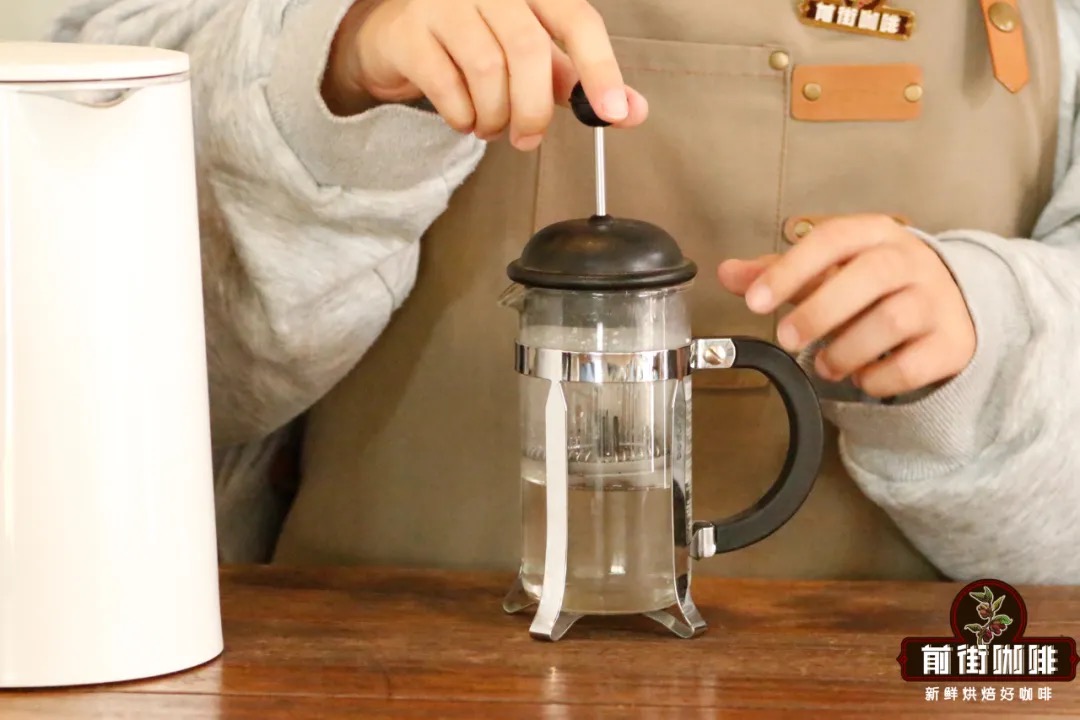
1. Fill the pot with hot water to preheat both the carafe and the plunger assembly, then discard the water.
2. Grind the beans coarse and tip them into the pot. Aim for a texture resembling coarse sugar crystals — roughly like small pebbles rather than fine sand.
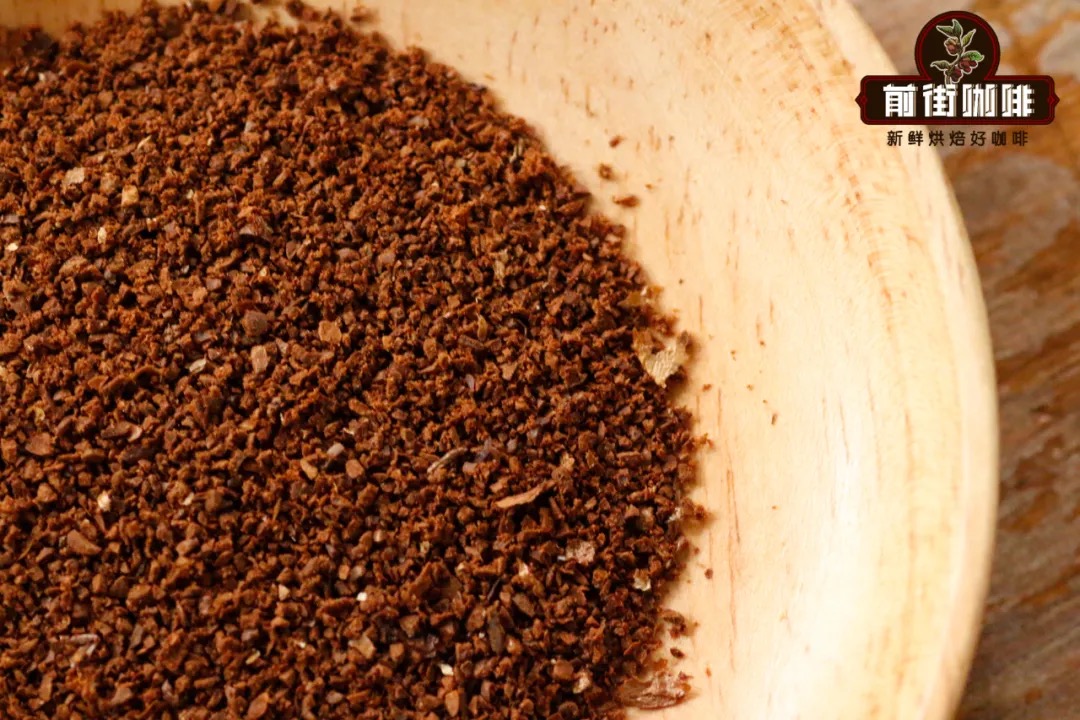
(If you prefer precise numbers: the target is a 70%–75% pass rate through the No. 20 standard sieve.)
3. Use at least 15g of coffee, with a coffee-to-water ratio of 1:13 to 1:16 — that means 195–240g of water for a 15g dose. Go 1:13 for something bolder, 1:15 for balanced, 1:16 for a lighter cup, and adjust to taste from there.
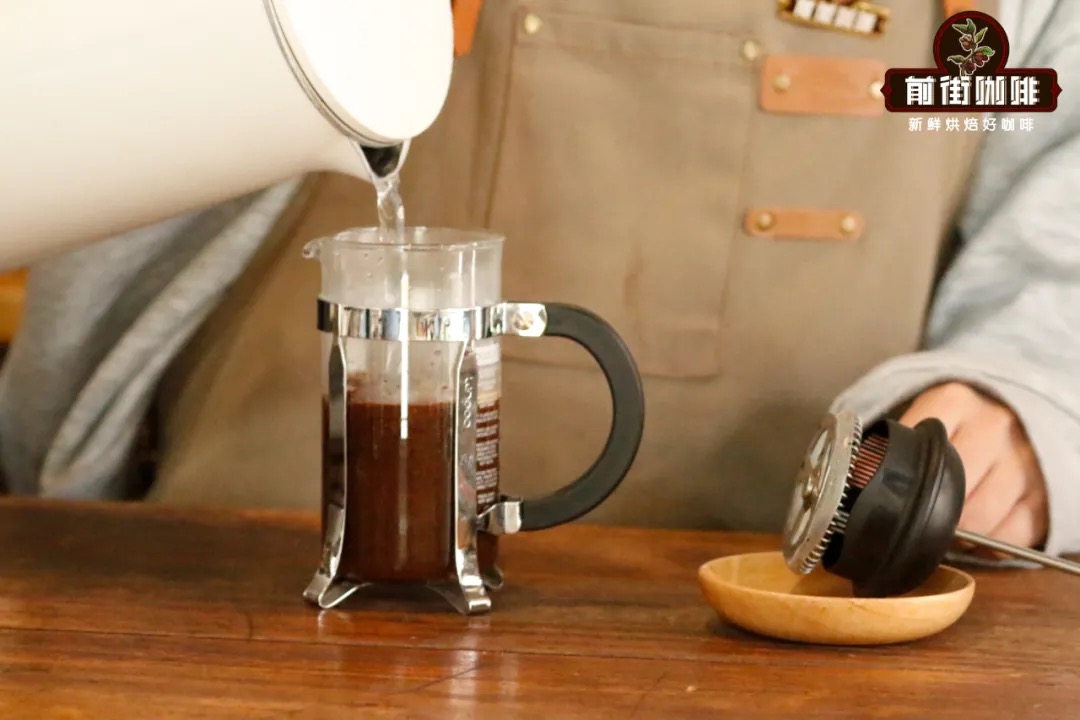
4. Match the water temperature to the roast. FrontStreet Coffee recommends water around 92°C for light-to-medium roasts (light brown to brown beans) and around 88°C for dark roasts (deep brown beans). After pouring the hot water, pull the plunger up and rest it on the lid — but do not press it down yet!
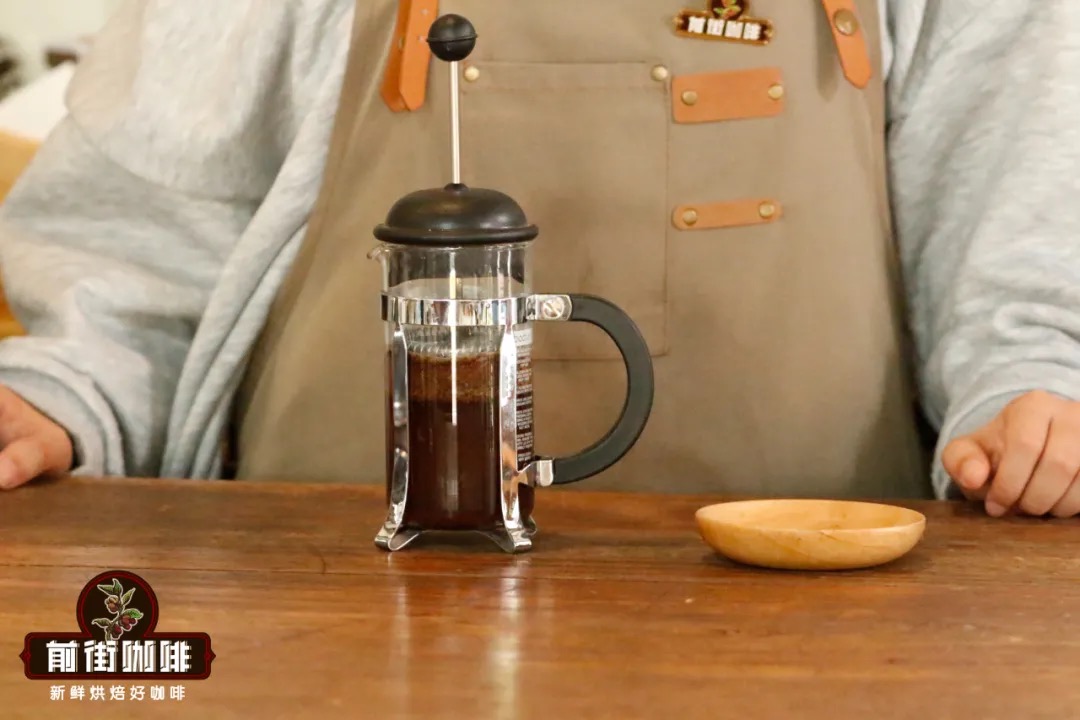
5. Steeping time varies with roast as well. FrontStreet Coffee suggests about 4 minutes for light-to-medium roasts and roughly 3 minutes 30 seconds for dark roasts. Do not let it sit too long: because a French press steeps the grounds directly in water, the pleasant flavors extract fully within this window, and anything longer risks pulling out harsh, woody, or scorched bitterness.
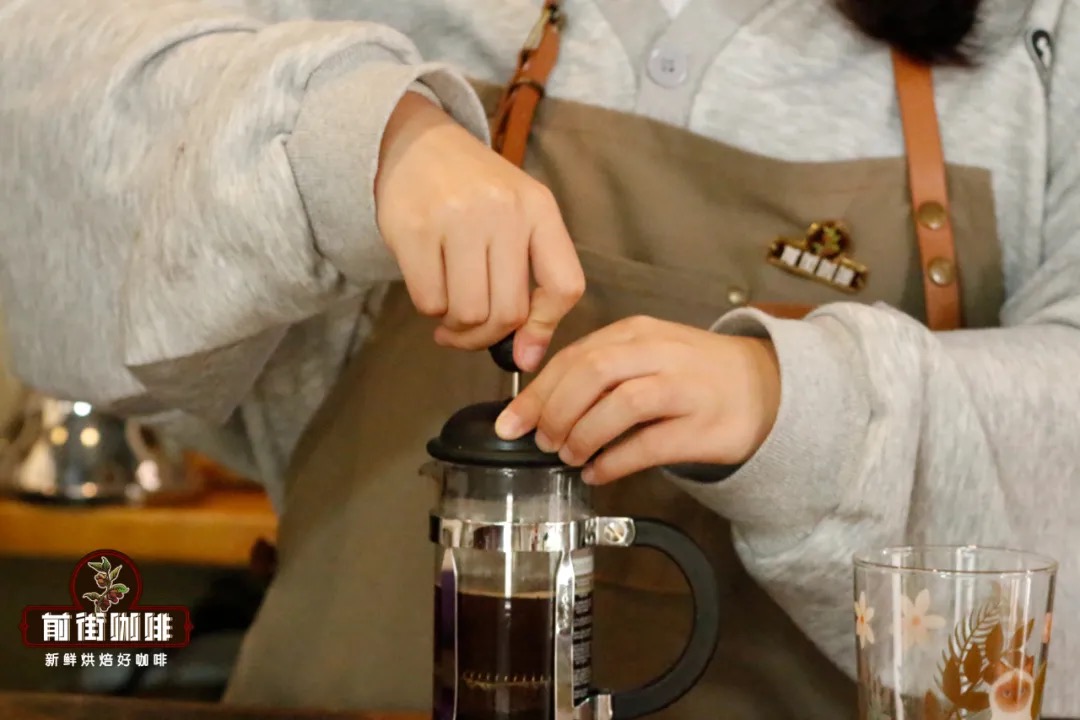
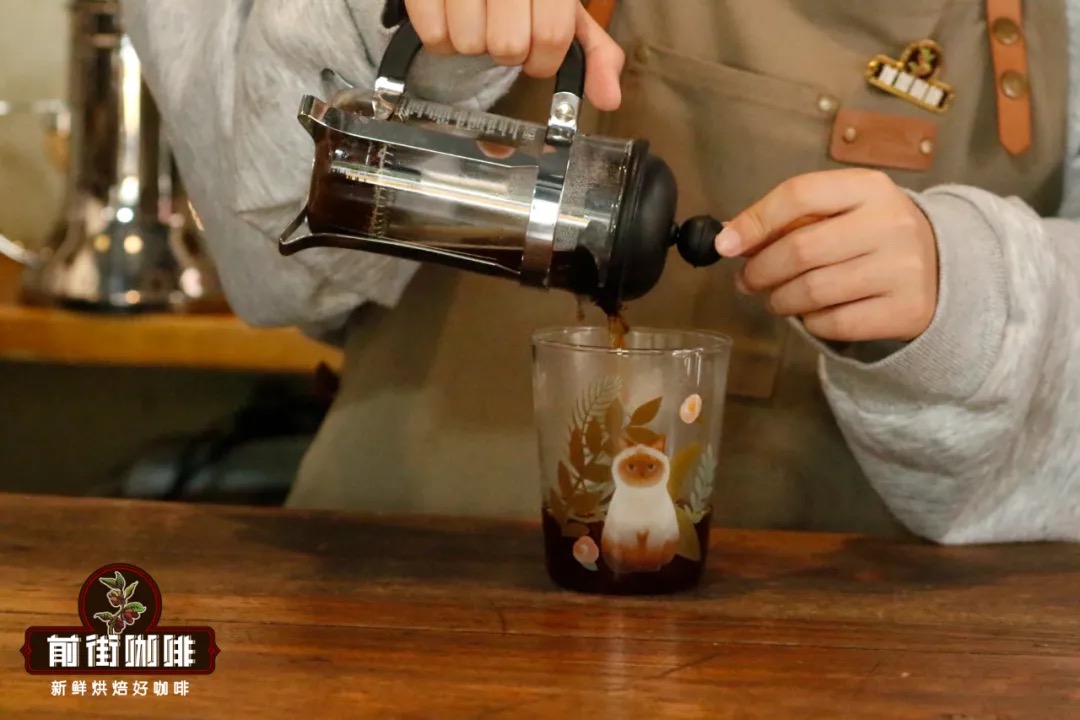
6. When the steep is done, press the plunger down and pour out every drop of coffee at once. Leaving coffee sitting on the grounds lets them keep releasing unpleasant flavors, and whatever remains in the pot will only taste worse by the minute.
7. Roasted coffee carries oils on its surface, so a film of coffee oil will cling to the press after brewing. When cleaning, take the entire metal assembly apart, wash the carafe and every part with detergent, dry them completely, and only then put the pot away.
The Soul of a French Press Cup!
That faint trace of sediment in the bottom of the cup is precisely what makes French press coffee taste authentic!
FrontStreet Coffee Recommendation
Strawberry Candy — a Geisha blend worth steeping
If what you want from a French press is an easy, aromatic, fruit-forward cup, FrontStreet Coffee's Strawberry Candy is a great pick. This Geisha blend pairs honey-processed coffee from Costa Rica with a custom washed Geisha from Panama, distilling the finest flavors of Central American coffee. Steeped in a French press, it unfolds notes of rose, citrus, grape, and dried blueberry, and with a splash of milk it turns into something like strawberry gummy candy.
PWN Golden Mandheling — low acidity, syrupy body
For black-coffee drinkers chasing low acidity and a rich, oil-laden mouthfeel, FrontStreet Coffee recommends the PWN Golden Mandheling, one of Asia's best-known specialty coffees. Each batch goes through three rounds of hand sorting plus one machine pass, leaving the beans uniform and translucent. At a medium-dark roast the large beans carry intense spice, caramel, cedar, and dark chocolate aromas, and a French press brew extracts a mellow, full-bodied cup with a satisfying layer of coffee oils.
Grinding for the press
For grind size, FrontStreet Coffee suggests a coarse-sugar setting — around 10.5 on an EK43s electric grinder or 26 clicks on a typical hand grinder. Grind too fine and fines will slip through the metal mesh, leaving a gritty layer of sediment at the bottom of your cup. If you do want a finer grind for more layered flavors, shorten the steep time accordingly to avoid over-extraction; a 1:15 ratio (15g of coffee to 225g of water) will land the brew strength between 1.1% and 1.2%.
Important Notice :
FrontStreet Coffee is a long-established specialty coffee roaster in Guangzhou China, selling freshly roasted beans from its own farm in Yunnan as well as dozens of carefully selected single-origin beans from around the world for both pour-over and espresso. The products deliver consistently excellent quality and great value, with shipping within 24 hours. Guangzhou's FrontStreet Coffee shop is recommended by many coffee lovers, and the beans are now available online at the Tmall 。
FrontStreet Coffee has moved to a new address:
FrontStreet Coffee Address: 315,Donghua East Road,GuangZhou
Tel:020 38364473
 Scan and follow the En Gafei WeChat official account. Please indicate that the reprint comes from "En Gafei".

