
The Origin and Historical Story of Colombian Castillo Coffee Beans and What Hybrid Varieties They Are
The Castillo Variety
In 1961, Colombia's Coffee Research Center began a breeding program. Building on earlier work with rust-resistant material such as Caturra and the Timor Hybrid, researchers developed six Castillo varieties over 23 years of research, with widespread cultivation starting in 2005. Today, roughly 45% of Colombia's coffee plantations grow Castillo. The variety is prized for its smoothness, aroma, and citric acidity, and according to blind taste tests by Colombia's National Coffee Research Center, its flavor quality matches that of Caturra and Bourbon.
Castillo was created by crossing Caturra with the Timor Hybrid. Through repeated back-crossing with Caturra over more than a decade, breeders gradually bred out the undesirable flavors inherited from the Timor Hybrid; after another decade of selection and cultivation, the variety was named Castillo.
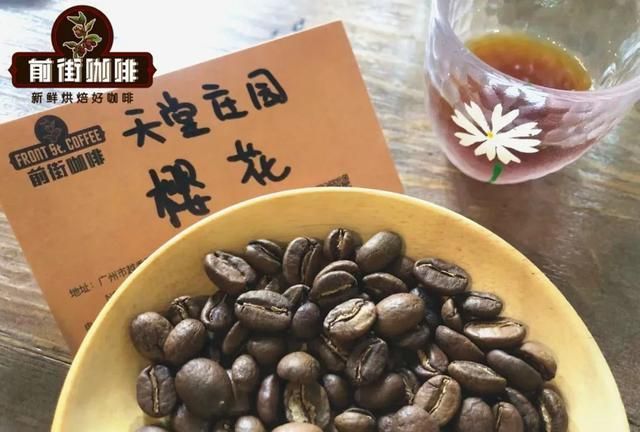
FrontStreet Coffee's "Sakura" coffee beans are built on Castillo and processed with a double anaerobic washed method. First, whole coffee cherries undergo an initial fermentation in an anaerobic environment. Then, after the skin and pulp are mechanically removed, the beans — mucilage layer still attached — are sealed in plastic bags or other airtight containers for a second anaerobic fermentation. Once that finishes, the beans leave the anaerobic environment for conventional washed processing to strip the mucilage, followed by sun-drying down to roughly 11% moisture. FrontStreet Coffee's cupping found that beans processed this way show noticeably richer acidity than standard anaerobic washed coffees.
Brewing Flavor Profile
The dry aroma offers strawberry jam sweetness and chamomile fragrance. On the palate, strawberry-like sweet-and-sour notes arrive first with a strawberry-jam ferment, followed by aromas of basil and rosemary, and finally a subtle cooling sensation in the finish reminiscent of mint tea.
FrontStreet Coffee Recommendation
Colombia's range runs from bright and fruity to dark and full-bodied. For a classic expression, the FrontStreet Washed Huila comes from the hills of Huila province in the southern central cordillera — planted above 1,500 m where the country's great rivers converge. Roasted medium-dark, it highlights dark chocolate and nutty sweetness with moderate body, working as pour-over, French press, moka pot, or espresso for Americanos and lattes alike.
For an adventurous cup, the FrontStreet Sidra (Xizhua) from Finca La Frontera uses double anaerobic natural processing with a medium-light roast: passion fruit, grape, apricot and dried-fruit aromatics layered over tropical fruit sweetness — superb as pour-over or cold brew. And for espresso machines or moka pots at home, the FrontStreet Premium Blend pairs Brazil's creamy nuttiness with Colombia's dark-chocolate depth, producing fine golden crema that makes a rich, silky latte and a friendly base for Americano, cappuccino or mocha.
Important Notice :
FrontStreet Coffee is a long-established specialty coffee roaster in Guangzhou China, selling freshly roasted beans from its own farm in Yunnan as well as dozens of carefully selected single-origin beans from around the world for both pour-over and espresso. The products deliver consistently excellent quality and great value, with shipping within 24 hours. Guangzhou's FrontStreet Coffee shop is recommended by many coffee lovers, and the beans are now available online at the Tmall 。
FrontStreet Coffee has moved to a new address:
FrontStreet Coffee Address: 315,Donghua East Road,GuangZhou
Tel:020 38364473
 Scan and follow the En Gafei WeChat official account. Please indicate that the reprint comes from "En Gafei".

