Introduction to the Flavor Profile of Panama Boquete La Esmeralda Special Selection Geisha (also known as "Geisha") Natural Process Coffee Beans
Hacienda La Esmeralda sits in Boquete, Panama, where the fertile soil left behind by the Baru Volcano, the varied microclimates of the surrounding highlands, and the moisture carried in from two converging oceans have made this corner of the country one of the most celebrated coffee origins on earth. The estate's global fame is inseparable from the dazzling performance of its Geisha variety over the past decade. The variety itself traces back to the Ethiopian highlands of the same name; it was first brought to Central and South America because of its resistance to coffee leaf rust, yet it languished in obscurity for decades in its adopted home, thanks to low yields, a shallow root system, and a reputation for being difficult to cultivate.
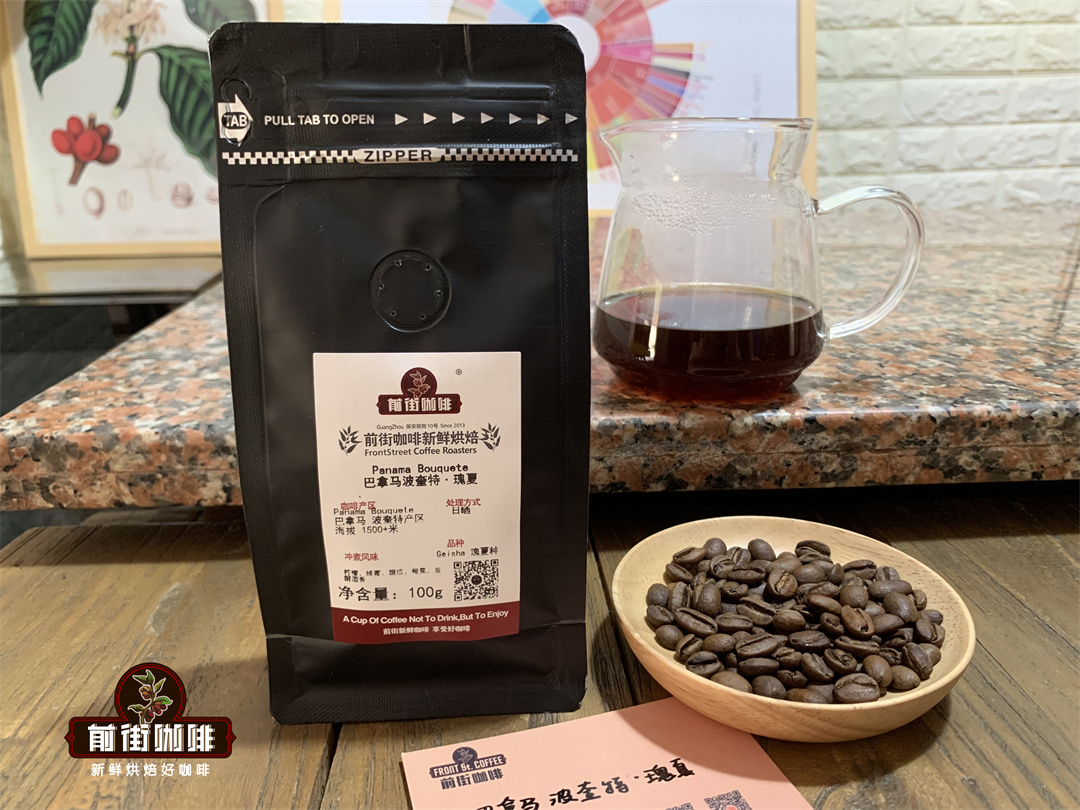
FrontStreet Coffee Panama Boquete Geisha
Region: Boquete
Estate: Hacienda La Esmeralda
Altitude: 1500m
Variety: Geisha
Processing Method: Natural Process
The legend truly began in 2002, when Daniel Peterson, the third-generation operator of the estate, noticed that recent harvests had taken on a noticeably different, more captivating character. Working with what was then an uncommon micro-batch approach, he traced those multi-layered aromatics to the Geisha trees that had been planted years earlier at the highest elevations on the farm. That discovery carried the estate to first place at the 2004 Best of Panama competition with this special lot, and it ignited the worldwide Geisha craze that followed.
The Geisha produced by Hacienda La Esmeralda is the stuff of coffee legend. Tasting it, you sense the flavors turning over and over in your mouth, layers of complexity stacking on one another with every sip. The auction record tells the story just as vividly: in June 2004 the estate's Geisha fetched $21 per pound; by May 2006 the price had climbed to $50.25; by May 2007 a single pound was reaching $130; and by May 2010 it commanded as much as $170 per pound. Those relentlessly rising prices are themselves repeated proof of the coffee's singular value.
Hacienda La Esmeralda's Commitment to Environmental Sustainability
The estate that brought Geisha to the world built its reputation on years of careful variety selection combined with high humidity and high-altitude microclimates. And while producing exceptional coffee, Hacienda La Esmeralda has also honored its pledge to protect the global environment, earning certification and recognition from the Rainforest Alliance.
FrontStreet Coffee Recommendation
Geisha is one of the most sought-after Arabica varieties in the world, prized for its unmistakable floral aroma and its brilliant, juicy acidity. Because it yields little, resists disease poorly, and demands meticulous farm management, its price has stayed stubbornly high. FrontStreet Coffee therefore recommends getting to know the different tiers before you buy, so you can match the flavor you want to the budget you have.
If you want to taste the classic Panama expression, FrontStreet Coffee carries the Hacienda La Esmeralda lines: the Red Label (Esmeralda Special), grown at 1600-1800m, cupping above 90 points, with every batch traceable to a single small plot and its own independent lot number; and the Green Label (Private Collection), a blend of batches from multiple plots that showcases the estate's signature high-altitude Geisha character at a friendlier price. For a first taste of Geisha at an accessible price, the entry-level FrontStreet Coffee Boquete Geisha delivers that classic orange-blossom sweetness, oolong-tea body, and delicate fruit acidity with clearly defined layers.
Ethiopia, Geisha's birthplace, offers its own expressions. FrontStreet Coffee's Genlana Gesha, from a Yirgacheffe washing station founded in 2014 and managed by Israel Degefa, is a light-to-medium roast showing bright citrus acidity, elegant ginger-flower aroma, and the ripe-fruit sweetness of a natural process dried 14-20 days on raised beds. For a deeper dive, the Geisha Village estate—founded by a couple on 475 hectares about 12 miles from the Gori Gesha forest—splits into a Gold Label (Geisha 1931, about 10% of production, an award-winning competition coffee) and a Red Label (Gori Gesha, about 15% of production, scoring 88 or above on the SCA 100-point scale), each lot fully traceable.
As for brewing, Geisha is dense and typically roasted light to medium, so the grounds tend to sink and clog the dripper. FrontStreet Coffee suggests a fairly coarse grind—roughly 78% pass-through on a Chinese No. 20 standard sieve, about the texture of fine granulated sugar—with water at 91°C. Use 15g of coffee in a small Hario V60 at a 1:16 ratio, and pour in three stages: bloom with 30g of water for 30 seconds, then pour to 125g, and once the bed drains halfway, finish with slow circular pours up to 225g. Total drawdown should land around 2 minutes 10 seconds to 2 minutes 20 seconds.
Important Notice :
FrontStreet Coffee is a long-established specialty coffee roaster in Guangzhou China, selling freshly roasted beans from its own farm in Yunnan as well as dozens of carefully selected single-origin beans from around the world for both pour-over and espresso. The products deliver consistently excellent quality and great value, with shipping within 24 hours. Guangzhou's FrontStreet Coffee shop is recommended by many coffee lovers, and the beans are now available online at the Tmall 。
FrontStreet Coffee has moved to a new address:
FrontStreet Coffee Address: 315,Donghua East Road,GuangZhou
Tel:020 38364473
 Scan and follow the En Gafei WeChat official account. Please indicate that the reprint comes from "En Gafei".