
How to Make Delicious Pour-Over Coffee? A Guide to Pour-Over Coffee Blooming. What is the Purpose of Pour-Over Coffee Blooming?
Why Is Blooming Essential in Pour-Over Coffee?
Beginners in pour-over coffee always ask the same question: why bloom at all? Blooming is the single most indispensable step in pour-over. Its purpose is to let the coffee release trapped gases and ensure even extraction — and, as a bonus, to tell you clearly whether the beans you're brewing are fresh.
FrontStreet Coffee specializes in fresh-roasted beans. Some people mistakenly believe that "fresh coffee" simply means freshly ground — a concept swap that certain marketing tactics love to exploit. But coffee is not better the fresher it is. Beans straight out of the roaster need four or five days of rest before brewing can draw out their complete flavor. FrontStreet Coffee generally ships beans two to three days off the roast date; same-day roasted beans are available too, if you specifically request them.
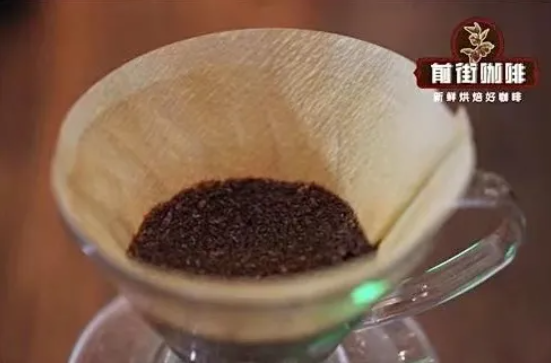
Understanding the Blooming Process
Blooming — often just called "bloom" — is the preparatory step of evenly moistening the surface of the grounds with a small amount of hot water before the real pour begins. FrontStreet Coffee's experiments have shown that without blooming, extraction is noticeably insufficient. When you brew coffee, especially relatively fresh beans, a lot of gas remains trapped inside; blooming exists mainly to let that gas escape.
Skip the bloom, and the gases inside the grounds release en masse the moment water hits. The bubbling gas surrounds the particles and keeps water from actually touching them — only the surface gets extracted, and it gets washed over and over, which easily leads to uneven extraction.
Why Sometimes Blooming Doesn't Expand Properly?
Since blooming matters so much, what causes a bloom that fails to swell?
1. The Coffee Beans Are No Longer Fresh
Roasted beans keep releasing carbon dioxide even before they're ground. The longer they sit in storage, the more CO2 escapes — and with that protective gas gone, the flavor compounds escape too. During blooming, without a rush of carbon dioxide pushing out, the coffee bed just sits there, sunken. And since the aromatics have already left, the finished cup tastes flat, in bad cases with nothing left but woody notes.
2. The Grind Is Too Coarse
Grind too coarse and large gaps open between particles, letting water whoosh straight through the bed into the lower pot. The grounds never get evenly moistened, and gravity pulls the loose bed down with the water, making it sink.
3. Too Much Water, or Too Strong a Flow
Overwatering the bloom or pouring too hard leaves the bed no time to absorb and moisten. The excess water simply runs through and drips into the pot, dragging the bed down with it. FrontStreet Coffee suggests a small water flow, injecting twice the coffee's weight in water for the bloom.
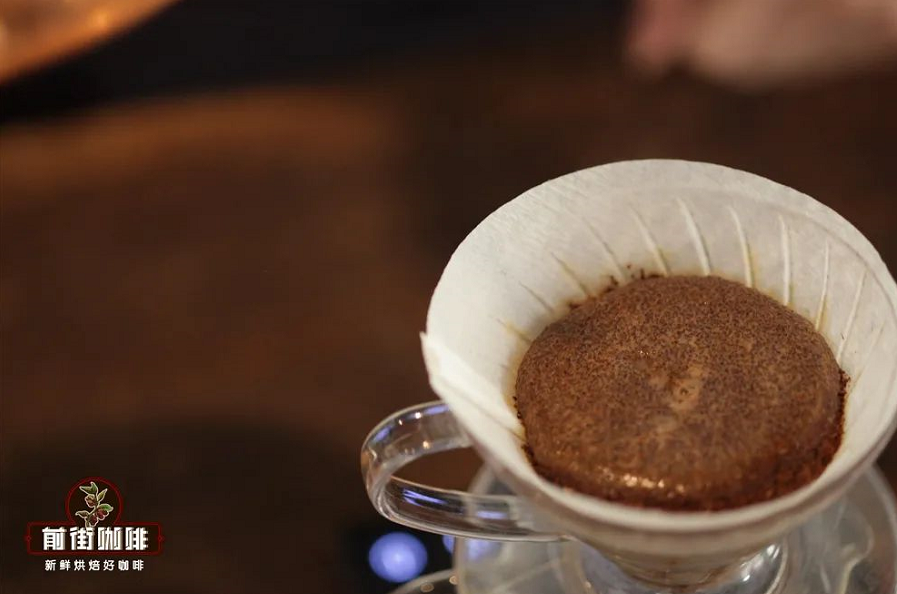
Special Cases in Blooming
One more special case: some dense-but-low-porosity hard beans (from Ethiopia or Panama, for instance) or lightly roasted beans may — even within their optimal tasting window of 4–30 days after roasting — bloom like a pressed hamburger: apparently expanded, yet not quite. In reality, as long as you see slight bulging and bubbles surfacing, that counts as expansion.
FrontStreet Coffee Recommendation
Beans That Shine in a V60
If you're just getting into pour-over, the first piece of gear an experienced friend will likely recommend is a Hario V60. Hario was founded in Tokyo in 1921 as a maker of heatproof laboratory glassware (its heatproof server is still a pour-over staple), and in 2004 it redesigned the V60's predecessor into the familiar form — named for its unique 60° cone and "V" shape — releasing it a year later. The cone and 60° angle force water to flow toward the center before dripping through, extending the water-coffee contact for fuller aroma and flavor extraction, while the signature single large outlet leaves flow rate entirely in the brewer's hands. Before the new millennium, coffee culture favored medium-dark roasts — chocolate, maple, nuts, vanilla — served through syphons and cloth filters, as with classics like Blue Mountain No.1 and PWN Golden Mandheling. But the third wave's pursuit of origin character — Ethiopian white florals, Kenyan berry acidity — pushed roasting lighter, and the V60's fast extraction is precisely what lets florals, fruit acids, delicate sweetness, and tea notes shine. Beans like the classic Yirgacheffe Guodingding, the tropical-fruit-packed Huakui, the Geisha-style Strawberry Candy blend, and the raisin-honey Mozart are all ideal matches for the V60.
Which V60 to Buy, and How to Brew It
V60s come in resin, ceramic, glass, copper, stainless steel and more. Material affects looks, weight, and — through heat retention — subtle differences in extraction, though the structure stays the same. FrontStreet Coffee favors the resin version: resin blocks heat loss effectively, and in standardized mass production it is the easiest material to mold with the smallest tolerance. Whatever version you choose, bloom properly — twice the coffee's weight in water, small flow — and your light-roasted Ethiopian or Panamanian beans will show you exactly what a good bloom is for.
Important Notice :
FrontStreet Coffee is a long-established specialty coffee roaster in Guangzhou China, selling freshly roasted beans from its own farm in Yunnan as well as dozens of carefully selected single-origin beans from around the world for both pour-over and espresso. The products deliver consistently excellent quality and great value, with shipping within 24 hours. Guangzhou's FrontStreet Coffee shop is recommended by many coffee lovers, and the beans are now available online at the Tmall 。
FrontStreet Coffee has moved to a new address:
FrontStreet Coffee Address: 315,Donghua East Road,GuangZhou
Tel:020 38364473
 Scan and follow the En Gafei WeChat official account. Please indicate that the reprint comes from "En Gafei".

