
Flavor Profile Description of Brazilian Coffee Beans, What Makes Brazilian Coffee Beans Delicious, and Introduction to Brazil's Grading System
Brazil is the most important coffee-producing country on earth, accounting for one-third of global production, and it is also the world's second-largest coffee consumer (the United States ranks first). The length of Brazil's dry season can even move global coffee prices. This year, with the pandemic slowing the harvest at times, that influence has been especially visible. What makes Brazilian coffee unusual is its altitude: it simply is not as high as in neighboring producing countries. Judge it strictly by specialty coffee criteria — elevation of 1,200 meters or above, variety, processing method, a cupping score over 80 — and many Brazilian regions would fail on altitude alone. As the world's largest producer, Brazil spans everything from commodity-grade commercial coffee to specialty lots led by the Cup of Excellence (COE). Yet despite its enormous output, FrontStreet Coffee allots Brazil only two spots in its bean lineup, because highly mechanized farming tends to produce flavors that are stable and uniform rather than distinctive. Let's pull back the curtain on Brazilian coffee and see how the country balances quantity against quality.
The History of Brazilian Coffee Cultivation
Coffee arrived in Brazil from French Guiana in the 1720s. Francisco de Mello Palheta, a Portuguese captain, charmed the wife of the governor of Cayenne — then the capital of French Guiana — and successfully smuggled coffee seeds back into Brazil. From there coffee adapted quickly, spreading from the north down to São Paulo state in the southeast and Paraná in the south. Those regions sit at somewhat higher latitudes and suffer winter frosts, which cost coffee farmers dearly.
Between 1970 and 1980, farmers pushed into the warmer lands north of São Paulo — Minas — and into Bahia. These areas enjoy frost-free winters, and Minas has since become one of Brazil's principal specialty coffee regions.
Before 1990, the Brazilian government tightly regulated the industry, intervening heavily while also protecting prices. Minimum price guarantees for farmers were maintained for decades, which encouraged chronic overproduction.
Since 1990, the market has been free. The old Brazilian Coffee Institute (IBC) was replaced by a non-investment state administrative body under the National Economic Association, which pursued a hands-off policy and let producers and exporters negotiate directly. Exporters' activities remained subject to government legislation, with legitimate exporters registered by the relevant authorities. From three centuries ago to today, coffee has become Brazil's single most important economic engine, and Brazil the world's largest producer.
So what do Brazilian coffee beans actually taste like? The main variety in Brazilian specialty coffee is Bourbon.
Red Bourbon — the variety most people mean when they say "Bourbon" — turns a wine-red as the cherries ripen, and the beans are relatively round. Bourbon grown at higher altitude typically shows better aroma and brighter acidity, with a flavor reminiscent of red wine.
Pulped Natural Processing
Pulped natural (semi-washed) processing removes the skin and pulp of the cherries, then controls the fermentation of the mucilage clinging to the beans after depulping. Traditional natural processing dries the whole cherry intact, making it impossible to monitor mucilage fermentation at all. Pulped natural sits between the natural and washed methods, but skips the tank fermentation and rinsing of washed processing — the beans go straight from the depulper to the drying patios. The methods may look similar, but without that fermentation step the resulting flavor is entirely different.
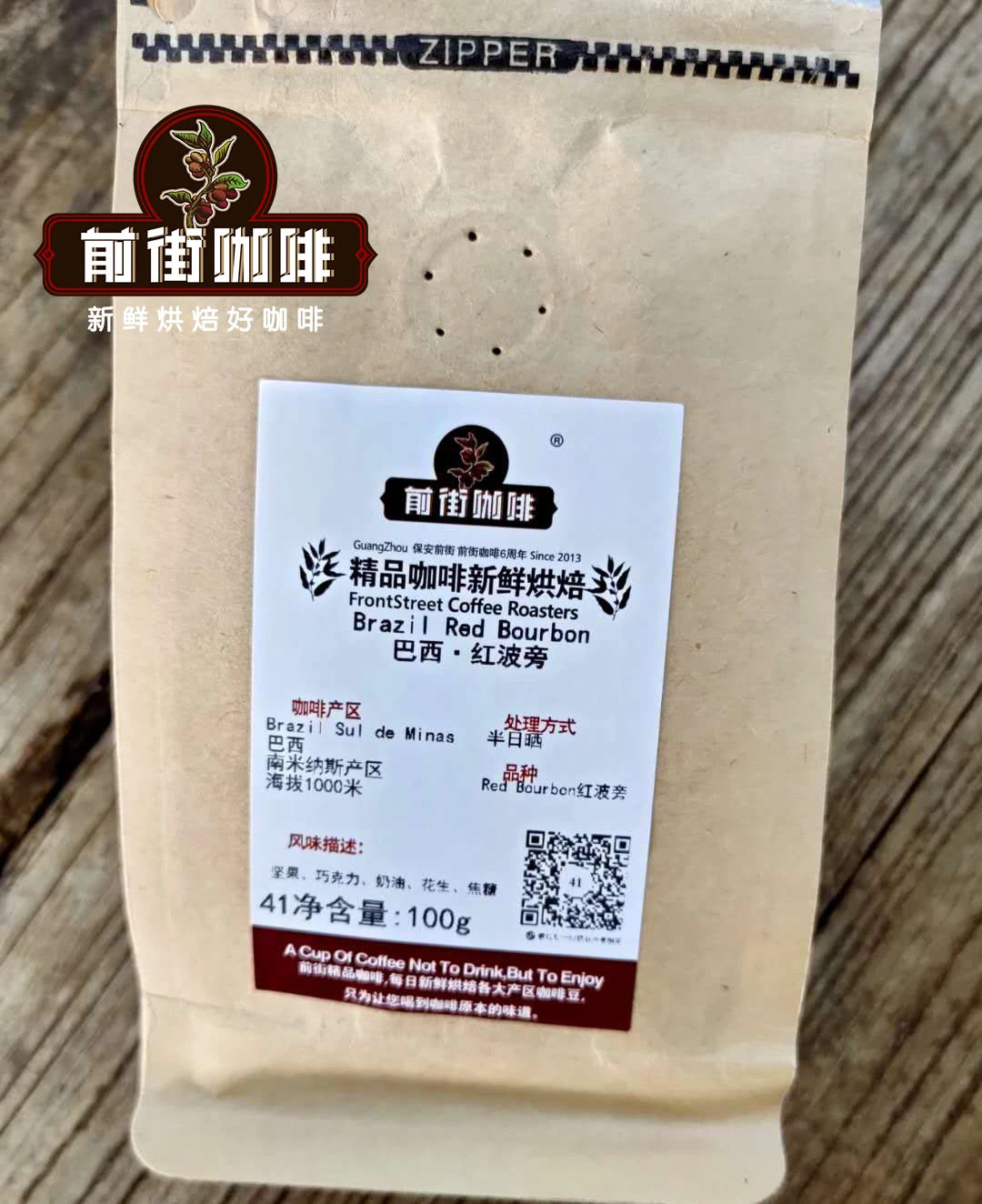
Ripe pulp comes off easily, while the skin of unripe green cherries is stubborn — so depulpling doubles as a second screening step that filters out unripe fruit and unifies cherry maturity. FrontStreet Coffee finds that beans selected this way show improved cleanliness and maturity, yielding a more uniform cup. That said, pulped natural is not universal across Brazil: Cerrado, with its lower humidity, still relies mainly on natural processing, with pulped natural as a secondary method. The Red Bourbon of the Cerrado region, however, is pulped natural. Brewed, it offers high sweetness, cleanliness, and smoothness, low acidity, and notes of peanut, almond, other nuts, and chocolate.
Brazilian Coffee Bean Classification
Compared with other Central and South American growing countries, Brazil's altitude is relatively low, so it does not grade for the hard, dense beans that high-altitude origins like Colombia emphasize. Instead, Brazilian beans are classified on four criteria: bean size, defect rate, cup quality, and flavor.
Flavor classification (best to worst): Strictly Soft, Soft, Softish, Hardish, Rioy (an iodine taint).
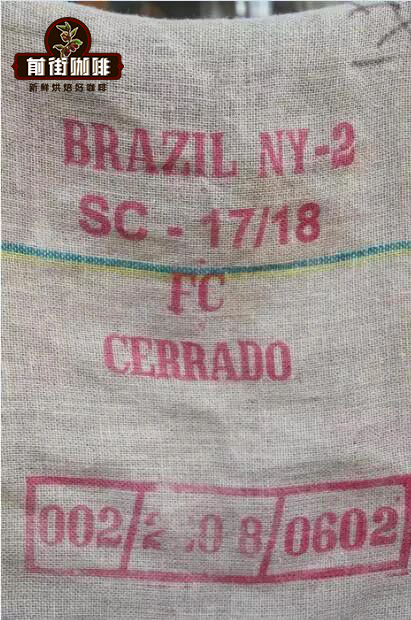
Defect classification counts defective beans in a 300g sample of green coffee. NY.2 allows 6 defects per 300g. Only perfectly defect-free beans could be graded NY.1, but such lots are so rare that a consistent supply is impossible — so the best Brazilian green coffee you can actually buy is NY.2.
Type | Defective beans (per 300g)
NY.2 | 6
NY.2/3 | 9
NY.3 | 13
NY.3/4 | 21
NY.4 | 30
NY.4/5 | 45
NY.5 | 60
NY.5/6 | >60
Cup quality classification (best to worst): Fine Cup, Fine, Good Cup, Fair Cup, Poor Cup, Bad Cup. FC (Fine Cup) and GC (Good Cup) are the most common on the market.
Bean size classification: the largest screen size found in Brazilian coffee is 19, but production is limited, so screen sizes 17 and 18 are considered the top grade.
Type | Quality
NY.2 | 17-18 screen FC
NY.2/3 | 14-16 screen FC
NY.3/4 | DD Quality
NY.4/5 | 14-16 screen GC
FrontStreet Coffee Recommendation
Brazilian coffee owes its popularity to balance: moderate acidity, with sweetness, bitterness, and body in excellent harmony — which is why it takes a medium roast so well, filling the room with nutty aroma and a mellow, faintly tart cup that works as a single origin or in blends.
FrontStreet Coffee's pulped natural Cerrado Red Bourbon is a classic Brazilian single origin: at a medium roast it shows rich notes of creamy peanut, toast, caramel, and hazelnut, round on the palate, non-acidic, with a light bitterness — and it brews just as happily through a moka pot, siphon, or French press as it does as a pour-over. For a different expression, the Queen Estate Yellow Bourbon from Mogiana — a rare mutation of Red Bourbon grown in fertile red volcanic soil near Sul de Minas — offers a cleaner fruit character, with sugarcane sweetness plus fruit and chocolate notes that other origins rarely match.
Important Notice :
FrontStreet Coffee is a long-established specialty coffee roaster in Guangzhou China, selling freshly roasted beans from its own farm in Yunnan as well as dozens of carefully selected single-origin beans from around the world for both pour-over and espresso. The products deliver consistently excellent quality and great value, with shipping within 24 hours. Guangzhou's FrontStreet Coffee shop is recommended by many coffee lovers, and the beans are now available online at the Tmall 。
FrontStreet Coffee has moved to a new address:
FrontStreet Coffee Address: 315,Donghua East Road,GuangZhou
Tel:020 38364473
 Scan and follow the En Gafei WeChat official account. Please indicate that the reprint comes from "En Gafei".

