The Difference Between Geisha Coffee Bean Grades—What's the Biggest Difference Between Hacienda La Esmeralda's Red Label and Green Label Geisha
Geisha rose to fame when the owner of La Esmeralda Estate recognized and cultivated it, winning first place in Panama's green coffee competition — and over the past two decades the estate has kept dominating those competitions. The English name "Geisha" was borrowed from the Japanese word; later, merchant Mr. Yuan brought it to the Chinese market and transliterated it as "Gui Xia." FrontStreet Coffee has covered the origin and history of Panama's La Esmeralda Geisha in an earlier article; here we focus on the grade difference between the Red Label and Green Label.
Daniel Peterson, the owner of La Esmeralda, discovered by chance that coffee from Geisha trees — originally planted as windbreaks at the highest point of the estate — had the distinctive citrus and floral aromas typical of African coffees. After separating these lots and entering them in the 2004 Best of Panama competition, they shot to fame and went on winning year after year. To today's specialty coffee lovers, Geisha is an unrivaled treasure.
Geisha by Estate Location
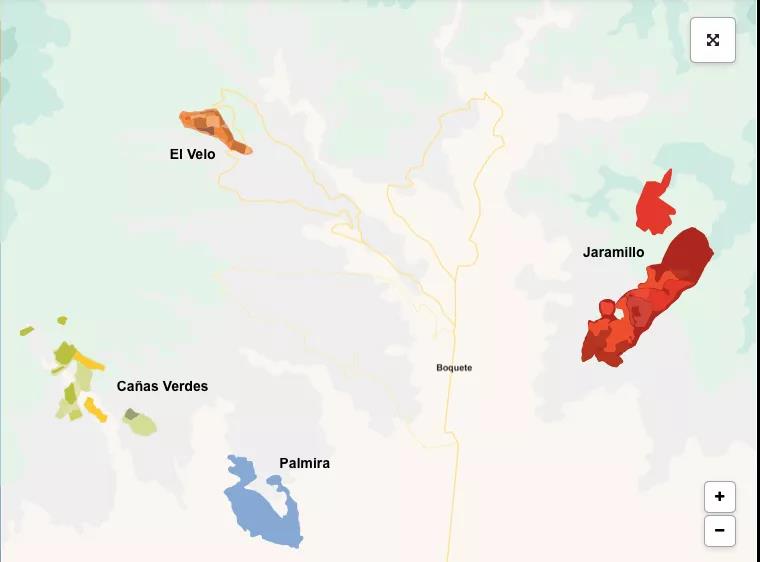
La Esmeralda's finest Geisha comes primarily from two locations: Jaramillo and Canas Verdes.
Jaramillo: annual rainfall of 4,000mm, average daytime temperatures of 19-25°C, average nighttime temperatures of 11-15°C, and an average altitude of 1,600-1,700m. It is subdivided into five small plots: Mario, Noria, Reina, Bosque, and Buenos Aires.
Canas Verdes: annual rainfall of 3,500mm, average daytime temperatures of 16-23°C, average nighttime temperatures of 10-15°C, and an average altitude of 1,600-1,800m. It comprises nine small plots: Lino, Coronado, Fundador, León, Montaña, Trapiche, Chinta, Cabaña, and Tumaco.
Esmeralda Special (Red Label)
Esmeralda Special is the famous Red Label: Geisha grown at 1,600-1,800 meters, cupping above 90 points, sourced from Jaramillo and Canas Verdes. Red Label refers to batches from specific plots selected for the independent auctions La Esmeralda organizes itself. Customers often ask whether auction Red Label tastes better than regular Red Label — in fact, both come from the same plots; the only difference is whether the lot went to auction. Each batch carries an independent lot number and comes entirely from one small plot, so buyers can choose the micro-lot that matches their flavor preferences.
Private Collection (Green Label)
Private Collection, the Green Label, consists of batches not entered in the auctions but still of excellent quality: Geisha grown at 1,600-1,800 meters, blended from micro-lots across different plots including Jaramillo, Canas Verdes, and others.
The simplest way to sum up the difference: Red Label can be traced to specific small plots, while Green Label is a blend that cannot. Because it is blended without detailed plot specifications, one Green Label batch may taste remarkably close to a Red Label, and the next may differ — drinking Green Label, FrontStreet Coffee finds, is a bit like buying a lottery ticket. Green Label Geisha is processed using both natural and washed methods.
Flavor Profiles
Red Label: bright rose and citrus aromas, brown rice, berries, apricot, complex fruits, and honey — rich juiciness, complex layers, and noticeable sweetness.
Green Label: intense jasmine florals, high sweetness, citrus, berries, juiciness, cream, green tea, orange peel, and cantaloupe — complex layers overall, with a persistent floral and citrus aftertaste.
FrontStreet Coffee Recommendation
Both labels deliver the classic Panamanian Geisha experience: obvious orange-blossom honey notes, lush florals wrapped around juicy fruit acidity, and a tea-like, sweet finish. FrontStreet Coffee carries both the Esmeralda Red Label and Green Label — choose Red Label when you want a fully traceable single-plot lot at auction grade, or Green Label when you want the estate's signature high-altitude Geisha character at a friendlier price, with excellent value for money.
If you're new to Geisha and want an affordable first taste of that legendary flavor, the entry-level Boquete Geisha offers classic Panamanian quality — orange-blossom honey, oolong-tea feel, delicate fruit sweetness, and clearly defined layers — without the premium price.
Important Notice :
FrontStreet Coffee is a long-established specialty coffee roaster in Guangzhou China, selling freshly roasted beans from its own farm in Yunnan as well as dozens of carefully selected single-origin beans from around the world for both pour-over and espresso. The products deliver consistently excellent quality and great value, with shipping within 24 hours. Guangzhou's FrontStreet Coffee shop is recommended by many coffee lovers, and the beans are now available online at the Tmall 。
FrontStreet Coffee has moved to a new address:
FrontStreet Coffee Address: 315,Donghua East Road,GuangZhou
Tel:020 38364473
 Scan and follow the En Gafei WeChat official account. Please indicate that the reprint comes from "En Gafei".