Which Brand of Jamaican Blue Mountain Coffee Beans is Best? A Guide to Identifying Authentic Blue Mountain Coffee
Which brand of Blue Mountain coffee beans is best? First, understand that the market holds two very different things: "Blue Mountain coffee" and "Blue Mountain flavored coffee" — two words apart, worlds apart. Blue Mountain flavored coffee is not grown in Jamaica's Blue Mountains at all; it's what the trade calls "Blue Mountain blend beans." Its flavor may resemble the genuine article, but there's no connection between them. True Blue Mountain coffee refers to high-quality beans grown above 1,000 meters in Jamaica's Blue Mountains.

Many merchants roast beans from other regions or multiple varieties slightly darker to mute their own character and push them toward Blue Mountain's profile — a word game, labeling non-Blue Mountain beans as "Blue Mountain flavored coffee." Because Jamaican Blue Mountain is so widely recognized, impostors abound: Blue Mountain style, Blue Mountain blend, or even just "Blue Mountain" — all blends mixed to simulate JBM's flavor, possibly without a single genuine Jamaican bean among them.
Meanwhile, some in the industry still cling to decade-old assumptions: that Japan bought all the Blue Mountain, and nothing sold in China is genuine Blue Mountain No.1. In reality, China's massive demand has meant legal imports for years; Blue Mountain estate owners have visited China to educate consumers, and production areas are larger than before while Japan's buying power has weakened. Genuine Jamaican Blue Mountain is indeed available in China — you just need to know how to identify it.
How to Distinguish Genuine from Fake Blue Mountain Coffee
Genuine Blue Mountain No.1 is grown under some of the most favorable conditions in the coffee world. Jamaica's climate, geology, and topography combine into an ideal natural environment. Certified JBM may only be grown in the Blue Mountain region north of Kingston in the island's east, where the ridge climbs above 2,100 meters. The cool, misty climate and frequent rain keep the fertile land well balanced in moisture, and farmers use mixed cultivation, letting coffee coexist with banana and avocado trees on terraced slopes.
The terrain is extremely rugged, which makes harvesting very difficult (and the pickers are almost all women). With trees on steep slopes, picking is exceptionally challenging — only skilled local workers can do it — and selecting cherries at just the right ripeness is critical, since underripe or overripe beans compromise quality.

Because there is no strict international grading standard for coffee and most consumers know little about it, ordinary buyers generally can't tell real from fake. But some insiders offer one experiential rule: genuine Blue Mountain coffee shows no harsh acidity whether served hot or cold — currently the only taste-based test.
Five Ways to Identify Genuine Blue Mountain Coffee
1. Appearance: Washed Blue Mountain green beans are bluish-green, very uniform, medium to small in size, with slightly raised ends. After roasting they expand markedly and look very full. Sun-dried Blue Mountain green beans, by contrast, are yellowish-green.
2. Grinding: Because genuine beans grow at high altitude, their cell structure is looser. When hand-grinding, they feel crisp, smooth, and consistent, with no resistance.
3. Aroma: Extremely rich and dense — so-called blended "Blue Mountain" beans simply lack this characteristic aroma.
4. Flavor: Genuine Blue Mountain is balanced and full-bodied, with no single element dominant or lacking — the most crucial identifying trait no other bean can match. Blue Mountain peaberries have a subtler aroma but a relatively stronger flavor.
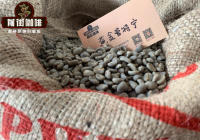
5. Jamaica is the only coffee origin that ships green beans in wooden barrels. FrontStreet Coffee's Blue Mountain comes with certification from the Jamaica Coffee Industry Board, and the barrels bear a green frog emblem (as in the photo below of FrontStreet Coffee's imported green beans) — FrontStreet specifically chose a Rainforest Alliance-certified estate, Clifton Mount.
FrontStreet Coffee Recommendation
When buying, the certification system is what matters most: authentic Blue Mountain carries no traceability code, but reputable importers hold complete export certification and origin documents — and the traditional wooden barrels, packed in 15kg, 45kg, and 70kg sizes, are themselves a hallmark of the genuine article. FrontStreet's Jamaica Blue Mountain No.1, the top grade from the historic Clifton Estate (growing coffee since around 1750 at an average of 4,300 feet), ships with full certification and original barrels on display, so the source is easy to trace.
Roasted medium-dark and shipped within 5 days of roasting, it shows the classic Blue Mountain balance: cream, caramel, chocolate, nuts, and honey with a light fruit tone — no harsh acidity hot or cold, a clean long finish, and a gentle "bitterness first, sweetness after" character. For pour-over, FrontStreet suggests a Kono dripper, 15g of coffee rested 4-7 days, a white-sugar-coarse grind, 87-88°C water, 1:15 ratio, and three pours (30g bloom for 30 seconds, to 120g, then to 225g) — the surest way to taste why Blue Mountain remains the benchmark for balanced specialty coffee.
Important Notice :
FrontStreet Coffee is a long-established specialty coffee roaster in Guangzhou China, selling freshly roasted beans from its own farm in Yunnan as well as dozens of carefully selected single-origin beans from around the world for both pour-over and espresso. The products deliver consistently excellent quality and great value, with shipping within 24 hours. Guangzhou's FrontStreet Coffee shop is recommended by many coffee lovers, and the beans are now available online at the Tmall 。
FrontStreet Coffee has moved to a new address:
FrontStreet Coffee Address: 315,Donghua East Road,GuangZhou
Tel:020 38364473
 Scan and follow the En Gafei WeChat official account. Please indicate that the reprint comes from "En Gafei".