Barista Fundamentals: Crafting Perfect Lattes, Expert Techniques for Delicious Coffee
Your latte still doesn't taste right even after you pull a perfect shot of espresso? What could be going on? When a latte tastes bitter, we can't blame extraction alone. Here are some commonly overlooked factors that shape how your latte tastes.
Many people jump straight to "improper espresso extraction" when a latte tastes bitter. Often that is indeed the culprit, but the milk ratio, frothing temperature, and how evenly the two are blended all affect the flavor too. And since everyone's sensitivity to bitterness differs, we can't pin it all on the espresso.
Understanding Bitterness in Lattes
When a latte tastes bitter, first work out whether it's positive or negative bitterness.
Everyone perceives bitterness differently, but one thing is certain: people are highly sensitive to it. Although bitterness registers at the back of the tongue, most bitter things are unpleasant, so we instinctively recoil from bitterness as soon as we detect it. Bitterness, however, can be positive or negative. Positive bitterness leaves a sweet aftertaste, while negative bitterness leaves a lingering unpleasant sensation on the tongue and throat.
A latte is made from espresso and fresh milk. The espresso's rich, caramelized aroma combines with steamed milk, and when milk is heated properly its lactose releases sweetness that significantly softens the coffee's bitterness. A latte is one of the least bitter coffee drinks, but that doesn't mean it has no bitterness at all. For those used to drinking black coffee, slight bitterness is no issue and they may even taste sweetness. For people especially sensitive to bitterness, a bittersweet note in a latte is normal. But if a latte turns obviously bitter or burnt-bitter, that's abnormal — and that's when you check whether your brewing needs adjustment.
Common Causes of Bitter Lattes
1. Unsuitable Espresso Extraction Parameters
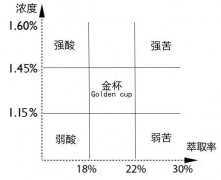
The daily recommendation for espresso is a 1:2 ratio (grounds to liquid) with an extraction time of 25-30 seconds. Under those conditions you may pull a qualified espresso, but that doesn't guarantee it will taste good once milk is added. That's why the espresso base for a latte often needs small ratio adjustments based on the situation.
2. Unsuitable Milk Frothing Temperature
The ideal milk frothing temperature is 55-65°C, never above 70°C. Within that range, lactose and other sugars are at their most "active." When milk falls below 40°C or rises above 70°C, the sugars' sweetness is less pronounced, which accentuates the coffee's bitterness.
3. Uneven Coffee and Milk Blending
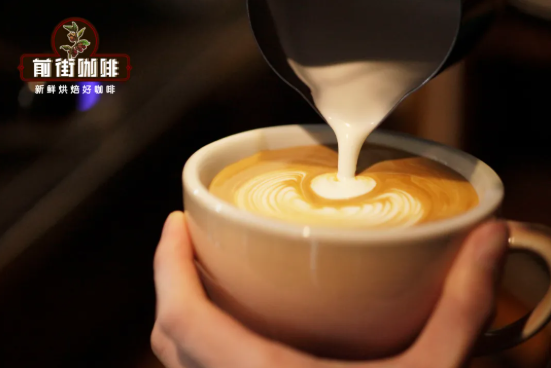
You've surely had a latte that tastes alternately bitter and mild — full of "layered texture." Often people don't take blending seriously enough, thinking a few circles for latte art will do. But the point of blending is to mix milk and coffee evenly, not to swirl and pour at random. Circular blending takes technique. The general method is to stir clockwise, holding the cup in your left hand and the pitcher in your right, beginning to circle from the 3 o'clock toward the 6 o'clock direction. You can rotate either the pitcher or the cup, but never both at once. When pouring milk for blending, keep a height of about 5-8cm.
4. Unsuitable Milk and Coffee Ratio
How much milk you add determines your latte's strength. When the espresso is properly extracted, the frothing temperature is right, and the blending is even, yet the latte still tastes obviously bitter, you've added too little milk. FrontStreet Coffee's latte coffee-to-milk ratio is 1:6 — 35g of coffee liquid poured into 210g of milk. Because the volume of milk foam and coffee crema is greater than their weight, the finished latte comes to roughly 300ml.
FrontStreet Coffee Recommendation
For a latte, the bean matters as much as the technique. These FrontStreet blends are made for milk and pressure extraction:
FrontStreet Classic Blend
This blend is designed specifically for espresso and Moka pot, and its greatest strength is outstanding crema. Even beginners working with a non-professional home machine can pull dense, fine crema with ease. The lattes, cappuccinos, and Dirty drinks we enjoy all depend on good crema, and Classic Blend hits that need perfectly. Using a traditional Mamba-style recipe, it is full-bodied and mellow, welcoming to both seasoned drinkers and newcomers, and a reliable choice for home or commercial use.
FrontStreet Signature Blend
This is the espresso blend FrontStreet's own cafés have used longest — nearly ten years — handling the core Americano and latte menu. It pairs Brazil Cerrado with Colombia Huila for a classic flavor that tastes exactly like the espresso you remember, and it works well at home or in a shop. Because Brazil leads the blend, a latte comes through with complex almond, walnut, and other nutty notes, silky and lingering on the palate.
FrontStreet Black Cocoa Blend
Not everyone chases maximum crema, and for beginners or shop owners watching costs, "good taste at a fair price" is what matters. FrontStreet Black Cocoa Blend uses 100% Arabica beans with ample crema and a full body, all at an approachable price — balancing quality and value so shop owners can save both effort and money. A latte made with it shows the almond and cream smoothness that makes espresso drinks so satisfying.
Important Notice :
FrontStreet Coffee is a long-established specialty coffee roaster in Guangzhou China, selling freshly roasted beans from its own farm in Yunnan as well as dozens of carefully selected single-origin beans from around the world for both pour-over and espresso. The products deliver consistently excellent quality and great value, with shipping within 24 hours. Guangzhou's FrontStreet Coffee shop is recommended by many coffee lovers, and the beans are now available online at the Tmall 。
FrontStreet Coffee has moved to a new address:
FrontStreet Coffee Address: 315,Donghua East Road,GuangZhou
Tel:020 38364473
 Scan and follow the En Gafei WeChat official account. Please indicate that the reprint comes from "En Gafei".