What is Geisha Coffee Variety? Origin and Flavor Characteristics of Geisha Coffee Beans
Professional coffee knowledge exchange. For more coffee bean information, please follow Coffee Workshop (WeChat official account: cafe_style).
A coffee professional recently posted on several social platforms that Ethiopia's Horse Champion coffee beans are in fact Geisha variety beans, sparking heated discussion among coffee lovers. For a long time, the literal Chinese translation has led many people to confuse Horse Champion coffee beans with Geisha coffee beans. In fact, Horse Champion is a sun-dried Ethiopian heirloom variety from the Buku processing plant in Hambela, Sidamo, Ethiopia; the name "Horse Champion" was given by a domestic green bean company. Geisha, by contrast, is a coffee variety that has been distributed to different growing regions for research, cultivation, and production. FrontStreet Coffee would therefore like to introduce you to this universally loved Arabica variety, Geisha.
The Geisha variety was discovered in 1931 in the Geisha forest of Ethiopia. It was later sent to the Coffee Research Institute in Kenya, introduced to Uganda and Tanzania in 1936, to Costa Rica in 1953, and to Panama in 1970. At first it drew little attention, until Panama's La Esmeralda (also known as Hacienda La Esmeralda) separated it from other varieties in 2003, after which it won the BOP competition in 2004. From then on, Geisha officially stepped into the spotlight. Although the flavor of Geisha is exquisite, that elegance comes from specific growing conditions. The variety is quite particular about its environment, requiring high altitudes, cloud cover or generous tree shade, and fertile soil. High-altitude Geisha beans show distinct floral aromas and a refined, elegant fruit acidity, which is one reason for their global popularity.
Panama Geisha Coffee
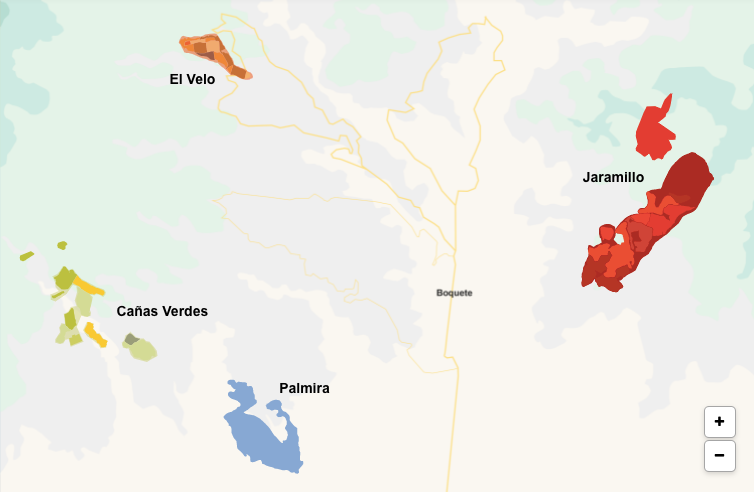
Among the Geisha beans we commonly encounter, the most famous undoubtedly come from La Esmeralda in the Boquete region of Panama. After its unique flavor was identified in 2003, it went on to win championship after championship in green bean competitions, including the BOP. In FrontStreet Coffee's daily brewing, Panama Geisha presents rose florals and citrus tones, much like a cup of floral, fruity tea. La Esmeralda stands out as a leader for several reasons: first, it was the earliest to discover Geisha; second, Geisha has been a consecutive BOP champion; and third, it established its own quality system, and several years later Gesha Village also adopted a grading system of its own.
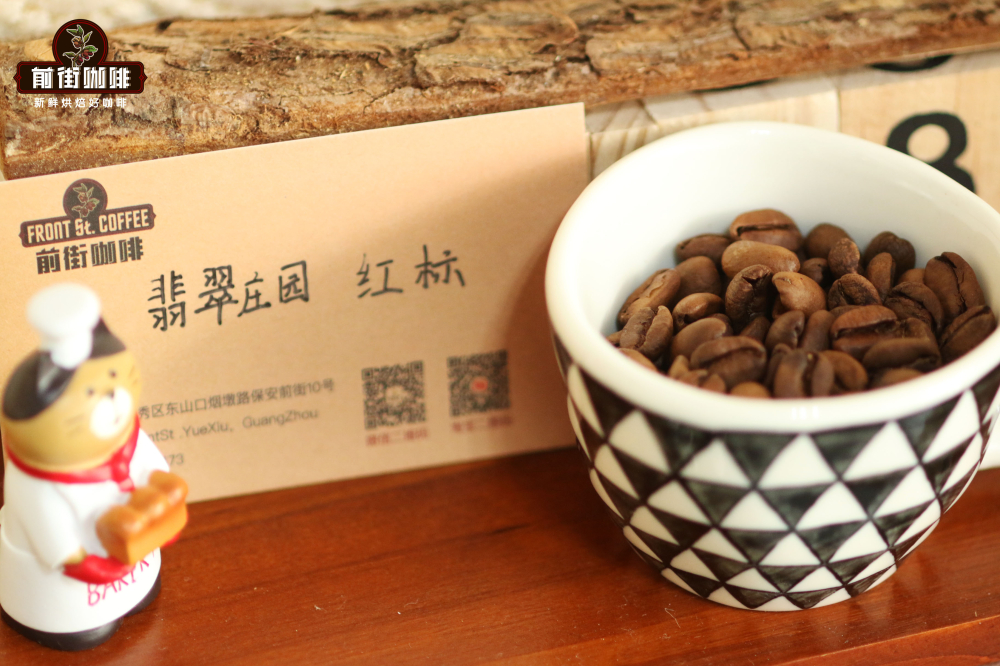
Emeralda Grading System
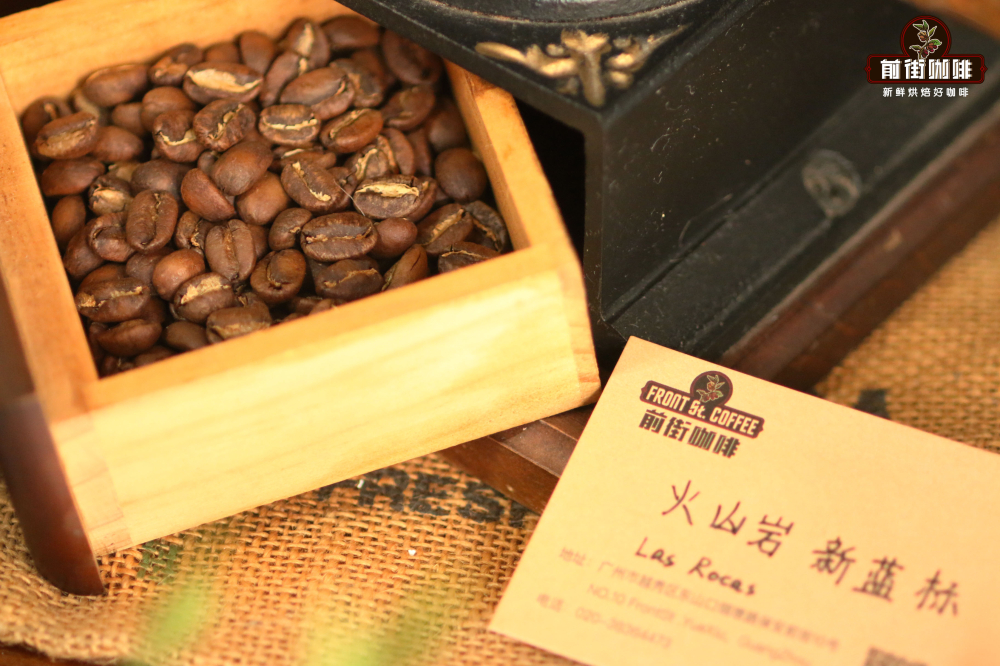
The grading is divided into Red Label Geisha, from precisely designated plots at 1600-1800m altitude on the estate; Green Label Geisha, from mixed plots at 1600-1800m altitude on the estate; and the newer Blue Label Geisha, grown on volcanic rock at around 1500m altitude and mixed within the estate.
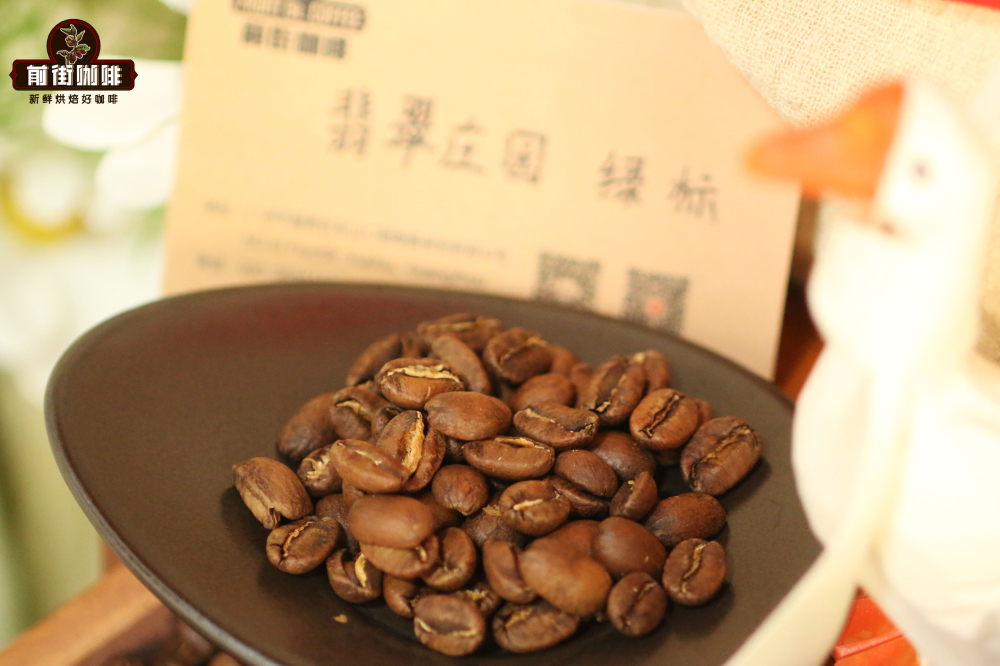
Flavor Differences
As for the differences in flavor, FrontStreet Coffee's Emeralda Estate sun-dried Red Label Geisha comes from a single plot and is grown at high altitude, so the flavor is fuller and clearer, with strawberry sweetness and acidity, rose fragrance, an oolong tea sensation, and a honey aftertaste. FrontStreet Coffee's Emeralda Estate Green Label washed Geisha is not from a single plot, but it too is grown at high altitude, so the flavor is relatively rich and fresh, with jasmine and ginger flower aromas, citrus fruit acidity, and a Tieguanyin tea aftertaste. FrontStreet Coffee's Emeralda Estate Volcanic Rock washed Blue Label, compared with the previous two, is grown at relatively lower altitude, so the flavor is fresher and more approachable, with white flower fragrance, citrus acidity, and a honey green tea aftertaste.
Ethiopia Gesha Village Coffee
Besides the famous Geisha varieties from Emeralda Estate, attentive readers will notice that Ethiopia also offers a coffee from Gesha Village. Some have asked FrontStreet Coffee whether this bean is also the well-known Geisha variety. Not exactly. Gesha Village is located in the Kaffa Forest, the birthplace of coffee. Compared with Panama Geisha, although the two share the name "Geisha," they are in fact completely unrelated varieties, and they can be told apart at a glance by their appearance. FrontStreet Coffee will discuss it separately as Ethiopia's Geisha variety.
In 2007, documentary director Adam Overton and his photographer wife Rachel Samuel, while filming a documentary about Ethiopian coffee for the Ethiopian government, came upon the Gera coffee forest in the Bench-Maji region. In the process they not only rediscovered this remarkable part of Ethiopia but also developed the idea of establishing their own coffee estate and brand. In recent years they learned planting techniques and estate management from Panama estate owner Willem Boot. Gesha Village also became the first coffee plantation estate in the Ethiopia region.
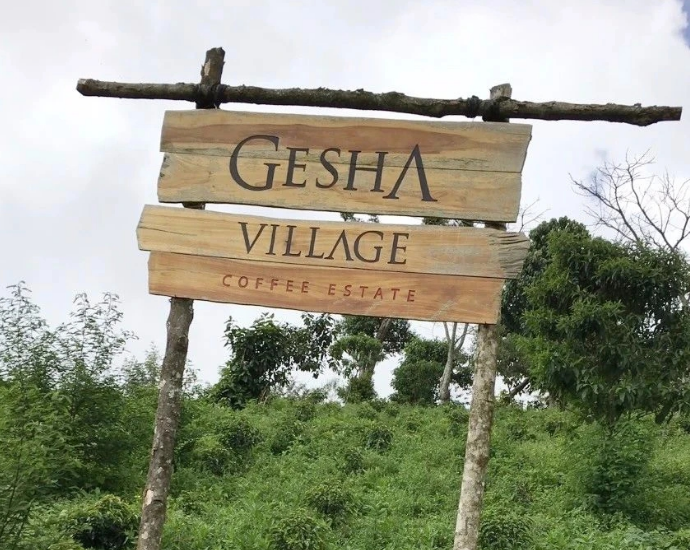
Adam followed Willem Boot on expeditions into the surrounding forests and discovered multiple wild coffee varieties in a jungle wrapped in dense forest, known as the Gori Geisha Forest. Among them, what surprised them most was the discovery of the native Geisha variety. They collected seeds from the native Geisha trees, screened them, and planted them at Gesha Village. They decided to establish the estate there, naming it Gesha Village Coffee Estate, and divided it into plots, managing varieties and classifying products.
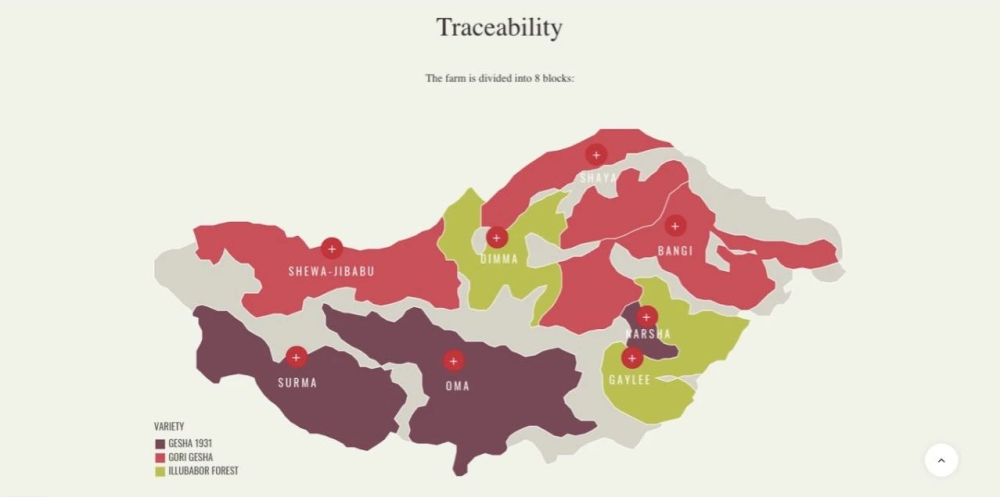
The Geisha beans grown at Ethiopia's Gesha Village are not the same as the famous Geisha beans from Panama. Gesha Village grows three varieties: Gori Gesha, Gesha 1931, and Illubabor Forest. The first two have genetic ties to the famous Panama Geisha variety but are not the same variety, while the latter is a disease-resistant variety provided by the Ethiopian Research Institute.
Gesha Village Grading System
Gesha Village also divides the coffee produced there into 5 batches: Auction, Gold Label, Red Label, Green Label, and Chaka. The Auction batch accounts for only 3.7% of Gesha Village's annual production and is the top batch selected through strict screening; it can only be obtained through global bidding.
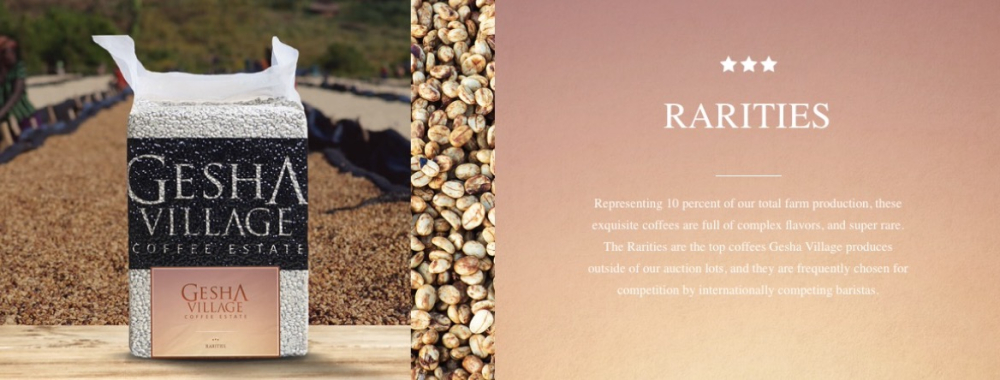
The Gold Label batch accounts for about 10% of Gesha Village's annual production, is very rare, and is the highest-quality Geisha bean from Gesha Village apart from the Auction batch. FrontStreet Coffee previously cupped a Gold Label batch from the Oma plot (the Oma 059 batch), processed as a sun-dried coffee with a drying time of 32 days, of the Gesha 1931 variety exclusive to the Oma plot. During the dry fragrance stage of cupping, FrontStreet Coffee smelled a strong fruit aroma. After hot water was added, during the wet fragrance stage, it transformed into intense floral and berry aromas. When FrontStreet Coffee actually tasted this Gesha Village Gold Label Geisha, the entry was distinctly citrusy with creamy tones. The acidity was not as bright as FrontStreet Coffee's Yirgacheffe; instead, the acidity of the Gold Label Geisha was relatively softer, with more pronounced sweetness. Caramel and cream sweetness continued through the cup, finally ending with a fermented aftertaste.
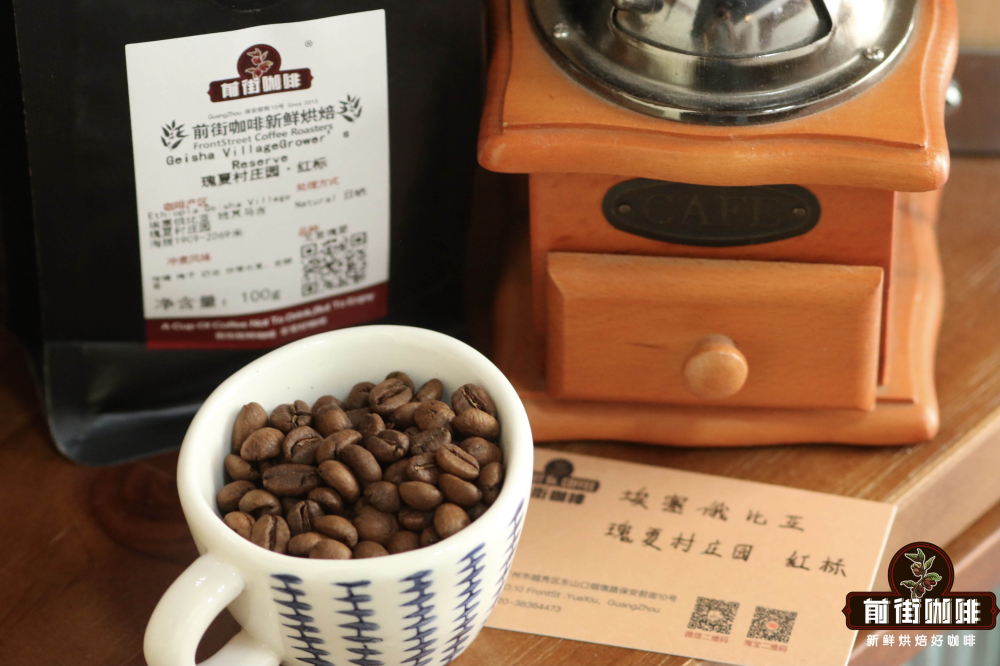
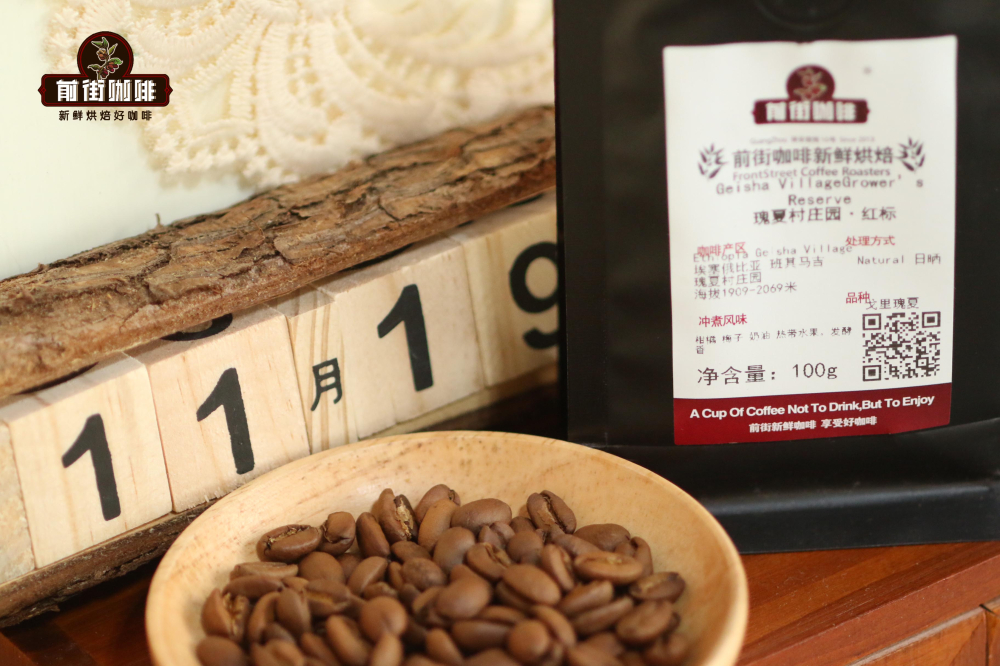
The Red Label batch accounts for about 15% of Gesha Village's annual production, comes from fully traceable batches, scores above 88 points (SCA standards) in cupping, and possesses the typical Gesha Village flavor. Its flavor intensity and complexity are slightly weaker than the Gold Label batch, making it a single-origin batch of excellent value. In the 2020 production season, FrontStreet Coffee selected a Geisha from the Shewa-Jibabu plot, FrontStreet Coffee's sun-dried Gori Gesha. When cupped, this Red Label batch of FrontStreet Coffee's Gori Gesha displayed tropical fruit, bergamot, and lemon tones, with creamy sweetness mixed with fermented aromas. As the temperature cooled slightly, jasmine fragrance gradually emerged, followed by flavors reminiscent of toffee and almonds.
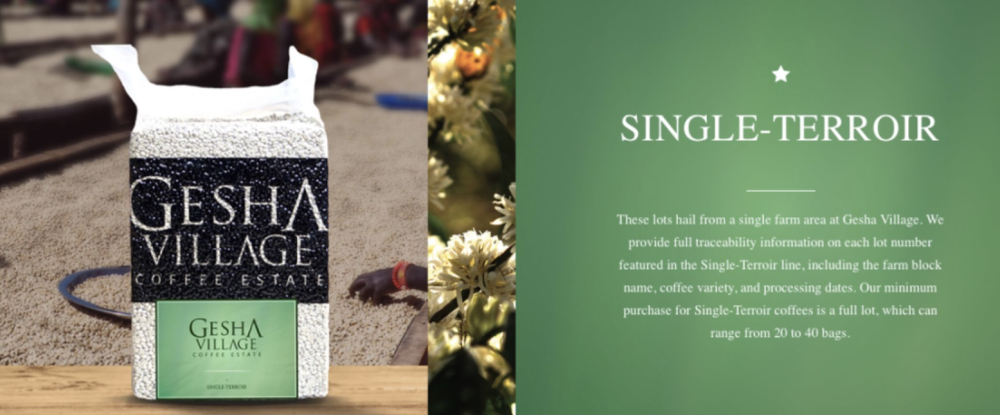
The Green Label batch comes from single plots and single varieties at Gesha Village. It provides complete traceability information for each batch number, including farm plot name, coffee variety, and processing date. Chaka, unlike the other batches, mixes coffee from all plots on the estate throughout the entire production season. Chaka batch coffee is processed both as sun-dried and washed, and it contains three coffee varieties from Gesha Village: Gesha 1931, Gori Gesha, and Illubabor.
Purchasing and Brewing Geisha Coffee
Now that you understand the differences between Panama Geisha coffee and Ethiopia Gesha coffee, are you eager to brew a cup and taste it for yourself? At FrontStreet Coffee you can purchase FrontStreet Coffee's Panama Emeralda Red Label, FrontStreet Coffee's Panama Emeralda Green Label, and FrontStreet Coffee's Panama Volcanic Rock Blue Label, the three grades of Geisha coffee beans. As for Gesha Village Geisha, FrontStreet Coffee currently offers only FrontStreet Coffee's Ethiopia Gesha Village Red Label batch. Every coffee bean FrontStreet Coffee sells is shipped within 5 days of completing the roast, so when your beans arrive, do not rush to drink them. First let them rest by keeping them sealed in their original packaging in a cool, dry place for 3-4 days after the roast date. Brewed this way, the Geisha will taste even better.
Brewing Parameters
FrontStreet Coffee's recommended brewing parameters for Geisha coffee beans: Dripper: V60 #01; Dose: 15g; Coffee-to-water ratio: 1:15; Brewing temperature: 90-91°C; Grind size: medium-fine (80% pass-through rate with a #20 standard sieve).
Brewing Method
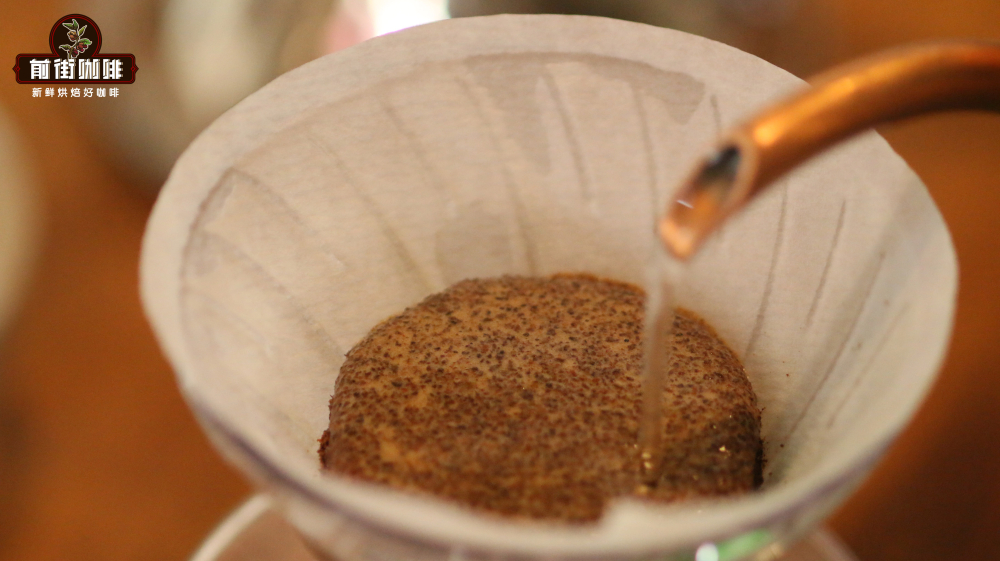
For the brewing method, we recommend the three-stage pouring technique. Start the timer and use 30g of water for the first-stage bloom for 30 seconds. After 30 seconds, begin the second stage with small circular pours until you reach 125g. When the coffee liquid level in the dripper drops to 2/3 of the coffee bed, start the third stage with small circular pours until you reach 225g, then stop pouring. When all of the coffee liquid has flowed from the dripper into the lower server, remove the dripper and end the extraction. The total extraction time for Geisha coffee beans is generally between 2 minutes 10 seconds and 2 minutes 20 seconds.
For more specialty coffee beans, please add FrontStreet Coffee's private WeChat: kaixinguoguo0925
FrontStreet Coffee Recommendation
To taste the classic Panama Geisha profile, the natural starting point is FrontStreet Panama Emerald Red Label Geisha, grown at 1,600-1,800 meters on a single designated plot of the Emerald Estate, whose formal name is Esmeralda Special. This is the highest of the estate's Geisha lines, and every lot must cup above 90 points with its own number, which lets you pick a batch by the fine flavor differences you prefer. If you would like that same high-altitude signature for less, FrontStreet Panama Emerald Green Label Geisha, sold as Private Collection, blends batches from multiple plots rather than stressing parcel-by-parcel detail, and its value is excellent. Around the famous Boquete area the fertile volcanic soil, old forest, year-round mist, and abundant rain create ideal growing conditions, and the cup shows the orange-blossom honey note, an oolong tea sensation, and delicate, well-defined fruit sweetness.
For a more fruit-acid-driven expression, look to Ethiopia. FrontStreet Ethiopia Gesha Village Range is the rare large estate in Ethiopia, sitting beside the original Geisha forest with strict quality control and standardized management. Its Red Label is the Gori Gesha variety, makes up about 15% of production, scores 88 or above on the SCA 100-point scale, and is a single-terroir series in which every lot number carries complete traceability, including the farm block name, variety, and processing date. Cupped at medium-light roast, it shows bright citrus acidity, elegant ginger flower aroma, and the full sweetness of ripe fruit with a delicate, silky body and the refined finish that marks the Geisha variety. Both lots brew beautifully as a pour-over: use 15g in a small V60 with a 1:16 ratio, a grind around fine granulated sugar (78% pass-through on the #20 standard sieve), and water at 91°C, pouring in three stages from a 30g bloom to 125g and then 225g for a total extraction of about 2 minutes 10 seconds to 2 minutes 20 seconds.
Important Notice :
FrontStreet Coffee is a long-established specialty coffee roaster in Guangzhou China, selling freshly roasted beans from its own farm in Yunnan as well as dozens of carefully selected single-origin beans from around the world for both pour-over and espresso. The products deliver consistently excellent quality and great value, with shipping within 24 hours. Guangzhou's FrontStreet Coffee shop is recommended by many coffee lovers, and the beans are now available online at the Tmall 。
FrontStreet Coffee has moved to a new address:
FrontStreet Coffee Address: 315,Donghua East Road,GuangZhou
Tel:020 38364473
 Scan and follow the En Gafei WeChat official account. Please indicate that the reprint comes from "En Gafei".