Barista Tips—How to Adjust Grind Size When Making Espresso, Espresso Brewing Guide
Espresso Coffee Grind Issues
For drip-style coffees like pour-over and cold brew, the coffee particles are ground relatively coarsely, and we can even use a sieve to sort them. An espresso machine, however, demands the finest possible grind, so fine it looks like dust to the naked eye.
Moreover, espresso grind size raises two issues. First, different espresso machines have slightly different requirements for fineness. Second, grinding beans into such fine powder wears the burrs, and significant wear degrades the grinder's precision. This ties back to the first issue: when customers own an espresso machine but no grinder, FrontStreet Coffee can only pre-grind their coffee to the setting we use for our own machines, and the result may not perfectly match a different machine's specifications. (The relationship between grind size and machines is discussed below.)
Why Frequent Grind Adjustments Are Necessary
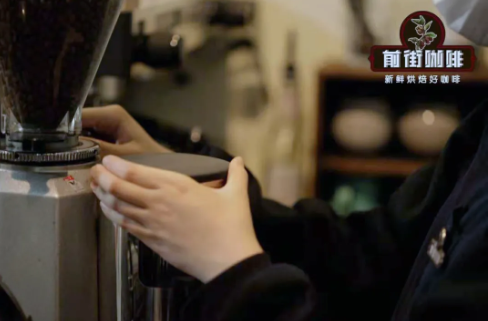
"Frequent" here is relative to pour-over coffee. In pour-over brewing, the grind setting for each bean stays basically constant, while espresso grind size needs adjusting at least 1-2 times a day.
The reason lies in daily swings in atmospheric pressure and humidity, combined with grinder precision. Even when the grounds look identical to the naked eye, the moment you lock in the basket and press the extraction button, whether the grind is too coarse or too fine becomes immediately obvious. That is why espresso grinders must be adjusted daily to accommodate the "picky" espresso machine; after all, the machine has half the say in whether the shot tastes good.
How to Adjust Grind Size for Espresso
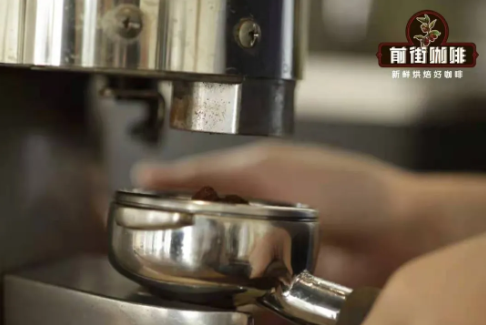
In daily operation, grind size is the main parameter adjusted for espresso, and these adjustments often involve barely perceptible increments of just 0.1 divisions. Before adjusting, be clear about two things. First, why the adjustment is needed: because the extracted espresso misses your preset targets, whether extraction parameters or flavor. Second, keep every other variable as consistent as possible, such as skilled puck distribution and tamping, and consistent dose and yield; otherwise your grind adjustments will be full of uncertainty.
Espresso grinders typically use a horizontal flat-burr structure with a graduated adjustment dial, where higher numbers mean coarser grinding. Take the Fiorenzato grinder used by FrontStreet Coffee: espresso grind sits between 1.5-2.5. For daily adjustments we follow an extraction formula built on dose, extracted liquid, and extraction time. Dose and yield form a dose-to-yield ratio, typically 1:2, with extraction time between 20-30 seconds.
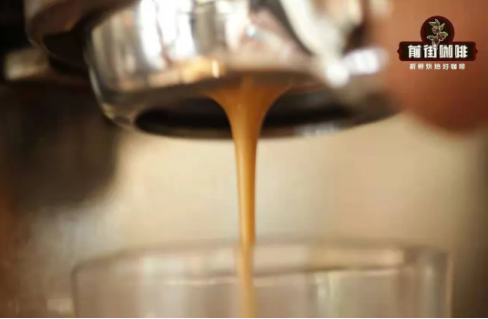
For example, when FrontStreet Coffee pulled 40 grams of espresso from 20 grams of coffee in 18 seconds, the shot clearly ran too fast, meaning the grind was too coarse and needed to go finer. Since 18 seconds is not far off the 20-30 second range, we could adjust finer by 0.1-0.2 divisions. After moving 0.2 divisions finer, the extraction time became 23 seconds, which fits the extraction formula, but that does not guarantee good taste, so we still taste to identify shortcomings and fine-tune further.
Another example: when FrontStreet Coffee extracted 40 grams of espresso from 20 grams of coffee in 48 seconds, with the first drop appearing after 15 seconds, and after confirming the dose and tamping were fine, we judged the grind too fine. The resistance from the overly fine grounds was so high that water could not penetrate the puck, so the grind needed to go coarser. Since the 48-second extraction was far outside the 20-30 second range, we first moved 0.5 divisions coarser, observed the extraction time, and gradually adjusted back. Typically 2-3 extractions are needed to lock in the optimal setting.
Extraction Suggestions for Home Espresso Machines
Many enthusiasts own an espresso machine and grinder at home but go through relatively little coffee, perhaps only 1-2 cups a day. Adjusting the grind 2-3 times daily for just 1-2 cups would clearly be wasteful and laborious. For this situation, FrontStreet Coffee offers the following suggestions:
1. Use the maximum dose recommended for your portafilter basket. For example, the reasonable capacity of the basket FrontStreet Coffee uses is 18-20g, and choosing a 20g dose runs more stably.
2. With such low daily output, burr wear is not a real concern. Set the grind properly when you first start using the machine and record that setting. For daily extractions of one or two cups, simply follow that setting, maintain a 1:2 dose-to-yield ratio, and keep extraction time within 20-30 seconds.
Some might ask: there is a 10-second spread within 20-30 seconds, so does it matter if one shot takes 20 seconds and another 30? There will certainly be a difference, but both generally fall within the acceptable espresso extraction range. If you are not drinking espresso straight but adding milk for lattes or water for Americanos, the difference shrinks dramatically. Unless you are conducting academic research, there will likely be no major negative sensory difference in the cup.
A good espresso features well-balanced acidity, sweetness, and bitterness, with prominent flavors and a long-lasting aftertaste.
FrontStreet Coffee Recommendation
Once your grinder is dialed in, the beans matter just as much. If you also brew cold coffee alongside your espresso, cold brewing amplifies floral and fruity tones while muting woody and roasted notes, so lightly to medium roasted beans show best. FrontStreet Coffee's Strawberry Candy Geisha blend combines Panama Geisha with Costa Rica's raisin honey process coffee: the Geisha contributes delicate rose and orange notes, while the Costa Rican component adds grape, dried blueberry, and strawberry-candy sweetness, making a cold brew that is sweet, tangy, and lively, and if you let it ferment and settle briefly, it takes on a wine-like character. For standout florals, the natural-processed Huakui from Ethiopia absorbs abundant sweetness from its fruit as it dries, revealing magnolia, creamy strawberry, dried mango, guava, and black tea in cold brew.
For a juice-like cold brew, FrontStreet Coffee's Kenya Little Tomato (SL28 and SL34 from Thika, 1550-1750 meters, K72 double-washed) shows cherry tomato, snow pear, black plum, and dried dark plum acidity with low bitterness, wonderfully refreshing over ice. The washed Gedding Cooperative Yirgacheffe, an affordable everyday workhorse, expresses sweet berries, layered florals, and honey in cold brew. And since cold brew consumes more coffee than pour-over, a blend is a smart way to balance flavor and cost: mix FrontStreet Coffee's Colombia Sidra, with its passion fruit, grape, apricot, and dried-fruit sweetness, with Costa Rica Tarrazu at a 1:2 ratio to enjoy the Sidra's floral-fruity character and Tarrazu's clean citrus acidity at a friendlier price per liter.
Important Notice :
FrontStreet Coffee is a long-established specialty coffee roaster in Guangzhou China, selling freshly roasted beans from its own farm in Yunnan as well as dozens of carefully selected single-origin beans from around the world for both pour-over and espresso. The products deliver consistently excellent quality and great value, with shipping within 24 hours. Guangzhou's FrontStreet Coffee shop is recommended by many coffee lovers, and the beans are now available online at the Tmall 。
FrontStreet Coffee has moved to a new address:
FrontStreet Coffee Address: 315,Donghua East Road,GuangZhou
Tel:020 38364473
 Scan and follow the En Gafei WeChat official account. Please indicate that the reprint comes from "En Gafei".