Barista Tips - Common Mistakes in Pour-Over Coffee Brewing, Pour-Over Coffee Tutorial
Pour-over coffee looks simple and turns out to be anything but. Behind those brief two minutes of brewing sits a deep well of knowledge, and beginners easily fall into common misconceptions. In this installment of our barista training series, we will look at some of the most frequent pitfalls.
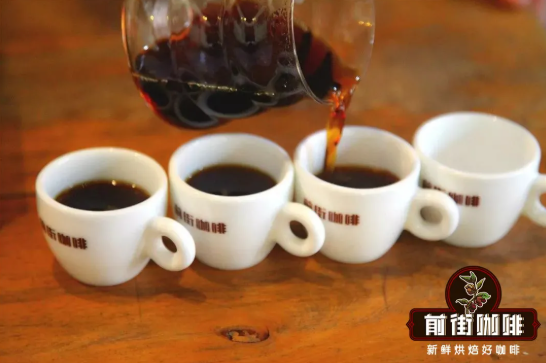
Many people are drawn to pour-over coffee by the elegant motions of baristas, and that can lead them to believe technique has an enormous effect on the cup, sometimes to the point of obsession, assuming any bad result must come from clumsy hands. FrontStreet Coffee won't deny that technique affects flavor, but it is not the dominant factor. Quality beans combined with the right grind size, water temperature, and coffee-to-water ratio, plus ordinary brewing skill, are enough to produce an excellent cup. Watching seasoned "master brewers," we should pay more attention to the brewing parameters they use and the intent behind their movements than to the flourish itself. Only by understanding their reasoning and absorbing what is useful can you speed up your own growth. What's more, no single technique fits every coffee. A fruit-forward Yirgacheffe and a rich, full-bodied Mandheling sit at quite different ends of the flavor spectrum. The right approach is to keep adjusting, judge the extraction by what you actually see, and change your pour-over parameters accordingly to reach the best possible result.
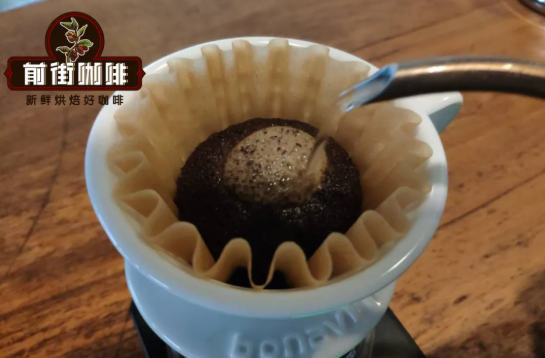
As pour-over coffee has grown popular, the market has filled with advanced brewing devices. Take filter cups: there are many styles, some designed for even extraction and others for fast flow that resists clogging. FrontStreet Coffee has published plenty of filter cup reviews and usage guides, but the sheer variety makes complete coverage impossible. Still, understanding extraction principles lets any device produce an excellent brew, while choosing the right filter cup can make the process twice as effective. To achieve a rich, full-bodied result, for example, a Kono filter cup might suit you; for balanced flavor through even extraction, a wave filter cup would be ideal. Brewing pour-over also usually calls for aids like a digital scale and a thermometer, which make a real difference to precision. Don't underestimate the importance of accuracy, because it can ruin a cup. Suppose your plan specifies 15g of grounds at a medium-fine grind, a 1:15 ratio, and 91°C water, but in reality you end up with only 14.8g of grounds (some lost during grinding), water at 91.4°C, and a total water volume of 231.2g. Though these figures look close to the plan, you will notice a clear difference between the two cups. Whether the result is better or worse is not the point here; what we can confirm is that the flavor has drifted from the intended result.
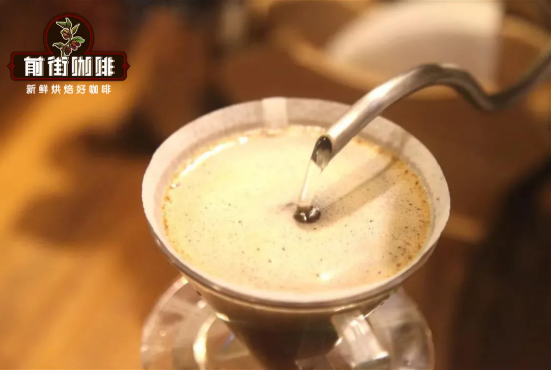
So once you have settled on a brewing plan, execute it as precisely as you can. If every parameter drifts a little, the final cup will show a significant difference.
FrontStreet Coffee Recommendation
Once your technique and parameters are dialed in, the next lever is the bean itself, and for pour-over that often means a vivid, floral Yirgacheffe. FrontStreet's washed Yirgacheffe is the classic everyday choice, known for white jasmine, bright citrus and lemon acidity, and a tea-like body, all at an accessible price that has made it a first bean for many newcomers to specialty coffee. Yirgacheffe is a town in southern Ethiopia's Sidamo province at 1,700-2,100 meters, where coffee trees are planted above 1,800 meters, making it one of the highest coffee regions in the world.
For a little more complexity within the same region, FrontStreet's washed Gedeb cooperative coffee comes from the Worka area at the southeastern edge of Yirgacheffe, once part of the YCFCU's Worka cooperative and established as an independent single-origin cooperative in 2012 with roughly 300 member farmers. Because the pulp is removed before drying, its inherent aromatics come through clearly, with citrus and lemon tones and elegant white florals, giving a bright, refined cup that responds beautifully to careful pour-over brewing.
Important Notice :
FrontStreet Coffee is a long-established specialty coffee roaster in Guangzhou China, selling freshly roasted beans from its own farm in Yunnan as well as dozens of carefully selected single-origin beans from around the world for both pour-over and espresso. The products deliver consistently excellent quality and great value, with shipping within 24 hours. Guangzhou's FrontStreet Coffee shop is recommended by many coffee lovers, and the beans are now available online at the Tmall 。
FrontStreet Coffee has moved to a new address:
FrontStreet Coffee Address: 315,Donghua East Road,GuangZhou
Tel:020 38364473
 Scan and follow the En Gafei WeChat official account. Please indicate that the reprint comes from "En Gafei".