An Introduction to Colombian Coffee Varieties—Types of Coffee Beans from Major Coffee-Producing Countries
Colombia: A Premier Coffee Growing Nation
Like Brazil, Colombia stands among the world's leading coffee-producing nations, with geographic conditions so well suited to the crop that they seem made for it. Colombia shifted its agricultural base away from cannabis toward coffee, with strong government backing, and after suffering devastating leaf rust outbreaks it set out deliberately to diversify its coffee varieties.
Typica: The Heritage Variety
As elsewhere, Typica is one of the longest-cultivated coffee varieties in Colombia, first brought in around the late 16th to early 17th century, when a priest carried it from the French Antilles by way of Venezuela. Typica offers exceptional flavor, with delicate floral notes, excellent acidity and a full body. Because its yields are low and its agronomic costs and technical demands are high, however, most farmers chose to plant higher-yielding varieties instead.
Bourbon: The Refined Mutation
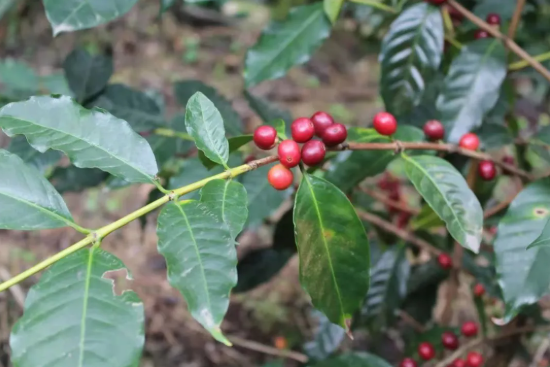
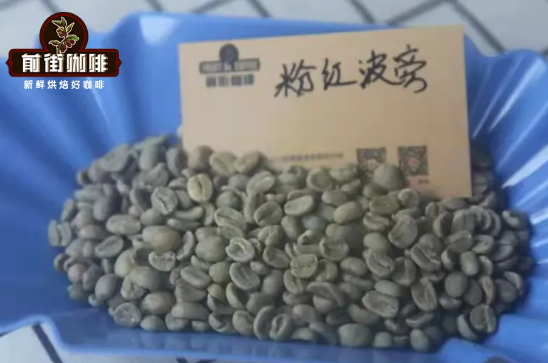
Bourbon, a mutation of Typica, is distinguished by a rounder bean shape and superior acidity, with red wine-like characteristics. It was formally introduced to the South American continent in 1860, arriving first in Brazil as a replacement for low-yielding Typica, and from there it spread to Colombia. Bourbon cultivation in Colombia stayed limited, restricted to just a few regions. FrontStreet Coffee currently offers a Pink Bourbon from Hacienda El Paraiso in the Cauca department, which shows clean, clear flavors with lemon and cherry-tomato-like acidity reminiscent of Kenyan coffee.
Caturra: The Compact Producer
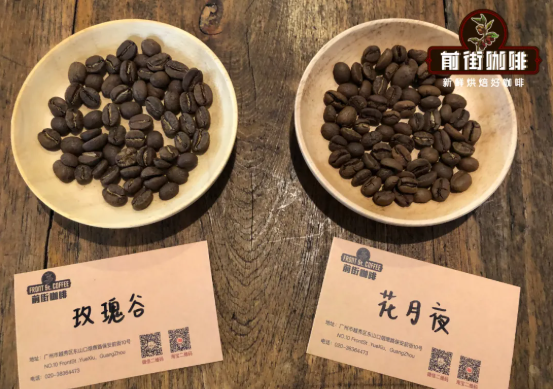
Caturra is a natural mutation of Bourbon. Its advantages over Bourbon include tolerance of full sun exposure, so no shade trees are needed, a compact size that makes harvesting easier, and more productive branches that lift yields. In flavor terms, Caturra is comparable to Bourbon. These traits made Caturra Colombia's primary coffee variety. Interestingly, Caturra was discovered at a plantation in Minas Gerais, Brazil, and later screened by the Instituto Agronomico de Campinas (IAC) in Sao Paulo, although experimental cultivation in Brazil did not perform well. When Caturra reached Colombia it thrived and was planted nationwide. FrontStreet Coffee currently features Caturra varieties in its Huayuena and Rose Valley offerings.
Colombia Variety: The Disease-Resistant Hybrid
To combat leaf rust, Colombia's National Coffee Research Center, Cenicafe, developed the improved Catimor variety through multiple generations of backcrossing in 1980. As the generations advanced, the Robusta genetics became increasingly diluted. Emphasizing how far the result had moved from the original Catimor, and wanting to encourage nationwide planting, the Colombian government named it "Colombia" after the country. The Colombia variety performs excellently in both disease resistance and yield, but compared with Caturra its flavor is somewhat lacking, so it is typically used for commercial commodity exports. It remains one of Colombia's main coffee varieties.
Castillo: The Modern Solution
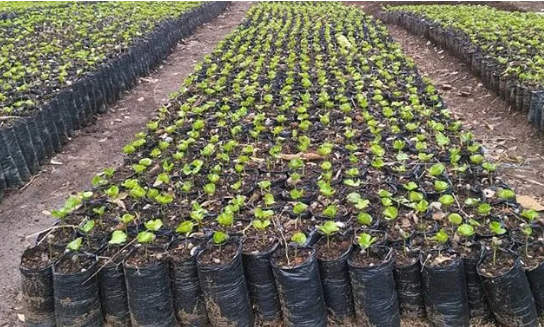
Castillo is a newer generation of leaf rust-resistant coffee developed jointly by the Colombian Coffee Growers Federation (FNC) and Cenicafe. Cenicafe set out to push varieties further, aiming for higher yields, greater resistance, and quality and flavor on par with Caturra. After 23 years of research and testing, Cenicafe released the fifth-generation Castillo, officially promoted for commercial cultivation in 2005. Castillo is known for its smoothness, aroma and citric acidity. Blind taste tests run by Colombia's National Coffee Research Center found that Castillo's flavor quality matches that of Caturra and Bourbon. Today Castillo is being promoted nationwide across Colombia.
FrontStreet Coffee Recommendation
Colombia shares the top of the coffee world with Brazil, and FrontStreet Coffee's Brazilian single-origin lots make a fitting counterpoint to the Colombian varieties above. The FrontStreet Brazil Cerrado red Bourbon is the classic profile: Cerrado is a well-known Brazilian region for high-quality beans, and this red Bourbon is medium roasted to draw out creamy peanut, toasted bread, caramel and hazelnut. The cup is round and smooth, low in acidity with a faint bitterness, and it works as well as pour-over as it does in a moka pot, as an espresso SOE, in a siphon or in a French press.
If you want to explore Brazil's rarer side, the FrontStreet Queen's Farm comes from Mogiana, close to South Minas, where fertile red volcanic soil feeds the fruit generously. Its variety is the uncommon yellow Bourbon, a mutation of red Bourbon, and its fruit character is correspondingly cleaner. Across pour-over, moka pot or a home espresso machine, it shows a sugarcane-like sweetness that most other regions cannot match, along with fruit and chocolate notes. Brazil also anchors most of FrontStreet's espresso blends: the Classic, the Premium, the Dark Cocoa and FrontStreet Coffee's Commercial Blends all include Brazilian beans, which supply chocolate and cream aromas plus a soft sweet-tart balance that keeps extraction stable. Where Colombia's story is one of deliberate variety breeding, Brazil's is one of scale and balance, and together they cover the two poles of Latin American coffee.
Important Notice :
FrontStreet Coffee is a long-established specialty coffee roaster in Guangzhou China, selling freshly roasted beans from its own farm in Yunnan as well as dozens of carefully selected single-origin beans from around the world for both pour-over and espresso. The products deliver consistently excellent quality and great value, with shipping within 24 hours. Guangzhou's FrontStreet Coffee shop is recommended by many coffee lovers, and the beans are now available online at the Tmall 。
FrontStreet Coffee has moved to a new address:
FrontStreet Coffee Address: 315,Donghua East Road,GuangZhou
Tel:020 38364473
 Scan and follow the En Gafei WeChat official account. Please indicate that the reprint comes from "En Gafei".