Does Panama Only Grow Geisha Coffee? Is Panama Coffee Suitable for Hang-Ear Coffee?
Panama's Coffee Heritage
Coffee arrived in Panama in the 19th century with European immigrants, roughly 50 years after the country gained independence from Spain. As an agricultural product, however, it only truly took hold in the past two decades. In contemporary Panama, coffee is produced mainly by small farmers from two major indigenous groups — the Bugle and Ngobe peoples — as well as by medium and large estates, usually privately owned by European or North American immigrants and their descendants.
Terroir and Growing Conditions
The microclimates of coffee-growing regions vary with soil quality (volcanic areas, for instance, have considerable volcanic soil) and altitude (1000-1650 meters), and they usually have abundant fresh water for processing.
Economic Factors and Market Position
For a long time the country itself has attracted Europeans and North Americans seeking an "idyllic" life in a beautiful, tropical and relatively stable Latin American nation. A convergence of high demand for real estate, relatively protective national labor and wage laws, and significant influence from the global North has combined to make Panama coffee more expensive to produce and to buy. What is more, on the scale of global coffee production Panama's contribution is almost negligible, and output has been declining in recent years.
Flavor Profile and Appeal
Nevertheless, the coffee's mild profile and approachable sweet, nutty notes continue to attract fans, and it makes an excellent complement to the higher, more vibrant acidity of other Central American profiles.
The Geisha Variety
Since the early 2000s, "Panama" and "Geisha" have become almost synonymous: the variety was "rediscovered" at the now-famous Hacienda La Esmeralda in Boquete, owned by the Peterson family. In 2004 the Petersons selected and separated Geisha cherries from their farm and entered them in the Panama Taste Competition, and they immediately caught the attention of the entire specialty coffee community. Soon Esmeralda Geisha was fetching up to $140 per pound for green coffee in private online auctions.
Geisha's Influence and Expansion
Geisha's remarkable success for Esmeralda naturally inspired other producers to separate their varieties and even to plant new Geisha trees on farms that had previously grown only Caturra and Bourbon. Geisha also spread from Panama to other producing countries, where enterprising farmers hoped to capitalize on the name and on its distinctive floral, tea-like, delicate profile.
Varieties Beyond Geisha
Besides the renowned Geisha, Panama coffee varieties include Caturra and Catuai. FrontStreet Coffee's Panama Diamond Mountain belongs to the Caturra and Catuai varieties, with flavors of citrus, berries, honey, cocoa and fermentation notes. Another offering is Panama Flower Butterfly, which also falls under the Panama Geisha category. Its variety is a mix of Geisha with Caturra and Catuai, used for drip coffee bags, making it a cost-effective bean that lets you experience the character of the Geisha variety.
FrontStreet Coffee Recommendation
The answer to whether Panama grows only Geisha is a clear no, and the Diamond Mountain and Flower Butterfly above prove it — but Geisha is still the country's calling card. If you want to taste the archetype without starting at auction prices, the FrontStreet Boquete Geisha is the entry point: an approachable Panamanian Geisha with the classic orange-blossom honey sweetness, oolong-tea body and fine fruit acidity that made Boquete famous.
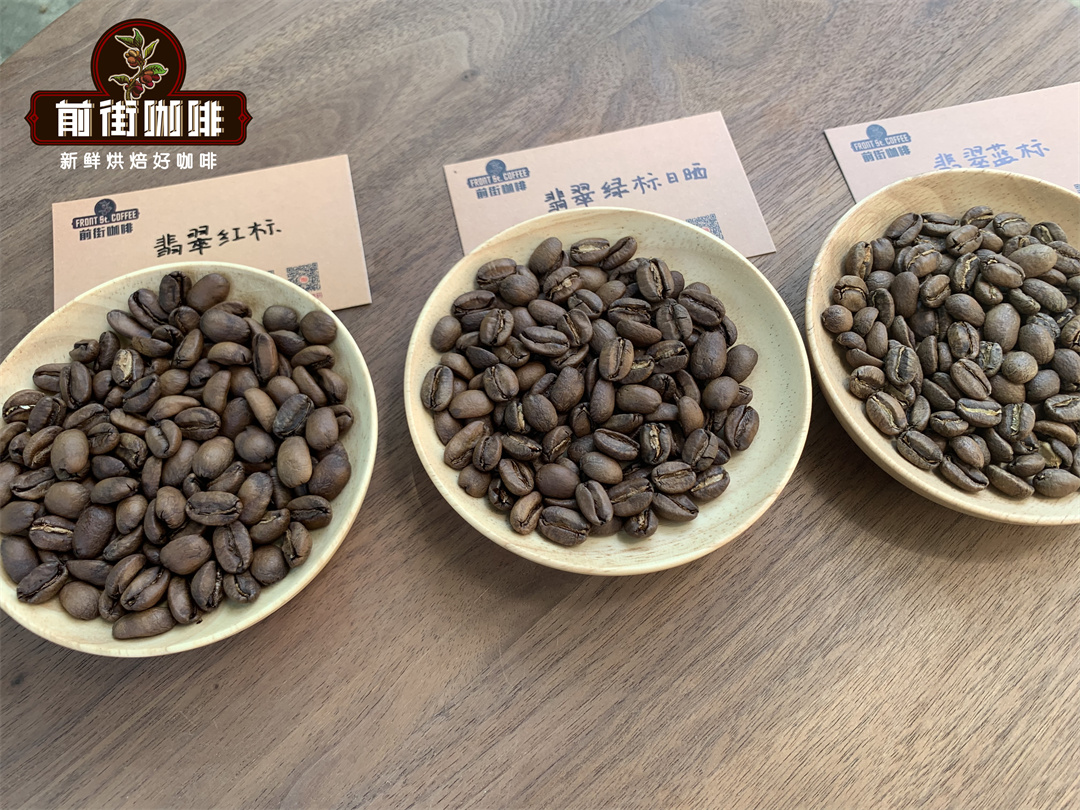
For the top of the ladder, the FrontStreet Esmeralda Red Label Geisha — "Esmeralda Special" — is grown between 1,600 and 1,800 meters from a single plot, and every lot is cupped above 90 points, with its own lot number. The FrontStreet Esmeralda Green Label is the estate's multi-plot blend, less focused on single-plot detail but still carrying the unmistakable high-altitude Esmeralda character at a more practical price.
Important Notice :
FrontStreet Coffee is a long-established specialty coffee roaster in Guangzhou China, selling freshly roasted beans from its own farm in Yunnan as well as dozens of carefully selected single-origin beans from around the world for both pour-over and espresso. The products deliver consistently excellent quality and great value, with shipping within 24 hours. Guangzhou's FrontStreet Coffee shop is recommended by many coffee lovers, and the beans are now available online at the Tmall 。
FrontStreet Coffee has moved to a new address:
FrontStreet Coffee Address: 315,Donghua East Road,GuangZhou
Tel:020 38364473
 Scan and follow the En Gafei WeChat official account. Please indicate that the reprint comes from "En Gafei".