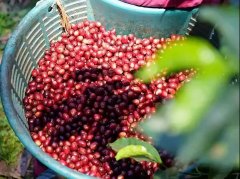
What are the coffee regions? Introduction to Indonesian coffee brands and characteristics of Mandheling coffee beans.
Today, the world's coffee growing regions are concentrated between 25° south latitude and 25° north latitude of the equator. The region we look at today is Indonesia, which sits inside that band.
The Republic of Indonesia, or Indonesia for short, is a Southeast Asian country with Jakarta as its capital. It borders Papua New Guinea, East Timor, and Malaysia. Indonesia covers 1,913,578.68 square kilometers and consists of roughly 17,508 islands, making it the world's largest archipelagic country. Its territory spans Asia and Oceania, and it is also a country of many volcanoes and earthquakes. Its larger islands include Kalimantan, Sumatra, Irian Jaya, Sulawesi, and Java.
Indonesia has a population of 262 million, the fourth largest in the world. It has hundreds of ethnic groups, with the Javanese making up 45% of the population, Sundanese 14%, and Madurese and Malay 7.5% each. There are more than 200 ethnic languages, with Indonesian as the official language. About 87% of the population practices Islam, making it the country with the largest Muslim population in the world.
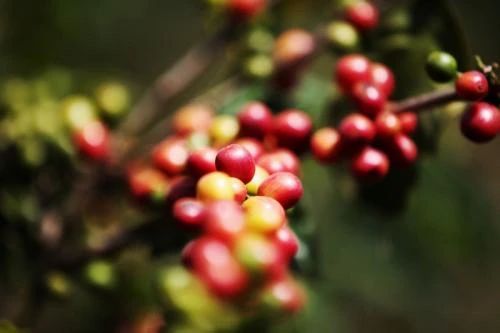
From the 13th to 14th centuries, a powerful empire formed in Java. In the late 16th century the islands became a Dutch colony. In 1942 they were occupied by Japan. Independence came in 1945, and the Republic was established in August 1950.
Indonesian coffee is known for its mellow, rich flavor and texture and its extremely low acidity. It carries caramel and dark chocolate sweetness and aftertaste, which is why the Japanese have shown an almost obsessive dedication to it. Indonesia is a major coffee producer in Asia and ranks among the top coffee-producing countries globally.
Coffee Cultivation Origins
In 1696, Hendrik Zwaardecroon, then the Dutch governor of Malabar in India, gave Arabica seedlings as a gift to the Dutch governor of Batavia, now Jakarta in Java. It was the first time coffee was planted in Indonesia. That first batch of seedlings failed because of flooding.
In 1699, the governor of Malabar sent a second batch, which was harvested for the first time in 1701, opening a new era for Indonesian coffee. These trees propagated and acclimatized to become the JAVA variety.
In 1706, the first local coffee samples were exported to Amsterdam along with coffee trees. The seedlings grew and propagated in the Amsterdam Botanical Garden (Hortus). Indeed, they became the origin of Arabica coffee in Brazil and the Caribbean.
In 1711, the Dutch East India Company (VOC) first shipped Indonesian coffee from Java to Europe.
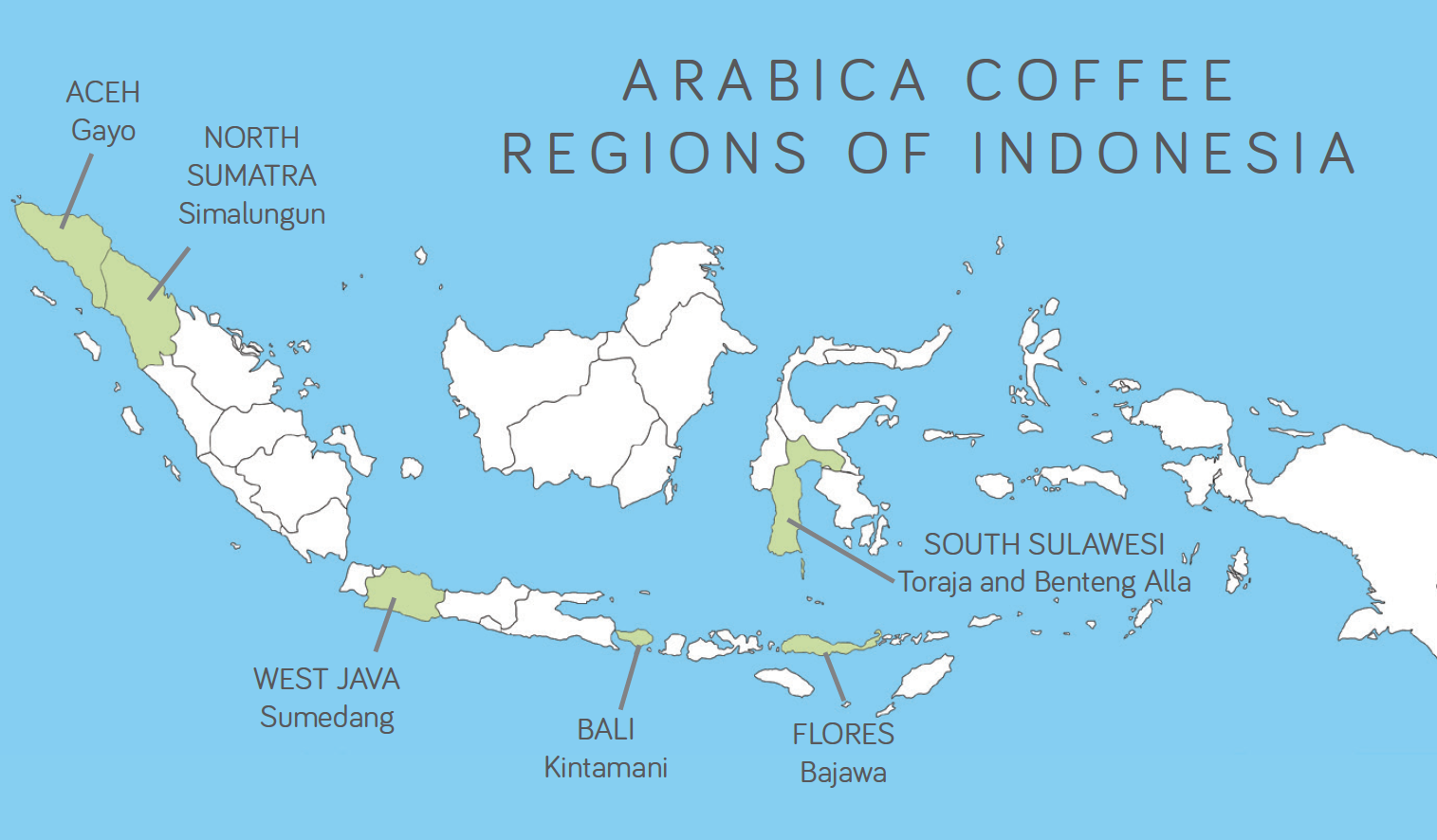
In 1718, the Dutch transplanted coffee to the Mandailing Highlands of western Sumatra near the Indian Ocean, later discovering that the Lake Toba region of northern Sumatra suited Arabica coffee even better.
In 1876, pest infestations killed all Arabica trees below 1,000 meters. To solve the problem, the Dutch introduced Liberica coffee (Coffea Liberica), which resists leaf rust more strongly.
From 1880-1884, Java coffee production peaked at 94,400 tons. Coffee mattered more than sugarcane at the time.
In the late 1880s, most plantations were destroyed by pests and disease. The blight spread across parts of central and eastern Java. The severe leaf rust damage wiped out most of the Dutch coffee variety system.
In 1888, Arabica coffee was planted again near Lake Toba in the north.
In 1900, Robusta was introduced as an alternative to Arabica in East Java.
In 1911, the Indonesian Coffee and Cocoa Research Institute (ICCRI) was established.
Around 1915, Robusta coffee reached smallholders near Mount Kerinci.
In 1920, Robusta spread rapidly through southern Sumatra.
In 1924, Arabica coffee moved north again to the Gayo mountains in the Lake Tawar region of Aceh province, where the local Gayo people cultivated it.
In the 1950s, shortly after independence, the Dutch-owned Java plantations were nationalized and managed by the Malayan Archipelago Plantation Company Limited (Perusahaan Terbatas Perkebunan Nusantara, or PTPN).
Today, Indonesian Robusta accounts for about 85% of total production and Arabica for 15%. Robusta is concentrated in southern Sumatra, while Arabica is grown in northern Sumatra. Indonesia's coffee area now exceeds 1 million hectares, with 90% operated by smallholders.
There are three main types of Indonesian coffee beans: Arabica, Robusta, and Liberica. Among them are more than 20 main varieties, the common ones being Catuai, Catimor, Timor, Typica, S288, S795, and Sidikalong.
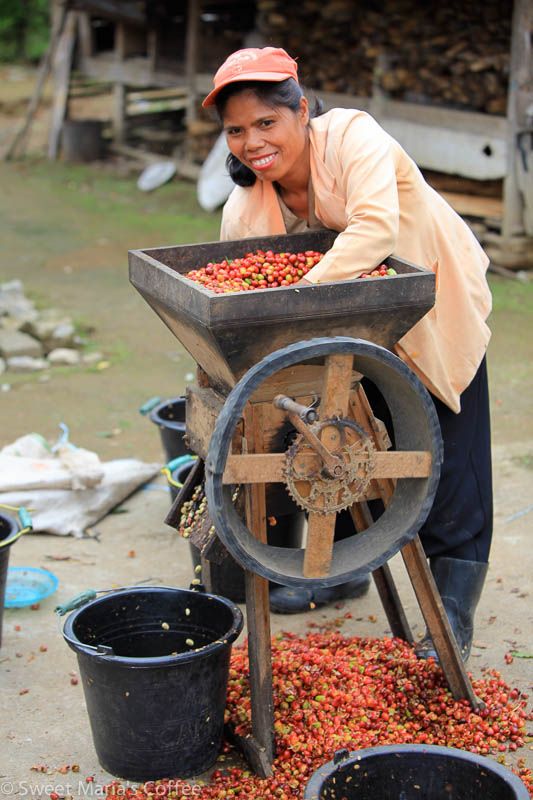
Wet Hulling Process
The Indonesian processing method is called "giling basah," known elsewhere as the semi-washed or wet-hulled process. Once the coffee is harvested, it is pulped and briefly dried. Unlike most processes, which dry coffee to 11% or 12% moisture content, the semi-washed process dries it to 30-35% moisture. The coffee is then hulled to remove the parchment and expose the green beans underneath. These naked beans are dried again until they are stable enough to store without spoiling. Semi-washed coffees tend to have far lower acidity and more body than most coffees.
Indonesian coffees tend to have dark, bold flavors with prominent earthiness. The semi-washed process produces flavors including earthy, musty, spicy, woody, tobacco, and leather notes. They typically finish long, with unsweetened or dark chocolate sensations. Sumatra is the most popular Indonesian region today, known for dark roasting. Sumatra produces Mandheling and Ankola, two of the world's most famous, high-quality coffees. They often carry smoky or roasted flavors with complexity. FrontStreet Coffee has found that people are often polarized about Indonesian coffee: those who like it cannot get enough, while those who don't tend to avoid it. When customers come to FrontStreet Coffee asking for a non-acidic pour-over coffee, FrontStreet Coffee always recommends Indonesian beans first.
Sumatra Mandheling Coffee Beans
When it comes to Sumatra coffee, Mandheling is undoubtedly the best-known. Its main production area lies around Lake Toba in northern Sumatra, Indonesia. Common Mandheling beans include Golden Mandheling, Lintong Mandheling, and Aged Mandheling.
The difference among the three is that Lintong Mandheling represents the most authentic Mandheling flavor with strong herbal notes. Golden Mandheling is a selected grade with uniform bean size of 18 mesh or larger, hand-selected more than 4 times; it has a clean, bright taste plus excellent body. Aged Mandheling, as noted earlier, uses a different wet-hulling approach that brings out richer flavors, which not everyone accepts. So when customers ask for a coffee that is both non-acidic and full-bodied, FrontStreet Coffee always recommends Golden Mandheling first.
FrontStreet Coffee PWN Golden Mandheling Example
Flavor description: nuts, chocolate, spices, herbs, caramel. Golden Mandheling tastes cleaner than Lintong Mandheling. The original herbal, earthy, and woody flavors of Mandheling are almost gone, but the caramel sweetness is more intense and the fruit acidity is brighter and more elegant.
FrontStreet Coffee Recommendation
For a full-bodied, low-acid cup, FrontStreet Coffee points to the PWN Golden Mandheling. Golden Mandheling is the finest expression of good Mandheling, and this one comes from Indonesia's PWN company, which applies especially strict standards: beans are selected at 18 mesh and above, and each 300g sample of green beans must contain fewer than 3 defective beans to meet the top G1 grade. On top of that, three rounds of hand sorting remove every defect, which sharpens the coffee's cleanliness and sweetness. Because the standards are so strict, quality is very high and output is limited.
That same strict sorting is reflected in the roast and the cup. Roasted medium-dark, the beans are uniform, plump, and translucent, with a low defect rate and a rich roasted aroma. The brewed black coffee is clean and full-bodied, ideal for anyone who does not like acidic coffee. FrontStreet Coffee suggests brewing it as pour-over to show its best side: 87-88°C water, 15g of coffee, a 1:15 ratio, a coarse-sugar grind, and a three-stage pour, which brings out the full body and caramel sweetness. Bloom with 30ml to wet all the grounds and let them degas, then pour 100ml to push out the golden crema and lift the bed, and finish with a gentle 95ml centered pour to raise the sweetness, yielding a thick, robust cup with caramel sweetness and chocolate and nut notes.
If you want to take Mandheling to an espresso machine, FrontStreet Coffee's classic blend is a top repeat purchase. Built on the creamy nut character of Brazilian coffee, it adds medium-dark Mandheling, which stands out with butter, roasted chestnut, and caramel. The Mandheling not only raises the body of the whole cup but also gives it distinctive sandalwood, herbal, and spice notes, and a small amount of Robusta is added to enrich the crema, so latte art or a layered Dirty are both easy.
Important Notice :
FrontStreet Coffee is a long-established specialty coffee roaster in Guangzhou China, selling freshly roasted beans from its own farm in Yunnan as well as dozens of carefully selected single-origin beans from around the world for both pour-over and espresso. The products deliver consistently excellent quality and great value, with shipping within 24 hours. Guangzhou's FrontStreet Coffee shop is recommended by many coffee lovers, and the beans are now available online at the Tmall 。
FrontStreet Coffee has moved to a new address:
FrontStreet Coffee Address: 315,Donghua East Road,GuangZhou
Tel:020 38364473
 Scan and follow the En Gafei WeChat official account. Please indicate that the reprint comes from "En Gafei".