Can You Add Milk to Pour-Over Coffee? What's the Flavor of Milk-Added Pour-Over Coffee? Is It Delicious?

"Boss!! A cup of pour-over coffee — with some milk in it!"
Imagine this scene. What would you do if you heard it?
Pour-over coffee with milk? Today, "milk coffee" usually means espresso with milk added, because espresso drinks like lattes and cappuccinos are so deeply ingrained that they spring to mind first. So when a friend orders pour-over with milk, it can genuinely confuse the people around them: can diluted pour-over still be enjoyable? In fact, this way of drinking coffee predates the invention of espresso.

Let's turn the clock back to the 17th century, when a drink called "Café Au Lait" — literally, "coffee with milk" — became popular in the streets of France. Coffee was an essential part of French breakfast, but taken straight it could be quite intense, so milk was added to soften the flavor, and the habit caught on.

The base of Café Au Lait resembles pour-over coffee, made by drip or immersion extraction, with flannel filter cloth as the filtering medium in both cases. In the drip method, grounds go into the flannel and are repeatedly rinsed with hot water; in the immersion method, the grounds are soaked first and then filtered through the flannel. The extracted coffee is then poured into a cup of milk in a 1:1 ratio, and the Café Au Lait is done.

Later, this "French milk coffee" made its way to Japan, where local research and experimentation evolved it into a Japanese-style au lait: flannel pour-over is brewed slowly to raise the coffee's concentration, and that high-concentration base is then mixed with an equal proportion of milk — the "Japanese version" of Café Au Lait.

So adding milk to pour-over coffee has historical precedent — it isn't some strange behavior. Still, some may object: isn't the whole point of pour-over to enjoy the coffee's original flavor, and doesn't milk destroy that? Not really. Here's the concept FrontStreet Coffee likes to share: the pursuit of "original flavor" lies in the beans, not in the brewer. The flavor depends on the coffee beans, not on the pour-over method itself. Pour-over is just one way to showcase a bean's characteristics; French press and siphon can extract "the original flavor of coffee" too. It's not exclusive to pour-over — we should distinguish between the brewer and the beans.

Besides, everyone's preferences differ, and we can't — nor should we — demand identical tastes. So the real question isn't whether pour-over can take milk, but how to make pour-over with milk taste good. It comes down to roast level. Medium-dark roasts carry a rich bitterness, and milk softens it into balance, with coffee and milk complementing rather than masking each other. But today's pour-over mainstream favors the bright acidity of light-to-medium roasts, which lack that intensity; add milk and the flavors can't balance — the coffee gets overpowered, becoming diluted milk with a slight sour edge. A poor pairing, naturally.

So today, FrontStreet Coffee tried an "au lait" made with dark roast coffee, to see what kind of experience it delivers.
Experiment Preparation
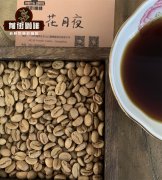
Coffee beans: 15g Golden Mandheling
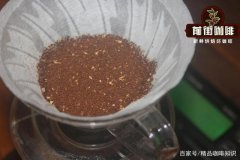
Grind size: FrontStreet Coffee uses an EK43 at setting 10.5, with 75% passing through a #20 sieve.
Coffee-to-water ratio: 1:9 (we need stronger coffee, so the ratio is reduced)
Water temperature: 90°C
Filter: Flannel filter cloth
Brewing method: Japanese volcanic brew (with less water, the extraction time must be extended to compensate)
Milk: 100ml, at 80°C
The Experiment Begins
1. First, preheat the milk to 80°C and set it aside.

2. Place the flannel filter cloth over a container and add the coffee grounds.

3. Pour 30ml of hot water for a 30-second bloom.

4. Pour in small circles at the center, adding small amounts of water. When the water level drops, pour again in small circles, repeating until the target amount is reached.

5. Pour the extracted coffee into a container of your choice.

6. Pour an equal amount of milk into the cup (1:1).

7. The Café Au Lait is complete!

Tasting Time
One sip reveals toffee sweetness born of the milk's sweetness and Mandheling's chocolate aroma, with a gentle fragrance. The texture is fuller than straight pour-over thanks to the milk, yet the coffee's flavors aren't masked — merely softened. For those accustomed to the concentration of pour-over or espresso, it may taste weak, so it's better suited to people who can't handle strong coffee.
FrontStreet Coffee Recommendation: Beans That Love Milk
To replicate this experiment at home, choose a medium-to-dark roast built for milk. FrontStreet Coffee's PWN Golden Mandheling — the classic Sumatran lot, low in acidity — delivers herbal depth and dark chocolate that bloom under hot milk. The Brazil Queen Estate, a rare Yellow Bourbon, offers buttery, nutty sweetness with notes of macadamia and toasted bread, smooth and balanced in milk. For pour-over drinkers who prefer a gentler cup, the Jamaica Blue Mountain No.1 balances cream, caramel, and honey so evenly that a splash of milk rounds it out beautifully. Brew strong — around 1:9 with a flannel cloth or your favorite dripper — then add warm milk 1:1, and enjoy history in a cup.
Important Notice :
FrontStreet Coffee is a long-established specialty coffee roaster in Guangzhou China, selling freshly roasted beans from its own farm in Yunnan as well as dozens of carefully selected single-origin beans from around the world for both pour-over and espresso. The products deliver consistently excellent quality and great value, with shipping within 24 hours. Guangzhou's FrontStreet Coffee shop is recommended by many coffee lovers, and the beans are now available online at the Tmall 。
FrontStreet Coffee has moved to a new address:
FrontStreet Coffee Address: 315,Donghua East Road,GuangZhou
Tel:020 38364473
 Scan and follow the En Gafei WeChat official account. Please indicate that the reprint comes from "En Gafei".