What Grade are Volcanic Coffee Beans and How Did Hawaii's KONA Coffee Come to Be?
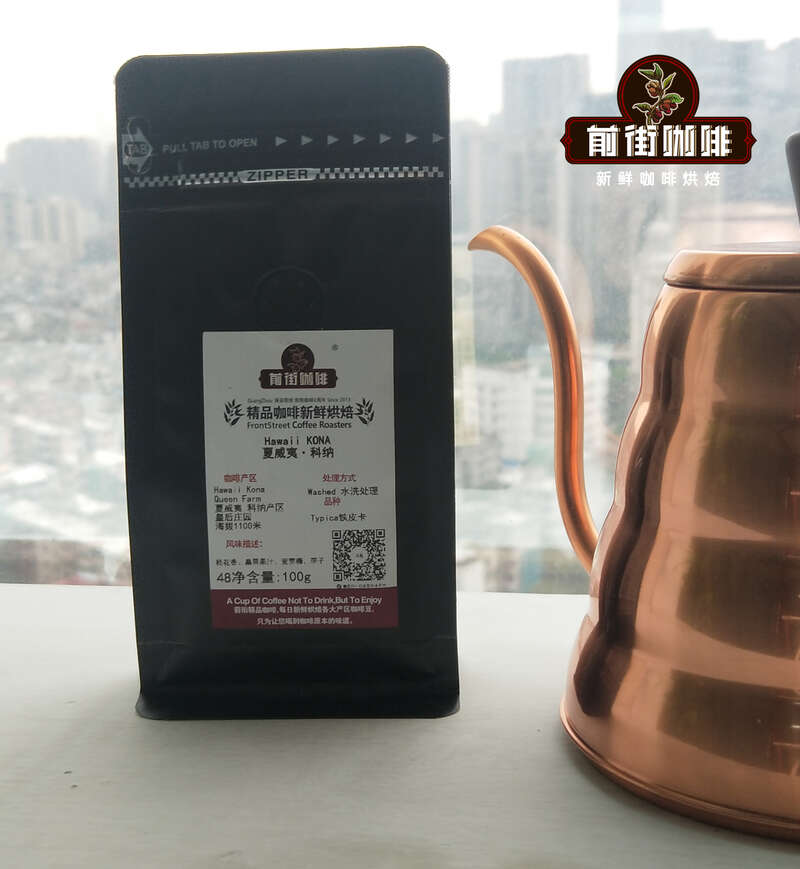
Hawaii KONA
Country of Origin: Hawaii
Processing Method: Washed
Variety: Typica
Altitude: 800m-1100m
Roast Level: Medium-dark roast
Following SCA recommendations, we suggest 15g of coffee to 225ml of water at 90-91°C, a 1:15 water-to-coffee ratio.
Hawaii's Kona coffee grows on volcanic terrain. At the same time, it benefits from high-density, carefully managed cultivation, so every bean is meticulously tended — and naturally precious. Its price is second only to Blue Mountain. Kona beans are uniform in shape, with pronounced acidity and sweetness.
The texture is smooth and silky. A medium roast draws out the bean's acidity, while a darker roast plays up bitterness and richness.
These beans grow from sea level up to 6,000 feet. Premium coffee generally grows only in mountainous regions, at altitudes of roughly 4,000-6,000 feet, and needs about 80 inches of annual rainfall with clearly defined wet and dry seasons.
The soil for growing premium coffee must be very fertile, and it's usually volcanic. Light cloud cover or overcast weather is also essential in the growing environment of high-quality coffee.
Daytime temperatures need to sit between 15-20°C. This climate lengthens the growing process, and these unique growing and climatic conditions produce richer coffee flavors.
The cup is very balanced, with notes of walnut, caramel, berries, plum, nuts and cream. All told, it's quite clean with rich layering.
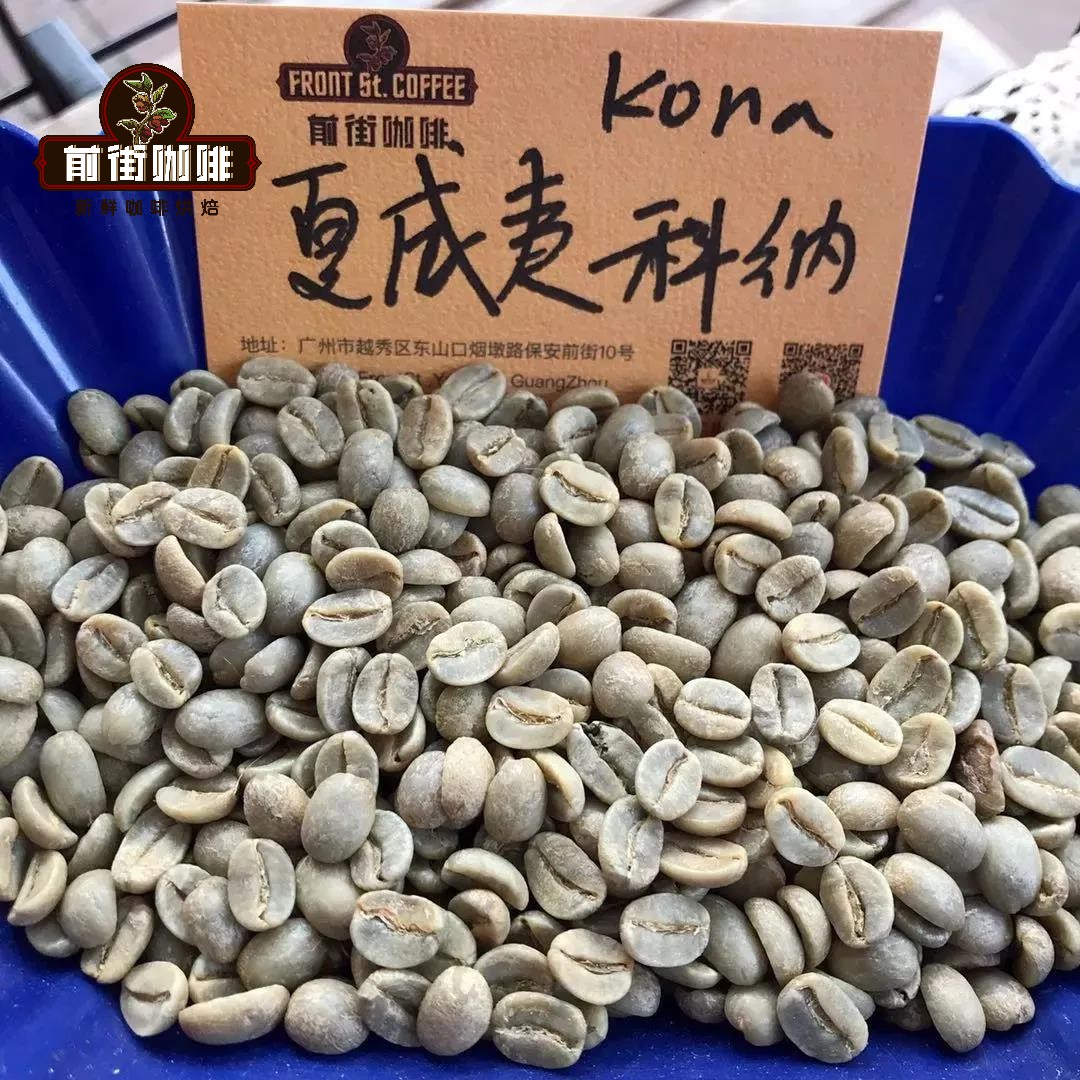
Hawaii primarily uses the washed method. The biggest difference from the natural method is that fermentation is used to break down the mucilage layer. After fermentation and mucilage removal, fermentation bacteria and impurities remain on the beans, so they're washed again. To ensure a thorough clean, this step consumes large amounts of fresh water, after which the fruit is dried and hulled. Hawaii's clean, sweet mountain spring water provides ideal conditions for the washed process, yielding Kona beans with a bright, clear appearance and a pure, fresh flavor. The washed beans are spread on large patios to dry naturally in the sun.
In 1828, the missionary Samuel Ruggles first introduced Bourbon varieties from Brazil, and in 1892 Typica was introduced from Guatemala. Farmers found that Typica adapted better to Kona's soil and water, so they switched to growing Guatemalan Typica — the lineage that gradually evolved into today's famous Kona variety.
Although the Kona growing region sits at a modest altitude, its fruit acidity is cleaner and more elegant than typical low-altitude coffees. That's because Hawaii lies in the subtropics, between 19-20 degrees north latitude, where it stays relatively cool and winter minimum temperatures remain above 12°C, keeping frost at bay. The dark volcanic ash soil supplies minerals for the coffee trees, and the climate is very well suited to them. Interestingly, Kona's coffee trees don't need shade trees: the air is saturated with moisture, humidity and fog are present year-round, and daily white clouds drift overhead to give the trees natural shade, while evenings turn clear and cool. The Kona region has a wide day-night temperature swing, and its volcanic soil drains exceptionally well — exactly the high-quality growing conditions that low-altitude regions can only dream of.
Kona Coffee Bean Classification
Kona coffee beans are actually subdivided into five grades. The first three are the most common, in order: Extra Fancy, Fancy and Number One, followed by Primary and Peaberry. Peaberry (often called "male bean") is hand-selected because some enthusiasts prize it, and it can sell at higher prices. About 5% of Kona beans are peaberry-shaped. Aside from the specially selected peaberries, the other four grades are classified by bean size, weight and defect ratio. Before Kona green beans are exported, they're labeled with numbers on burlap bags, showing certification by the Hawaii Department of Agriculture and accompanied by an official seal of identification.
The History of Kona Coffee
Hawaii's earliest coffee cultivation already followed the model of large-scale plantations, at a time when coffee had not yet become a widely grown crop worldwide. Kona coffee's production and sales have ridden several ups and downs. After World War I broke out, demand for coffee surged. The government bought coffee in large quantities to sustain soldiers' fighting fitness, and rising demand pushed prices up — Kona included. The period from the outbreak of World War I to 1928 was Kona coffee's golden age. The Great Depression that followed dealt it a heavy blow, though in 1940 World War II sent coffee prices climbing again. To avoid excessive increases, the U.S. government set price ceilings on coffee. Even so, Hawaiian coffee farmers profited considerably, and during this period their method of transporting coffee fruit shifted from mules to jeeps. In the 1970s and 1980s, Kona prices went through several more swings, but it was from this period that Kona established its status as one of the world's top coffees. Even as Kona has become world-renowned, its production has remained relatively low.
FrontStreet Coffee Recommendation
Kona's price sits "second only to Blue Mountain," so it's only natural to wonder about the coffee it trails. Jamaica Blue Mountain is grown only in a defined area of the Blue Mountains in eastern Jamaica — one of the Caribbean's highest ranges, peaking at 2,256 meters — and must carry official Jamaican certification to bear the name. The whole region produces less than 2,500 tons a year, and Japan has historically bought more than 70% of it, so the supply reaching the rest of the world is small. That scarcity, paired with steady demand, is why Blue Mountain has stayed expensive; it has been formally exported to China since 2003.
The appeal of the best Blue Mountain is balance. It has no obvious weak spot: no searing African-style acidity, no heavy dark-roast bitterness, just an even harmony of acidity, sweetness, bitterness and aroma. Expect cream, caramel, chocolate, nuts, honey and a faint fruit note, with a smooth, rounded entry, a sweet mid-palate and a clean, long finish. FrontStreet's Jamaica Blue Mountain No.1 comes from the historic Clifton estate, which has grown and processed coffee since around 1750 on land averaging 4,300 feet (1,310.64 meters). It's graded as one of the highest tiers in the Blue Mountains, and the whole, traceable supply arrives in the traditional 15, 45 and 70 kilogram wooden barrels.
To brew it, FrontStreet favors a Kono dripper, which plays up the coffee's full body. Use 15g per serving and let the beans rest 4-7 days from the roast date (counting the roast date as day one). Grind coarser than you would for a light roast — roughly white-sugar consistency — and brew with 87-88°C water at a 1:15 ratio. Pour in three stages: a 30g bloom for 30 seconds, then water to 120g with a slow, vertical circling pour, then to 225g with a slightly faster stream and circle to keep the bed from clogging and over-extracting. Roasted medium-dark, it pours out a very clean, complex, gentle cup — chocolate sweetness, strong body, perfectly matched sweet, bright and bitter notes, and a lasting fruity finish.
Important Notice :
FrontStreet Coffee is a long-established specialty coffee roaster in Guangzhou China, selling freshly roasted beans from its own farm in Yunnan as well as dozens of carefully selected single-origin beans from around the world for both pour-over and espresso. The products deliver consistently excellent quality and great value, with shipping within 24 hours. Guangzhou's FrontStreet Coffee shop is recommended by many coffee lovers, and the beans are now available online at the Tmall 。
FrontStreet Coffee has moved to a new address:
FrontStreet Coffee Address: 315,Donghua East Road,GuangZhou
Tel:020 38364473
 Scan and follow the En Gafei WeChat official account. Please indicate that the reprint comes from "En Gafei".