Understanding Red Label Geisha: Ethiopian Coffee Evaluation and Grading System
FrontStreet Coffee - Ethiopia Gesha Village Red Label Natural Gesha Coffee Beans
Origin: Ethiopia
Region: Gesha Village
Processing: Natural
Variety: Ethiopia Gesha
Altitude: 2040 meters
Roast Level: Medium-light roast
For pour-over, FrontStreet Coffee follows the SCA recommendations: 15g of coffee with 90-91°C hot water for 225ml, at a water-to-coffee ratio of 1:15.
The Red Label accounts for approximately 15% of Gesha Village's annual production and represents the batches with complete traceability and cupping scores exceeding 88 points (SCA standard).
This FrontStreet Coffee Ethiopia Gesha Village Red Label embodies the typical Gesha Village character, with slightly less intensity and complexity than the Gold Label—which makes it an exceptional value in a single-origin Gesha.
Its flavor profile presents coconut, licorice, cream, chocolate, toffee, citrus, almond, and strawberry with fermented aromatics. Overall, the cup is well balanced, with a rich mouthfeel and prominent nutty notes.
The Origin of Gesha Village
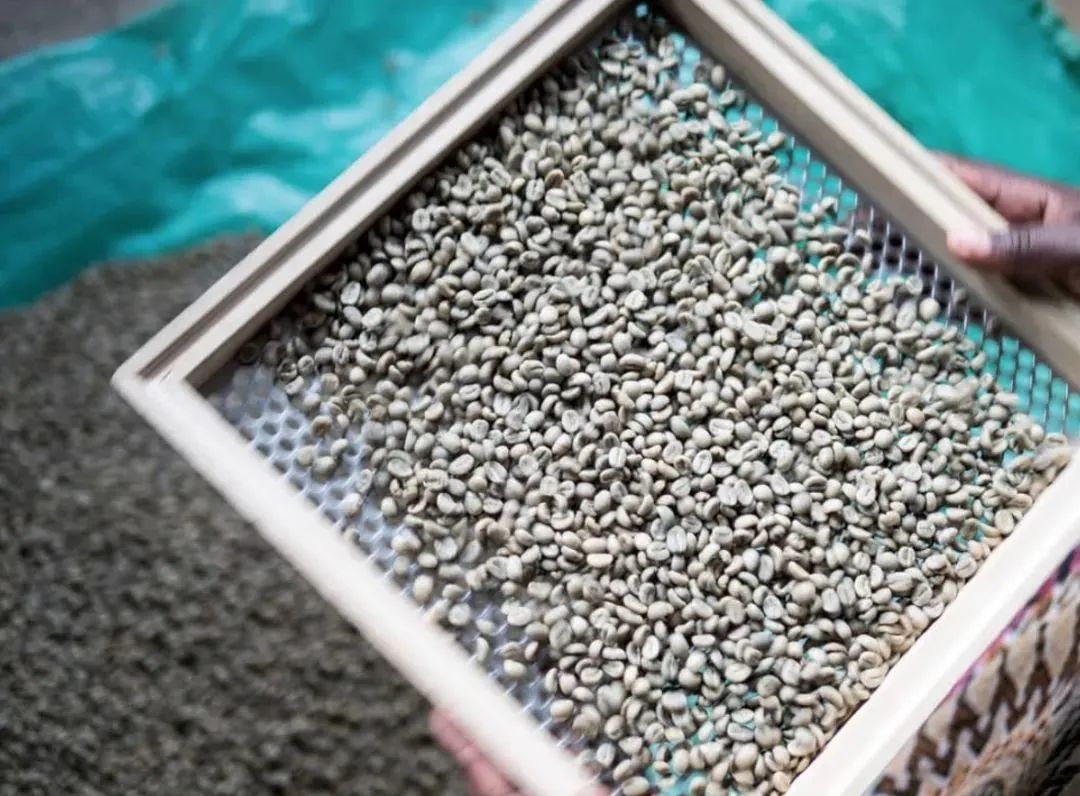
Gesha Village's Gori Gesha Forest is the place where the Gesha variety was first discovered. In 2011, guided by consultant Willem Boot, Adam began "exploring" the forests surrounding the estate. In jungle so dense it felt almost enchanted, they found multiple wild tree species—and the most thrilling discovery of all was wild Gesha. They soon realized this was the Gori Gesha Forest, the very spot where the Gesha variety had first been identified.
They collected seeds from the original Gesha trees and, after careful screening, sent them to professional institutions for genetic testing, which confirmed this as the original collection site of the Panama Gesha variety. Studying tree morphology, bean appearance and size, and cupping results, they selected the Gesha line most closely resembling today's Panama Gesha and began raising seedlings. Adam has his own philosophy of processing: high-quality natural and washed methods to highlight terroir, supplemented by small amounts of honey process and other experimental batches.
Gesha Village's Internal Classification
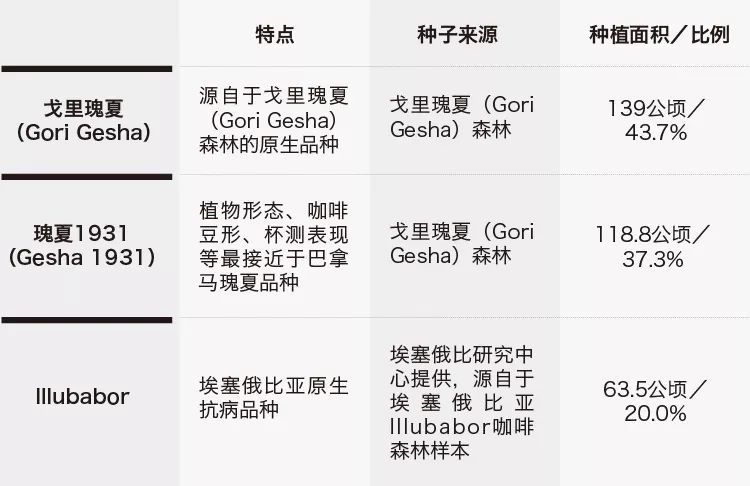
Gesha Village's internal grading runs from Auction through Gold Label, Red Label, Green Label, and Chaka batches. The estate grows three varieties: Gori Gesha, Gesha 1931, and Illubabor (Ethiopia's native disease-resistant variety).
How to Tell the Grades Apart
Even the most celebrated estates produce coffee of varying quality. To protect Gesha Village's flavor reputation, the estate enforces a strict grading system.
Auction Batch
A mere 3.7% of Gesha Village's annual production, these are the estate's most meticulously selected premium lots, available only through the 2018 Gesha Village Coffee Estate Global Auction. The 2018 auction lots scored 88.15-92.67 points in cupping and were further divided into Champion's Reserve and Farm Reserve—for example, Gesha Village 2018 Auction Lot RSV.6 belongs to this tier.
Gold Label Batch
Just 5% of annual production, this is the tier typically chosen by competition baristas worldwide and purchased by roasters with the highest standards. It offers complete traceability, and every batch shows outstanding flavors and high complexity—the estate's second-best grade after the Auction lots.
Red Label Batch
Fully traceable batches offering typical Gesha Village flavors, with slightly less intensity and complexity than the Gold Label—exceptional value in a single origin.
Green Label Batch
Batches from single plots and single varieties, showing typical Gesha Village flavors with slightly less intensity and complexity than the Red Label.
Chaka Batch
Gesha Village's house Gesha blend, combining the three varieties: Gori Gesha, Gesha 1931, and Illubabor (Ethiopia's native disease-resistant variety).
Gesha Village Estate Details
Gesha Village covers 471 hectares in total. Cultivation has expanded gradually since 2011, reaching approximately 320 hectares by 2017, making it one of the largest Gesha estates in the world. To manage and refine flavors more precisely, the owner divided the estate into 8 major zones, each with numbered sub-lots. The western side of the estate sits at higher elevation, so the OMA, SURMA, and SHEWA-JIBABU plots enjoy slightly higher altitudes; the southern side has the highest shade ratio, while the northern side receives the longest sunlight exposure.
Across these eight plots, the estate's managers match each area with the most suitable variety based on microclimate differences—altitude, soil, and shade coverage—so that every major plot develops a distinct character of its own.
The Legacy of Gesha
Gesha never leaves the conversation in coffee circles. To professionals, it is the undisputed goddess of the species: countless drinkers have been bewitched by its bright, complex floral and fruit aromatics, its multi-layered, high-sweetness fruit notes, and its delicate, soft acidity.
FrontStreet Coffee Recommendation
Gesha—transliterated from the English "Geisha"—is one of the most beloved varieties in Arabica coffee. Its singular florals and exquisite sweet-sour character have won over coffee lovers everywhere, while its low yield, weak disease resistance, and demanding cultivation keep prices climbing. If you want great Gesha without a great expense, it pays to know the tiers.
Ethiopia is Gesha's birthplace, and it is home to an estate famous for the variety: Gesha Village. Like Panama's Hacienda La Esmeralda, it runs a rigorous grading system—but a more intricate one. It grows three Gesha varieties (Gori Gesha, Gesha 1931, and Illubabor Forest) and grades them into Gold Label RARITIES, Red Label GROWERS RESERVE, Green Label SINGLE-TERROIR, and Chaka batches, differentiated by variety as well. The FrontStreet Coffee Gold Label is the Gesha 1931 variety—10% of Gesha Village's total output and the estate's top coffee apart from the auctions, frequently picked by internationally competing baristas. Processed as a refined natural, it offers complex, rich flavors whose unique dry aroma, sip-by-sip character, and lingering finish are unforgettable. The FrontStreet Coffee Red Label is the Gori Gesha variety—15% of production, scoring 88 or above on the SCA 100-point scale, and part of the estate's single-terroir series, so every lot number carries full traceability: farm block name, variety, and processing date.
New to Gesha's fabled flavor? Start with the entry-level FrontStreet Coffee Granella Estate Gesha. Roasted medium-light, it keeps a pleasant white floral note while bringing out bright sweet-tart tones of orange, guava, and citrus, with a cleaner finish. As for brewing, Gesha is a medium-light, floral-fruity coffee with a dense, hard bean that tends to sink and clog the filter. FrontStreet Coffee recommends grinding to a 78% pass-through rate on the Chinese-standard #20 sieve (about fine-granulated sugar) and brewing at 91°C: 15g of coffee in a small Hario V60 at a 1:16 ratio, using a three-pour method—pour to 30g and bloom for 30 seconds, then pour in small circles to 125g; when the bed drains to half, continue to 225g, for a total extraction time of about 2 minutes 10 seconds to 2 minutes 20 seconds.
Important Notice :
FrontStreet Coffee is a long-established specialty coffee roaster in Guangzhou China, selling freshly roasted beans from its own farm in Yunnan as well as dozens of carefully selected single-origin beans from around the world for both pour-over and espresso. The products deliver consistently excellent quality and great value, with shipping within 24 hours. Guangzhou's FrontStreet Coffee shop is recommended by many coffee lovers, and the beans are now available online at the Tmall 。
FrontStreet Coffee has moved to a new address:
FrontStreet Coffee Address: 315,Donghua East Road,GuangZhou
Tel:020 38364473
 Scan and follow the En Gafei WeChat official account. Please indicate that the reprint comes from "En Gafei".