What varieties are in Ethiopian Flower Queen coffee beans? Are these champion pour-over coffee beans delicious?
Sidamo Hakui Small Bean Variety
Country of Origin: Ethiopia
Region: Sidamo
Processing Method: Natural
Variety: Heirloom
Altitude: 2200 meters
Roast Level: Medium-Light
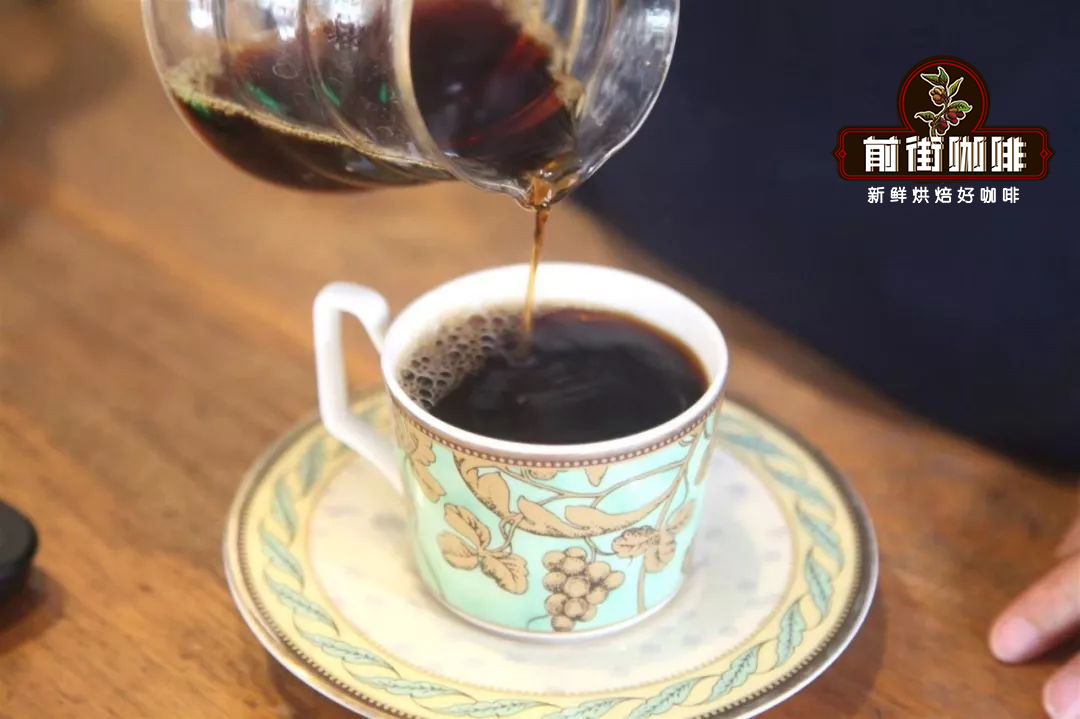
Following SCA recommendations, we suggest using 15g of coffee grounds with 90-91°C hot water to make 225ml of coffee, at a water-to-coffee ratio of 1:15.
The renowned specialty bean Hakui comes from the Guji region of Ethiopia. Guji was originally part of Sidamo, but its outstanding flavor profile won it status as an independent coffee-producing region — though many people still classify Hakui beans as belonging to Sidamo. FrontStreet Coffee has tasted beans from several Ethiopian regions, including Yirgacheffe, which stands alongside Sidamo as one of the country's two major specialty regions. Comparing Yirgacheffe and Sidamo side by side, FrontStreet Coffee could clearly tell their characters apart. Both are Ethiopian beans with bright fruit acidity as a baseline, but Yirgacheffe leans toward citrus and lemon with hints of jasmine, while Sidamo brings strawberry jam and passion fruit acidity with a creamy mouthfeel.
Guji Region
The Guji region, formerly part of Sidamo, was established as an independent new region by the Ethiopia Commodity Exchange (ECX) in 2010.
The most famous bean from Guji is undoubtedly Hakui, which won the 2017 TOH (Ethiopia National Taste of Harvest Competition) on the strength of its outstanding strawberry cream flavor — a worthy champion.
The naming of Hakui X.0 follows the harvest year, so Hakui 3.0 means beans from the 2019 season and Hakui 4.0 means the 2020 season. Beyond that yearly pattern, the 2017 Hakui was natural-processed coffee handled only by the "Buku Abel" processing station, whereas DW company gradually expanded its processing stations and increased production, and its flavor diverges noticeably from the 2017 original. Strictly speaking, only natural-processed beans from the "Buku Abel" station can be called Hakui coffee.
Small Bean Hakui's flavor and aroma closely resemble the 2017 Hakui. At first, FrontStreet Coffee found similar flavors in the 2018 and 2019 vintages, but the body and aftertaste did not match the 2017. FrontStreet Coffee discovered that the main source of the 2017 Hakui's aroma was certain particularly small bean varieties within the Hakui lot, and similar small beans turned up in the 2018 and 2019 vintages too. Beginning in 2020, the processing station started processing Small Bean Hakui separately again. Small Bean Hakui therefore does not belong to the [X.0] series; from 2020 onward, DW company processed the small bean varieties on their own, creating Small Bean Hakui coffee.
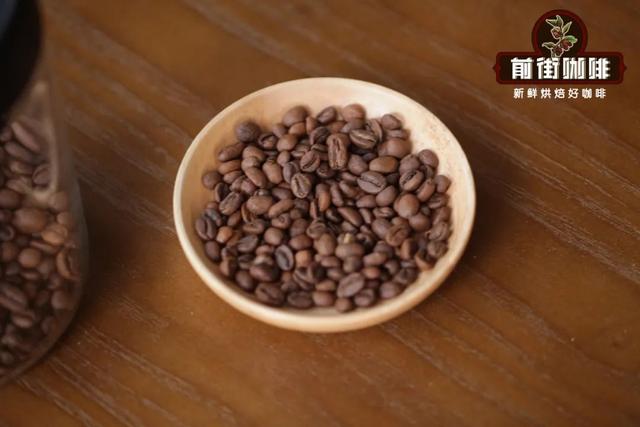
In cupping, Small Bean Hakui shows creamy strawberry, citrus, passion fruit, and fermented wine notes.
FrontStreet Coffee Recommendation
For anyone new to Ethiopian coffee, the clearest place to start is FrontStreet's washed Yirgacheffe, known for white jasmine, bright citrus and lemon acidity, and a tea-like body — and, at a friendly price, a common first bag of specialty coffee. Yirgacheffe is a small town in southern Ethiopia, within the Sidamo region, at roughly 1700-2100 meters, with the coffee trees planted above 1800 meters; that makes it one of the highest growing regions in the world. The land was wetland in ancient times, and the name has become shorthand for a whole style of Ethiopian specialty coffee thanks to its unmistakable white florals and lemon-citrus acidity. In 2010, with the name so famous, the Ethiopian Commodity Exchange finally separated it from Sidamo.
Within that same Yirgacheffe tradition, FrontStreet's washed Gotiti cooperative is especially representative. It sits in the Woka district at Yirgacheffe's southeastern tip and was originally part of the Woka cooperative under the YCFCU; as the demand for traceability grew, it was pulled out as a single district by coffee hunters around the world. It keeps to the most traditional washed processing and is often called Yirgacheffe's last pure land — carrying no traditional bitterness, only fresh, bright citrus and lemon acidity and the fragrance of jasmine.
FrontStreet also offers Yirgacheffe's Red Cherry, a natural process using only fully ripe, defect-free cherries. After a first sorting, the fruit is laid directly on raised beds to dry, and for the first few days it is turned every two to three hours to prevent uneven heating and over-fermentation. After three to five weeks of drying, the outer pulp is scraped off by machine, weather and temperature permitting, and the beans go into storage. Because the coffee dries with the fruit still attached, it keeps the typical Yirgacheffe character while gaining the tropical fruit of natural processing — citrus-like acidity, a berry-juice body, honeyed sweetness, and a creamy smoothness. Brew it on a V60 at 90-91°C with 15g of coffee at a 1:15 ratio, ground to an EK43s setting of 10 (fine-sugar size, with 80% passing a No. 20 sieve).
Important Notice :
FrontStreet Coffee is a long-established specialty coffee roaster in Guangzhou China, selling freshly roasted beans from its own farm in Yunnan as well as dozens of carefully selected single-origin beans from around the world for both pour-over and espresso. The products deliver consistently excellent quality and great value, with shipping within 24 hours. Guangzhou's FrontStreet Coffee shop is recommended by many coffee lovers, and the beans are now available online at the Tmall 。
FrontStreet Coffee has moved to a new address:
FrontStreet Coffee Address: 315,Donghua East Road,GuangZhou
Tel:020 38364473
 Scan and follow the En Gafei WeChat official account. Please indicate that the reprint comes from "En Gafei".