Coffee Basics: Detailed Guide to Making Espresso-based Mocha Coffee (Illustrated)
Autumn, a season that heals the soul. Picture holding a cup of rich mocha in the morning, watching the blue sky and falling leaves outside the window, the breeze stirring the curtains, sunlight warming your heart. Everything is calm, full of character, yet understated.
The Origin of Mocha Coffee
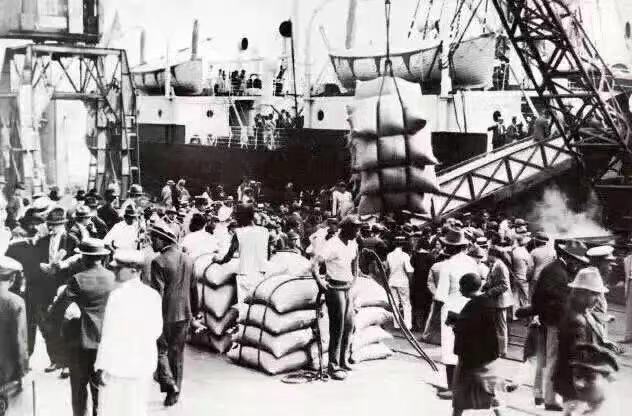
The word "mocha" comes from the port of Mocha in Yemen. Yemen, the first country in the world to cultivate and produce coffee on a large scale, began exporting its first batches of coffee to Europe in the early 17th century. At that time Yemen had only one small port for exports to Europe: Mocha. Everything shipped from there was stamped "MOCHA" to certify its origin, so Europeans came to call the delicious coffee that arrived from the port "mocha coffee."
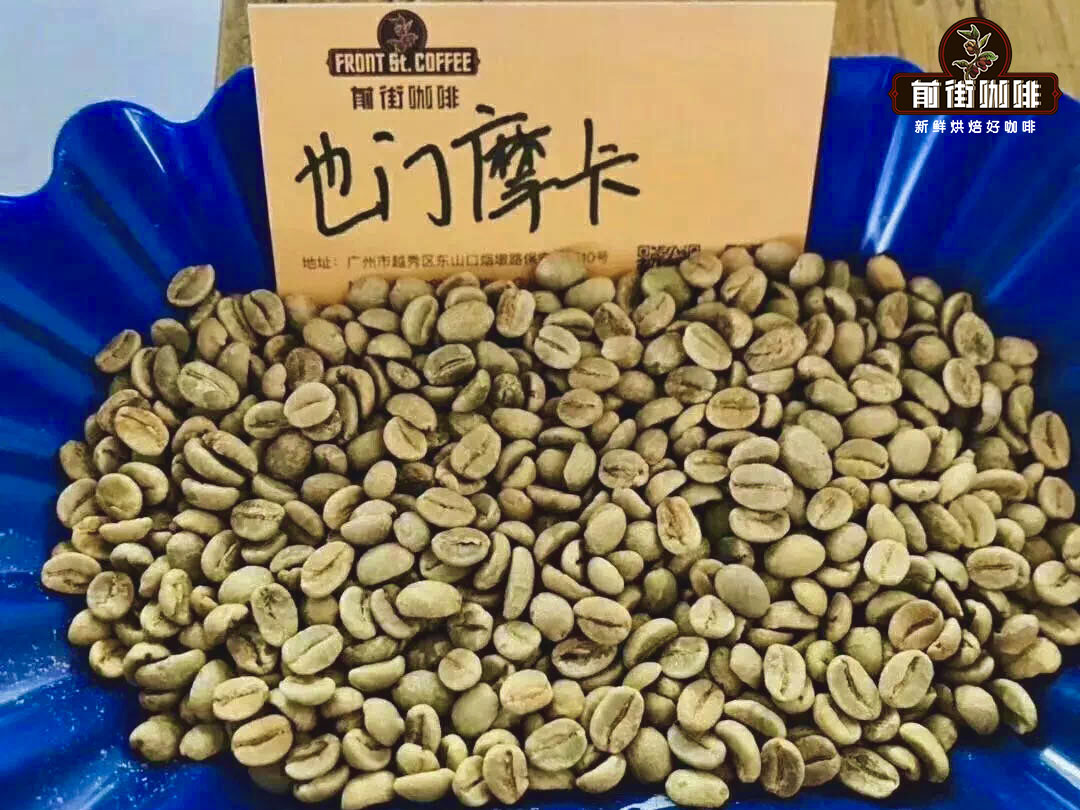
Though the mocha coffee bean is small, its flavor is exceptionally rich and aromatic: noticeable acidity, strong body, fermented characteristics, moderate sweetness in the aftertaste, and a finish loaded with dark cocoa aroma.
By the 18th century the port of Mocha had fallen under the control of the Ottoman Empire (the multi-ethnic empire established by the Turks). The Turks loved Yemeni coffee dearly, so fewer and fewer beans made it to Europe. The Italians, missing that rich cocoa aroma, began adding dark cocoa to espresso, and a new wave of mocha popularity was born: Italian mocha coffee.
How to Make Italian Mocha Coffee
The mocha we drink today is an espresso-based milk coffee. FrontStreet Coffee's mocha consists of espresso, chocolate sauce, cocoa powder, and fresh milk; some coffee shops use dark chocolate blocks instead.
Choosing the Coffee Cup
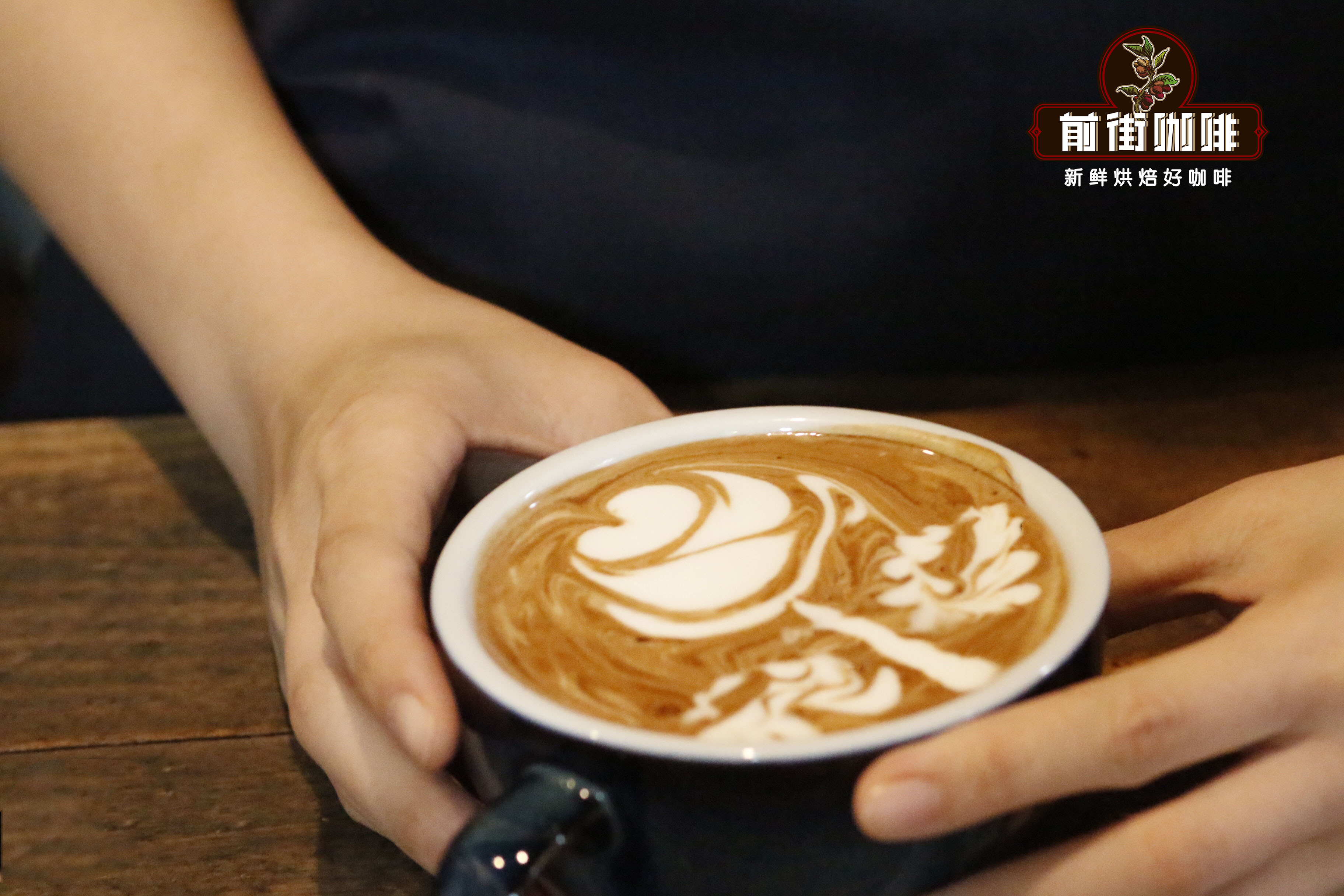
FrontStreet Coffee uses a 300ml round-bottom latte cup for mocha. A round bottom helps milk and coffee blend better and gives you more room to pour latte-art patterns.
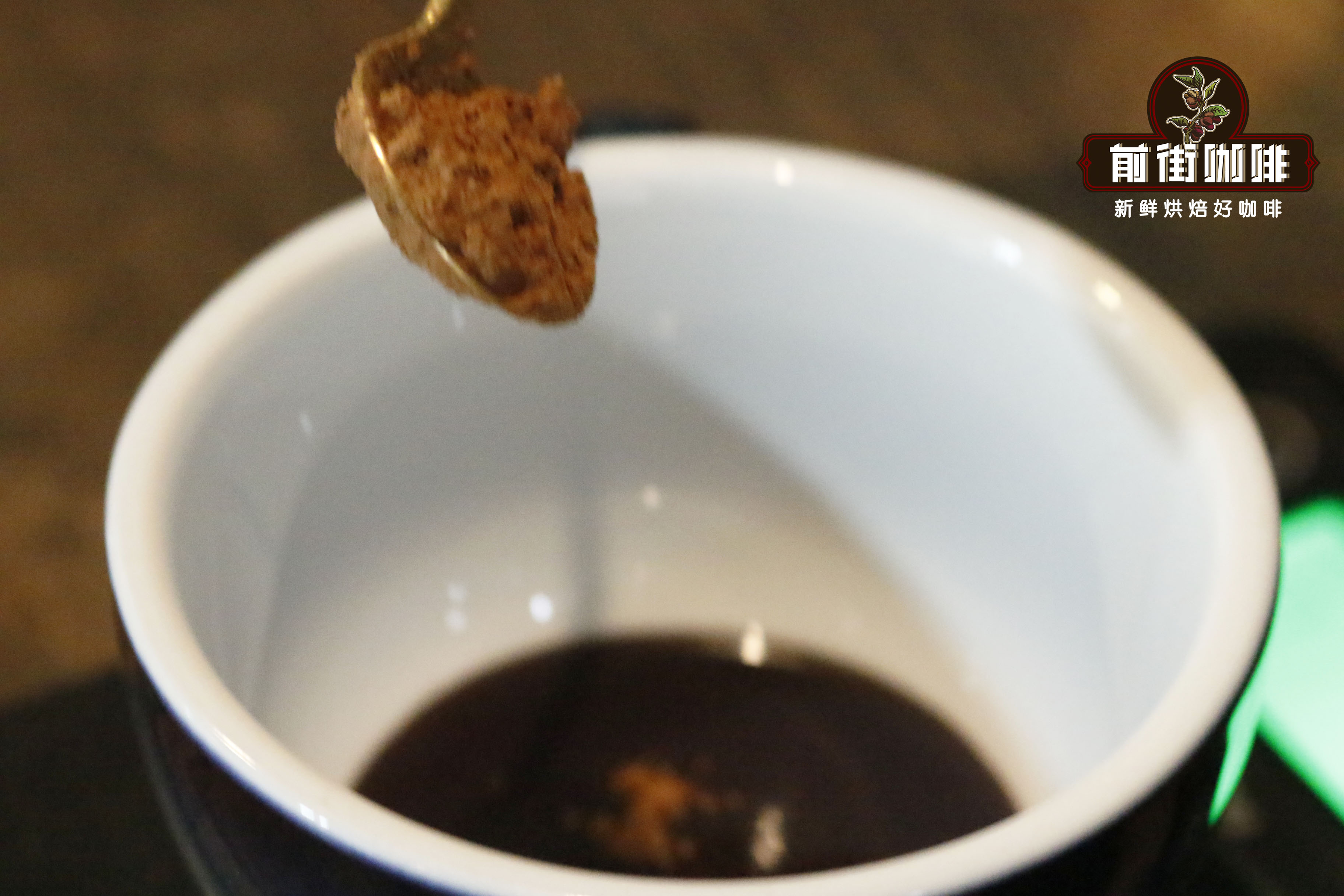
Adding 20g Chocolate Sauce & 5g Unsweetened Dark Cocoa Powder
The chocolate sauce brings chocolate flavor and sweetness, while the unsweetened dark cocoa powder further deepens the coffee's body and richness.
Espresso Extraction
FrontStreet Coffee pulls its espresso from Sunflower Warm Sun beans, a blend of sherry barrel-aged and sun-processed Yirgacheffe. For mocha, a double espresso is used, extracted as 20g of grounds yielding 35g of espresso liquid over 27 seconds, then stirred thoroughly with the chocolate sauce and cocoa powder in the cup.
Using Chilled Fresh Milk
Chilled fresh milk better preserves its proteins and milk fat. Protein is the key to forming milk foam; milk fat stabilizes the foam, slows its breakdown, and adds richness to the coffee.
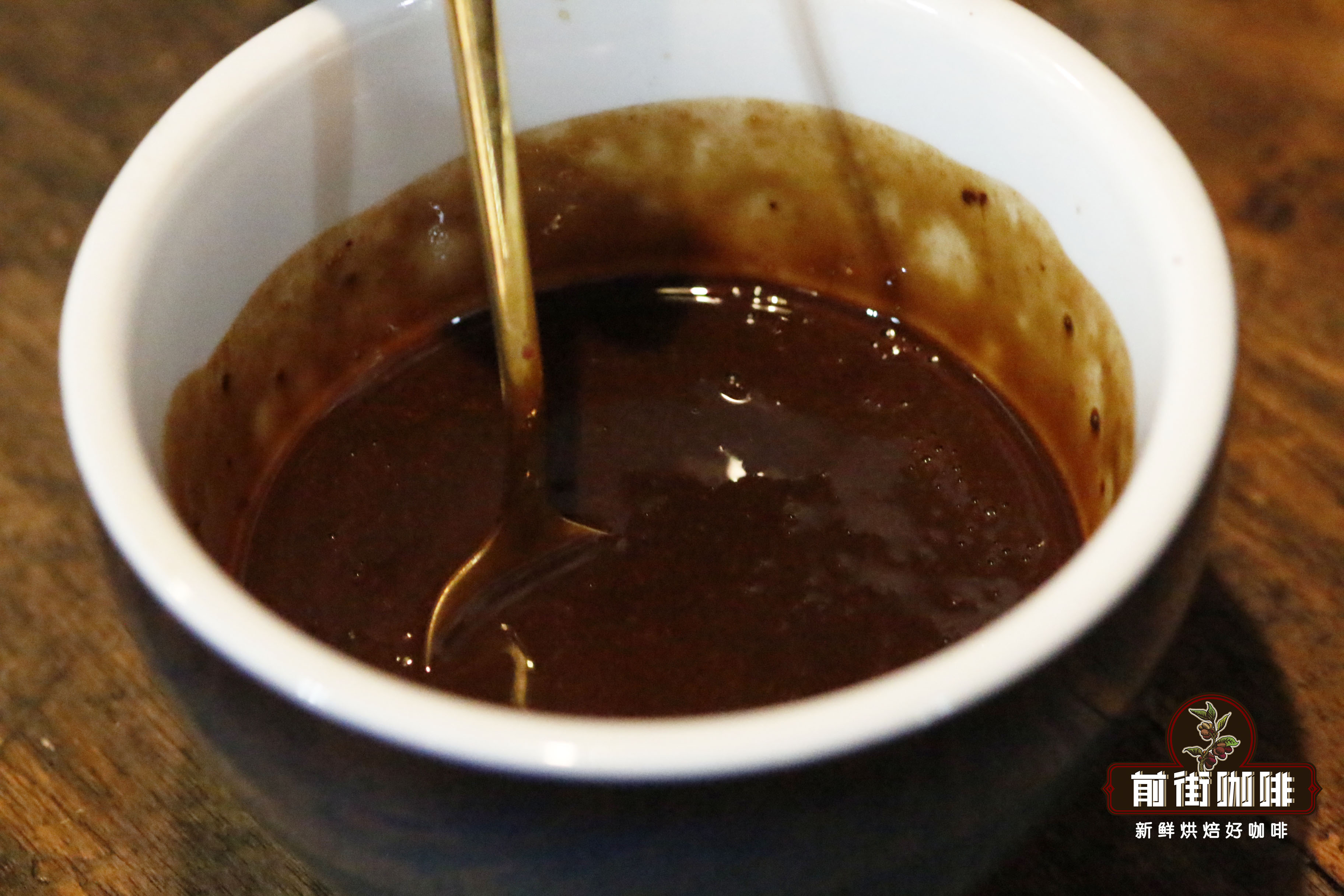
Once the espresso has been stirred with chocolate sauce and cocoa, the crema on top dissipates and loses its power to stabilize the foam. If you then use milk with low protein or milk fat, the frothed foam will be thin and unstable, and when it is time for latte art, you will find the pattern drifting.
Frothing the Milk
Use a medium-sized pitcher and pour in 200-230ml of chilled fresh milk. Before inserting the steam wand, purge it to release condensed water. Place the wand tip about 1cm below the milk surface and turn on the steam. When the steam meets the surface it makes a hissing sound, that is the key step for creating foam.
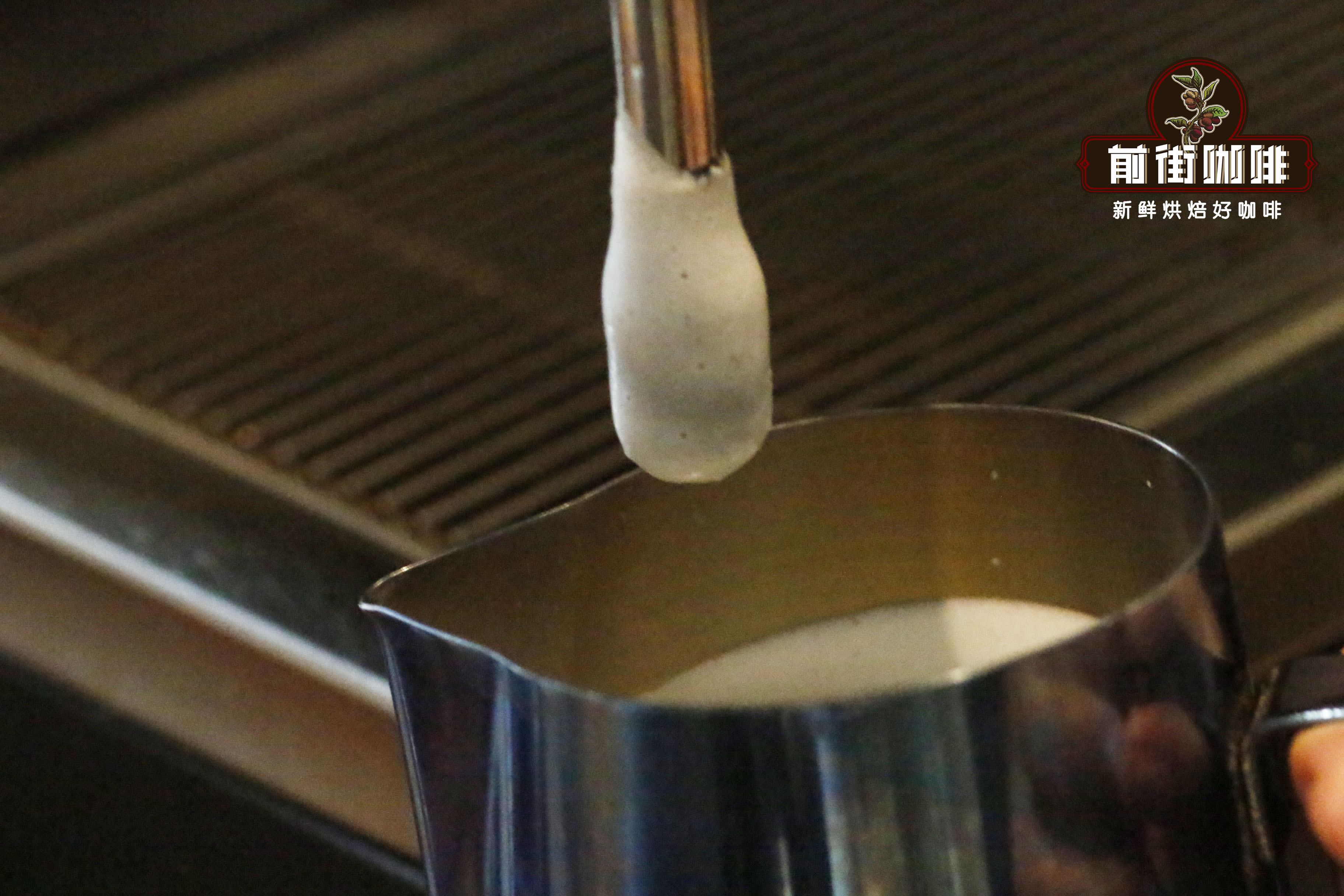
As noted, once the crema is gone the foam needs to carry itself, so froth to a thickness of about 1.2cm, slightly thicker than latte foam, thinner than cappuccino foam. Stop aerating after 4-5 hisses, then tilt the pitcher to a 45-degree angle to spin a vortex that breaks up the large bubbles (no more hissing at this point), and heat the milk to 55-65°C.
Combining Milk with Chocolate Coffee
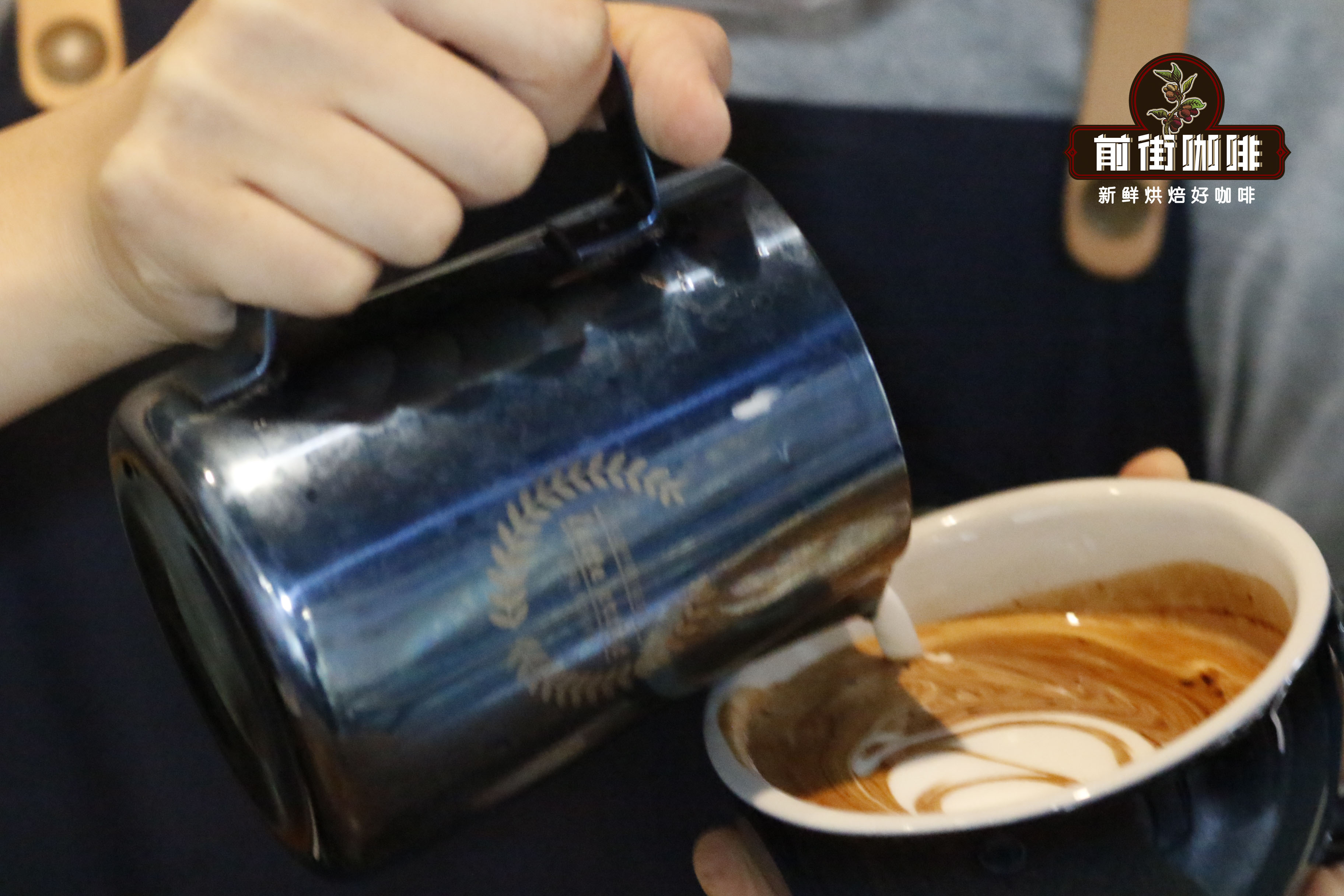
Before pouring, find a pivot point on the table and swirl the pitcher clockwise with your wrist, making sure the foam and milk have not separated. Technique matters too: hold the cup in your left hand and the pitcher in your right, and begin pouring in a circular motion, starting from the 3 o'clock and moving toward the 6 o'clock position of the cup.
Creating Latte Art
Pour from a height of 5cm. Use a faster flow while swirling to combine, then slow down when forming the pattern. Coordinate both hands, pouring while adjusting the cup's angle, so the foam settles into a proper pattern.
How to Make Iced Mocha Coffee
Friends in the southern regions have said: "It's still so hot here!!! Do you have a tutorial for iced mocha?" Of course, here it is.
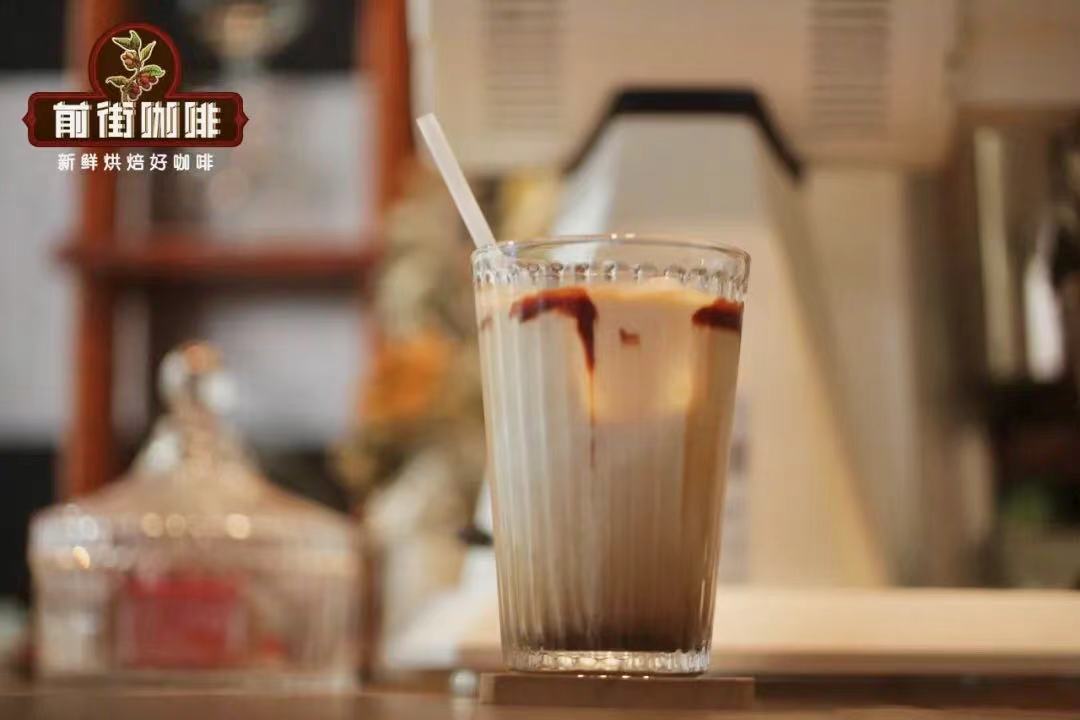
FrontStreet Coffee's iced mocha is much like the hot one: add 100g of ice cubes and 150g of milk to a cold drink cup, then mix 35ml of espresso liquid with 20g of chocolate sauce and 5g of cocoa powder until well combined, and pour it into the cup.
FrontStreet Coffee Recommendation
The soul of a mocha is the espresso underneath, so the bean matters as much as the chocolate. FrontStreet Coffee's Sunflower Warm Sun, used above, is one excellent answer: the sherry barrel-aged component lends winey depth and the sun-dried Yirgacheffe brings sweetness, standing up to cocoa and milk without disappearing. For a more classic mocha or latte base, the FrontStreet Premium Blend is the shop's longest-running espresso blend, nearly a decade of daily service, pairing Brazilian Cerrado with Colombian Huila to give that familiar, timeless espresso flavor, with the Brazilian component delivering layered almond, walnut, and nut complexity and a silky, lingering finish. If rich crema is the goal, choose the Classic Blend or Commercial Blend, which include a small amount of Robusta for extra golden foam, full body, and caramel aroma.
For milk drinks, medium-dark roasts are the safe bet: their nut, chocolate, and cream notes flow straight through the milk. Newer home baristas might start with FrontStreet Coffee's Black Cocoa Blend, 100% Arabica, full-bodied, budget-friendly, and build from there. Whichever you choose, the parameters above (double espresso 20g in, 35g out, 27 seconds; foam at 1.2cm; milk at 55-65°C) will carry you to a café-quality mocha.
Important Notice :
FrontStreet Coffee is a long-established specialty coffee roaster in Guangzhou China, selling freshly roasted beans from its own farm in Yunnan as well as dozens of carefully selected single-origin beans from around the world for both pour-over and espresso. The products deliver consistently excellent quality and great value, with shipping within 24 hours. Guangzhou's FrontStreet Coffee shop is recommended by many coffee lovers, and the beans are now available online at the Tmall 。
FrontStreet Coffee has moved to a new address:
FrontStreet Coffee Address: 315,Donghua East Road,GuangZhou
Tel:020 38364473
 Scan and follow the En Gafei WeChat official account. Please indicate that the reprint comes from "En Gafei".