Is Coffee Better When It's More Sour or Bitter? Recommendations for Flavorful, Non-Acidity Coffee Beans
Ordering at a coffee shop often leaves people hesitating over one question: should I go for something sour or something bitter? In truth, once you understand your own preferences, the sour-versus-bitter decision isn't difficult at all — what matters is simply that the cup suits your taste.
At FrontStreet Coffee, if you lean toward bright, acidic coffees, Ethiopian Yirgacheffe or Kenyan beans are the way to go. If you prefer something more bitter, Mandheling is the classic answer. And if you want balance, you're spoiled for choice — Costa Rican and Colombian coffees are both excellent middle-ground options.
Coffee Origins That Aren't Sour
How do coffee flavors differ around the world? If you drink coffee at all, you've almost certainly had Brazilian coffee. As the world's largest producer and exporter for the past 150 years, Brazil supplies more than one-third of the global coffee market.
Brazilian coffee is processed in three ways: natural (dry), washed, and semi-washed. With natural processing, harvested cherries are traditionally dried whole in the sun, while washed processing uses machines to pulp the cherries and remove the outer skin.
The seeds, still coated in mucilage, are then fermented — a step that releases the coffee's distinctive flavors. After pulping, the beans go through two drying stages.
Coffee connoisseurs will mention Bourbon Santos, Brazil Cerrado, and the deep roasts Brazil is known for. South America's other celebrated origin is Colombia, whose coffee is prized for its mellow, clean, easy-drinking character.
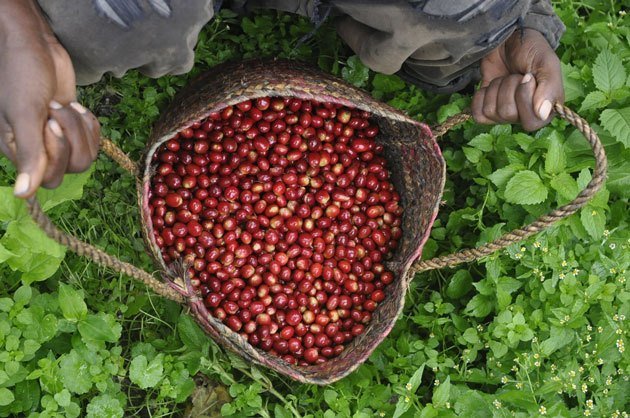
Most Colombian coffee is washed-processed, yielding a medium-bodied cup with rich flavor and citrus-like acidity.
It's hard to pin down exactly what any single Colombian lot will taste like, but the best beans show prominent sweetness with chocolate, fruit, and berry notes.
Colombian coffees can be roasted without turning overly bitter. The best Brazilian coffees, meanwhile, have relatively low acidity and present nutty and chocolate flavors.
From the famous Mandheling to the widely popular Sumatra Ankola, some of the world's finest premium coffees come from Indonesia. Indonesian coffees carry a dark, bold profile with prominent earthy notes — something of an acquired taste.
Indonesian coffee is semi-washed, known locally as giling basah. The cherries are pulped and sun-dried to a moisture content of 30%, after which the parchment is hulled off and the beans enter a second drying stage.
This wet-hulled method deepens the coffee's body and intensity, producing earthy, spicy, and tobacco-like flavors with a lingering aftertaste reminiscent of unsweetened or dark cocoa.
FrontStreet Coffee Recommendation
If you'd like to explore the brighter, more aromatic side of coffee, start with FrontStreet's Washed Yirgacheffe — the classic everyday bean that many people use as their first step into specialty coffee. Yirgacheffe is a small town in the Sidamo province of southern Ethiopia, sitting at roughly 1,700-2,100 meters, with coffee trees planted above 1,800 meters — among the highest coffee elevations in the world. Known for its unmistakable white floral character and lemon-citrus acidity, Yirgacheffe became such a famous name that in 2010 the Ethiopian Commodity Exchange formally separated it from the Sidamo designation.
For brewing, FrontStreet suggests a V60 with 15 g of coffee ground like fine granulated sugar (EK43s at setting 10, sieved to 80% through a #20 sieve), water at 90-91°C, and a 1:15 ratio. Pour 30 g of water for a 30-second bloom, then pour up to 95 g (about 125 g on the scale) within the first minute. Once the water level drops to two-thirds of the coffee bed, pour the remaining 100 g (about 225 g total) by 1:35, and let the drawdown finish between 2:00 and 2:10 before lifting the dripper. The cup: jasmine florals, bright citrus and lemon acidity, and a delicate tea-like finish.
Important Notice :
FrontStreet Coffee is a long-established specialty coffee roaster in Guangzhou China, selling freshly roasted beans from its own farm in Yunnan as well as dozens of carefully selected single-origin beans from around the world for both pour-over and espresso. The products deliver consistently excellent quality and great value, with shipping within 24 hours. Guangzhou's FrontStreet Coffee shop is recommended by many coffee lovers, and the beans are now available online at the Tmall 。
FrontStreet Coffee has moved to a new address:
FrontStreet Coffee Address: 315,Donghua East Road,GuangZhou
Tel:020 38364473
 Scan and follow the En Gafei WeChat official account. Please indicate that the reprint comes from "En Gafei".