Cold Brew Coffee Ratio: 8 Tips for Making the Best Cold Brew Coffee

The whole idea behind cold brew coffee is that at low temperatures, the small molecules responsible for aroma and acidity dissolve more readily in cold water. The result is a coffee that tastes light, dominated by sweet and tangy notes. And because it isn't tied to any equipment or venue, cold brew is about the most accessible coffee there is: at home, with beans, a bottle, water, and a refrigerator, anyone can reach caffeine freedom.

At this point, some observant coffee lovers will have noticed something: unlike pour-over coffee, which almost always sticks to an unchanging 1:15 ratio, the coffee-to-water ratio for cold brew varies enormously. Some swear by 1:8, others advocate 1:13, and FrontStreet Coffee uses 1:10 for its own products. So what kind of taste experience do cold brews made with different ratios actually deliver?
What Effect Does the Coffee-to-Water Ratio Have on Coffee?
Cold brew is a classic immersion method: cold water and coffee grounds sit together in the same container for an extended period, slowly drawing out flavor. When all other parameters stay the same, the more water you use, the lower the concentration of the finished coffee, giving a lighter taste and thinner mouthfeel; conversely, the less water, the higher the concentration, the stronger the taste and the thicker the body.
So to find a balanced mouthfeel and let the coffee show its best flavors, you need an appropriate coffee-to-water ratio.

How Long Should Cold Brew Steep? How Fine Should the Grounds Be?
Every parameter in any extraction method is interconnected to some degree. For cold brew, the ratio is not the only thing that determines taste; you also have to consider grind size, steeping time, water quality, and above all the coffee beans themselves.

Although low-temperature extraction reduces the appearance of bitter compounds, it doesn't eliminate them entirely. So in pursuit of delicious flavor, grounds for cold brew should be neither too fine nor steeped too long. For grind, we recommend about an 80-85% pass-through rate on a 0.85mm standard sieve—visually similar to granulated sugar. For time, keep the steep within 6-16 hours: that guarantees enough contact between grounds and water while avoiding the negative flavors of over-extraction.

FrontStreet Coffee stresses water quality not only because it's the extraction medium, but because it's the most easily overlooked parameter of all. We regularly hear from customers who bought our beans, followed the parameters in our articles, and made cold brew that didn't taste as expected. After ruling out every other culprit, they discover the problem was that colorless, tasteless "water." If you've run into the same trouble, see FrontStreet Coffee's earlier comparison experiment "Making Cold Brew with Different Water—The Difference Is Surprisingly Huge!" We won't go further into it here.
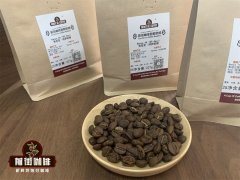
As for bean selection, FrontStreet Coffee used Kenya·Little Tomato from our bean shelf for this demonstration. It is processed with the K72 washed method and built on the SL28 and SL34 varieties, both products of multiple breeding rounds. SL28 belongs to the Bourbon genetic group and carries the bright tone and rich acidity of original Bourbon; SL34's lineage sits closer to Typica genes, with milder acidity.

Kenya AA, made into iced coffee, wraps the palate in dark berries with rich little-tomato aromas. Served chilled it is wonderfully refreshing, which is why it's a favorite choice among friends making cold brew.
How Do Cold Brews Made with Different Ratios Taste?
Because cold brew always happens in a 0-10°C environment, extraction efficiency is very low. The grounds and water sit relatively still, and no external force is applied, so the rate at which flavor compounds dissolve is quite limited. To make the results of this test as clear as possible, FrontStreet Coffee set up four common ratios—1:8, 1:10, 1:12, and 1:15—while holding everything else constant.

The process was identical for all four: grounds and water go into the container in sequence, then the mixture is stirred, sealed, and placed in the refrigerator. When time is up, take it out and filter it (one stir midway is fine).
Coffee Beans: Kenya·Little Tomato
Coffee Amount: 18g
Steeping Time: 6 hours
Grind Size: Granulated sugar / 80% pass-through on the China No. 20 standard sieve (EK43s setting 9.5)
Coffee-to-Water Ratio: 1:8, 1:10, 1:12, 1:15
Corresponding Water Amount: 144g, 180g, 216g, 270g

The 1:8 brew was the darkest in color, strongest in taste and acidity, with a slightly salty mouthfeel, barely any berry flavors, and a bitter aftertaste.
The 1:10 brew smelled of fresh sugarcane, with flavors of red plum, berries, and pear tea. The mouthfeel was slightly concentrated, with high acidity and less pronounced sweetness.
The 1:12 cold brew had the clearest mouthfeel, with flavors of little tomato, red plum, dark plum juice, and sugarcane, plus the aftertaste of preserved plum candy. The concentration was moderate, with a balanced sweet-and-sour profile.
The 1:15 brew was the lightest in color and thinnest in body, with only a slight acidity of black plum and berries. The taste was plain—but almost free of bitterness.

From this comparison it's easy to see that at 1:8, the smaller amount of water doesn't leave enough room for the coffee's flavors to unfold, so negative traits like thickness and bitterness show up easily. At the other extreme, 1:15 uses so much water that the soluble compounds are over-diluted, leaving the coffee thin and bland.
Between the two middle groups, the 1:12 cold brew clearly performs best for flavor and mouthfeel when drunk straight. Yet FrontStreet Coffee uses 1:10 in many articles and in its daily products. Why?

For cold brew products, FrontStreet Coffee weighs two main factors.
First, to keep the cold brew properly chilled, we not only use chilled glasses but also add 1-2 hard ice cubes. That way, even as the coffee is diluted, its flavor doesn't change much.
Second, every customer's taste is different—some like it light, some like it strong. When the ice first goes in, the coffee tastes full and thick; as the cubes slowly melt into water, the coffee gradually turns lighter. Serving high-concentration cold brew over ice therefore satisfies both the "strong flavor camp" and the "light flavor camp."
FrontStreet Coffee Recommendation
The bean FrontStreet Coffee used for this test, Kenya·Little Tomato, is our top pick for cold brew that tastes like fresh juice. It comes from the Sithaka region of Kenya, grown at 1550-1750 meters from the classic SL28 and SL34 varieties, with plump, round beans graded AA TOP. The K72 double-washed fermentation—72 hours in the local style—draws out the fruit while keeping the cup clean, and a light-medium roast preserves its lively acidity. In cold brew, the cherry tomato, snow pear, black plum, and dark plum notes shine through with full acidity, low bitterness, and a long, lingering finish over ice.
If you prefer floral over fruity, FrontStreet Coffee's Natural Chakri (Huakui) from Ethiopia is the cold brew to reach for. Since cold brewing amplifies floral and fruity tones while muting woody and roast notes, light-to-medium roasted beans show their best here—and with natural processing, the beans absorbed a wealth of sweet compounds inside the cherry. Expect magnolia, creamy strawberry, dried mango, guava, and black tea.
For something playful, the FrontStreet Strawberry Candy Geisha Blend pairs the classic Panamanian Geisha variety with Costa Rican honey-processed coffee: rose and orange on one side, grape, dried blueberry, and strawberry-gummy sweetness on the other. Made into cold brew it is sweet, tangy, and lively—and if you let it ferment and settle a little longer, it even takes on a fruit-wine character.
Important Notice :
FrontStreet Coffee is a long-established specialty coffee roaster in Guangzhou China, selling freshly roasted beans from its own farm in Yunnan as well as dozens of carefully selected single-origin beans from around the world for both pour-over and espresso. The products deliver consistently excellent quality and great value, with shipping within 24 hours. Guangzhou's FrontStreet Coffee shop is recommended by many coffee lovers, and the beans are now available online at the Tmall 。
FrontStreet Coffee has moved to a new address:
FrontStreet Coffee Address: 315,Donghua East Road,GuangZhou
Tel:020 38364473
 Scan and follow the En Gafei WeChat official account. Please indicate that the reprint comes from "En Gafei".