A Coffee Taster's Explanation of the Flavor Wheel: Is the Flavor Wheel a Standardized Coffee Tasting Database?
When we eat delicious food as children, our faces betray surprise or delight—that's the experience tasting gives us. But tasting subtle flavors is not something we're simply born with. Corn tastes like corn, steak tastes like steak—that's how most of us are first taught to understand flavor. Trained by those habits, we struggle to taste coffee as anything other than coffee, let alone find raspberry, chocolate, or flowers in it.
At FrontStreet Coffee you can taste coffees from around the world—famous Blue Mountain, Panama Geisha, Ethiopia's beloved Yirgacheffe, and more. And there has always been a tug-of-war between those who simplify flavors and those who savor their complexity: each side accuses the other of either wild imagination or narrow-mindedness. New breakthroughs in sensory science have let researchers and ordinary people alike understand what they eat and drink more deeply, and the gap between the two camps is narrowing.
Sensory Science Meets Coffee
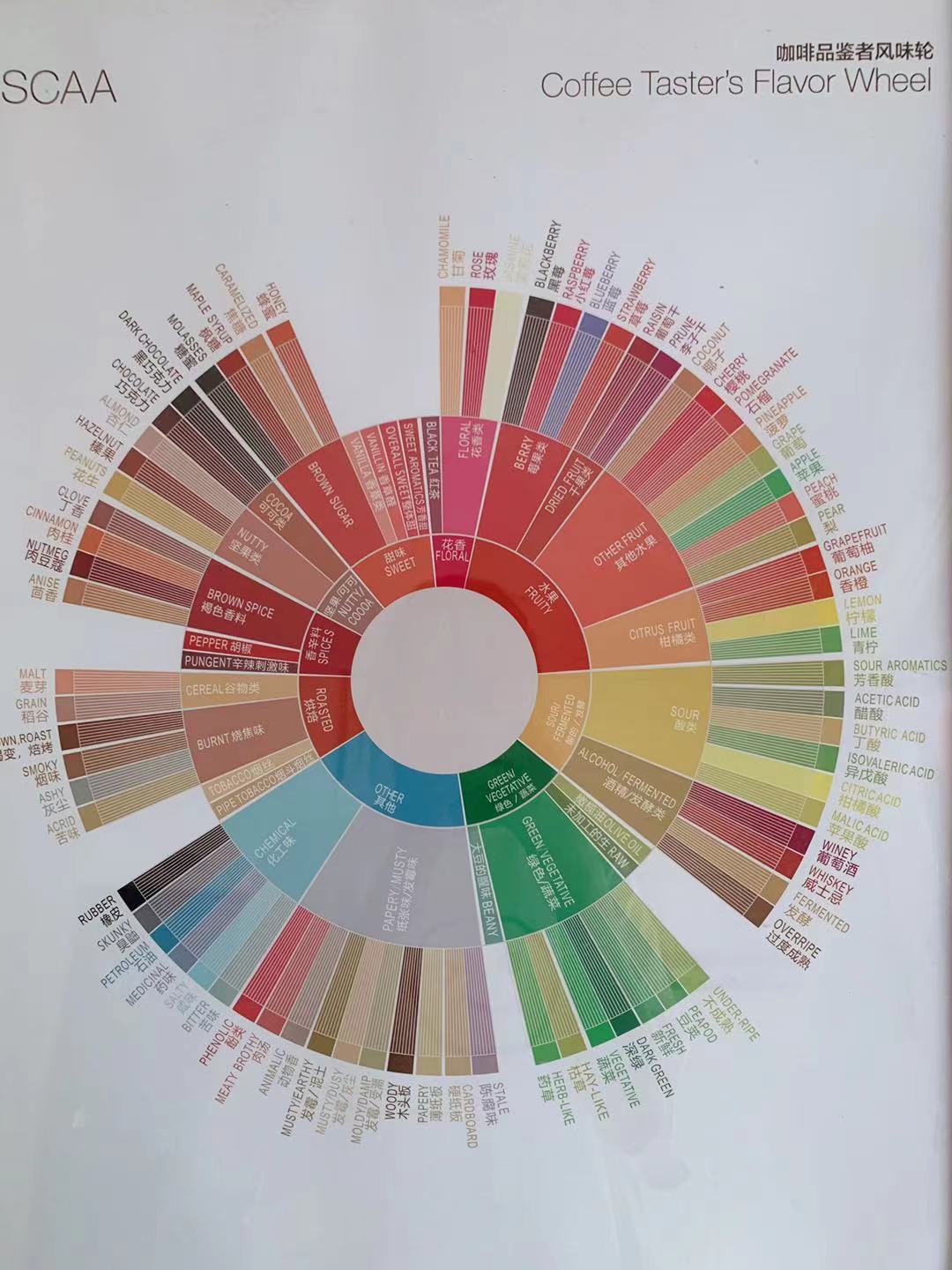
One of the most refined studies in modern sensory science aims to understand coffee flavor. The Specialty Coffee Association of America, working with World Coffee Research, launched the new Coffee Taster's Flavor Wheel—a colorful circle cataloguing the many flavors that can exist in black, unadulterated coffee.
A quick glance may intrigue you; a closer look may confuse you. If you doubt that coffee can taste of jasmine, rubber, or cherry, you're not alone—but stay a while before you judge.
Scientists Unite
In 2009, at the first annual SCAA symposium, the conference broadly agreed that the professional coffee industry needed a standardized yet accessible method for identifying coffee flavors. The old flavor wheel published in 1995 was deemed insufficient—too vague for the needs of a rapidly growing global industry.
The SCAA listened and partnered with World Coffee Research to build an updated, standardized way to taste coffee and name its flavors—one that doesn't require mastering laboratory equipment or explaining a catalog of chemicals and acids to ordinary people.
Three years of work brought more than 100 scientists together to establish a standardized coffee tasting database: the World Coffee Research Sensory Lexicon, which carefully and systematically anchors coffee flavors to real-world reference products.
Now anyone can calibrate their senses by comparing coffee flavors against actual standards instead of tasting and guessing. The blackberry note in a coffee, for example, corresponds closely to Smucker's blackberry jam, as determined by the project's researchers—and lexicon users can even rate the intensity of each flavor.
To build the updated wheel, the SCAA invited professional coffee tasters and sensory scientists from the University of California, Davis, to join the final construction phase. These volunteers sorted the lexicon's entries into flavor categories and subcategories; a program then generated a "similarity matrix," which was condensed into the new flavor wheel—colors and all.
How Does It Work?
The items on the flavor wheel are not conjured from thin air, nor wishful thinking. They are recorded flavors that coffee professionals and sensory scientists can reliably identify.
To use this powerful tool, brew some fresh coffee and start at the center of the wheel. As you grow familiar with the cup in front of you, consider the broad flavors first: is it earthy and nutty, or floral and sweet? These general observations narrow your search, even when you're not confident in your diagnosis.
As you identify more flavors, you naturally move outward toward the wheel's edge and ever more specific descriptors. That is the wheel's purpose: to let anyone step onto the coffee-tasting stage without formal training or elaborate procedures.
To go further, open the sensory lexicon and test the attributes you've identified against its references. If the match isn't exact but isn't completely different either, it's probably close—keep it in the same category and color as your first guess and search for a nearer match. If the coffee attribute and the lexicon item taste identical, you've completed the work of both tools.
Taste More
To understand and use the new flavor wheel, the single most important thing anyone can do is taste coffee—often. Pour-over reveals more flavor than most methods, whether you brew at home in the morning or visit a coffee shop for a special cup. Pause and consider the coffee's flavors and aromas, and soon enough you'll taste coffee—and understand its components—naturally.
FrontStreet Coffee Recommendation
Want a bean that exercises every spoke of the flavor wheel? FrontStreet Coffee's Washed Yirgacheffe is a floral-acid masterclass: grown in a misty, spring-like town at roughly 1,700-2,100 meters where thousands of coffee trees thrive, it layers white jasmine florals over bright citrus and lemon acidity with a light, tea-like body—many drinkers' first "aha" moment of tasting flowers and fruit in a cup.
For a darker fruit-and-sweetness exercise, the FrontStreet Natural Huakui from Sidamo's Hambella district—fully ripe cherries sun-dried 21 days on raised beds, medium-light roasted—delivers strawberry, passion fruit, jackfruit, even lychee aromatics with obvious sweetness and almost no bitterness, so smooth and juicy that fans call it "the least coffee-like coffee." Tasting them side by side is the fastest sensory training there is.
Important Notice :
FrontStreet Coffee is a long-established specialty coffee roaster in Guangzhou China, selling freshly roasted beans from its own farm in Yunnan as well as dozens of carefully selected single-origin beans from around the world for both pour-over and espresso. The products deliver consistently excellent quality and great value, with shipping within 24 hours. Guangzhou's FrontStreet Coffee shop is recommended by many coffee lovers, and the beans are now available online at the Tmall 。
FrontStreet Coffee has moved to a new address:
FrontStreet Coffee Address: 315,Donghua East Road,GuangZhou
Tel:020 38364473
 Scan and follow the En Gafei WeChat official account. Please indicate that the reprint comes from "En Gafei".