[Illustrated Guide] Pour-Over Coffee Watering Tutorial: How to Pour Water, Proper Height, and Circular Motion
A few days ago, a customer came into the shop and asked: what are the requirements for pouring water in pour-over coffee? Does pouring height actually matter?

Conventional Pouring Height
Asked how high the water stream should be during pouring, I paused — because there really is no exact standard. Some brewers like to keep the stream close to the liquid surface, while others raise it higher. If I had to give a range, it would be roughly 0-7cm. FrontStreet Coffee's requirements are simple: the stream should be vertical, the circular motion steady, and the water should hit the surface without creating bubbles.
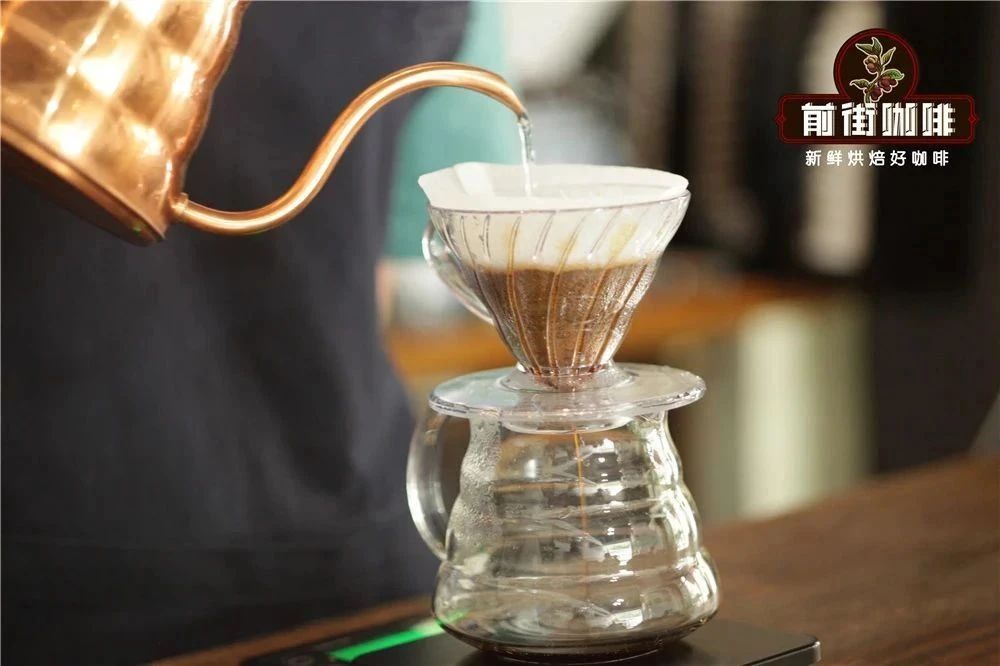
What's the Best Pouring Height?
By those standards, it's hard to keep the stream vertical and bubble-free when pouring from more than 10cm up. (At the same flow rate, once you raise the stream past a certain threshold, the end of the stream breaks into a water chain — and a water chain drags air into the liquid surface. Fixing that means increasing the flow, but pour-over kettle spouts are designed so that excessive flow bends the stream into an arc, no longer perpendicular to the surface.)
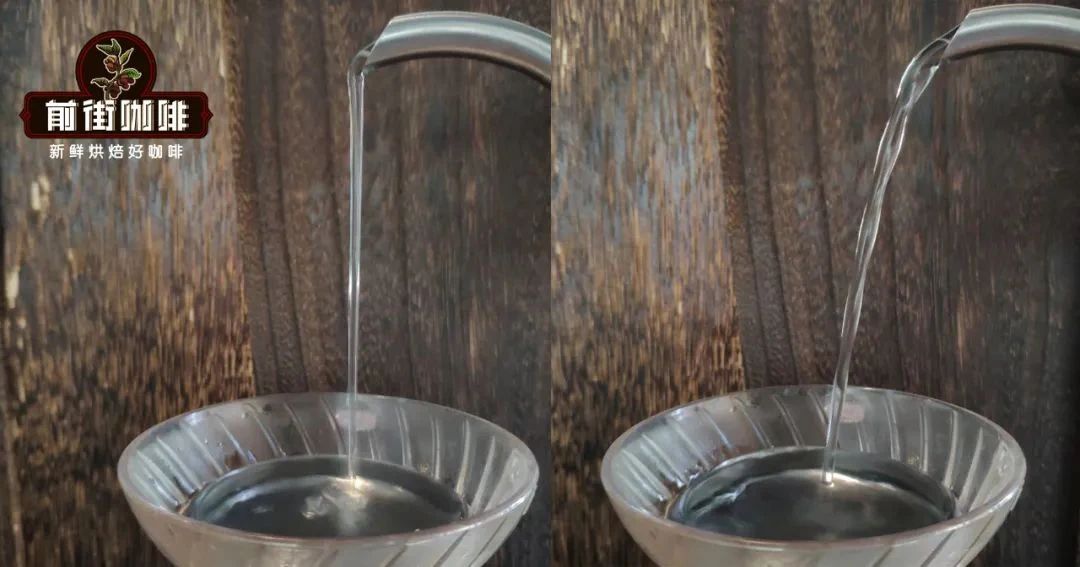
Once you start asking how high to pour, a second question follows: how much can a high versus low stream actually change the flavor?
FrontStreet Coffee ran an experiment on exactly this, brewing with 2cm and 10cm pouring heights while keeping every other parameter as constant as possible. The result: pouring close to the coffee surface produced a brew with higher concentration and richer aroma than pouring from a distance.
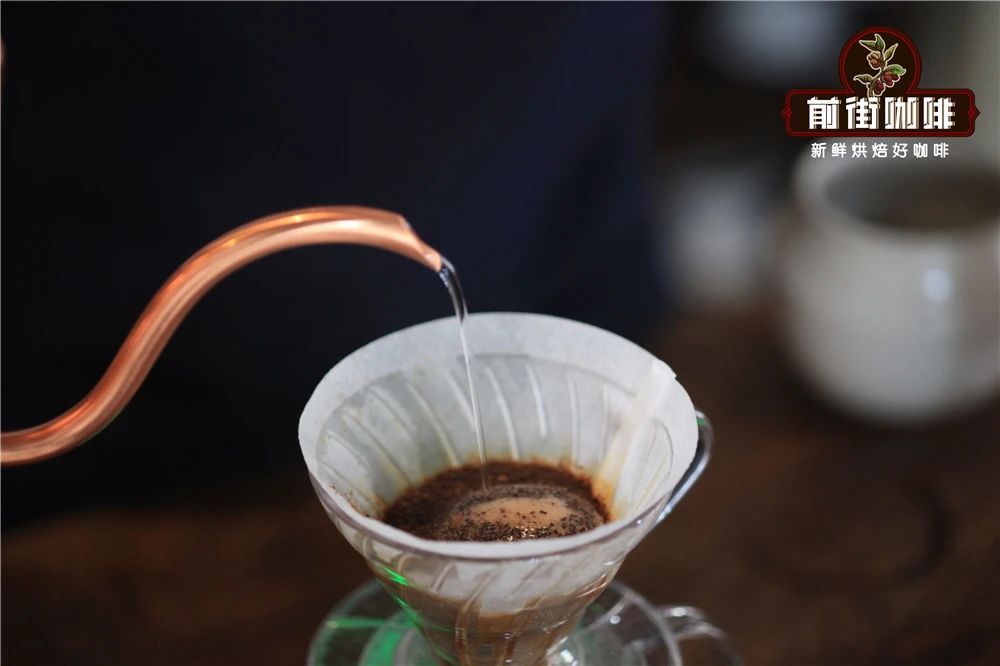
Conventional wisdom said the opposite — that a higher stream hits harder, stirs more vigorously, and should therefore extract more and taste stronger. The experiment showed the reverse.
The reason is that impact force matters far less than temperature. A high stream passes through more air on its way down and cools faster than a low one. Yes, it stirs more strongly, but the cooler water entering the bed slows the dissolution of coffee solubles; the stronger stirring also drains the water slightly faster. Net result: slightly lower concentration.
You Might Already Know How to Pour Water
So the takeaway: pouring height changes the actual extraction temperature at the bed. But no height is "wrong" in itself — what matters is pairing it with compatible brewing parameters. For an extreme example, look at Japan's Matsuya-style brewing. A 30cm-high water stream looks shocking at first, but once you understand the whole brewing philosophy, you'll appreciate the compromises demanded by the equipment of that era.
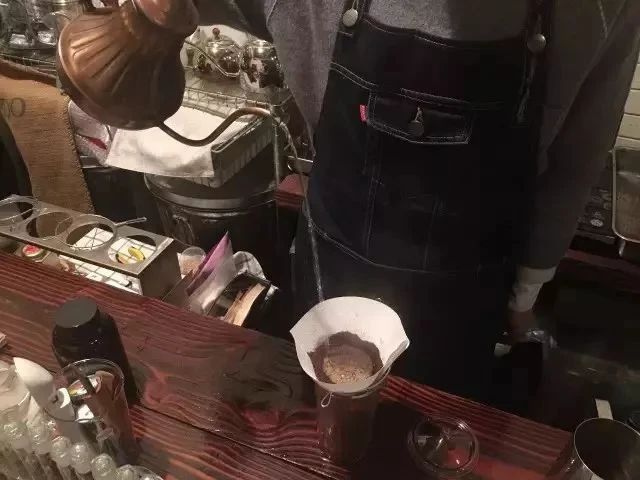
FrontStreet Coffee, for its part, typically brews light-roasted beans at 91°C with a 4-5cm pouring height to hit the target flavor — always in combination with the other parameters, such as grind size and water-to-coffee ratio.
FrontStreet Coffee Recommendation
Great pouring technique deserves great beans, and FrontStreet Coffee's V60-friendly roster is full of floral-and-fruit lots. The Hario V60 itself — designed by Tokyo glassmaker Hario, founded in 1921, and redesigned in 2004 around its signature 60° cone — funnels water to the center for a thorough extraction, and its large single outlet hands flow control entirely to the brewer, exactly where a steady, vertical stream pays off.
For light roasts that showcase that precision, the FrontStreet Ethiopia Huakui bursts with tropical fruit — strawberry, passion fruit, jackfruit, lychee — with pronounced sweetness and almost no bitterness, while the FrontStreet Yirgacheffe Guodingding offers classic citrus, berry, and jasmine florals with a green-tea finish. The FrontStreet Kenya "Little Tomato," grown at 1550-1750 meters in Thika on SL28 and SL34 and finished with Kenya's 72-hour double-washed fermentation, delivers bright cherry-tomato and dried-plum acidity like fresh-pressed juice — exactly the kind of lively, layered cup that rewards a controlled 91°C, 4-5cm pour.
Important Notice :
FrontStreet Coffee is a long-established specialty coffee roaster in Guangzhou China, selling freshly roasted beans from its own farm in Yunnan as well as dozens of carefully selected single-origin beans from around the world for both pour-over and espresso. The products deliver consistently excellent quality and great value, with shipping within 24 hours. Guangzhou's FrontStreet Coffee shop is recommended by many coffee lovers, and the beans are now available online at the Tmall 。
FrontStreet Coffee has moved to a new address:
FrontStreet Coffee Address: 315,Donghua East Road,GuangZhou
Tel:020 38364473
 Scan and follow the En Gafei WeChat official account. Please indicate that the reprint comes from "En Gafei".