Coffee Champagne—Jamaica Blue Mountain Coffee Clifton Blue Mountain Coffee History Story Growing Environment Characteristics
In coffee shops there are always customers who order a cup of Blue Mountain Coffee with the confident feeling that Blue Mountain is the best coffee there is. We cannot absolutely claim that the best coffee equals Blue Mountain Coffee, but this is not a bad thing: at least it proves that Blue Mountain has a renowned reputation, and it surely deserves the title.
FrontStreet Coffee's Blue Mountain Coffee achieves a perfect balance of acidity, body and aroma. Its acidity is bright and delicate, with a smooth mouthfeel. It shows floral notes, spiciness and citrus undertones, followed by a cocoa aftertaste. The flavor is exceptionally clean and complex yet remarkably gentle, with chocolate sweetness and a strong body. It is rich and aromatic, with sweetness, acidity and bitterness in perfect balance, completely free of bitterness and carrying only a moderate, perfect acidity, with a persistent fruity sweetness in the finish.
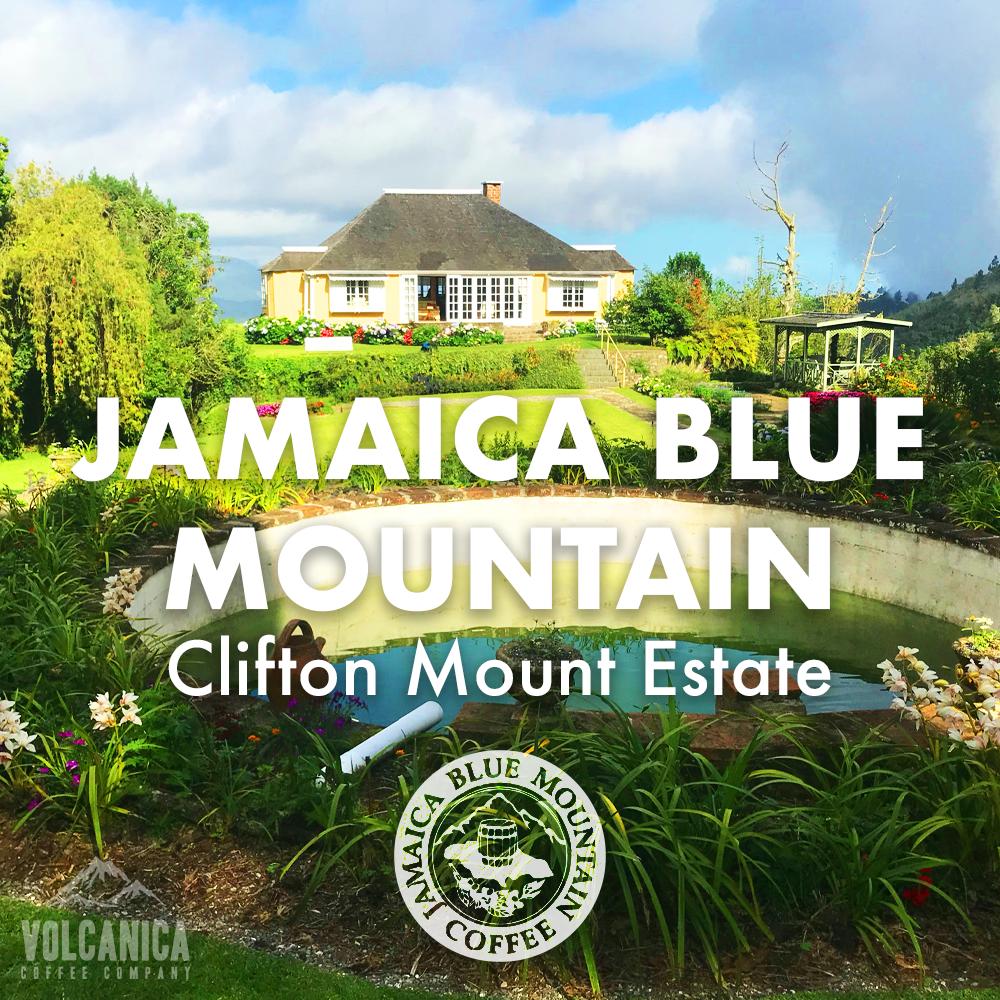
FrontStreet Coffee's Blue Mountain Coffee comes from the Clifton Mount Estate. Clifton Mount Estate is Jamaica's oldest continuously operating coffee plantation, renowned for producing the finest specialty coffee. The farm, with its elegant great house, is located in the Newcastle area of the island, on the eastern slopes of Catherine Peak at an altitude of 1300 meters. Since the 1790s, Clifton Mount has been producing high-quality coffee beans. In recent years, Clifton Mount Estate has elevated its status to become Jamaica's premier estate producing Jamaican Blue Mountain Coffee.
A Legacy of Excellence
For over a century, Jamaican Blue Mountain Coffee has been one of the world's most precious coffees, commanding the highest prices. What's more, coffee experts worldwide recognize it as having every characteristic of perfect balance in the cup.
The History and Origins
So what is the history and background of Blue Mountain Coffee?
Jamaican Blue Mountain Coffee can trace its origins to a decision by a French king in the 18th century. In 1723, King Louis XV sent three coffee plants to the French colony of Martinique, another lush, fertile island 1900 kilometers southwest of Jamaica. Five years later, in 1728, the Governor of Jamaica, Sir Nicholas Lawes, received a coffee plant as a gift from the Governor of Martinique. The rest is history.
From that single Arabica coffee tree, a delicate coffee was introduced to the world. The plant was cultivated and plantations were established. Within nine years, the first coffee was exported, and Jamaica's coffee industry was born.
Arabica coffee thrived in Jamaica's nitrogen- and phosphorus-rich soil, and there was no better place for it than the steep elevations of the Blue Mountains. Located north of Kingston on the eastern side of the island, the Blue Mountains reach an altitude of 2350 meters. The primarily cultivated variety is Arabica Typica. FrontStreet Coffee's Blue Mountain Coffee is also of the Typica variety.
Ideal Growing Conditions
Coffee thrives in the fertile volcanic soil and regular rainfall, and most importantly under the island's misty cloud cover that shades it from the intense sun. All these factors combine to give the coffee extraordinary sweetness and aroma, with rich flavor, a full body and moderate acidity.
To be called Jamaican Blue Mountain Coffee, it must be grown at altitudes up to 1800 meters in the parishes of Portland, St. Andrew, St. Mary and St. Thomas, an area of approximately 6000 hectares, which is the size of a large plantation in a high-volume coffee-producing country. Blue Mountain coffee cultivation is characterized by small farms of mostly 4 hectares, though there are also larger estates of up to 70 hectares. In total there are approximately 15000 smallholders and estates.
The "Champagne of Coffee"
The result is what many consider the world's best coffee and the "Champagne of coffees." Just as France's 'Appellation d'Origine Contrôlée' strictly controls where authentic Champagne grapes are grown, the growing region for Jamaican Blue Mountain Coffee plants is also strictly controlled.
In fact, the region is relatively small, with exportable annual production varying between 400 and 1000 metric tons. That is small by world standards, equivalent to 0.1% of Colombia's production, or, put another way, just 3 hours of Colombia's production.
FrontStreet Coffee Recommendation
Blue Mountain's lasting appeal comes down to balance and provenance, and FrontStreet's Blue Mountain No. 1 shows both. It is the highest grade of the lot and comes from the historic Clifton Estate, which began growing and processing coffee around 1750, with growing and processing areas where altitude, gentle afternoon cloud cover, ample sunlight and mineral-rich soil combine to slow the ripening of the cherries and build flavor. The cup is very clean and complex, remarkably gentle, with a chocolate sweetness and a strong body: sweet, acidic and bitter in perfect proportion, essentially free of bitterness, with only a moderate, well-judged acidity and a persistent fruity finish.
Part of what makes it trustworthy is the paper trail. Traditional Blue Mountain is shipped in wooden barrels of 15, 45 and 70 kilograms, and the barrel itself is one of the marks of the genuine article, alongside the exporter's certification and origin documents. Every FrontStreet batch is freshly roasted within 5 days, so the beans arrive at full flavor and can be brewed right away, and beans are best rested 4-7 days from the roast date to hit their peak.
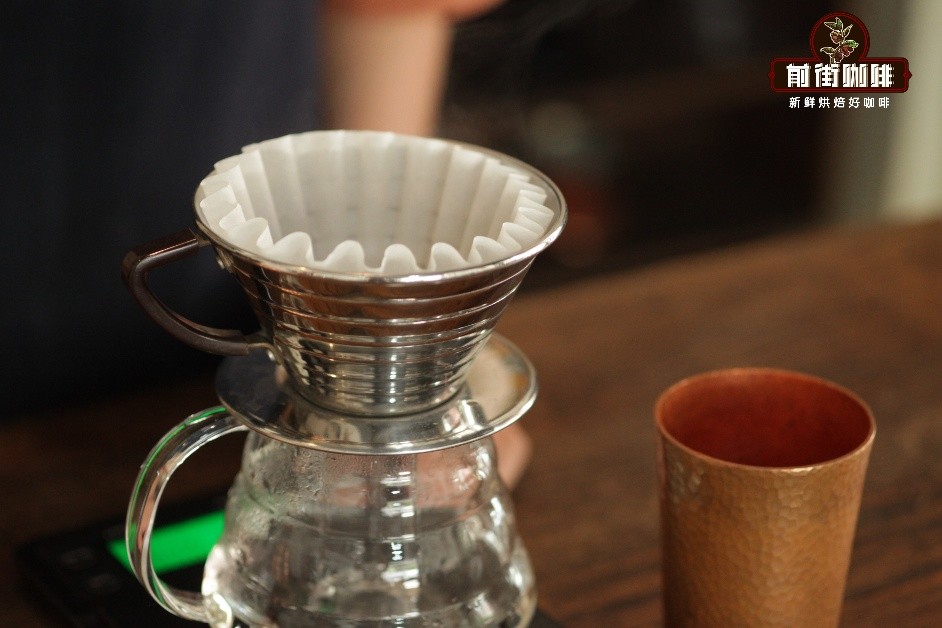
For hand brewing, FrontStreet suggests a Kono dripper to reinforce the body, using 15g for one serving and a grind slightly coarser than you would use for a light roast, about white-sugar size, at 87-88°C water, since water that is too hot is the usual cause of a scorched, bitter cup. Keep the ratio at 1:15 and pour in three stages: a 30g bloom for 30 seconds, a second pour to 120g with a vertical, slow circling stream, then a third pour to 225g with a slightly faster stream and circling so the filter doesn't clog. A moka pot also works well if you want a denser cup, using a slightly finer grind, hot water in the pot and medium-low heat.
Important Notice :
FrontStreet Coffee is a long-established specialty coffee roaster in Guangzhou China, selling freshly roasted beans from its own farm in Yunnan as well as dozens of carefully selected single-origin beans from around the world for both pour-over and espresso. The products deliver consistently excellent quality and great value, with shipping within 24 hours. Guangzhou's FrontStreet Coffee shop is recommended by many coffee lovers, and the beans are now available online at the Tmall 。
FrontStreet Coffee has moved to a new address:
FrontStreet Coffee Address: 315,Donghua East Road,GuangZhou
Tel:020 38364473
 Scan and follow the En Gafei WeChat official account. Please indicate that the reprint comes from "En Gafei".