Introduction to Coffee Varieties at Costa Rica's Small Candle Estate - Characteristics of Caturra and Catuai Hybrid Coffee Beans
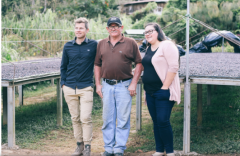
FrontStreet Coffee carries a Costa Rican Geisha coffee from the La Candela estate. If you are curious about the story of La Candela itself, you can find our previously published articles about it.
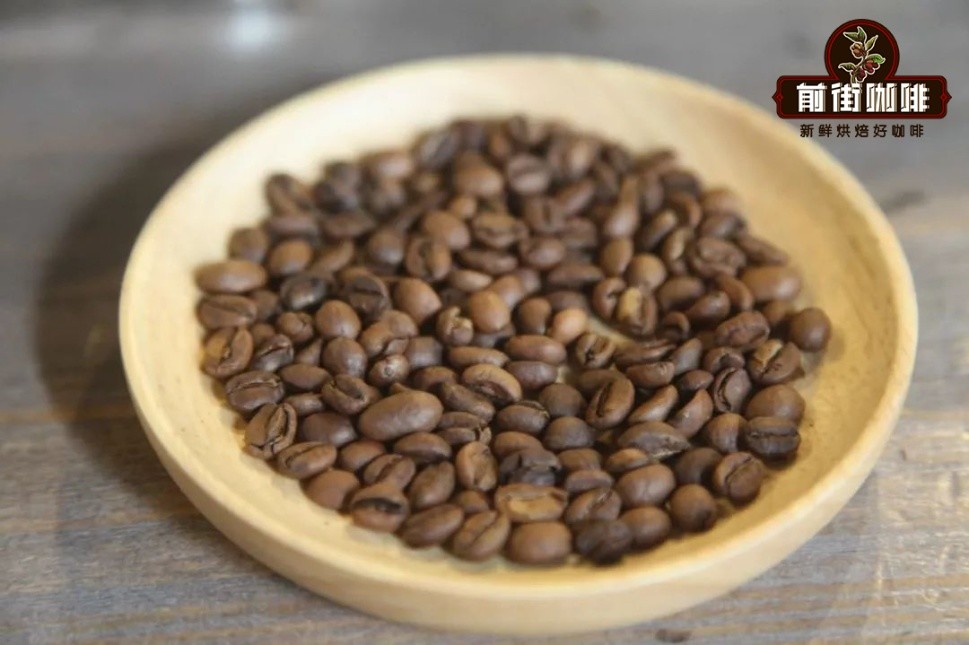
Although FrontStreet Coffee only carries the Geisha variety from La Candela estate, the estate actually grows other coffee varieties as well. Today, FrontStreet Coffee would like to introduce you to the other coffee bean varieties from La Candela.
Caturra
The Caturra variety was developed by Alcides Carvalho at the Instituto Agronomico de Campinas (IAC) in São Paulo state, Brazil.
In 1937, the IAC received seed samples of genetic material from the border region between Minas Gerais and Espírito Santo states. These included both red Caturra and yellow Caturra. Both originated as natural mutations of Bourbon, itself originally a tall coffee shrub discovered in Serra do Caparaó, now a mountainous national park northeast of Rio de Janeiro.
These are the main agronomic characteristics of the red and yellow Caturra varieties:
- It has a compact appearance with reduced internode, leaf, and lateral branch lengths, giving the coffee bush a smaller stature.
- This was the first naturally occurring coffee mutation discovered that combined small size with high productivity.
- Cup quality is excellent, since the genetic composition is nearly 100% Bourbon.
- Under Brazilian conditions, Caturra shows low cold resistance and lacks vigor after several harvests, leading to premature decline in yield.
Catuai
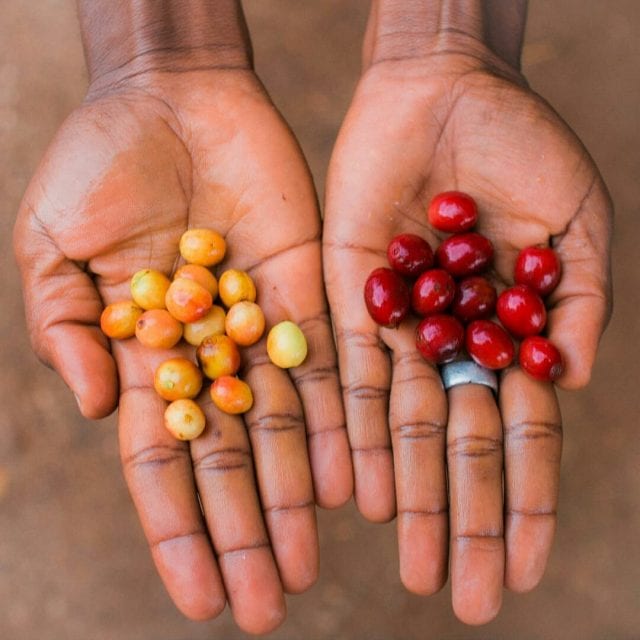
Catuai is a hybrid between the high-yielding Mundo Novo and the compact Caturra, created by the IAC in Campinas, São Paulo, Brazil. Compared to Bourbon, it is more productive, partly because its small size lets growers space plants closely — at nearly double the density. The plant's shape also makes it relatively easy to apply pest and disease treatments. Its main traits are vigorous growth at a low height, though it is not as compact as Caturra, and it is highly susceptible to coffee leaf rust.
The name Catuai derives from the Guarani term "multo mom," meaning "very good." Today it is considered to have good, though not exceptional, cup quality. It exists in both yellow and red fruit forms, with many selections made in different countries since. The variety was created in 1949 through a cross between yellow Caturra and Mundo Novo, initially designated H-2077. After pedigree selection through successive generations, it was released in Brazil in 1972 and widely planted there. It was first introduced to Honduras in 1979 and tested by the Instituto Hondureño del Café (IHCAFÉ); after IHCAFÉ selected two planting lines, it was commercially released in 1983. Today in Honduras, Catuai accounts for nearly half of all Arabica coffee planted, and IHCAFÉ researchers are actively pursuing breeding work with it, including hybrid crosses between Catuai and Timor hybrid lines.
Catuai also carries significant economic importance in Costa Rica, where yellow Catuai was introduced in 1985 and its descendants have since spread widely throughout the country. It arrived in Guatemala in 1970, where it now makes up about 20% of production. Its presence in other Central American countries is negligible.
Catuai's short stature allows dense planting and more efficient harvesting, which helped drive the intensification of full-sun coffee cultivation across Central America in the 1970s and 1980s.
FrontStreet Coffee Recommendation
Geisha may be the most celebrated of Arabica varieties, and La Candela's is a fine example, but it is far from the only one worth drinking. If you want to experience the full floral and honeyed potential of the variety, FrontStreet Coffee's Red Label Esmeralda Special Gesha — grown at 1600-1800 meters in single, auction-tracked lots — cups above 90 points, while the Green Label Private Collection offers the same estate's signature high-altitude profile at a gentler price. On the Ethiopia side, the FrontStreet Genlana Estate Gesha, medium-light roasted, shows bright citrus acidity, elegant ginger-flower aroma, and ripe fruit sweetness with a refined Gesha finish. For an everyday bean that echoes the clean Bourbon-derived sweetness of Caturra and Catuai, try the FrontStreet Classic Blend, whose Mandheling-and-Brazil recipe produces thick crema and a mellow body that works beautifully for espresso, moka pot, and milk drinks alike.
Important Notice :
FrontStreet Coffee is a long-established specialty coffee roaster in Guangzhou China, selling freshly roasted beans from its own farm in Yunnan as well as dozens of carefully selected single-origin beans from around the world for both pour-over and espresso. The products deliver consistently excellent quality and great value, with shipping within 24 hours. Guangzhou's FrontStreet Coffee shop is recommended by many coffee lovers, and the beans are now available online at the Tmall 。
FrontStreet Coffee has moved to a new address:
FrontStreet Coffee Address: 315,Donghua East Road,GuangZhou
Tel:020 38364473
 Scan and follow the En Gafei WeChat official account. Please indicate that the reprint comes from "En Gafei".