The Flavor Profile of Honduras Honey Process Coffee Beans and How It Differs from Washed Processing
Like other Central American countries, Honduras has a rich coffee culture. Good coffee is an essential part of everyone's day, and coffee is the centerpiece of many social occasions.
We love Central American coffee! FrontStreet Coffee currently carries two Honduran coffees — Sherry and Lychee Lan. Historically there was never a honey-processed Honduran coffee, so now that we have introduced one, let's dig into what honey processing actually is. And to understand honey processing, first a quick look at coffee itself.
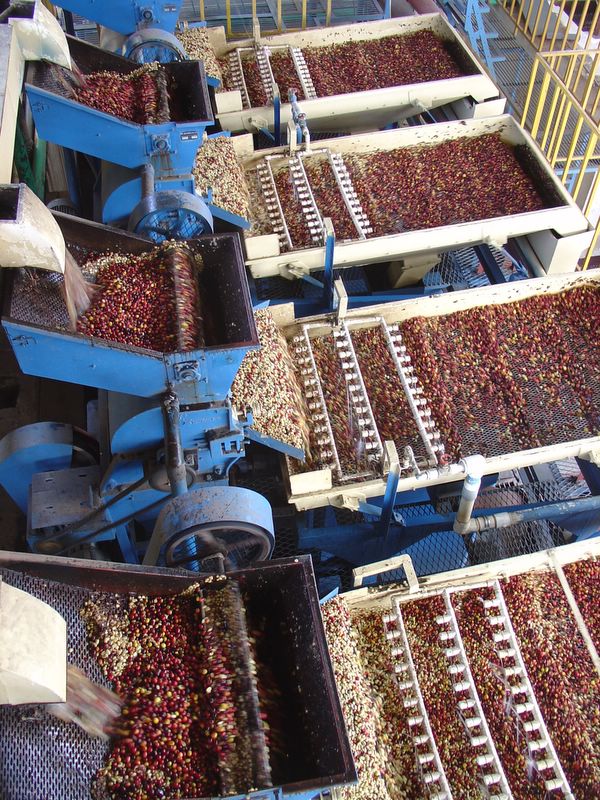
As everyone knows, coffee is the dried, roasted bean (or seed) of the coffee tree. The whole fruit is called a coffee cherry, and the bean sits at its center, surrounded by pulp. That pulp and the other debris clinging to the beans must be removed before the coffee can be roasted and brewed into your daily cup.
Coffee Processing Methods
There are two main ways to process coffee. The most common is to strip the pulp off before drying the beans — the wet, or washed, method, named for the step where cherries are "washed" in large tanks to separate fruit from bean.
The original method, still common in some countries, is the dry, or natural, method: the entire cherry dries in the sun, after which the pulp is peeled away, leaving the beans. Drying whole cherries takes longer than the wet method, so it demands a hot, dry environment and careful monitoring to keep the fruit from over-fermenting.
The Honey Process
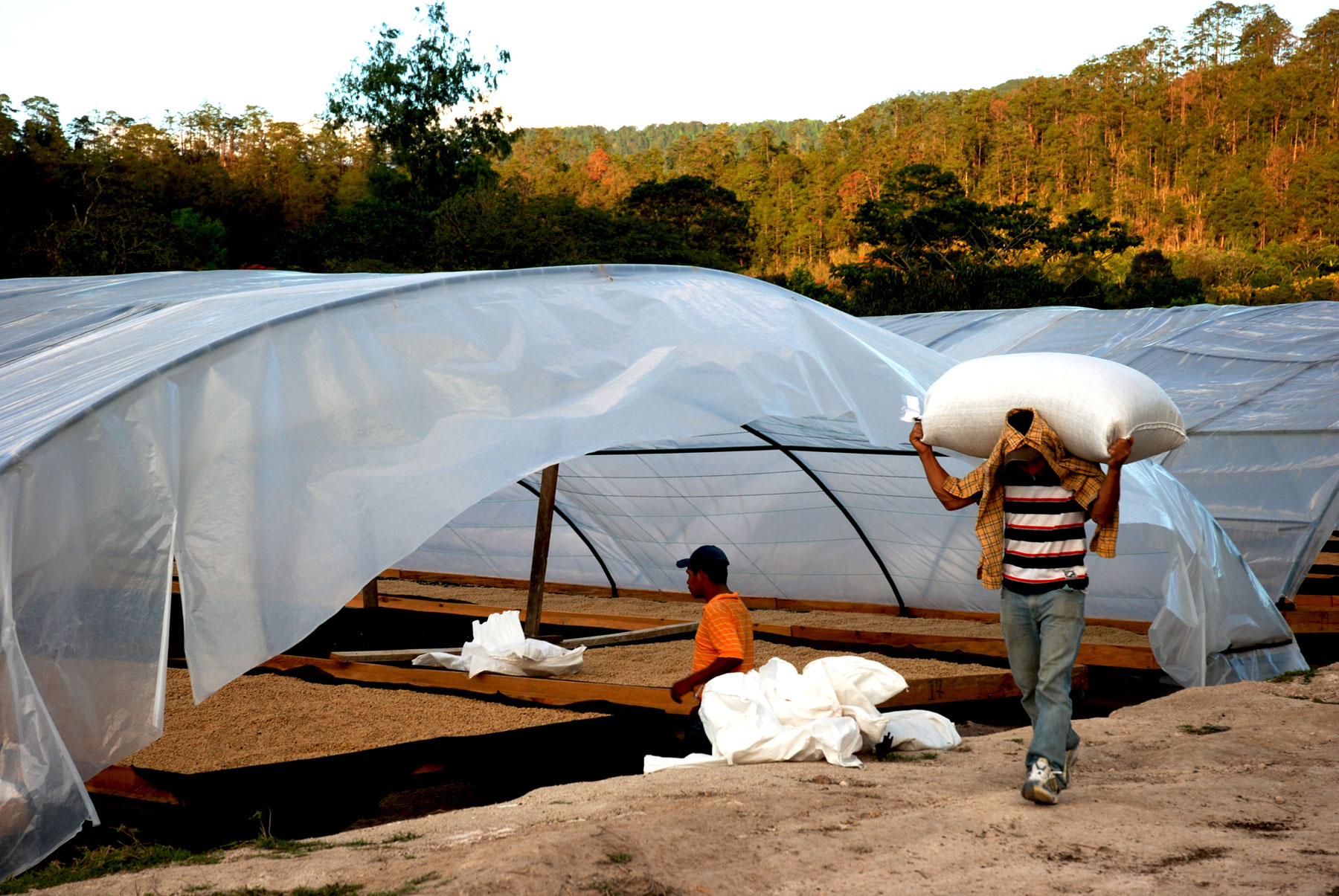
In honey processing, the coffee is dried with part or all of the mucilage left on the parchment around the seed, which shapes the coffee's sweetness and depth. Honey-processed coffee tastes as though someone stirred honey and brown sugar into your cup — though the name actually comes from how sticky the beans are during processing. Its acidity is rounder than washed coffee's, with strong sweetness and a complex mouthfeel. This naturally honey-processed coffee carries flavors of watermelon, cherry, strawberry, and honey. Sweet, unique, and delicious! The honey process aims for the best of both worlds, combining the dry and wet methods: after harvest, farmers remove the skin and most of the fruit, then dry the beans.
It is called the honey process because the pulp fragments left on the beans are as sticky and golden as honey. The method was first developed in Costa Rican coffee and is now spreading across other Central American growing regions.
During drying, some of the mucilage's sweetness soaks into the beans. Compared to the dry method, drying time is shorter and the risk of over-fermentation lower. Unlike washing, the honey process uses no (or very little) water — significant environmental and economic benefits for farmers. For us coffee lovers, the payoff is rich, intense sweetness with tropical fruit elements and lower acidity than most other natural-style processing.
For a concrete example, take a close look at the coffee below.
La Guadalupe Red Honey
General Information
Varieties: Bourbon Whiskey, Catuai, Pacas
Processing: Honey
Crop Year: 2020
Grade: SHG EP
Certifications: Fairtrade International, USDA Organic
Origin: Selin Recinos
Finca La Guadalupe
Finca La Guadalupe was founded by Don Celin Recinos Sr. over 80 years ago. Today it remains a family affair, with Selin Recinos Jr. running the farm as a small plot of wonderland, growing Catuai, Pacas, Parainema, Maragogype, Bourbon, and Typica varieties.
Selin Jr. takes a holistic view of farming, focusing on reforestation with native species and protecting existing forests and water sources. His care extends beyond coffee to planting shade and fruit trees around the farm and his home, providing food and shelter for the region's birds and wildlife. In recent years the focus has broadened to continuous improvement in picking practices and on-site wet milling. As part of a cooperative of over 400 organic farmers, Selin also joins many educational programs on organic farming and is an important voice promoting those practices across the local producer community.
Selin's dedication to his farm and community keeps paying off in steadily rising quality. Finca La Guadalupe is FTO certified organic and has been a finalist in previous Cup of Excellence competitions.
FrontStreet Coffee Recommendation
Honey processing traces back to Brazil's semi-washed (pulped natural) method, which strips the skin and dries the beans with the mucilage still attached — a technique Costa Rica then refined by varying how much fruit is kept and how long the drying lasts, splitting into black, red, yellow, and white honey. If this Honduran red honey intrigues you, FrontStreet Coffee's Costa Rica Blackberry shows the deepest end of that spectrum: black honey leaves nearly all the mucilage on and dries the beans for at least two weeks under shading, turned regularly to prevent uneven fermentation. A medium-light roast brings fresh floral aroma and flavors of grape, berries, and ripe blackberry.
For the most innovative twist, FrontStreet Coffee's Costa Rica Mozart uses raisin honey processing — the cherries are pre-dried on raised beds for at least three days before the skin comes off, with 100% of the mucilage retained, a method even more demanding than black honey. It rewards the effort with rich cooked-fruit sweetness: osmanthus, pineapple, and raisin, whether brewed as pour-over, cold brew, or moka pot coffee.
Important Notice :
FrontStreet Coffee is a long-established specialty coffee roaster in Guangzhou China, selling freshly roasted beans from its own farm in Yunnan as well as dozens of carefully selected single-origin beans from around the world for both pour-over and espresso. The products deliver consistently excellent quality and great value, with shipping within 24 hours. Guangzhou's FrontStreet Coffee shop is recommended by many coffee lovers, and the beans are now available online at the Tmall 。
FrontStreet Coffee has moved to a new address:
FrontStreet Coffee Address: 315,Donghua East Road,GuangZhou
Tel:020 38364473
 Scan and follow the En Gafei WeChat official account. Please indicate that the reprint comes from "En Gafei".