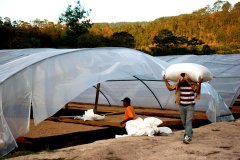
Honduras Small-Scale Coffee Cooperative Organizations: Sustainable Agriculture and Organic Coffee Processing
Many coffee-growing regions are known for uniting individual farmers through cooperatives, creating small-scale conditions for coffee cultivation and production. This model is in fact very popular across Central and South America, and Guatemalan and Costa Rican coffee adopt it as well. Here, FrontStreet Coffee introduces two Honduran coffee organizations.
Café Orgánico Marcala (COMSA)
Founded in December 2001, Café Orgánico Marcala (COMSA) set out to create new alternative development opportunities for small-scale coffee farmers in the region. The organization initially brought together 69 small farmers from the Lenca community who wanted to sell their coffee collectively under the protection of a rural credit cooperative.
At the time, the region's primary production system relied on traditional (chemical) practices and sold to local giants, with prices that often barely covered production costs. One of COMSA's main founding goals was to seek out and promote new ways of thinking — in production, moving from traditional to organic farming; and in the market, shifting from commercial buyers to specialty buyers. Under the protection of the rural credit cooperative, members sold their coffee collectively. With support from CEDECO, COMSA's staff and members learned new innovative practices and turned their land into integrated organic farms. They work to promote soil and water conservation as well as the protection of local plants and wildlife. At the same time, members began to see higher coffee yields and better family relationships, and COMSA's membership grew quickly.
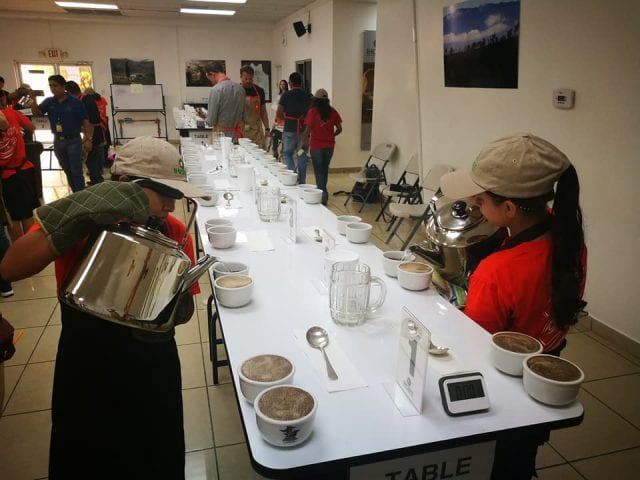
As they achieved initial success, members became increasingly willing to try innovative organic practices. Their organic evolution unfolded as follows: 2001 – use of organic materials; 2006 – application of microorganisms in compost; 2010 – exploration of mineral uses; 2012 – production of fermented active solutions; 2013 – strengthening their technical team, members' knowledge and robust educational programs with youth and women's groups.
To ensure optimal quality control, COMSA now manages its own wet and dry processing facilities and is certified organic by Biolatina, exporting according to FLO, SPP, Denominación de Origen Marcala (DOP) and UTZ standards.
Harvesting takes place from December to February, when gentle sunlight filters indirectly through the farms thanks to ample shade, shorter days and cool temperatures. Cherries are hand-picked, with careful selection of fruits that have reached optimal maturity, look freshest and have firm, vibrant color. This meticulous selection requires at least three passes through the same plants to produce high-quality coffee.
After harvesting, the fruit goes through wet processing: the coffee is depulped and then placed in tanks to ferment for over 36 hours. Any byproducts, such as pulp, are returned to the farm's soil. Finally, the coffee is sun-dried in an extended drying process.
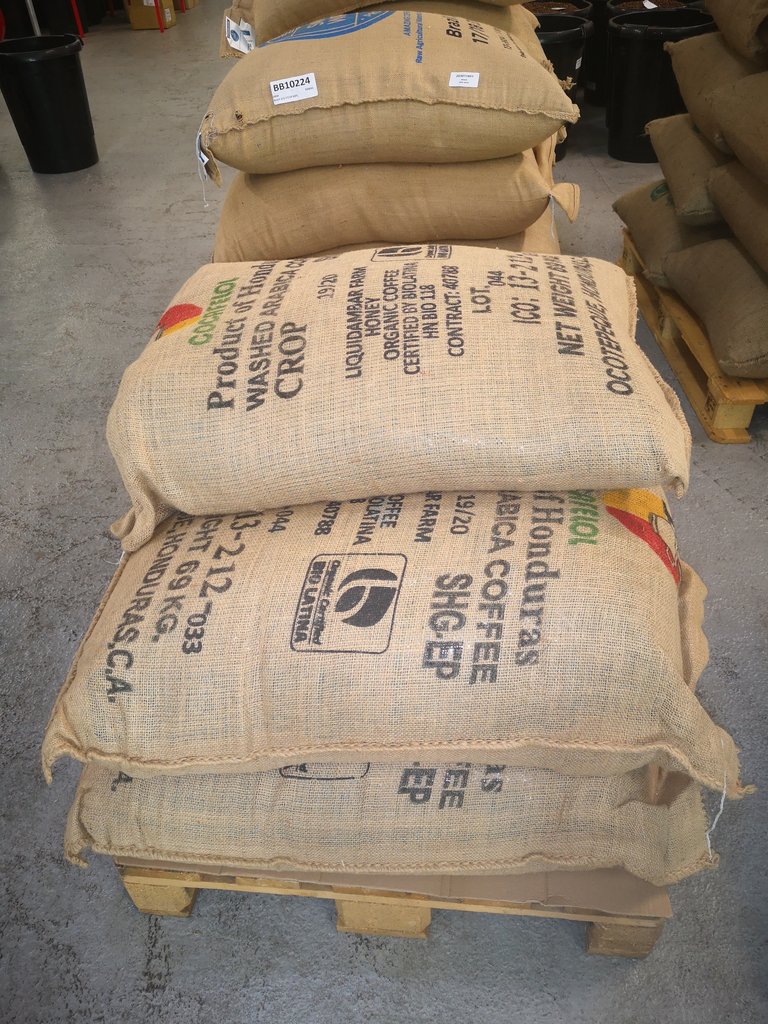
TechnoServe's Impact in Honduras
In Honduras, TechnoServe helps coffee farmers like Luis Olvera improve their coffee and join local producer organizations. By doing so, they can connect to better markets and sell their coffee directly in bulk to exporters, earning better prices and improving their livelihoods. In El Capiro, a remote community in Honduras's northern mountains, coffee is a way of life. Farmers here have produced coffee for generations, but poor cultivation techniques, limited quality control and low prices made it hard to earn a living. The situation grew so dire that some farmers considered selling farms they had owned for decades. In 2013, TechnoServe began working with more than 5,000 coffee farmers in Honduras through the Sustainable Agricultural Transformation Project (MAS+ in Spanish), funded by the United States Department of Agriculture. At the time, Luis and his neighbors were part of the La Inmensa Jornada producer organization, but were still selling coffee at low prices through intermediaries or second-tier organizations. TechnoServe also works with private coffee exporters to bring small farmers into agricultural supply chains and market systems by providing training, financing and technical assistance. This approach combines a focus on quality and sustainability, benefiting farmers and their communities.
FrontStreet Coffee Recommendation
Smallholder cooperatives like COMSA are exactly where many of the best everyday single-origins come from, and two FrontStreet lots tell that story well. FrontStreet Yirgacheffe Gutiti Cooperative is a washed Ethiopian from a village-level processing group, delivering jasmine florals, bright citrus acidity, green tea and honey. FrontStreet Yunnan Small Lot comes from small farms in Baoshan, washed and medium-roasted for soft nut and chocolate sweetness with a light plum note. Both are approachable as a hand-pour and inexpensive enough to drink every morning.
Important Notice :
FrontStreet Coffee is a long-established specialty coffee roaster in Guangzhou China, selling freshly roasted beans from its own farm in Yunnan as well as dozens of carefully selected single-origin beans from around the world for both pour-over and espresso. The products deliver consistently excellent quality and great value, with shipping within 24 hours. Guangzhou's FrontStreet Coffee shop is recommended by many coffee lovers, and the beans are now available online at the Tmall 。
FrontStreet Coffee has moved to a new address:
FrontStreet Coffee Address: 315,Donghua East Road,GuangZhou
Tel:020 38364473
 Scan and follow the En Gafei WeChat official account. Please indicate that the reprint comes from "En Gafei".