Pour-Over Coffee Watering Techniques for Beginners: How to Pour Evenly from the Center
Coffee brewing guides fill the shelves in bewildering variety. For anyone just starting with pour-over, every stage raises doubts about whether you are doing it right. What actually matters most? Put simply: understanding the state of the beans, setting a flavour standard, keeping the brewing method correct and consistent, and trying to fully extract the true character of the coffee.
Pour-Over Water Injection Techniques
FrontStreet Coffee is here today to talk about water injection in pour-over brewing. Setting other things aside, even the way you pour carries a great deal of nuance. Whether you use the intermittent pour, the continuous pour, the Kono style or the Kanazawa style, every method avoids a stream so large that it agitates the bed excessively and floods the whole coffee bed. Think of watering a potted plant: you add water slowly and let the soil absorb it, rather than emptying a bucket in one go so the soil is scoured by a waterfall and half the contents splash out of the pot.
Mastering the Pour-Over Technique
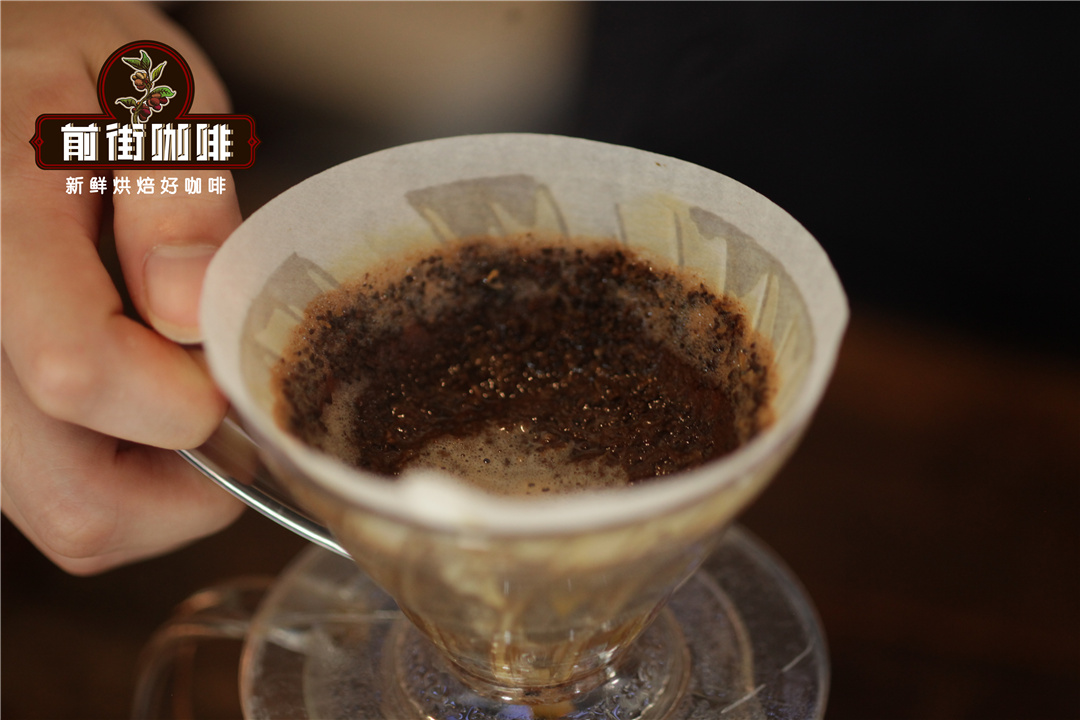
Whether the filter is flat-bottomed or conical, the thickest part of the coffee bed almost always sits at the centre. During the bloom, therefore, inject water slowly from the centre so the bed meets water evenly and extraction channels are prepared. Once the bloom ends, keep pouring from the centre outward, watching how the bed absorbs water and making fine adjustments to your stream and speed.
A slightly slower pace is recommended because beginners who pour too quickly leave themselves little room to correct and adjust. Pouring outward rather than inward matters because the centre of the bed is thicker: working from the inside out gradually pushes the central bed toward the outer layer, creating what is known as a "coffee wall."
Avoiding Common Pour-Over Mistakes
Pour from the outside in, and the stream first runs from the filter's edge down the ribs into the server. When the water only skims the coffee surface quickly, what do you get? Coffee water with just a hint of coffee flavour. In the widely used Hario V60, beginners often brew a watery cup for exactly this reason: the V60 has many tall ribs. When the stream lands on an empty area without a coffee wall — during the second pour, say, when the pouring height rises above the wall built in the first pour — it tends to run quickly down the ribs to the bottom and dilutes the well-extracted coffee already in the server.
Achieving Even Water Distribution
As for starting from the centre point, how do you keep the water even? If you find it hard at first to control the speed of a circular pour, try holding your wrist and arm still and keeping the flow rate and stream from the kettle constant, moving the stream by rotating your body in a circular motion.
FrontStreet Coffee Recommendation
Because the V60 extracts fast, it flatters aroma and lively acidity — which is why fruit-and-floral coffees suit it so well. FrontStreet Yirgacheffe Gotitty is the reference bean for the classic Yirgacheffe profile, and FrontStreet Huakui brings a richer tropical fruit character. The V60's conical 60° shape and single large hole force water to the centre before it drips through, extending contact between water and grounds, while the spiral ribs let air escape more easily. Hario, the company behind the dripper, was founded in Tokyo in 1921 as a maker of heat-resistant glassware for laboratories; the V60 was redesigned in 2004 into the shape we know today and went on sale a year later, named for its 60° cone and V silhouette. FrontStreet favours the resin version because it blocks heat loss well and, in high-volume production, is the easiest material to mould to tight tolerances.
FrontStreet Strawberry Candy Geisha Blend and FrontStreet Mozart show the fruitier end of the range. Strawberry Candy brings Geisha's citrus-honey perfume, and Mozart, processed by the raisin honey method, adds raisin character. Before the third wave, the market was dominated by medium-dark roasts and valued body, sweetness and caramelised notes — the era when FrontStreet Jamaica Blue Mountain No.1 and FrontStreet PWN Golden Mandheling were the most popular specialty beans and were brewed in siphon or cloth filter. As tastes shifted toward origin character — the white florals of Ethiopia, the berry acidity of Kenya — roasts moved lighter, and the V60's quick extraction became the tool of choice for bringing out florals, fruit acidity, clean sweetness and tea notes.
For lighter-roast beans brewed this way, a medium-fine grind works well. If you prefer a heavier cup and lower acidity, FrontStreet PWN Golden Mandheling is a medium-dark Sumatran bean with deep herbal and dark chocolate notes, screened three times by hand plus once by machine so the defect rate stays minimal, and it suits immersion-style brewing as much as pour-over. Whatever the bean, the water amount at each stage is not fixed: adjust it against your own experience and your reading of the coffee, treating brewing as a small, repeatable experiment.
Important Notice :
FrontStreet Coffee is a long-established specialty coffee roaster in Guangzhou China, selling freshly roasted beans from its own farm in Yunnan as well as dozens of carefully selected single-origin beans from around the world for both pour-over and espresso. The products deliver consistently excellent quality and great value, with shipping within 24 hours. Guangzhou's FrontStreet Coffee shop is recommended by many coffee lovers, and the beans are now available online at the Tmall 。
FrontStreet Coffee has moved to a new address:
FrontStreet Coffee Address: 315,Donghua East Road,GuangZhou
Tel:020 38364473
 Scan and follow the En Gafei WeChat official account. Please indicate that the reprint comes from "En Gafei".