The Correct Brewing Method for Mandheling Coffee: How Should Authentic Indonesian Coffee Be Consumed and Can Milk Be Added?
How should Mandheling coffee be enjoyed? Customers often tell us they can't quite "get" Mandheling—its rich, bold body with dark chocolate notes and a touch of herbaceous greenness can feel unfamiliar. So FrontStreet Coffee invites you on a tour of how Indonesians actually drink their coffee.
Coffee arrived in the archipelago in the 17th and 18th centuries, and Indonesians took it to heart immediately. Coffee drinking is now woven into daily life and tradition. In big cities like Jakarta, Bandung, Surabaya, and Medan, international chains and modern cafés operate inside shopping malls and office towers—but the real coffee culture lives on the street.
Street vendors sell coffee candies and instant sachets for those who need a morning fix, and at almost every corner a roadside stall—a warung kopi—draws a crowd, pouring unfiltered brewed coffee into glass tumblers. Most Indonesians take their black coffee sweetened, and many versions come dressed up with vanilla and spices. (Curiously, a similar tradition of spiced coffee exists in Colombia.)
In parts of Sumatra, such as village communities in West Sumatra, people even brew coffee leaves in hot water for a subtle, tea-like drink called Kopi Kahwa. In Aceh, coffee is "pulled" through a filter in the style of a stretched pour—known there as Kopi Tarik. Here are the classics of Indonesian coffee culture.
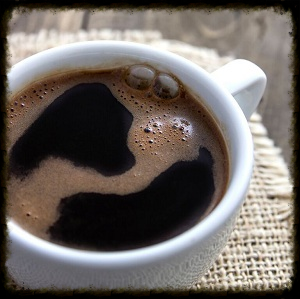
Kopi Tubruk (Unfiltered Brewed Coffee)
This is the country's most popular freshly brewed coffee. The classic recipe calls for two teaspoons of finely or medium-ground coffee per cup of boiling water, with sugar to taste. Today large companies sell ready-made single-serve mixes—the famous 3-in-1 packets—though many of those are low in quality, so it's easy to make the real thing at home:
How to Make Kopi Tubruk:
- Add two teaspoons of finely or medium-ground coffee (sugar is optional) to a cup
- Boil the water, then pour it into the cup at boiling temperature
- Stir well to combine the water and grounds
- Let it steep for a few minutes until most of the grounds settle to the bottom
- Drink carefully, leaving the "mud" at the bottom of the cup
Kopi Tarik
Kopi Tarik is a specialty of Aceh: Arabica coffee brewed with sugar, then repeatedly poured back and forth between vessels through a cotton filter to build a distinctive thickness and rich texture. It's sold in Acehnese coffee shops that are mostly frequented by male regulars, who sit for hours from morning to evening discussing local affairs. Beyond its reputation for being delicious, locals insist the pulling method makes the coffee even more fragrant.
Kopi Jahe (Ginger Coffee)
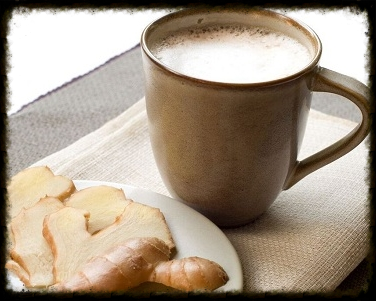
Coffee mixed with ginger and palm sugar, produced mainly on Java. Several manufacturers sell this traditional mixture in small packets, and it is promoted both as a classic drink and as a herbal remedy believed to ease flu symptoms.
Kopi Joss
Perhaps the most theatrical of all: a piece of burning charcoal is plunged directly into the freshly brewed coffee, imparting a roasted, smoky flavor—the name comes from the "joss" hiss of the hot charcoal. It's a fixture of the roadside stalls (angkringan) of Yogyakarta, Java's cultural capital. The beans are roasted to the vendor's own recipe and ground fine before brewing; the water must be boiled in a tin kettle or similar large pot over a charcoal stove.
Once the grounds are in the glass with a few small spoons of sugar, a little milk may be added. The boiling water is poured slowly into the glass, steam billowing as it hits coffee and sugar, releasing a wonderfully rich aroma—and after the seller stirs the cup, it becomes fragrant still.
Kopi Bumbu (Spiced Coffee)
Coffee simmered with cinnamon, cardamom, cloves, and sugar. The tradition arrived centuries ago through cultural exchange with immigrants and Middle Eastern communities living in the country.
Kopi Sereh (Lemongrass Coffee)
Lemongrass appears throughout Indonesian cooking, and coffee brewed with it carries a special aromatic lift and a refreshing finish.
If any of these tempt you, all of them can be recreated at home.
FrontStreet Coffee Recommendation
Sumatra is Indonesia's largest source of both Arabica and Robusta, accounting for over 60% of national output. Arabica grows mainly in the high-altitude provinces of Aceh and North Sumatra, and coffee from these regions is what the trade calls Mandheling. Aceh's Gayo mountains near Lake Tawar produce a delicate, bright style, while the traditional Lintong region around Lake Toba—shaped by the local wet-hulled (giling basah) process and its microbial fermentation—gives the classic Mandheling profile: intense aroma, heavy body, and bold flavor. Because Sumatra's rainy season overlaps with harvest (annual rainfall can exceed 2000mm and humidity runs 70–90%), farmers hull the parchment off beans at a half-dry stage to speed drying—hence the wild, earthy, herbal character.
For the benchmark expression, choose the FrontStreet PWN Gold Top Mandheling: PWN selects beans over an 18-screen size, insists on fewer than 3 defects per 300g sample to meet the top G1 grade, and hand-sorts three times for exceptional cleanliness and sweetness. Roast it medium-dark, then brew it as a pour-over at 87–88°C with 15g of coffee, a 1:15 ratio, a coarse-sugar grind, and a three-pour technique (30ml bloom, 100ml, then a gentle 95ml center pour) to bring out caramel sweetness with chocolate and nut tones. If you'd rather pull espresso, the FrontStreet classic blend—Brazil cream-and-nut base plus Mandheling for butter, roasted chestnut, caramel, sandalwood, and spice, with a touch of Robusta for crema—makes gorgeous lattes and Dirty drinks.
Important Notice :
FrontStreet Coffee is a long-established specialty coffee roaster in Guangzhou China, selling freshly roasted beans from its own farm in Yunnan as well as dozens of carefully selected single-origin beans from around the world for both pour-over and espresso. The products deliver consistently excellent quality and great value, with shipping within 24 hours. Guangzhou's FrontStreet Coffee shop is recommended by many coffee lovers, and the beans are now available online at the Tmall 。
FrontStreet Coffee has moved to a new address:
FrontStreet Coffee Address: 315,Donghua East Road,GuangZhou
Tel:020 38364473
 Scan and follow the En Gafei WeChat official account. Please indicate that the reprint comes from "En Gafei".